



我们在项目中添加 Spring Cloud Sentinel 依赖添加后 spring-cloud-starter-alibaba-sentinel
在 Spring-Boot 启动的过程中回去初始化 spring.factories
中的配置信息,如:SentinelWebAutoConfiguration
、SentinelAutoConfiguration
等配置文件来初始化
再讲代码之前我先声明一下我的版本号sentinel 1.8.0
。后续的所有内容均基于该版本进行
@ResoureSetinel 工作原理
配置流控规则我们最简单的方式就是通过 @ResoureSetinel 的方式来管理,该注解可以直接定义流控规则、降级规则。下面是一个简单的使用例子:
@SentinelResource(value = "ResOrderGet",fallback = "fallback",fallbackClass = SentinelResourceExceptionHandler.class,blockHandler = "blockHandler",blockHandlerClass = SentinelResourceExceptionHandler.class)@GetMapping("/order/get/{id}")public CommonResult<StockModel> getStockDetails(@PathVariable Integer id) {StockModel stockModel = new StockModel();stockModel.setCode("STOCK==>1000");stockModel.setId(id);return CommonResult.success(stockModel);}
如果大家熟悉 Spring 相关的组件大家都可以想到,这里多半是通过Spring Aop. 的方式来拦截 getStockDetails
方法。我们先看看SentinelAutoConfiguration
配置文件,我们可以找到 SentinelResourceAspect
Bean 的定义方法。
@Bean@ConditionalOnMissingBeanpublic SentinelResourceAspect sentinelResourceAspect() {return new SentinelResourceAspect();}
让后我们再来看看 SentinelResourceAspect 具体是怎么处理的,源码如下:
// 定义 Pointcut@Pointcut("@annotation(com.alibaba.csp.sentinel.annotation.SentinelResource)")public void sentinelResourceAnnotationPointcut() {}// Around 来对被标记 @SentinelResource 注解的方法进行处理@Around("sentinelResourceAnnotationPointcut()")public Object invokeResourceWithSentinel(ProceedingJoinPoint pjp) throws Throwable {Method originMethod = resolveMethod(pjp);// 获取注解信息SentinelResource annotation = originMethod.getAnnotation(SentinelResource.class);// 获取资源名称String resourceName = getResourceName(annotation.value(), originMethod);EntryType entryType = annotation.entryType();int resourceType = annotation.resourceType();Entry entry = null;try {// 执行 entryentry = SphU.entry(resourceName, resourceType, entryType, pjp.getArgs());// 执行业务方法Object result = pjp.proceed();// 返回return result;} catch (BlockException ex) {// 处理 BlockExceptionreturn handleBlockException(pjp, annotation, ex);} catch (Throwable ex) {Class<? extends Throwable>[] exceptionsToIgnore = annotation.exceptionsToIgnore();// The ignore list will be checked first.if (exceptionsToIgnore.length > 0 && exceptionBelongsTo(ex, exceptionsToIgnore)) {throw ex;}if (exceptionBelongsTo(ex, annotation.exceptionsToTrace())) {traceException(ex);// 处理降级return handleFallback(pjp, annotation, ex);}// No fallback function can handle the exception, so throw it out.throw ex;}}
我们总结一下, @SentinelResource 的执行过程, 首先是通过 Aop 进行拦截,然后通过 SphU.entry
执行对应的流控规则,最后调用业务方法。如果触发流控规则首先处理流控异常 BlockException
然后在判断是否有服务降级的处理,如果有就调用 fallback
方法。通过 handleBlockException
、handleFallback
进行处理。
责任链模式处理流控
通过上面的梳理,我们知道对于流控的过程,核心处理方法就是 SphU.entry
。在这个方法中其实主要就是初始化流控 Solt 和执行 Solt. 在这个过程中会对:簇点定义、流量控制、熔断降级、系统白名单等页面功能进行处理。
1. 初始化责任链
下面是初始化 Solt 的核心代码在 SphU.entryWithPriority
// 删减部分代码private Entry entryWithPriority(ResourceWrapper resourceWrapper, int count, boolean prioritized, Object... args)throws BlockException {// 初始化责任链ProcessorSlot<Object> chain = lookProcessChain(resourceWrapper);Entry e = new CtEntry(resourceWrapper, chain, context);try {// 执行 entrychain.entry(context, resourceWrapper, null, count, prioritized, args);} catch (BlockException e1) {e.exit(count, args);// 异常抛出,让 SentinelResourceAspect.invokeResourceWithSentinel 统一处理throw e1;} catch (Throwable e1) {// This should not happen, unless there are errors existing in Sentinel internal.RecordLog.info("Sentinel unexpected exception", e1);}return e;}
通过 lookProcessChain
方法我逐步的查找,我们可以看到最终的责任链初始化类,默认是 DefaultSlotChainBuilder
public class DefaultSlotChainBuilder implements SlotChainBuilder {@Overridepublic ProcessorSlotChain build() {ProcessorSlotChain chain = new DefaultProcessorSlotChain();// Note: the instances of ProcessorSlot should be different, since they are not stateless.// 通过 SPI 去加载所有的 ProcessorSlot 实现,通过 Order 排序List<ProcessorSlot> sortedSlotList = SpiLoader.loadPrototypeInstanceListSorted(ProcessorSlot.class);for (ProcessorSlot slot : sortedSlotList) {if (!(slot instanceof AbstractLinkedProcessorSlot)) {RecordLog.warn("The ProcessorSlot(" + slot.getClass().getCanonicalName() + ") is not an instance of AbstractLinkedProcessorSlot, can't be added into ProcessorSlotChain");continue;}// 添加到 chain 尾部chain.addLast((AbstractLinkedProcessorSlot<?>) slot);}return chain;}}
2. 责任链的处理过程
我们可以通过断点的方式来查看在 sortedSlotList 集合中所有的 solt
顺序如下图所示:
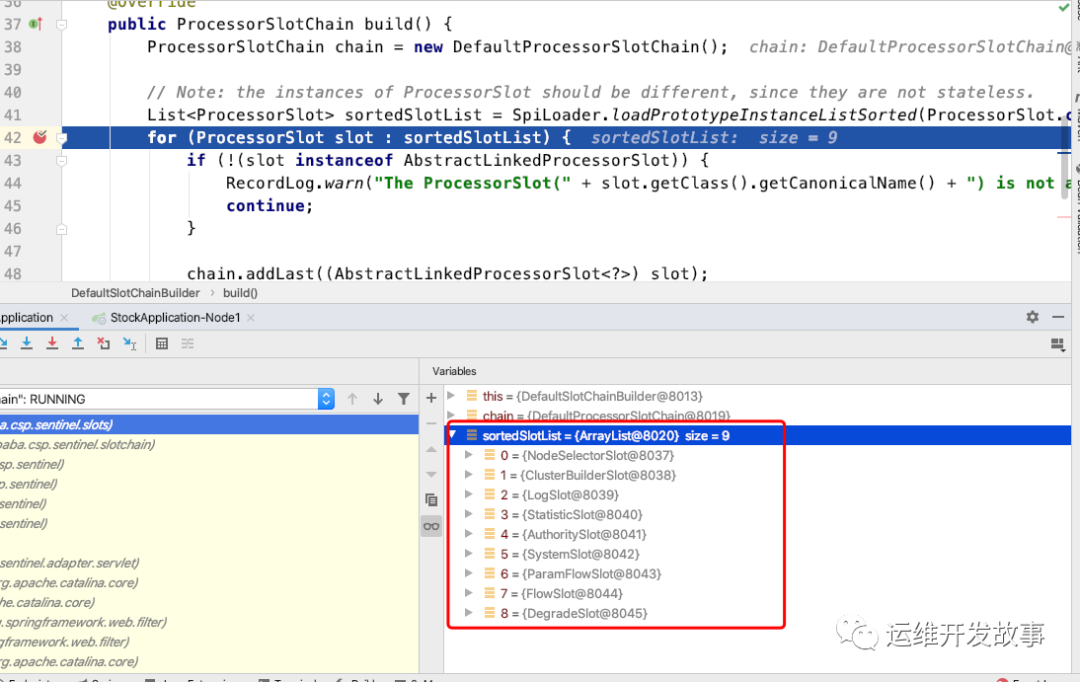
我们可以通过如下的顺序进行逐个的简单的分析一下
NodeSelectorSolt
CusterBuilderSolt
LogSlot
StatisicSlot
AuthoritySolt
SystemSolts
ParamFlowSolt
FlowSolt
DegradeSlot
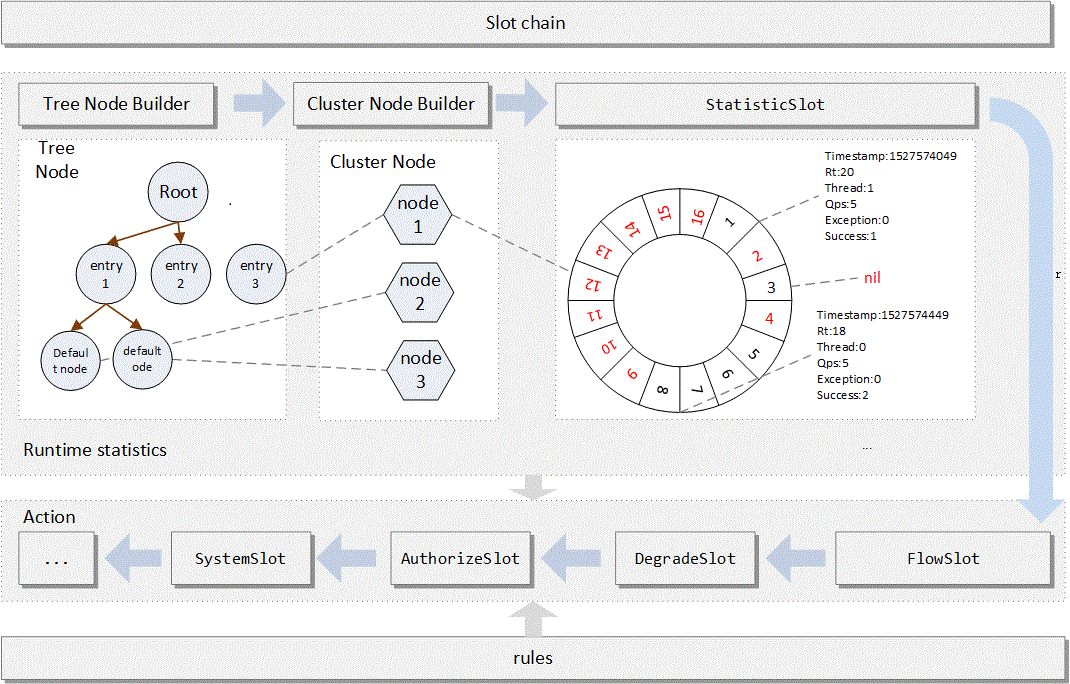
对于 Sentinel 的 Slot 流控协作流程可以参考官方给出的文档, 如下图所示:
FlowSolt 流控
通过 NodeSelectorSolt、CusterBuilderSolt、StatisicSlot 等一系列的请求数据处理,在 FlowSolt 会进入流控规则,所有的 Solt 都会执行 entry 方法, 如下所示
// FlowSolt 的 entry 方法@Overridepublic void entry(Context context, ResourceWrapper resourceWrapper, DefaultNode node, int count,boolean prioritized, Object... args) throws Throwable {// 检查流量checkFlow(resourceWrapper, context, node, count, prioritized);fireEntry(context, resourceWrapper, node, count, prioritized, args);}
在后续的流程中,会执进行判断具体的流控策略,默认是快速失败,会执行 DefaultController
方法。
// DefaultController@Overridepublic boolean canPass(Node node, int acquireCount, boolean prioritized) {// 当前资源的调用次数int curCount = avgUsedTokens(node);// 当前资源的调用次数 + 1 > 当前阈值if (curCount + acquireCount > count) {// 删减比分代码// 不通过return false;}// 通过return true;}private int avgUsedTokens(Node node) {if (node == null) {return DEFAULT_AVG_USED_TOKENS;}return grade == RuleConstant.FLOW_GRADE_THREAD ? node.curThreadNum() : (int)(node.passQps());}
如果上面返回不通过会回到,那么会抛出 FlowException
public void checkFlow(Function<String, Collection<FlowRule>> ruleProvider, ResourceWrapper resource,Context context, DefaultNode node, int count, boolean prioritized) throws BlockException {if (ruleProvider == null || resource == null) {return;}Collection<FlowRule> rules = ruleProvider.apply(resource.getName());if (rules != null) {for (FlowRule rule : rules) {if (!canPassCheck(rule, context, node, count, prioritized)) {// 流控规则不通过,会抛出 FlowExceptionthrow new FlowException(rule.getLimitApp(), rule);}}}}
然后会在 StatisticSlot
中增加统计信息, 最后会抛出给 SentinelResourceAspect
进行处理,完成流控功能。我们再来看看这个异常信息,如果是BlockException
异常,会进入 handleBlockException
方法处理, 如果是其他的业务异常首先会判断是否有配置 fallback 处理如果有,就调用 handleFallback
没有就继续往外抛,至此完成流控功能
try {entry = SphU.entry(resourceName, resourceType, entryType, pjp.getArgs());Object result = pjp.proceed();return result;} catch (BlockException ex) {return handleBlockException(pjp, annotation, ex);} catch (Throwable ex) {Class<? extends Throwable>[] exceptionsToIgnore = annotation.exceptionsToIgnore();// The ignore list will be checked first.if (exceptionsToIgnore.length > 0 && exceptionBelongsTo(ex, exceptionsToIgnore)) {throw ex;}if (exceptionBelongsTo(ex, annotation.exceptionsToTrace())) {traceException(ex);return handleFallback(pjp, annotation, ex);}// No fallback function can handle the exception, so throw it out.throw ex;}
DegradeSlot 降级
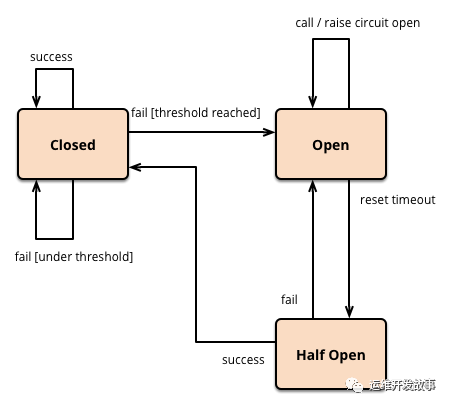
断路器的作用是当某些资源一直出现故障时,将触发断路器。断路器不会继续访问已经发生故障的资源,而是拦截请求并返回故障信号。
Sentinel 在 DegradeSlot
这个 Slot 中实现了熔断降级的功能,它有三个状态 OPEN
、HALF_OPEN
、CLOSED
以ResponseTimeCircuitBreaker
RT 响应时间维度来分析, 断路器工作的过程。下面是一个标准断路器的工作流程:
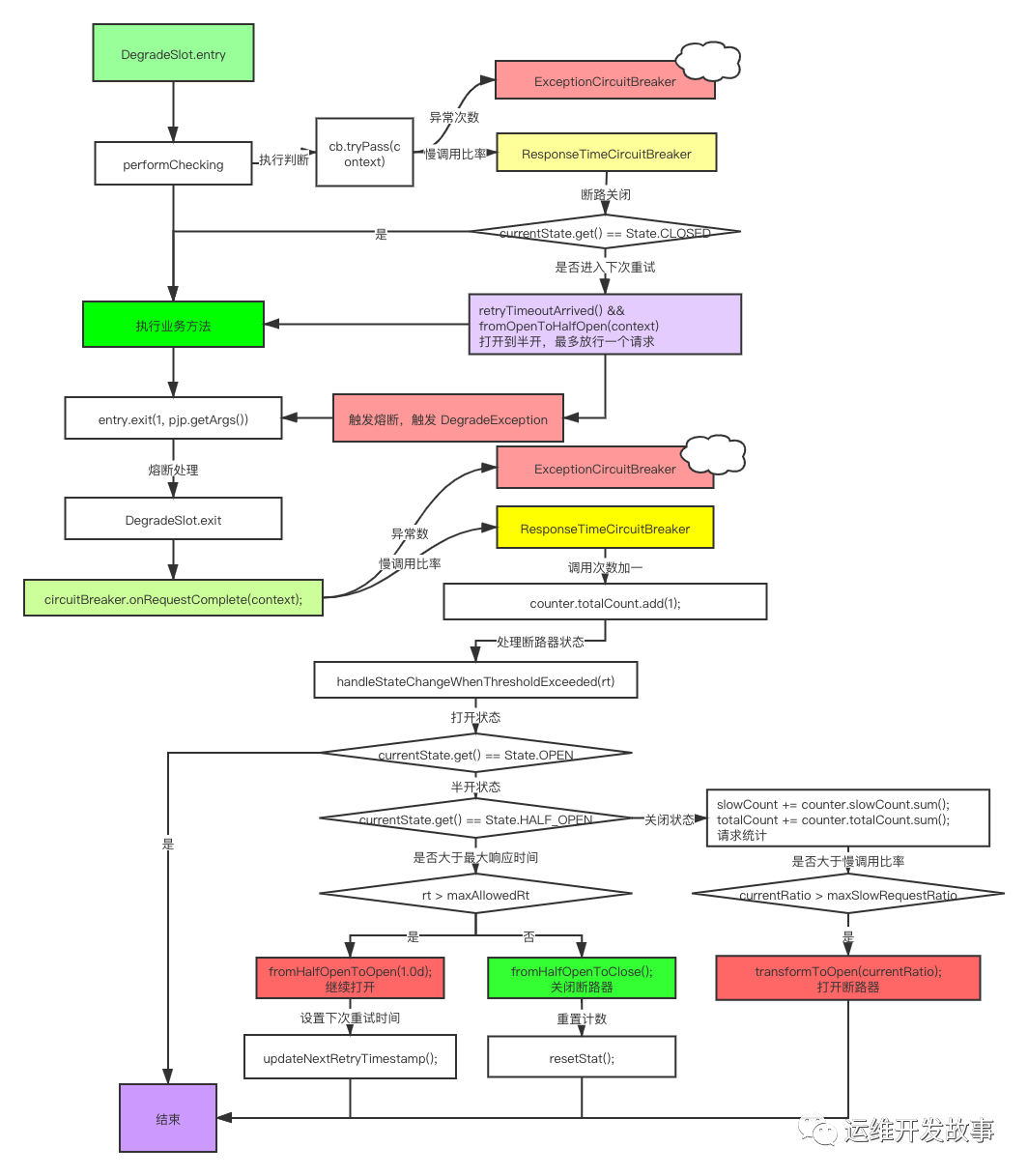
在 Sentinel 实现的源码过程如下图所示:
Sentinel 通过 Web 拦截器
Sentinel 在默认情况下, 不使用 @ResourceSentinel 注解实现流控的时候, Sentinel 通过拦截器进行流控实现的。初始化类在 SentinelWebAutoConfiguration
它实现了 WebMvcConfigurer
接口,在 sentinelWebInterceptor
方法初始化 SentinelWebInterceptor
等 Bean。
@Bean@ConditionalOnProperty(name = "spring.cloud.sentinel.filter.enabled",matchIfMissing = true)public SentinelWebInterceptor sentinelWebInterceptor(SentinelWebMvcConfig sentinelWebMvcConfig) {return new SentinelWebInterceptor(sentinelWebMvcConfig);}
我们在 SentinelWebInterceptor
的核心方法 preHandle
中处理,这里面我们又可以看到 SphU.entry
熟悉的过程调用流控的责任链。由于逻辑都类似,此处不再多说。代码如下:
public boolean preHandle(HttpServletRequest request, HttpServletResponse response, Object handler)throws Exception {try {String resourceName = getResourceName(request);if (StringUtil.isEmpty(resourceName)) {return true;}if (increaseReferece(request, this.baseWebMvcConfig.getRequestRefName(), 1) != 1) {return true;}// Parse the request origin using registered origin parser.String origin = parseOrigin(request);String contextName = getContextName(request);ContextUtil.enter(contextName, origin);Entry entry = SphU.entry(resourceName, ResourceTypeConstants.COMMON_WEB, EntryType.IN);request.setAttribute(baseWebMvcConfig.getRequestAttributeName(), entry);return true;} catch (BlockException e) {try {handleBlockException(request, response, e);} finally {ContextUtil.exit();}return false;}}
参考文档
https://github.com/alibaba/Sentinel/wiki
https://martinfowler.com/bliki/CircuitBreaker.html

