



点击蓝字
关注我们

时间序列是相对于时间观察到的一系列数据点。在数据科学中,时间序列主要是一个独立变量,目标是使用历史数据预测未来。传统上,时间序列问题是通过ARIMA模型使用滞后和微分特征来解决的。但是,在发生意外事件时,所记录的信号显示出趋势的更多动态特性,因此仅使用这些传统方法就很难获得准确的模型。
从业人员提出了一种现代方法,即通过将时间序列转换为表格数据格式以及手动特征工程来解决机器学习问题。有许多可用的数据集可以很好地解决特定的时间序列问题。对于金融,供应链等领域的问题,基于日期和时间的功能可以在捕获趋势和理解数据方面发挥重要作用,尤其是在涉及时间序列数据时。
本文主要介绍一些可以完全基于日期和时间创建的功能。这些功能中的某些功能非常常用,并且能够在时间序列数据分析中极大的帮助到我们。
所需安装包:
1.Pandas
2.Datetime
3.Calendar
数据集来自:
http://archive.ics.uci.edu/ml/datasets/Occupancy+Detection+
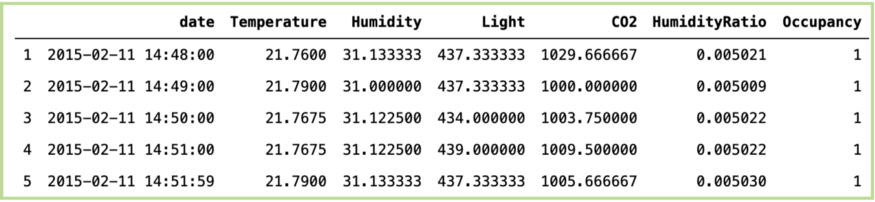
数据集样本如下:
#Importing the package:import pandas as pd# Getting the date:data['Date'] = data['date'].dt.date# Pring the date:data['Date'].head()
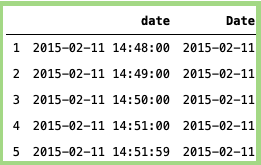
上面代码的输出
#Importing the package:import pandas as pd# Getting the Time:data['Time'] = data['date'].dt.time# Pring the time:data[['date','Time']].head()
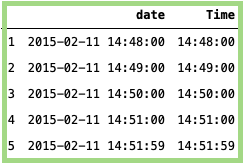
上面代码的输出
#Importing the package:import pandas as pd# Getting the Hour:data['Hour'] = data['date'].dt.hour# Pring the time:data[['date','Hour']].sample(n=10)
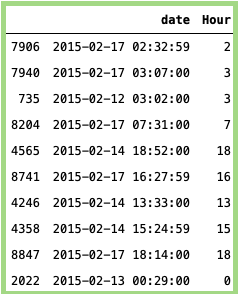
上面代码的输出
#Importing the package:import pandas as pd# Getting the Minutes:data['Minute'] = data['date'].dt.minute# Pring the Minutes:data[['date','Minute']].sample(n=10)
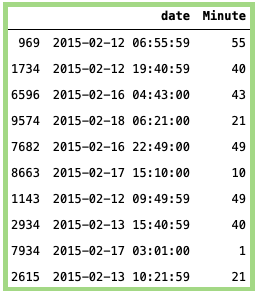
上面代码的输出
# Importing the package:import pandas as pd# Getting the Seconds:data['Second'] = data['date'].dt.second# Pring the Seconds:data[['date','Second']].sample(n=10)
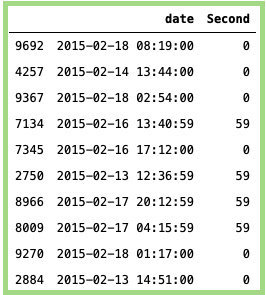
上面代码的输出
# Getting the week of year:data_min_temp['Week_of_year'] = data_min_temp['Date'].dt.week# Taking random samples:data_min_temp[['Date','Week_of_year']].sample(n=10)
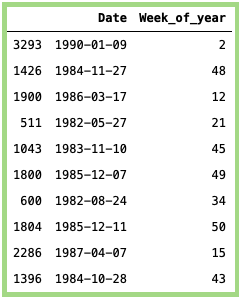
上面代码的输出
# Getting the day of week:data_min_temp['day_of_week'] = data_min_temp['Date'].dt.dayofweek# Taking random samples:data_min_temp[['Date','day_of_week']].sample(n=10)
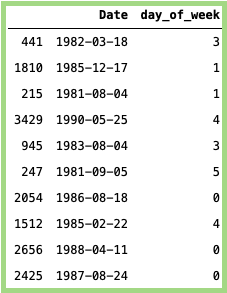
上面代码的输出
# Getting the day of year:data_min_temp['day_of_year'] = data_min_temp['Date'].dt.dayofyear# Taking random sampledata_min_temp[['Date','day_of_year']].sample(n=10)
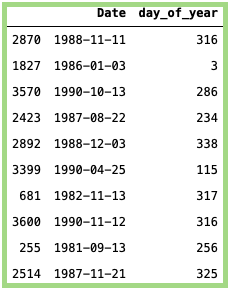
上面代码的输出
此功能用于根据天数计算两个日期之间的时差。下面是显示从今天到过去某个x日期的示例。
#获取与今天相比的月份差异:data_min_temp [ 'days_diff_from_today' ] =(日期时间。日期时间。现在()- data_min_temp [ '日期' ])。dt。天#随机抽样:data_min_temp [[ 'Date','days_diff_from_today' ]]。样品(10)
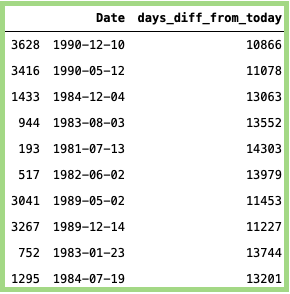
上面代码的输出
#获取与今天相比的月份差异:data_min_temp [ 'month_diff_from_today' ] =(日期时间。日期时间。现在()- data_min_temp [ '日期' ])。dt。天// 30#随机抽样:data_min_temp [[ 'Date','month_diff_from_today' ]]。样品(10)
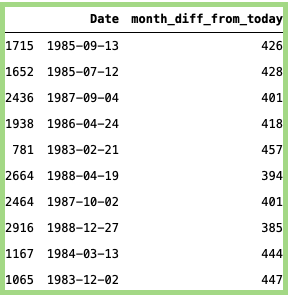
上面代码的输出
计算到月底为止的剩余天数。对于到月底有趋势的问题,这个功能非常有用。
#再导入一个软件包:从 日历 导入 月份范围#定义一个函数来获取月底:DEF last_day_of_month(DATE_VALUE):返回 date_value。替换(天 = monthrange(DATE_VALUE。年,DATE_VALUE。月)[ 1 ])#计算到月底的天数:data_min_temp [ 'days_to_end_of_the_month' ] = data_min_temp [ 'Date' ]。申请(拉姆达 X:(last_day_of_month(X)- X)。天)#随机抽样:data_min_temp [[ 'Date','days_to_end_of_the_month' ]]。样品(10)
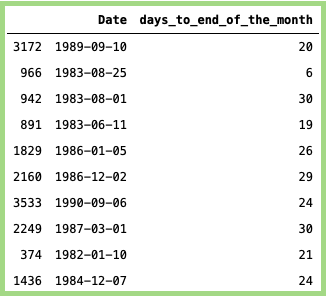
上面代码的输出
#计算季度:data_min_temp [ 'quarter' ] = data_min_temp [ 'Date' ]。dt。25美分硬币#随机抽样:data_min_temp [[ 'Date','quarter' ]]。样品(10)
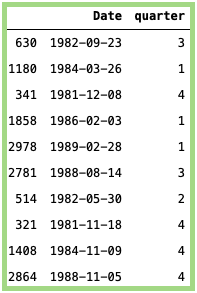
上面代码的输出
#计算季度:data_min_temp [ 'is_quarter_start' ] = data_min_temp [ 'Date' ]。dt。is_quarter_start#映射值(True = 1和False = 0):data_min_temp [ 'is_quarter_start' ] = data_min_temp [ 'is_quarter_start' ]。映射({ True:1,False:0 })#随机抽样:data_min_temp [[ 'Date','is_quarter_start' ]]。样品(10)
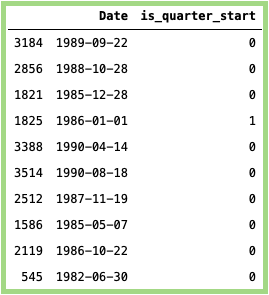
上面代码的输出
#计算季度末:data_min_temp [ 'is_quarter_end' ] = data_min_temp [ 'Date' ]。dt。is_quarter_end#映射值(True = 1和False = 0):data_min_temp [ 'is_quarter_end' ] = data_min_temp [ 'is_quarter_end' ]。映射({ True:1,False:0 })#随机抽样:data_min_temp [[ 'Date','is_quarter_end' ]]。样品(10)
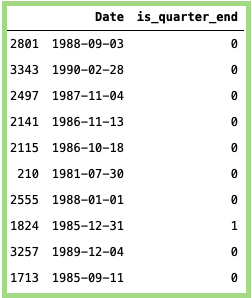
上面代码的输出
#计算年份:data_min_temp [ 'year' ] = data_min_temp [ 'Date' ]。dt。年#随机抽样:data_min_temp [[ 'Date','year' ]]。样品(10)#计算月份:data_min_temp [ 'month' ] = data_min_temp [ 'Date' ]。dt。月#随机抽样:data_min_temp [[ 'Date','month' ]]。样品(10)#计算日:data_min_temp [ 'day' ] = data_min_temp [ 'Date' ]。dt。天#随机抽样:data_min_temp [[ 'Date','day' ]]。样品(10)
本文作者:


指导老师:

扫码关注我们


文章转载自数艺学苑,如果涉嫌侵权,请发送邮件至:contact@modb.pro进行举报,并提供相关证据,一经查实,墨天轮将立刻删除相关内容。
