



有序链表的合并也是常见的链表问题,这里通过两种方法来讲解:
归并法
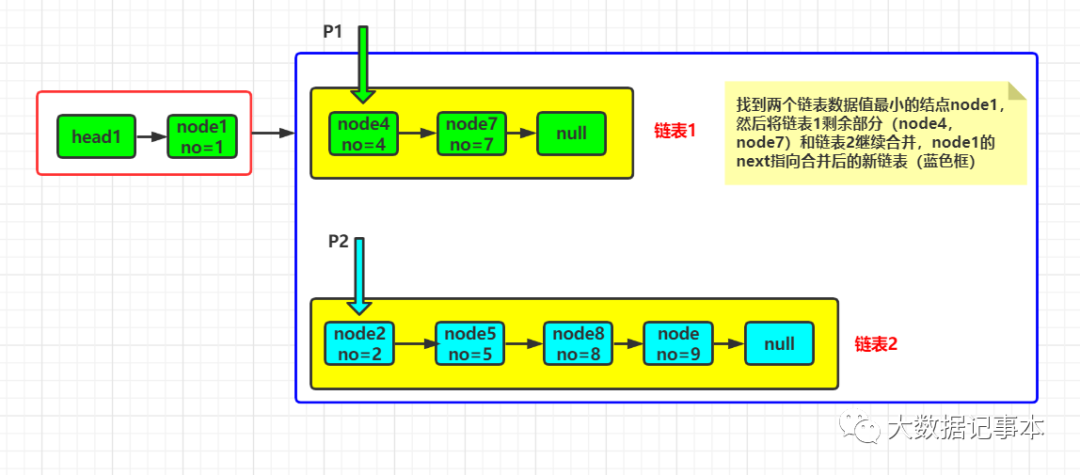
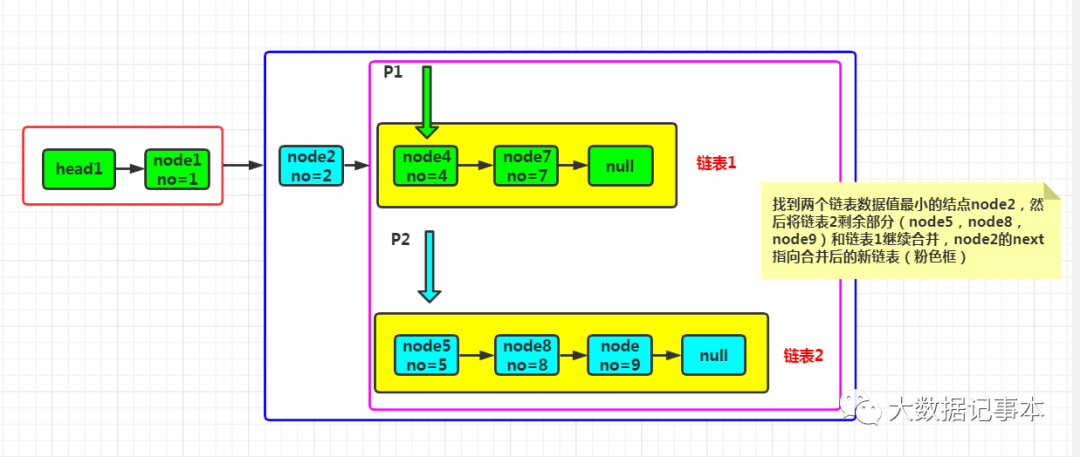
递归法
定义结点类型:
class Node {int no;Node next;public Node(int no) {this.no = no;}@Overridepublic String toString() {return "Node{" + "no=" + no + "}";}}
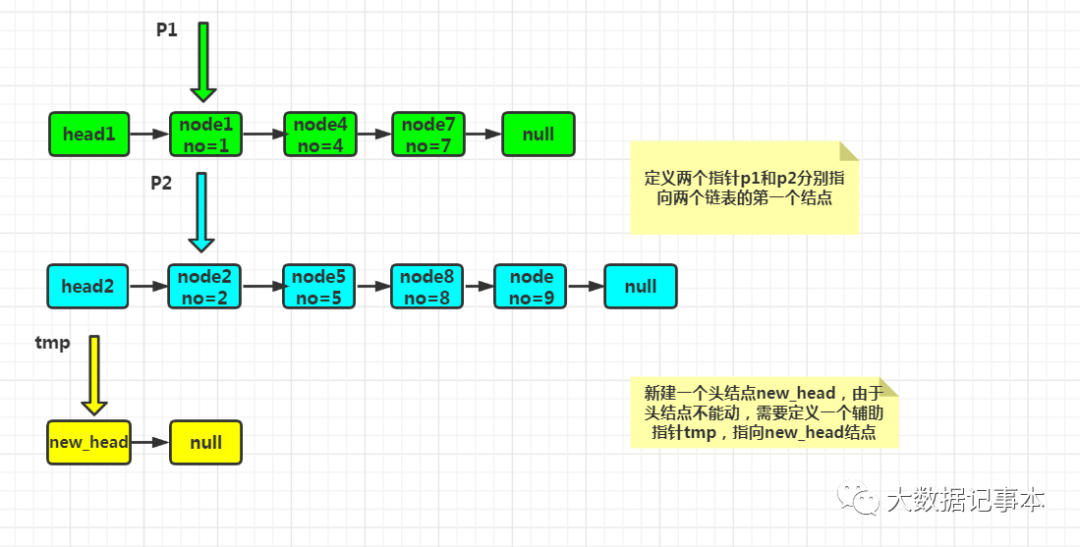
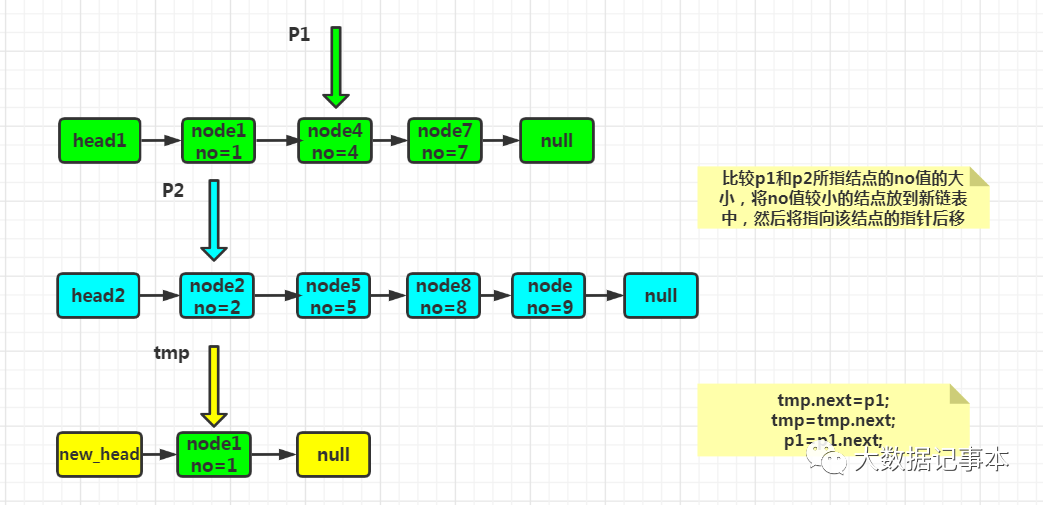
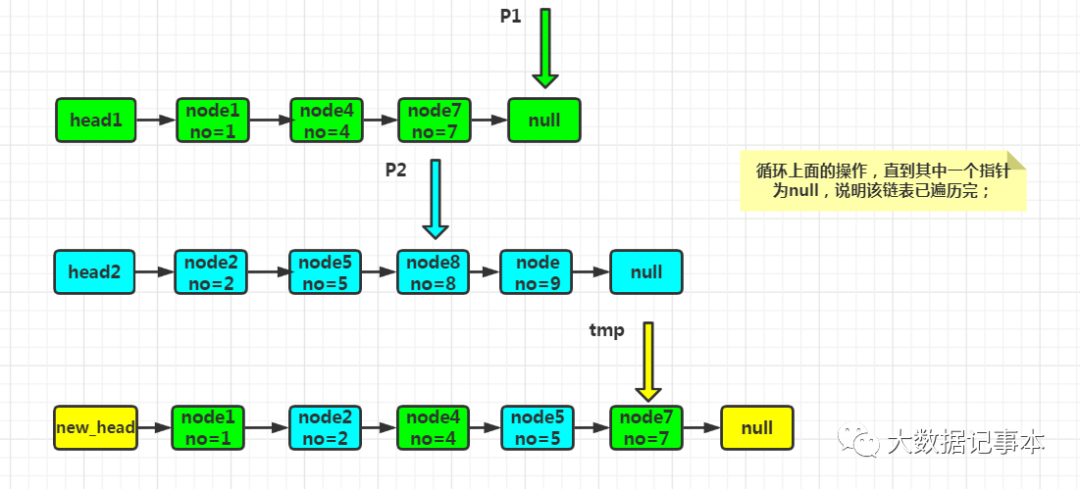
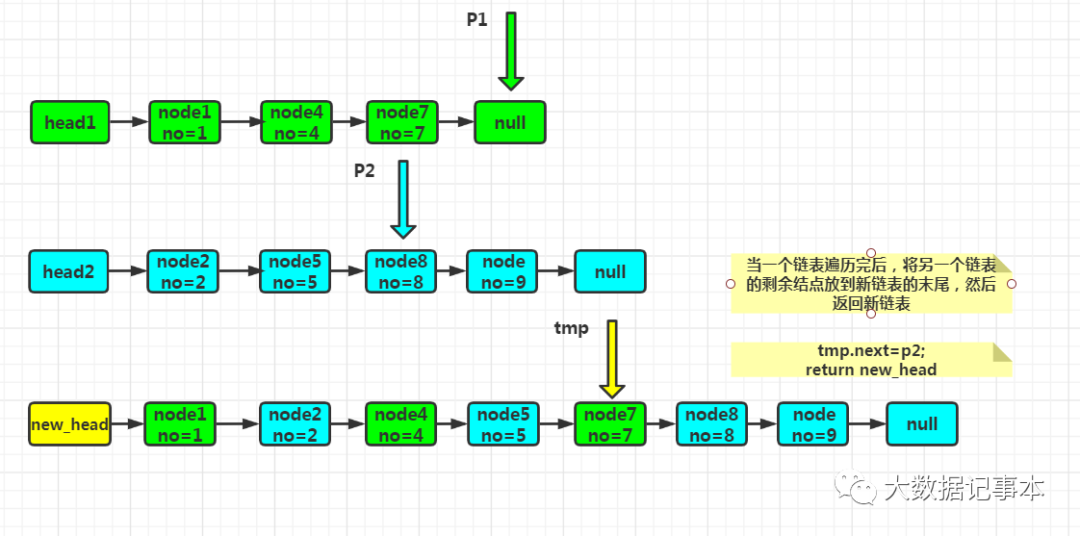
代码实现:
public static Node mergeSortedLinkedList(Node head1,Node head2){//如果有一个链表为空,直接返回另一个链表if(head1==null)return head2;if (head2==null)return head1;//新建一个头结点,并定义一个辅助指针tmpNode new_head = new Node(0);Node tmp=new_head;//两个指针分别指向链表的第一个结点Node p1=head1.next;Node p2=head2.next;//两个链表都没遍历完while(p1!=null&&p2!=null){if (p1.no<=p2.no){tmp.next=p1;p1=p1.next;tmp=tmp.next;}else{tmp.next=p2;p2=p2.next;tmp=tmp.next;}}//p1不为null说明第一个链表还有结点没遍历完,而第二个链表已遍历完//将剩余结点放在新链表的末尾if (p1!=null){tmp.next=p1;}if (p2!=null){tmp.next=p2;}return new_head;}
代码实现:
//对于带头结点的链表,可以增加一个参数,标记参数链表是否带头结点,//如果带头结点,比较的应该是其next域对应结点的值;否则直接比较结点的值public static Node mergeSortedLinkedList2(Node head1,Node head2,boolean isHead){//递归结束条件:其中一个链表为空if(head1==null)return head2;if (head2==null)return head1;if(isHead){//如果是头结点,应该比较其next域对应结点的值if (head1.next.no<=head2.next.no){head1.next.next=mergeSortedLinkedList2(head1.next.next,head2.next,false);return head1;}else{head2.next.next=mergeSortedLinkedList2(head1.next,head2.next.next,false);return head2;}}else{//如果不是头结点,直接比较结点的值if (head1.no<=head2.no){head1.next=mergeSortedLinkedList2(head1.next,head2,false);return head1;}else{head2.next=mergeSortedLinkedList2(head1,head2.next,false);return head2;}}}
public static Node mergeSortedLinkedList2(Node head1,Node head2){//递归结束条件:其中一个链表遍历完if(head1==null)return head2;if (head2==null)return head1;if(head1.no<=head2.no){head1.next=mergeSortedLinkedList2(head1.next,head2);return head1;}else{head2.next=mergeSortedLinkedList2(head1,head2.next);return head2;}}
文章转载自大数据记事本,如果涉嫌侵权,请发送邮件至:contact@modb.pro进行举报,并提供相关证据,一经查实,墨天轮将立刻删除相关内容。
