




Why learn pygame
一、pygame的安装
pip install pygame
这是最简单,最不易出错的一种方式,且不用区分操作系统的区别。安装完成后我们使用下面的方式检查一下是否安装成功。
打开pycharm的PythonConsole,然后输入
import pygame
安装成功便会如下图一般显示pygame的版本号。
pygame 2.0.1 (SDL 2.0.14, Python 3.8.5)Hello from the pygame community. https://www.pygame.org/contribute.html
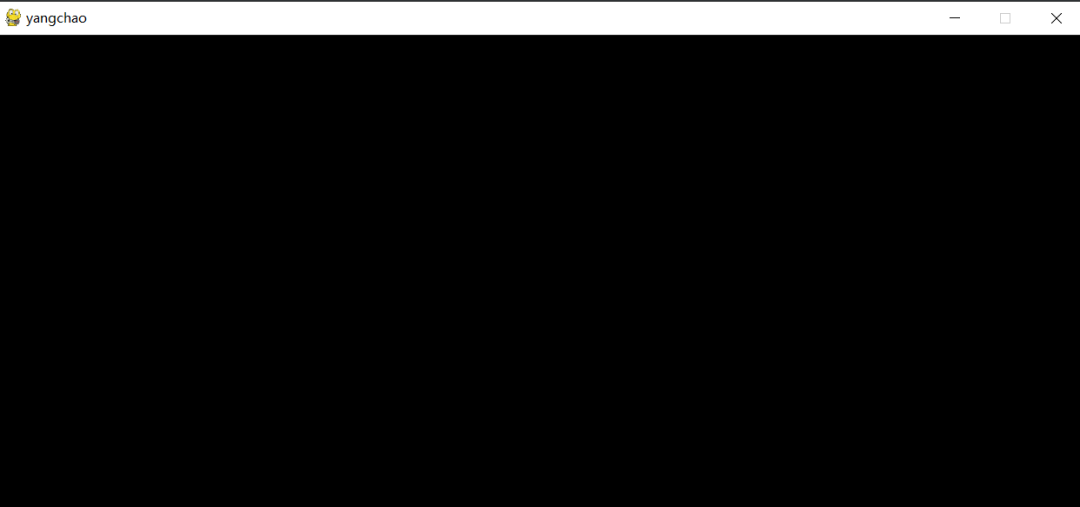
二、pygame的最小系统----pygame版"yangchao"
#!/usr/bin/env python# -*- coding: utf-8 -*-# ****** Auto : YangGaoChao ******************************# **** A beautiful day has begun. come on, Xiao Yang******# ***** Cretive time : 2021-05-08 23:10 ******************import pygamefrom pygame.locals import *import sys# 使用pygame之前必须初始化pygame.init()# 设置用于显示的窗口,单位为像素screen = pygame.display.set_mode((1000, 800))# 设置标题pygame.display.set_caption("yangchao")while True:for event in pygame.event.get(): # 循环获取事件if event.type == QUIT: # 若检测到事件类型为退出,则退出系统pygame.quit()sys.exit()pygame.display.update() # 更新屏幕内容
# ----------图像相关操作-----------# 加载图片文件,返回图片对象image = pygame.image.load("图片路径")# 获得图片矩形对象 -> Rect(x, y, width, height)# 默认情况下左上角的坐标是 (0, 0)rect = image.get_rect(centerx=x, centery=y)# 在原位置基础上,移动指定的偏移量 (x, y 增加)rect.move_ip(num1, num2)# 判断两个矩形是否相交,相交返回True,否则返回Falseflag = pygame.Rect.colliderect(rect1, rect2)# 将图片对象按指定宽高缩放,返回新的图片对象trans_image = pygame.transform.scale(image, (WINDOWWIDTH, WINDOWHEIGHT))
# 常见事件类型:# QUIT 关闭窗口# KEYDOWN 键盘按键# 获得当前所有持续按键 bools_tuple# 获得所有事件的列表event_list = pygame.event.get()for event in event_list:# 1. 鼠标点击关闭窗口事件if event.type == pygame.QUIT:print("关闭了窗口")sys.exit()# 2. 键盘按下事件if event.type == pygame.KEYDOWN:# 判断用户按下的键是否是a键if event.key == pygame.K_a:print("按了 a ")if event.key == pygame.K_UP:print("按了 方向键上")# 3. 获得当前键盘所有按键的状态(按下,没有按下),返回bool元组pressed_keys = pygame.key.get_pressed()if pressed_keys[pygame.K_w] or pressed_keys[pygame.K_UP]:print("按了 w 键,或者 方向键上")
# 加载背景音乐pygame.mixer.music.load("./res/音乐文件名")# 循环播放背景音乐pygame.mixer.music.play(-1)# 停止背景音乐pygame.mixer.music.stop()# 加载音效boom_sound = pygame.mixer.Sound("./res/音效名")# 播放音效boom_sound.play()# 停止音效boom_sound.stop()三基色:Red Green Blue0 ~ 255
# 设置字体样式和大小font = pygame.font.SysFont('SimHei', 字体大小)# render(text(文本内容), antialias(抗锯齿), color(RGB)),返回文字对象textobj = font.render(text, 1, (200, 200, 200))# 设置文字矩形对象位置textrect = textobj.get_rect()textrect.move_ip(水平偏移量, 竖直偏移量)# 在指定位置绘制指定文字对象window.blit(textobj, textrect)# 更新界面pygame.display.update()
三、pygame的运行流程
使用pygame开发游戏,创建游戏窗口是基础,游戏的主循环(事件的获取、状态的检测、图像更新后的绘制)是核心。游戏事件可以理解为用户的所有输入,游戏获取后作出相应回应。游戏状态可以理解为游戏中某个对象在某一时刻的状态,如英雄的位置,动作等等。当所有对象按照时间进行更新后,绘制出当前时间帧的图像。物体或图形位置的变化只有通过在屏幕上绘图才可以看出来。

四.pygame源码
1、__init__.pyi
from typing import Any, Tuple, Callable, Union, Optional, overload, Type# Most useful stufffrom pygame.constants import *import pygame.surfaceimport pygame.rectimport pygame.colorimport pygame.eventimport pygame.bufferproxyimport pygame.drawimport pygame.displayimport pygame.fontimport pygame.imageimport pygame.keyimport pygame.mixerimport pygame.mouseimport pygame.timeimport pygame.version# Advanced stuffimport pygame.cursorsimport pygame.joystickimport pygame.maskimport pygame.spriteimport pygame.transformimport pygame.bufferproxyimport pygame.pixelarrayimport pygame.pixelcopyimport pygame.sndarrayimport pygame.surfarrayimport pygame.mathimport pygame.fastevent# Otherimport pygame.scrap# This classes are auto imported with pygame, so I put their declaration hereclass Rect(pygame.rect.Rect): ...class Surface(pygame.surface.Surface): ...class Color(pygame.color.Color): ...class PixelArray(pygame.pixelarray.PixelArray): ...class Vector2(pygame.math.Vector2): ...class Vector3(pygame.math.Vector3): ...def init() -> Tuple[int, int]: ...def quit() -> None: ...def get_init() -> bool: ...class error(RuntimeError):RuntimeErrordef get_error() -> str: ...def set_error(error_msg: str) -> None: ...def get_sdl_version() -> Tuple[int, int, int]: ...def get_sdl_byteorder() -> int: ...def encode_string(obj: Union[str, bytes],encoding: Optional[str] = "unicode_escape",errors: Optional[str] = "backslashreplace",etype: Optional[Type[Exception]] = UnicodeEncodeError,) -> bytes: ...@overloaddef encode_file_path(obj: Union[str, bytes], etype: Optional[Type[Exception]] = UnicodeEncodeError) -> bytes: ...@overloaddef encode_file_path(obj: Any, etype: Optional[Type[Exception]] = UnicodeEncodeError) -> bytes: ...def register_quit(callable: Callable) -> None: ...def __getattr__(name) -> Any: ... # don't error on missing stubs
2.typing.py
2.1、typing模块的作用:自python3.5开始,PEP484为python引入了类型注解(type hints)类型检查,防止运行时出现参数和返回值类型不符合。作为开发文档附加说明,方便使用者调用时传入和返回参数类型。该模块加入后并不会影响程序的运行,不会报正式的错误;只是提醒pycharm目前支持typing检查,参数类型错误会“黄色”提示
2.2、常用的类型有如下:int、long、float: 整型、长整形、浮点型;bool、str: 布尔型、字符串类型;List、 Tuple,、Dict、 Set:列表、元组、字典、集合;Iterable、Iterator:可迭代类型、迭代器类型;Generator:生成器类型;
2.3、typing源码"""The typing module: Support for gradual typing as defined by PEP 484.At large scale, the structure of the module is following:* Imports and exports, all public names should be explicitly added to __all__.* Internal helper functions: these should never be used in code outside this module.* _SpecialForm and its instances (special forms): Any, NoReturn, ClassVar, Union, Optional* Two classes whose instances can be type arguments in addition to types: ForwardRef and TypeVar* The core of internal generics API: _GenericAlias and _VariadicGenericAlias, the latter iscurrently only used by Tuple and Callable. All subscripted types like X[int], Union[int, str],etc., are instances of either of these classes.* The public counterpart of the generics API consists of two classes: Generic and Protocol.* Public helper functions: get_type_hints, overload, cast, no_type_check,no_type_check_decorator.* Generic aliases for collections.abc ABCs and few additional protocols.* Special types: NewType, NamedTuple, TypedDict.* Wrapper submodules for re and io related types."""from abc import abstractmethod, ABCMetaimport collectionsimport collections.abcimport contextlibimport functoolsimport operatorimport re as stdlib_re # Avoid confusion with the re we export.import sysimport typesfrom types import WrapperDescriptorType, MethodWrapperType, MethodDescriptorType# Please keep __all__ alphabetized within each category.__all__ = [# Super-special typing primitives.'Any','Callable','ClassVar','Final','ForwardRef','Generic','Literal','Optional','Protocol','Tuple','Type','TypeVar','Union',# ABCs (from collections.abc).'AbstractSet', # collections.abc.Set.'ByteString','Container','ContextManager','Hashable','ItemsView','Iterable','Iterator','KeysView','Mapping','MappingView','MutableMapping','MutableSequence','MutableSet','Sequence','Sized','ValuesView','Awaitable','AsyncIterator','AsyncIterable','Coroutine','Collection','AsyncGenerator','AsyncContextManager',# Structural checks, a.k.a. protocols.'Reversible','SupportsAbs','SupportsBytes','SupportsComplex','SupportsFloat','SupportsIndex','SupportsInt','SupportsRound',# Concrete collection types.'ChainMap','Counter','Deque','Dict','DefaultDict','List','OrderedDict','Set','FrozenSet','NamedTuple', # Not really a type.'TypedDict', # Not really a type.'Generator',# One-off things.'AnyStr','cast','final','get_args','get_origin','get_type_hints','NewType','no_type_check','no_type_check_decorator','NoReturn','overload','runtime_checkable','Text','TYPE_CHECKING',]# The pseudo-submodules 're' and 'io' are part of the public# namespace, but excluded from __all__ because they might stomp on# legitimate imports of those modules.def _type_check(arg, msg, is_argument=True):"""Check that the argument is a type, and return it (internal helper).As a special case, accept None and return type(None) instead. Also wrap stringsinto ForwardRef instances. Consider several corner cases, for example plainspecial forms like Union are not valid, while Union[int, str] is OK, etc.The msg argument is a human-readable error message, e.g::"Union[arg, ...]: arg should be a type."We append the repr() of the actual value (truncated to 100 chars)."""invalid_generic_forms = (Generic, Protocol)if is_argument:invalid_generic_forms = invalid_generic_forms + (ClassVar, Final)if arg is None:return type(None)if isinstance(arg, str):return ForwardRef(arg)if (isinstance(arg, _GenericAlias) andarg.__origin__ in invalid_generic_forms):raise TypeError(f"{arg} is not valid as type argument")if (isinstance(arg, _SpecialForm) and arg not in (Any, NoReturn) orarg in (Generic, Protocol)):raise TypeError(f"Plain {arg} is not valid as type argument")if isinstance(arg, (type, TypeVar, ForwardRef)):return argif not callable(arg):raise TypeError(f"{msg} Got {arg!r:.100}.")return argdef _type_repr(obj):"""Return the repr() of an object, special-casing types (internal helper).If obj is a type, we return a shorter version than the defaulttype.__repr__, based on the module and qualified name, which istypically enough to uniquely identify a type. For everythingelse, we fall back on repr(obj)."""if isinstance(obj, type):if obj.__module__ == 'builtins':return obj.__qualname__return f'{obj.__module__}.{obj.__qualname__}'if obj is ...:return('...')if isinstance(obj, types.FunctionType):return obj.__name__return repr(obj)def _collect_type_vars(types):"""Collect all type variable contained in types in order offirst appearance (lexicographic order). For example::_collect_type_vars((T, List[S, T])) == (T, S)"""tvars = []for t in types:if isinstance(t, TypeVar) and t not in tvars:tvars.append(t)if isinstance(t, _GenericAlias) and not t._special:tvars.extend([t for t in t.__parameters__ if t not in tvars])return tuple(tvars)def _subs_tvars(tp, tvars, subs):"""Substitute type variables 'tvars' with substitutions 'subs'.These two must have the same length."""if not isinstance(tp, _GenericAlias):return tpnew_args = list(tp.__args__)for a, arg in enumerate(tp.__args__):if isinstance(arg, TypeVar):for i, tvar in enumerate(tvars):if arg == tvar:new_args[a] = subs[i]else:new_args[a] = _subs_tvars(arg, tvars, subs)if tp.__origin__ is Union:return Union[tuple(new_args)]return tp.copy_with(tuple(new_args))def _check_generic(cls, parameters):"""Check correct count for parameters of a generic cls (internal helper).This gives a nice error message in case of count mismatch."""if not cls.__parameters__:raise TypeError(f"{cls} is not a generic class")alen = len(parameters)elen = len(cls.__parameters__)if alen != elen:raise TypeError(f"Too {'many' if alen > elen else 'few'} parameters for {cls};"f" actual {alen}, expected {elen}")def _remove_dups_flatten(parameters):"""An internal helper for Union creation and substitution: flatten Unionsamong parameters, then remove duplicates."""# Flatten out Union[Union[...], ...].params = []for p in parameters:if isinstance(p, _GenericAlias) and p.__origin__ is Union:params.extend(p.__args__)elif isinstance(p, tuple) and len(p) > 0 and p[0] is Union:params.extend(p[1:])else:params.append(p)# Weed out strict duplicates, preserving the first of each occurrence.all_params = set(params)if len(all_params) < len(params):new_params = []for t in params:if t in all_params:new_params.append(t)all_params.remove(t)params = new_paramsassert not all_params, all_paramsreturn tuple(params)_cleanups = []def _tp_cache(func):"""Internal wrapper caching __getitem__ of generic types with a fallback tooriginal function for non-hashable arguments."""cached = functools.lru_cache()(func)_cleanups.append(cached.cache_clear)@functools.wraps(func)def inner(*args, **kwds):try:return cached(*args, **kwds)except TypeError:pass # All real errors (not unhashable args) are raised below.return func(*args, **kwds)return innerdef _eval_type(t, globalns, localns):"""Evaluate all forward reverences in the given type t.For use of globalns and localns see the docstring for get_type_hints()."""if isinstance(t, ForwardRef):return t._evaluate(globalns, localns)if isinstance(t, _GenericAlias):ev_args = tuple(_eval_type(a, globalns, localns) for a in t.__args__)if ev_args == t.__args__:return tres = t.copy_with(ev_args)res._special = t._specialreturn resreturn tclass _Final:"""Mixin to prohibit subclassing"""__slots__ = ('__weakref__',)def __init_subclass__(self, , *args, **kwds):if '_root' not in kwds:raise TypeError("Cannot subclass special typing classes")class _Immutable:"""Mixin to indicate that object should not be copied."""def __copy__(self):return selfdef __deepcopy__(self, memo):return selfclass _SpecialForm(_Final, _Immutable, _root=True):"""Internal indicator of special typing constructs.See _doc instance attribute for specific docs."""__slots__ = ('_name', '_doc')def __new__(cls, *args, **kwds):"""Constructor.This only exists to give a better error message in casesomeone tries to subclass a special typing object (not a good idea)."""if (len(args) == 3 andisinstance(args[0], str) andisinstance(args[1], tuple)):# Close enough.raise TypeError(f"Cannot subclass {cls!r}")return super().__new__(cls)def __init__(self, name, doc):self._name = nameself._doc = docdef __eq__(self, other):if not isinstance(other, _SpecialForm):return NotImplementedreturn self._name == other._namedef __hash__(self):return hash((self._name,))def __repr__(self):return 'typing.' + self._namedef __reduce__(self):return self._namedef __call__(self, *args, **kwds):raise TypeError(f"Cannot instantiate {self!r}")def __instancecheck__(self, obj):raise TypeError(f"{self} cannot be used with isinstance()")def __subclasscheck__(self, cls):raise TypeError(f"{self} cannot be used with issubclass()")@_tp_cachedef __getitem__(self, parameters):if self._name in ('ClassVar', 'Final'):item = _type_check(parameters, f'{self._name} accepts only single type.')return _GenericAlias(self, (item,))if self._name == 'Union':if parameters == ():raise TypeError("Cannot take a Union of no types.")if not isinstance(parameters, tuple):parameters = (parameters,)msg = "Union[arg, ...]: each arg must be a type."parameters = tuple(_type_check(p, msg) for p in parameters)parameters = _remove_dups_flatten(parameters)if len(parameters) == 1:return parameters[0]return _GenericAlias(self, parameters)if self._name == 'Optional':arg = _type_check(parameters, "Optional[t] requires a single type.")return Union[arg, type(None)]if self._name == 'Literal':# There is no '_type_check' call because arguments to Literal[...] are# values, not types.return _GenericAlias(self, parameters)raise TypeError(f"{self} is not subscriptable")Any = _SpecialForm('Any', doc="""Special type indicating an unconstrained type.- Any is compatible with every type.- Any assumed to have all methods.- All values assumed to be instances of Any.Note that all the above statements are true from the point of view ofstatic type checkers. At runtime, Any should not be used with instanceor class checks.""")NoReturn = _SpecialForm('NoReturn', doc="""Special type indicating functions that never return.Example::from typing import NoReturndef stop() -> NoReturn:raise Exception('no way')This type is invalid in other positions, e.g., ``List[NoReturn]``will fail in static type checkers.""")ClassVar = _SpecialForm('ClassVar', doc="""Special type construct to mark class variables.An annotation wrapped in ClassVar indicates that a givenattribute is intended to be used as a class variable andshould not be set on instances of that class. Usage::class Starship:stats: ClassVar[Dict[str, int]] = {} # class variabledamage: int = 10 # instance variableClassVar accepts only types and cannot be further subscribed.Note that ClassVar is not a class itself, and should notbe used with isinstance() or issubclass().""")Final = _SpecialForm('Final', doc="""Special typing construct to indicate final names to type checkers.A final name cannot be re-assigned or overridden in a subclass.For example:MAX_SIZE: Final = 9000MAX_SIZE += 1 # Error reported by type checkerclass Connection:TIMEOUT: Final[int] = 10class FastConnector(Connection):TIMEOUT = 1 # Error reported by type checkerThere is no runtime checking of these properties.""")Union = _SpecialForm('Union', doc="""Union type; Union[X, Y] means either X or Y.To define a union, use e.g. Union[int, str]. Details:- The arguments must be types and there must be at least one.- None as an argument is a special case and is replaced bytype(None).- Unions of unions are flattened, e.g.::Union[Union[int, str], float] == Union[int, str, float]- Unions of a single argument vanish, e.g.::Union[int] == int # The constructor actually returns int- Redundant arguments are skipped, e.g.::Union[int, str, int] == Union[int, str]- When comparing unions, the argument order is ignored, e.g.::Union[int, str] == Union[str, int]- You cannot subclass or instantiate a union.- You can use Optional[X] as a shorthand for Union[X, None].""")Optional = _SpecialForm('Optional', doc="""Optional type.Optional[X] is equivalent to Union[X, None].""")Literal = _SpecialForm('Literal', doc="""Special typing form to define literal types (a.k.a. value types).This form can be used to indicate to type checkers that the correspondingvariable or function parameter has a value equivalent to the providedliteral (or one of several literals):def validate_simple(data: Any) -> Literal[True]: # always returns True...MODE = Literal['r', 'rb', 'w', 'wb']def open_helper(file: str, mode: MODE) -> str:...open_helper('/some/path', 'r') # Passes type checkopen_helper('/other/path', 'typo') # Error in type checkerLiteral[...] cannot be subclassed. At runtime, an arbitrary valueis allowed as type argument to Literal[...], but type checkers mayimpose restrictions.""")class ForwardRef(_Final, _root=True):"""Internal wrapper to hold a forward reference."""__slots__ = ('__forward_arg__', '__forward_code__','__forward_evaluated__', '__forward_value__','__forward_is_argument__')def __init__(self, arg, is_argument=True):if not isinstance(arg, str):raise TypeError(f"Forward reference must be a string -- got {arg!r}")try:code = compile(arg, '<string>', 'eval')except SyntaxError:raise SyntaxError(f"Forward reference must be an expression -- got {arg!r}")self.__forward_arg__ = argself.__forward_code__ = codeself.__forward_evaluated__ = Falseself.__forward_value__ = Noneself.__forward_is_argument__ = is_argumentdef _evaluate(self, globalns, localns):if not self.__forward_evaluated__ or localns is not globalns:if globalns is None and localns is None:globalns = localns = {}elif globalns is None:globalns = localnselif localns is None:localns = globalnsself.__forward_value__ = _type_check(eval(self.__forward_code__, globalns, localns),"Forward references must evaluate to types.",is_argument=self.__forward_is_argument__)self.__forward_evaluated__ = Truereturn self.__forward_value__def __eq__(self, other):if not isinstance(other, ForwardRef):return NotImplementedif self.__forward_evaluated__ and other.__forward_evaluated__:return (self.__forward_arg__ == other.__forward_arg__ andself.__forward_value__ == other.__forward_value__)return self.__forward_arg__ == other.__forward_arg__def __hash__(self):return hash(self.__forward_arg__)def __repr__(self):return f'ForwardRef({self.__forward_arg__!r})'class TypeVar(_Final, _Immutable, _root=True):"""Type variable.Usage::T = TypeVar('T') # Can be anythingA = TypeVar('A', str, bytes) # Must be str or bytesType variables exist primarily for the benefit of static typecheckers. They serve as the parameters for generic types as wellas for generic function definitions. See class Generic for moreinformation on generic types. Generic functions work as follows:def repeat(x: T, n: int) -> List[T]:'''Return a list containing n references to x.'''return [x]*ndef longest(x: A, y: A) -> A:'''Return the longest of two strings.'''return x if len(x) >= len(y) else yThe latter example's signature is essentially the overloadingof (str, str) -> str and (bytes, bytes) -> bytes. Also notethat if the arguments are instances of some subclass of str,the return type is still plain str.At runtime, isinstance(x, T) and issubclass(C, T) will raise TypeError.Type variables defined with covariant=True or contravariant=Truecan be used to declare covariant or contravariant generic types.See PEP 484 for more details. By default generic types are invariantin all type variables.Type variables can be introspected. e.g.:T.__name__ == 'T'T.__constraints__ == ()T.__covariant__ == FalseT.__contravariant__ = FalseA.__constraints__ == (str, bytes)Note that only type variables defined in global scope can be pickled."""__slots__ = ('__name__', '__bound__', '__constraints__','__covariant__', '__contravariant__')def __init__(self, name, *constraints, bound=None,covariant=False, contravariant=False):self.__name__ = nameif covariant and contravariant:raise ValueError("Bivariant types are not supported.")self.__covariant__ = bool(covariant)self.__contravariant__ = bool(contravariant)if constraints and bound is not None:raise TypeError("Constraints cannot be combined with bound=...")if constraints and len(constraints) == 1:raise TypeError("A single constraint is not allowed")msg = "TypeVar(name, constraint, ...): constraints must be types."self.__constraints__ = tuple(_type_check(t, msg) for t in constraints)if bound:self.__bound__ = _type_check(bound, "Bound must be a type.")else:self.__bound__ = Nonetry:def_mod = sys._getframe(1).f_globals.get('__name__', '__main__') # for picklingexcept (AttributeError, ValueError):def_mod = Noneif def_mod != 'typing':self.__module__ = def_moddef __repr__(self):if self.__covariant__:prefix = '+'elif self.__contravariant__:prefix = '-'else:prefix = '~'return prefix + self.__name__def __reduce__(self):return self.__name__# Special typing constructs Union, Optional, Generic, Callable and Tuple# use three special attributes for internal bookkeeping of generic types:# * __parameters__ is a tuple of unique free type parameters of a generic# type, for example, Dict[T, T].__parameters__ == (T,);# * __origin__ keeps a reference to a type that was subscripted,# e.g., Union[T, int].__origin__ == Union, or the non-generic version of# the type.# * __args__ is a tuple of all arguments used in subscripting,# e.g., Dict[T, int].__args__ == (T, int).# Mapping from non-generic type names that have a generic alias in typing# but with a different name._normalize_alias = {'list': 'List','tuple': 'Tuple','dict': 'Dict','set': 'Set','frozenset': 'FrozenSet','deque': 'Deque','defaultdict': 'DefaultDict','type': 'Type','Set': 'AbstractSet'}def _is_dunder(attr):return attr.startswith('__') and attr.endswith('__')class _GenericAlias(_Final, _root=True):"""The central part of internal API.This represents a generic version of type 'origin' with type arguments 'params'.There are two kind of these aliases: user defined and special. The special onesare wrappers around builtin collections and ABCs in collections.abc. These musthave 'name' always set. If 'inst' is False, then the alias can't be instantiated,this is used by e.g. typing.List and typing.Dict."""def __init__(self, origin, params, *, inst=True, special=False, name=None):self._inst = instself._special = specialif special and name is None:orig_name = origin.__name__name = _normalize_alias.get(orig_name, orig_name)self._name = nameif not isinstance(params, tuple):params = (params,)self.__origin__ = originself.__args__ = tuple(... if a is _TypingEllipsis else() if a is _TypingEmpty elsea for a in params)self.__parameters__ = _collect_type_vars(params)self.__slots__ = None # This is not documented.if not name:self.__module__ = origin.__module__@_tp_cachedef __getitem__(self, params):if self.__origin__ in (Generic, Protocol):# Can't subscript Generic[...] or Protocol[...].raise TypeError(f"Cannot subscript already-subscripted {self}")if not isinstance(params, tuple):params = (params,)msg = "Parameters to generic types must be types."params = tuple(_type_check(p, msg) for p in params)_check_generic(self, params)return _subs_tvars(self, self.__parameters__, params)def copy_with(self, params):# We don't copy self._special.return _GenericAlias(self.__origin__, params, name=self._name, inst=self._inst)def __repr__(self):if (self._name != 'Callable' orlen(self.__args__) == 2 and self.__args__[0] is Ellipsis):if self._name:name = 'typing.' + self._nameelse:name = _type_repr(self.__origin__)if not self._special:args = f'[{", ".join([_type_repr(a) for a in self.__args__])}]'else:args = ''return (f'{name}{args}')if self._special:return 'typing.Callable'return (f'typing.Callable'f'[[{", ".join([_type_repr(a) for a in self.__args__[:-1]])}], 'f'{_type_repr(self.__args__[-1])}]')def __eq__(self, other):if not isinstance(other, _GenericAlias):return NotImplementedif self.__origin__ != other.__origin__:return Falseif self.__origin__ is Union and other.__origin__ is Union:return frozenset(self.__args__) == frozenset(other.__args__)return self.__args__ == other.__args__def __hash__(self):if self.__origin__ is Union:return hash((Union, frozenset(self.__args__)))return hash((self.__origin__, self.__args__))def __call__(self, *args, **kwargs):if not self._inst:raise TypeError(f"Type {self._name} cannot be instantiated; "f"use {self._name.lower()}() instead")result = self.__origin__(*args, **kwargs)try:result.__orig_class__ = selfexcept AttributeError:passreturn resultdef __mro_entries__(self, bases):if self._name: # generic version of an ABC or built-in classres = []if self.__origin__ not in bases:res.append(self.__origin__)i = bases.index(self)if not any(isinstance(b, _GenericAlias) or issubclass(b, Generic)for b in bases[i+1:]):res.append(Generic)return tuple(res)if self.__origin__ is Generic:if Protocol in bases:return ()i = bases.index(self)for b in bases[i+1:]:if isinstance(b, _GenericAlias) and b is not self:return ()return (self.__origin__,)def __getattr__(self, attr):# We are careful for copy and pickle.# Also for simplicity we just don't relay all dunder namesif '__origin__' in self.__dict__ and not _is_dunder(attr):return getattr(self.__origin__, attr)raise AttributeError(attr)def __setattr__(self, attr, val):if _is_dunder(attr) or attr in ('_name', '_inst', '_special'):super().__setattr__(attr, val)else:setattr(self.__origin__, attr, val)def __instancecheck__(self, obj):return self.__subclasscheck__(type(obj))def __subclasscheck__(self, cls):if self._special:if not isinstance(cls, _GenericAlias):return issubclass(cls, self.__origin__)if cls._special:return issubclass(cls.__origin__, self.__origin__)raise TypeError("Subscripted generics cannot be used with"" class and instance checks")def __reduce__(self):if self._special:return self._nameif self._name:origin = globals()[self._name]else:origin = self.__origin__if (origin is Callable andnot (len(self.__args__) == 2 and self.__args__[0] is Ellipsis)):args = list(self.__args__[:-1]), self.__args__[-1]else:args = tuple(self.__args__)if len(args) == 1 and not isinstance(args[0], tuple):args, = argsreturn operator.getitem, (origin, args)class _VariadicGenericAlias(_GenericAlias, _root=True):"""Same as _GenericAlias above but for variadic aliases. Currently,this is used only by special internal aliases: Tuple and Callable."""def __getitem__(self, params):if self._name != 'Callable' or not self._special:return self.__getitem_inner__(params)if not isinstance(params, tuple) or len(params) != 2:raise TypeError("Callable must be used as ""Callable[[arg, ...], result].")args, result = paramsif args is Ellipsis:params = (Ellipsis, result)else:if not isinstance(args, list):raise TypeError(f"Callable[args, result]: args must be a list."f" Got {args}")params = (tuple(args), result)return self.__getitem_inner__(params)@_tp_cachedef __getitem_inner__(self, params):if self.__origin__ is tuple and self._special:if params == ():return self.copy_with((_TypingEmpty,))if not isinstance(params, tuple):params = (params,)if len(params) == 2 and params[1] is ...:msg = "Tuple[t, ...]: t must be a type."p = _type_check(params[0], msg)return self.copy_with((p, _TypingEllipsis))msg = "Tuple[t0, t1, ...]: each t must be a type."params = tuple(_type_check(p, msg) for p in params)return self.copy_with(params)if self.__origin__ is collections.abc.Callable and self._special:args, result = paramsmsg = "Callable[args, result]: result must be a type."result = _type_check(result, msg)if args is Ellipsis:return self.copy_with((_TypingEllipsis, result))msg = "Callable[[arg, ...], result]: each arg must be a type."args = tuple(_type_check(arg, msg) for arg in args)params = args + (result,)return self.copy_with(params)return super().__getitem__(params)class Generic:"""Abstract base class for generic types.A generic type is typically declared by inheriting fromthis class parameterized with one or more type variables.For example, a generic mapping type might be defined as::class Mapping(Generic[KT, VT]):def __getitem__(self, key: KT) -> VT:...# Etc.This class can then be used as follows::def lookup_name(mapping: Mapping[KT, VT], key: KT, default: VT) -> VT:try:return mapping[key]except KeyError:return default"""__slots__ = ()_is_protocol = Falsedef __new__(cls, *args, **kwds):if cls in (Generic, Protocol):raise TypeError(f"Type {cls.__name__} cannot be instantiated; ""it can be used only as a base class")if super().__new__ is object.__new__ and cls.__init__ is not object.__init__:obj = super().__new__(cls)else:obj = super().__new__(cls, *args, **kwds)return obj@_tp_cachedef __class_getitem__(cls, params):if not isinstance(params, tuple):params = (params,)if not params and cls is not Tuple:raise TypeError(f"Parameter list to {cls.__qualname__}[...] cannot be empty")msg = "Parameters to generic types must be types."params = tuple(_type_check(p, msg) for p in params)if cls in (Generic, Protocol):# Generic and Protocol can only be subscripted with unique type variables.if not all(isinstance(p, TypeVar) for p in params):raise TypeError(f"Parameters to {cls.__name__}[...] must all be type variables")if len(set(params)) != len(params):raise TypeError(f"Parameters to {cls.__name__}[...] must all be unique")else:# Subscripting a regular Generic subclass._check_generic(cls, params)return _GenericAlias(cls, params)def __init_subclass__(cls, *args, **kwargs):super().__init_subclass__(*args, **kwargs)tvars = []if '__orig_bases__' in cls.__dict__:error = Generic in cls.__orig_bases__else:error = Generic in cls.__bases__ and cls.__name__ != 'Protocol'if error:raise TypeError("Cannot inherit from plain Generic")if '__orig_bases__' in cls.__dict__:tvars = _collect_type_vars(cls.__orig_bases__)# Look for Generic[T1, ..., Tn].# If found, tvars must be a subset of it.# If not found, tvars is it.# Also check for and reject plain Generic,# and reject multiple Generic[...].gvars = Nonefor base in cls.__orig_bases__:if (isinstance(base, _GenericAlias) andbase.__origin__ is Generic):if gvars is not None:raise TypeError("Cannot inherit from Generic[...] multiple types.")gvars = base.__parameters__if gvars is not None:tvarset = set(tvars)gvarset = set(gvars)if not tvarset <= gvarset:s_vars = ', '.join(str(t) for t in tvars if t not in gvarset)s_args = ', '.join(str(g) for g in gvars)raise TypeError(f"Some type variables ({s_vars}) are"f" not listed in Generic[{s_args}]")tvars = gvarscls.__parameters__ = tuple(tvars)class _TypingEmpty:"""Internal placeholder for () or []. Used by TupleMeta and CallableMetato allow empty list/tuple in specific places, without allowing themto sneak in where prohibited."""class _TypingEllipsis:"""Internal placeholder for ... (ellipsis)."""_TYPING_INTERNALS = ['__parameters__', '__orig_bases__', '__orig_class__','_is_protocol', '_is_runtime_protocol']_SPECIAL_NAMES = ['__abstractmethods__', '__annotations__', '__dict__', '__doc__','__init__', '__module__', '__new__', '__slots__','__subclasshook__', '__weakref__']# These special attributes will be not collected as protocol members.EXCLUDED_ATTRIBUTES = _TYPING_INTERNALS + _SPECIAL_NAMES + ['_MutableMapping__marker']def _get_protocol_attrs(cls):"""Collect protocol members from a protocol class objects.This includes names actually defined in the class dictionary, as wellas names that appear in annotations. Special names (above) are skipped."""attrs = set()for base in cls.__mro__[:-1]: # without objectif base.__name__ in ('Protocol', 'Generic'):continueannotations = getattr(base, '__annotations__', {})for attr in list(base.__dict__.keys()) + list(annotations.keys()):if not attr.startswith('_abc_') and attr not in EXCLUDED_ATTRIBUTES:attrs.add(attr)return attrsdef _is_callable_members_only(cls):# PEP 544 prohibits using issubclass() with protocols that have non-method members.return all(callable(getattr(cls, attr, None)) for attr in _get_protocol_attrs(cls))def _no_init(self, *args, **kwargs):if type(self)._is_protocol:raise TypeError('Protocols cannot be instantiated')def _allow_reckless_class_cheks():"""Allow instnance and class checks for special stdlib modules.The abc and functools modules indiscriminately call isinstance() andissubclass() on the whole MRO of a user class, which may contain protocols."""try:return sys._getframe(3).f_globals['__name__'] in ['abc', 'functools']except (AttributeError, ValueError): # For platforms without _getframe().return True_PROTO_WHITELIST = {'collections.abc': ['Callable', 'Awaitable', 'Iterable', 'Iterator', 'AsyncIterable','Hashable', 'Sized', 'Container', 'Collection', 'Reversible',],'contextlib': ['AbstractContextManager', 'AbstractAsyncContextManager'],}class _ProtocolMeta(ABCMeta):# This metaclass is really unfortunate and exists only because of# the lack of __instancehook__.def __instancecheck__(cls, instance):# We need this method for situations where attributes are# assigned in __init__.if ((not getattr(cls, '_is_protocol', False) or_is_callable_members_only(cls)) andissubclass(instance.__class__, cls)):return Trueif cls._is_protocol:if all(hasattr(instance, attr) and# All *methods* can be blocked by setting them to None.(not callable(getattr(cls, attr, None)) orgetattr(instance, attr) is not None)for attr in _get_protocol_attrs(cls)):return Truereturn super().__instancecheck__(instance)class Protocol(Generic, metaclass=_ProtocolMeta):"""Base class for protocol classes.Protocol classes are defined as::class Proto(Protocol):def meth(self) -> int:...Such classes are primarily used with static type checkers that recognizestructural subtyping (static duck-typing), for example::class C:def meth(self) -> int:return 0def func(x: Proto) -> int:return x.meth()func(C()) # Passes static type checkSee PEP 544 for details. Protocol classes decorated with@typing.runtime_checkable act as simple-minded runtime protocols that checkonly the presence of given attributes, ignoring their type signatures.Protocol classes can be generic, they are defined as::class GenProto(Protocol[T]):def meth(self) -> T:..."""__slots__ = ()_is_protocol = True_is_runtime_protocol = Falsedef __init_subclass__(cls, *args, **kwargs):super().__init_subclass__(*args, **kwargs)# Determine if this is a protocol or a concrete subclass.if not cls.__dict__.get('_is_protocol', False):cls._is_protocol = any(b is Protocol for b in cls.__bases__)# Set (or override) the protocol subclass hook.def _proto_hook(other):if not cls.__dict__.get('_is_protocol', False):return NotImplemented# First, perform various sanity checks.if not getattr(cls, '_is_runtime_protocol', False):if _allow_reckless_class_cheks():return NotImplementedraise TypeError("Instance and class checks can only be used with"" @runtime_checkable protocols")if not _is_callable_members_only(cls):if _allow_reckless_class_cheks():return NotImplementedraise TypeError("Protocols with non-method members"" don't support issubclass()")if not isinstance(other, type):# Same error message as for issubclass(1, int).raise TypeError('issubclass() arg 1 must be a class')# Second, perform the actual structural compatibility check.for attr in _get_protocol_attrs(cls):for base in other.__mro__:# Check if the members appears in the class dictionary...if attr in base.__dict__:if base.__dict__[attr] is None:return NotImplementedbreak# ...or in annotations, if it is a sub-protocol.annotations = getattr(base, '__annotations__', {})if (isinstance(annotations, collections.abc.Mapping) andattr in annotations andissubclass(other, Generic) and other._is_protocol):breakelse:return NotImplementedreturn Trueif '__subclasshook__' not in cls.__dict__:cls.__subclasshook__ = _proto_hook# We have nothing more to do for non-protocols...if not cls._is_protocol:return# ... otherwise check consistency of bases, and prohibit instantiation.for base in cls.__bases__:if not (base in (object, Generic) orbase.__module__ in _PROTO_WHITELIST andbase.__name__ in _PROTO_WHITELIST[base.__module__] orissubclass(base, Generic) and base._is_protocol):raise TypeError('Protocols can only inherit from other'' protocols, got %r' % base)cls.__init__ = _no_initdef runtime_checkable(cls):"""Mark a protocol class as a runtime protocol.Such protocol can be used with isinstance() and issubclass().Raise TypeError if applied to a non-protocol class.This allows a simple-minded structural check very similar toone trick ponies in collections.abc such as Iterable.For example::@runtime_checkableclass Closable(Protocol):def close(self): ...assert isinstance(open('/some/file'), Closable)Warning: this will check only the presence of the required methods,not their type signatures!"""if not issubclass(cls, Generic) or not cls._is_protocol:raise TypeError('@runtime_checkable can be only applied to protocol classes,'' got %r' % cls)cls._is_runtime_protocol = Truereturn clsdef cast(typ, val):"""Cast a value to a type.This returns the value unchanged. To the type checker thissignals that the return value has the designated type, but atruntime we intentionally don't check anything (we want thisto be as fast as possible)."""return valdef _get_defaults(func):"""Internal helper to extract the default arguments, by name."""try:code = func.__code__except AttributeError:# Some built-in functions don't have __code__, __defaults__, etc.return {}pos_count = code.co_argcountarg_names = code.co_varnamesarg_names = arg_names[:pos_count]defaults = func.__defaults__ or ()kwdefaults = func.__kwdefaults__res = dict(kwdefaults) if kwdefaults else {}pos_offset = pos_count - len(defaults)for name, value in zip(arg_names[pos_offset:], defaults):assert name not in resres[name] = valuereturn res_allowed_types = (types.FunctionType, types.BuiltinFunctionType,types.MethodType, types.ModuleType,WrapperDescriptorType, MethodWrapperType, MethodDescriptorType)def get_type_hints(obj, globalns=None, localns=None):"""Return type hints for an object.This is often the same as obj.__annotations__, but it handlesforward references encoded as string literals, and if necessaryadds Optional[t] if a default value equal to None is set.The argument may be a module, class, method, or function. The annotationsare returned as a dictionary. For classes, annotations include alsoinherited members.TypeError is raised if the argument is not of a type that can containannotations, and an empty dictionary is returned if no annotations arepresent.BEWARE -- the behavior of globalns and localns is counterintuitive(unless you are familiar with how eval() and exec() work). Thesearch order is locals first, then globals.- If no dict arguments are passed, an attempt is made to use theglobals from obj (or the respective module's globals for classes),and these are also used as the locals. If the object does not appearto have globals, an empty dictionary is used.- If one dict argument is passed, it is used for both globals andlocals.- If two dict arguments are passed, they specify globals andlocals, respectively."""if getattr(obj, '__no_type_check__', None):return {}# Classes require a special treatment.if isinstance(obj, type):hints = {}for base in reversed(obj.__mro__):if globalns is None:base_globals = sys.modules[base.__module__].__dict__else:base_globals = globalnsann = base.__dict__.get('__annotations__', {})for name, value in ann.items():if value is None:value = type(None)if isinstance(value, str):value = ForwardRef(value, is_argument=False)value = _eval_type(value, base_globals, localns)hints[name] = valuereturn hintsif globalns is None:if isinstance(obj, types.ModuleType):globalns = obj.__dict__else:nsobj = obj# Find globalns for the unwrapped object.while hasattr(nsobj, '__wrapped__'):nsobj = nsobj.__wrapped__globalns = getattr(nsobj, '__globals__', {})if localns is None:localns = globalnselif localns is None:localns = globalnshints = getattr(obj, '__annotations__', None)if hints is None:# Return empty annotations for something that _could_ have them.if isinstance(obj, _allowed_types):return {}else:raise TypeError('{!r} is not a module, class, method, ''or function.'.format(obj))defaults = _get_defaults(obj)hints = dict(hints)for name, value in hints.items():if value is None:value = type(None)if isinstance(value, str):value = ForwardRef(value)value = _eval_type(value, globalns, localns)if name in defaults and defaults[name] is None:value = Optional[value]hints[name] = valuereturn hintsdef get_origin(tp):"""Get the unsubscripted version of a type.This supports generic types, Callable, Tuple, Union, Literal, Final and ClassVar.Return None for unsupported types. Examples::get_origin(Literal[42]) is Literalget_origin(int) is Noneget_origin(ClassVar[int]) is ClassVarget_origin(Generic) is Genericget_origin(Generic[T]) is Genericget_origin(Union[T, int]) is Unionget_origin(List[Tuple[T, T]][int]) == list"""if isinstance(tp, _GenericAlias):return tp.__origin__if tp is Generic:return Genericreturn Nonedef get_args(tp):"""Get type arguments with all substitutions performed.For unions, basic simplifications used by Union constructor are performed.Examples::get_args(Dict[str, int]) == (str, int)get_args(int) == ()get_args(Union[int, Union[T, int], str][int]) == (int, str)get_args(Union[int, Tuple[T, int]][str]) == (int, Tuple[str, int])get_args(Callable[[], T][int]) == ([], int)"""if isinstance(tp, _GenericAlias) and not tp._special:res = tp.__args__if get_origin(tp) is collections.abc.Callable and res[0] is not Ellipsis:res = (list(res[:-1]), res[-1])return resreturn ()def no_type_check(arg):"""Decorator to indicate that annotations are not type hints.The argument must be a class or function; if it is a class, itapplies recursively to all methods and classes defined in that class(but not to methods defined in its superclasses or subclasses).This mutates the function(s) or class(es) in place."""if isinstance(arg, type):arg_attrs = arg.__dict__.copy()for attr, val in arg.__dict__.items():if val in arg.__bases__ + (arg,):arg_attrs.pop(attr)for obj in arg_attrs.values():if isinstance(obj, types.FunctionType):obj.__no_type_check__ = Trueif isinstance(obj, type):no_type_check(obj)try:arg.__no_type_check__ = Trueexcept TypeError: # built-in classespassreturn argdef no_type_check_decorator(decorator):"""Decorator to give another decorator the @no_type_check effect.This wraps the decorator with something that wraps the decoratedfunction in @no_type_check."""@functools.wraps(decorator)def wrapped_decorator(*args, **kwds):func = decorator(*args, **kwds)func = no_type_check(func)return funcreturn wrapped_decoratordef _overload_dummy(*args, **kwds):"""Helper for @overload to raise when called."""raise NotImplementedError("You should not call an overloaded function. ""A series of @overload-decorated functions ""outside a stub module should always be followed ""by an implementation that is not @overload-ed.")def overload(func):"""Decorator for overloaded functions/methods.In a stub file, place two or more stub definitions for the samefunction in a row, each decorated with @overload. For example:@overloaddef utf8(value: None) -> None: ...@overloaddef utf8(value: bytes) -> bytes: ...@overloaddef utf8(value: str) -> bytes: ...In a non-stub file (i.e. a regular .py file), do the same butfollow it with an implementation. The implementation should *not*be decorated with @overload. For example:@overloaddef utf8(value: None) -> None: ...@overloaddef utf8(value: bytes) -> bytes: ...@overloaddef utf8(value: str) -> bytes: ...def utf8(value):# implementation goes here"""return _overload_dummydef final(f):"""A decorator to indicate final methods and final classes.Use this decorator to indicate to type checkers that the decoratedmethod cannot be overridden, and decorated class cannot be subclassed.For example:class Base:@finaldef done(self) -> None:...class Sub(Base):def done(self) -> None: # Error reported by type checker...@finalclass Leaf:...class Other(Leaf): # Error reported by type checker...There is no runtime checking of these properties."""return f# Some unconstrained type variables. These are used by the container types.# (These are not for export.)T = TypeVar('T') # Any type.KT = TypeVar('KT') # Key type.VT = TypeVar('VT') # Value type.T_co = TypeVar('T_co', covariant=True) # Any type covariant containers.V_co = TypeVar('V_co', covariant=True) # Any type covariant containers.VT_co = TypeVar('VT_co', covariant=True) # Value type covariant containers.T_contra = TypeVar('T_contra', contravariant=True) # Ditto contravariant.# Internal type variable used for Type[].CT_co = TypeVar('CT_co', covariant=True, bound=type)# A useful type variable with constraints. This represents string types.# (This one *is* for export!)AnyStr = TypeVar('AnyStr', bytes, str)# Various ABCs mimicking those in collections.abc.def _alias(origin, params, inst=True):return _GenericAlias(origin, params, special=True, inst=inst)Hashable = _alias(collections.abc.Hashable, ()) # Not generic.Awaitable = _alias(collections.abc.Awaitable, T_co)Coroutine = _alias(collections.abc.Coroutine, (T_co, T_contra, V_co))AsyncIterable = _alias(collections.abc.AsyncIterable, T_co)AsyncIterator = _alias(collections.abc.AsyncIterator, T_co)Iterable = _alias(collections.abc.Iterable, T_co)Iterator = _alias(collections.abc.Iterator, T_co)Reversible = _alias(collections.abc.Reversible, T_co)Sized = _alias(collections.abc.Sized, ()) # Not generic.Container = _alias(collections.abc.Container, T_co)Collection = _alias(collections.abc.Collection, T_co)Callable = _VariadicGenericAlias(collections.abc.Callable, (), special=True)Callable.__doc__ = \"""Callable type; Callable[[int], str] is a function of (int) -> str.The subscription syntax must always be used with exactly twovalues: the argument list and the return type. The argument listmust be a list of types or ellipsis; the return type must be a single type.There is no syntax to indicate optional or keyword arguments,such function types are rarely used as callback types."""AbstractSet = _alias(collections.abc.Set, T_co)MutableSet = _alias(collections.abc.MutableSet, T)# NOTE: Mapping is only covariant in the value type.Mapping = _alias(collections.abc.Mapping, (KT, VT_co))MutableMapping = _alias(collections.abc.MutableMapping, (KT, VT))Sequence = _alias(collections.abc.Sequence, T_co)MutableSequence = _alias(collections.abc.MutableSequence, T)ByteString = _alias(collections.abc.ByteString, ()) # Not genericTuple = _VariadicGenericAlias(tuple, (), inst=False, special=True)Tuple.__doc__ = \"""Tuple type; Tuple[X, Y] is the cross-product type of X and Y.Example: Tuple[T1, T2] is a tuple of two elements correspondingto type variables T1 and T2. Tuple[int, float, str] is a tupleof an int, a float and a string.To specify a variable-length tuple of homogeneous type, use Tuple[T, ...]."""List = _alias(list, T, inst=False)Deque = _alias(collections.deque, T)Set = _alias(set, T, inst=False)FrozenSet = _alias(frozenset, T_co, inst=False)MappingView = _alias(collections.abc.MappingView, T_co)KeysView = _alias(collections.abc.KeysView, KT)ItemsView = _alias(collections.abc.ItemsView, (KT, VT_co))ValuesView = _alias(collections.abc.ValuesView, VT_co)ContextManager = _alias(contextlib.AbstractContextManager, T_co)AsyncContextManager = _alias(contextlib.AbstractAsyncContextManager, T_co)Dict = _alias(dict, (KT, VT), inst=False)DefaultDict = _alias(collections.defaultdict, (KT, VT))OrderedDict = _alias(collections.OrderedDict, (KT, VT))Counter = _alias(collections.Counter, T)ChainMap = _alias(collections.ChainMap, (KT, VT))Generator = _alias(collections.abc.Generator, (T_co, T_contra, V_co))AsyncGenerator = _alias(collections.abc.AsyncGenerator, (T_co, T_contra))Type = _alias(type, CT_co, inst=False)Type.__doc__ = \"""A special construct usable to annotate class objects.For example, suppose we have the following classes::class User: ... # Abstract base for User classesclass BasicUser(User): ...class ProUser(User): ...class TeamUser(User): ...And a function that takes a class argument that's a subclass ofUser and returns an instance of the corresponding class::U = TypeVar('U', bound=User)def new_user(user_class: Type[U]) -> U:user = user_class()# (Here we could write the user object to a database)return userjoe = new_user(BasicUser)At this point the type checker knows that joe has type BasicUser."""@runtime_checkableclass SupportsInt(Protocol):"""An ABC with one abstract method __int__."""__slots__ = ()@abstractmethoddef __int__(self) -> int:pass@runtime_checkableclass SupportsFloat(Protocol):"""An ABC with one abstract method __float__."""__slots__ = ()@abstractmethoddef __float__(self) -> float:pass@runtime_checkableclass SupportsComplex(Protocol):"""An ABC with one abstract method __complex__."""__slots__ = ()@abstractmethoddef __complex__(self) -> complex:pass@runtime_checkableclass SupportsBytes(Protocol):"""An ABC with one abstract method __bytes__."""__slots__ = ()@abstractmethoddef __bytes__(self) -> bytes:pass@runtime_checkableclass SupportsIndex(Protocol):"""An ABC with one abstract method __index__."""__slots__ = ()@abstractmethoddef __index__(self) -> int:pass@runtime_checkableclass SupportsAbs(Protocol[T_co]):"""An ABC with one abstract method __abs__ that is covariant in its return type."""__slots__ = ()@abstractmethoddef __abs__(self) -> T_co:pass@runtime_checkableclass SupportsRound(Protocol[T_co]):"""An ABC with one abstract method __round__ that is covariant in its return type."""__slots__ = ()@abstractmethoddef __round__(self, ndigits: int = 0) -> T_co:passdef _make_nmtuple(name, types):msg = "NamedTuple('Name', [(f0, t0), (f1, t1), ...]); each t must be a type"types = [(n, _type_check(t, msg)) for n, t in types]nm_tpl = collections.namedtuple(name, [n for n, t in types])# Prior to PEP 526, only _field_types attribute was assigned.# Now __annotations__ are used and _field_types is deprecated (remove in 3.9)nm_tpl.__annotations__ = nm_tpl._field_types = dict(types)try:nm_tpl.__module__ = sys._getframe(2).f_globals.get('__name__', '__main__')except (AttributeError, ValueError):passreturn nm_tpl# attributes prohibited to set in NamedTuple class syntax_prohibited = ('__new__', '__init__', '__slots__', '__getnewargs__','_fields', '_field_defaults', '_field_types','_make', '_replace', '_asdict', '_source')_special = ('__module__', '__name__', '__annotations__')class NamedTupleMeta(type):def __new__(cls, typename, bases, ns):if ns.get('_root', False):return super().__new__(cls, typename, bases, ns)types = ns.get('__annotations__', {})nm_tpl = _make_nmtuple(typename, types.items())defaults = []defaults_dict = {}for field_name in types:if field_name in ns:default_value = ns[field_name]defaults.append(default_value)defaults_dict[field_name] = default_valueelif defaults:raise TypeError("Non-default namedtuple field {field_name} cannot ""follow default field(s) {default_names}".format(field_name=field_name,default_names=', '.join(defaults_dict.keys())))nm_tpl.__new__.__annotations__ = dict(types)nm_tpl.__new__.__defaults__ = tuple(defaults)nm_tpl._field_defaults = defaults_dict# update from user namespace without overriding special namedtuple attributesfor key in ns:if key in _prohibited:raise AttributeError("Cannot overwrite NamedTuple attribute " + key)elif key not in _special and key not in nm_tpl._fields:setattr(nm_tpl, key, ns[key])return nm_tplclass NamedTuple(metaclass=NamedTupleMeta):"""Typed version of namedtuple.Usage in Python versions >= 3.6::class Employee(NamedTuple):name: strid: intThis is equivalent to::Employee = collections.namedtuple('Employee', ['name', 'id'])The resulting class has an extra __annotations__ attribute, giving adict that maps field names to types. (The field names are also inthe _fields attribute, which is part of the namedtuple API.)Alternative equivalent keyword syntax is also accepted::Employee = NamedTuple('Employee', name=str, id=int)In Python versions <= 3.5 use::Employee = NamedTuple('Employee', [('name', str), ('id', int)])"""_root = Truedef __new__(*args, **kwargs):if not args:raise TypeError('NamedTuple.__new__(): not enough arguments')cls, *args = args # allow the "cls" keyword be passedif args:typename, *args = args # allow the "typename" keyword be passedelif 'typename' in kwargs:typename = kwargs.pop('typename')import warningswarnings.warn("Passing 'typename' as keyword argument is deprecated",DeprecationWarning, stacklevel=2)else:raise TypeError("NamedTuple.__new__() missing 1 required positional ""argument: 'typename'")if args:try:fields, = args # allow the "fields" keyword be passedexcept ValueError:raise TypeError(f'NamedTuple.__new__() takes from 2 to 3 'f'positional arguments but {len(args) + 2} 'f'were given') from Noneelif 'fields' in kwargs and len(kwargs) == 1:fields = kwargs.pop('fields')import warningswarnings.warn("Passing 'fields' as keyword argument is deprecated",DeprecationWarning, stacklevel=2)else:fields = Noneif fields is None:fields = kwargs.items()elif kwargs:raise TypeError("Either list of fields or keywords"" can be provided to NamedTuple, not both")return _make_nmtuple(typename, fields)__new__.__text_signature__ = '($cls, typename, fields=None, , **kwargs)'def _dict_new(cls, , *args, **kwargs):return dict(*args, **kwargs)def _typeddict_new(cls, typename, fields=None, , *, total=True, **kwargs):if fields is None:fields = kwargselif kwargs:raise TypeError("TypedDict takes either a dict or keyword arguments,"" but not both")ns = {'__annotations__': dict(fields), '__total__': total}try:# Setting correct module is necessary to make typed dict classes pickleable.ns['__module__'] = sys._getframe(1).f_globals.get('__name__', '__main__')except (AttributeError, ValueError):passreturn _TypedDictMeta(typename, (), ns)def _check_fails(cls, other):# Typed dicts are only for static structural subtyping.raise TypeError('TypedDict does not support instance and class checks')class _TypedDictMeta(type):def __new__(cls, name, bases, ns, total=True):"""Create new typed dict class object.This method is called directly when TypedDict is subclassed,or via _typeddict_new when TypedDict is instantiated. This wayTypedDict supports all three syntax forms described in its docstring.Subclasses and instances of TypedDict return actual dictionariesvia _dict_new."""ns['__new__'] = _typeddict_new if name == 'TypedDict' else _dict_newtp_dict = super(_TypedDictMeta, cls).__new__(cls, name, (dict,), ns)anns = ns.get('__annotations__', {})msg = "TypedDict('Name', {f0: t0, f1: t1, ...}); each t must be a type"anns = {n: _type_check(tp, msg) for n, tp in anns.items()}for base in bases:anns.update(base.__dict__.get('__annotations__', {}))tp_dict.__annotations__ = annsif not hasattr(tp_dict, '__total__'):tp_dict.__total__ = totalreturn tp_dict__instancecheck__ = __subclasscheck__ = _check_failsclass TypedDict(dict, metaclass=_TypedDictMeta):"""A simple typed namespace. At runtime it is equivalent to a plain dict.TypedDict creates a dictionary type that expects all of itsinstances to have a certain set of keys, where each key isassociated with a value of a consistent type. This expectationis not checked at runtime but is only enforced by type checkers.Usage::class Point2D(TypedDict):x: inty: intlabel: stra: Point2D = {'x': 1, 'y': 2, 'label': 'good'} # OKb: Point2D = {'z': 3, 'label': 'bad'} # Fails type checkassert Point2D(x=1, y=2, label='first') == dict(x=1, y=2, label='first')The type info can be accessed via Point2D.__annotations__. TypedDictsupports two additional equivalent forms::Point2D = TypedDict('Point2D', x=int, y=int, label=str)Point2D = TypedDict('Point2D', {'x': int, 'y': int, 'label': str})By default, all keys must be present in a TypedDict. It is possibleto override this by specifying totality.Usage::class point2D(TypedDict, total=False):x: inty: intThis means that a point2D TypedDict can have any of the keys omitted.A typechecker is only expected to support a literal False or True as the value ofthe total argument. True is the default, and makes all items defined in theclass body be required.The class syntax is only supported in Python 3.6+, while two othersyntax forms work for Python 2.7 and 3.2+"""def NewType(name, tp):"""NewType creates simple unique types with almost zeroruntime overhead. NewType(name, tp) is considered a subtype of tpby static type checkers. At runtime, NewType(name, tp) returnsa dummy function that simply returns its argument. Usage::UserId = NewType('UserId', int)def name_by_id(user_id: UserId) -> str:...UserId('user') # Fails type checkname_by_id(42) # Fails type checkname_by_id(UserId(42)) # OKnum = UserId(5) + 1 # type: int"""def new_type(x):return xnew_type.__name__ = namenew_type.__supertype__ = tpreturn new_type# Python-version-specific alias (Python 2: unicode; Python 3: str)Text = str# Constant that's True when type checking, but False here.TYPE_CHECKING = Falseclass IO(Generic[AnyStr]):"""Generic base class for TextIO and BinaryIO.This is an abstract, generic version of the return of open().NOTE: This does not distinguish between the different possibleclasses (text vs. binary, read vs. write vs. read/write,append-only, unbuffered). The TextIO and BinaryIO subclassesbelow capture the distinctions between text vs. binary, which ispervasive in the interface; however we currently do not offer away to track the other distinctions in the type system."""__slots__ = ()@property@abstractmethoddef mode(self) -> str:pass@property@abstractmethoddef name(self) -> str:pass@abstractmethoddef close(self) -> None:pass@property@abstractmethoddef closed(self) -> bool:pass@abstractmethoddef fileno(self) -> int:pass@abstractmethoddef flush(self) -> None:pass@abstractmethoddef isatty(self) -> bool:pass@abstractmethoddef read(self, n: int = -1) -> AnyStr:pass@abstractmethoddef readable(self) -> bool:pass@abstractmethoddef readline(self, limit: int = -1) -> AnyStr:pass@abstractmethoddef readlines(self, hint: int = -1) -> List[AnyStr]:pass@abstractmethoddef seek(self, offset: int, whence: int = 0) -> int:pass@abstractmethoddef seekable(self) -> bool:pass@abstractmethoddef tell(self) -> int:pass@abstractmethoddef truncate(self, size: int = None) -> int:pass@abstractmethoddef writable(self) -> bool:pass@abstractmethoddef write(self, s: AnyStr) -> int:pass@abstractmethoddef writelines(self, lines: List[AnyStr]) -> None:pass@abstractmethoddef __enter__(self) -> 'IO[AnyStr]':pass@abstractmethoddef __exit__(self, type, value, traceback) -> None:passclass BinaryIO(IO[bytes]):"""Typed version of the return of open() in binary mode."""__slots__ = ()@abstractmethoddef write(self, s: Union[bytes, bytearray]) -> int:pass@abstractmethoddef __enter__(self) -> 'BinaryIO':passclass TextIO(IO[str]):"""Typed version of the return of open() in text mode."""__slots__ = ()@property@abstractmethoddef buffer(self) -> BinaryIO:pass@property@abstractmethoddef encoding(self) -> str:pass@property@abstractmethoddef errors(self) -> Optional[str]:pass@property@abstractmethoddef line_buffering(self) -> bool:pass@property@abstractmethoddef newlines(self) -> Any:pass@abstractmethoddef __enter__(self) -> 'TextIO':passclass io:"""Wrapper namespace for IO generic classes."""__all__ = ['IO', 'TextIO', 'BinaryIO']IO = IOTextIO = TextIOBinaryIO = BinaryIOio.__name__ = __name__ + '.io'sys.modules[io.__name__] = ioPattern = _alias(stdlib_re.Pattern, AnyStr)Match = _alias(stdlib_re.Match, AnyStr)class re:"""Wrapper namespace for re type aliases."""__all__ = ['Pattern', 'Match']Pattern = PatternMatch = Matchre.__name__ = __name__ + '.re'sys.modules[re.__name__] = re
文章转载自心在远方AND走在路上,如果涉嫌侵权,请发送邮件至:contact@modb.pro进行举报,并提供相关证据,一经查实,墨天轮将立刻删除相关内容。
