mybatis-spring官网(http://www.mybatis.org/spring/zh/index.html)
这里我们以传统的spring为例,因为配置更为直观,在spring中使用注解的效果是一样的。
我们在其它几篇文章中已经介绍了MyBatis的工作流程、核心模块和底层原理。了解了MyBatis的原生API里面有三个核心对象:
SqlSessionFactory、SqlSession和MapperProxy
大部分时候我们不会在项目中单独使用MyBatis的工程,而是集成到Spring中使用,但是却没有看到这三个对象在代码里面出现。我们都是直接注入一个Mapper接口,然后调用Mapper接口的方法。所以有下面几个问题,我们要弄清楚:
1. SqlSessionFactory是什么时候创建的
2. SqlSession去哪里了?为什么不用它来获取Mapper?
3. 为什么@Autowired注入一个接口,在使用的时候却变成了一个代理对象?在IOC的容器里面我们注入的是什么?注入的时候发生了什么事情?
下面,先看一下把MyBatis集成到Spring中要做的几件事:
1. 除了MyBatis的依赖之外,我们还需要在pom中添加MyBatis和Spring整合的依赖
<dependency><groupId>org.mybatis</groupId><artifactId>mybatis-spring</artifactId><version>2.0.0</version></dependency>
2. 在Spring的applicationContext.xml中配置SqlSessionFactoryBean,它是用来帮助我们创建会话的,其中还要指定全局配置文件和mapper映射器文件的路径
<!-- 在Spring启动时创建 sqlSessionFactory --><bean id="sqlSessionFactory" class="org.mybatis.spring.SqlSessionFactoryBean"><property name="configLocation" value="classpath:mybatis-config.xml"></property><property name="mapperLocations" value="classpath:mapper/*.xml"></property><property name="dataSource" ref="dataSource"/></bean>
3. 然后在applicationContext.xml中配置需要扫描Mapper接口的路径:
在MyBatis中有几种方式,第一种是配置一个MapperScannerConfigurer,第二种是使用scan标签
<!--配置扫描器,将mybatis的接口实现加入到 IOC容器中 --><!--<mybatis-spring:scan #base-package="com.yrk.dao"/>--><bean id="mapperScanner" class="org.mybatis.spring.mapper.MapperScannerConfigurer"><property name="basePackage" value="com.yrk.dao"/></bean>
还有一种是使用注解@MapperScan,比如我们在springboot的启动类上加上一个注解
@SpringBootApplication@MapperScan("com.yrk.mybatis")public class MyBatisAnnotationApplication {/*** @param args*/public static void main(String[] args) {SpringApplication.run(MyBatisAnnotationApplication.class, args);}}
创建会话工厂
Spring对MyBatis的对象进行管理,并不是替换MyBatis的核心对象,也就意味着MyBatis中SqlSessionFactory、SqlSession和MapperProxy这些类都会用到,而mybatis-spring.jar里面的类只是做了一些封装或者桥梁的工作。所以,第一步我们先看一下在spring里面是怎么创建工厂类的:
我们在Spring的配置文件中配置了一个SqlSessionFactoryBean,我们来看一下这个类
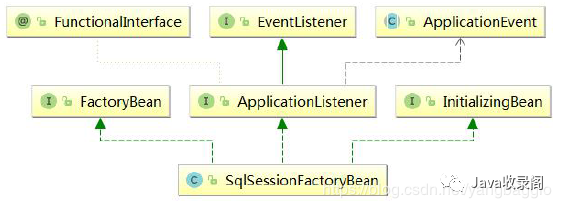
它实现了InitializingBean接口,所以要实现afterPropertiesSet()方法,这个方法会在Bean的属性值设置完成时被调用。另外,它实现了FactoryBean接口,所以在初始化的时候,实际上是调用getObject()方法,它里面调用的也是afterPropertiesSet()方法
@Overridepublic SqlSessionFactory getObject() throws Exception {if (this.sqlSessionFactory == null) {afterPropertiesSet();}return this.sqlSessionFactory;}
在afterPropertiesSet方法中,调用了buildSqlSessionFactory()方法。
@Overridepublic void afterPropertiesSet() throws Exception {notNull(dataSource, "Property 'dataSource' is required");notNull(sqlSessionFactoryBuilder, "Property 'sqlSessionFactoryBuilder' is required");state((configuration == null && configLocation == null) || !(configuration != null && configLocation != null),"Property 'configuration' and 'configLocation' can not specified with together");this.sqlSessionFactory = buildSqlSessionFactory();}
在buildSqlSessionFactory()方法中,第一步我们定义了一个Configuration,叫做targetConfiguration;
426 行,判断Configuration 对象是否已经存在,也就是是否已经解析过。如果已经有对象,就覆盖一下属性。
433 行,如果Configuration 不存在,但是配置了configLocation 属性,就根据mybatis-config.xml 的文件路径,构建一个xmlConfigBuilder 对象。
436 行,否则,Configuration 对象不存在,configLocation 路径也没有,只能使用默认属性去构建去给configurationProperties 赋值。
后面就是基于当前factory 对象里面已有的属性,对targetConfiguration 对象里面属性的赋值。
在第498 行,如果xmlConfigBuilder 不为空,也就是上面的第二种情况,调用了xmlConfigBuilder.parse()去解析配置文件,最终会返回解析好的Configuration 对象,这里的parse()方法是MyBatis里面的方法,和我们单独使用MyBatis时候的解析全局配置文件的过程是一样的。
在第507 行, 如果没有明确指定事务工厂, 默认使用SpringManagedTransactionFactory 。它创建SpringManagedTransaction 也有getConnection()和close()方法。
在520 行,调用xmlMapperBuilder.parse(),这个步骤我们之前了解过了,它的作用是把接口和对应的MapperProxyFactory 注册到MapperRegistry 中。
最后调用sqlSessionFactoryBuilder.build() 返回了一个DefaultSqlSessionFactory。OK,在这里我们完成了编程式的案例里面的第一步,根据配置文件获得一个工厂类,它是单例的,会在后面用来创建SqlSession。
protected SqlSessionFactory buildSqlSessionFactory() throws IOException {final Configuration targetConfiguration;XMLConfigBuilder xmlConfigBuilder = null;if (this.configuration != null) {targetConfiguration = this.configuration;if (targetConfiguration.getVariables() == null) {targetConfiguration.setVariables(this.configurationProperties);} else if (this.configurationProperties != null) {targetConfiguration.getVariables().putAll(this.configurationProperties);}} else if (this.configLocation != null) {xmlConfigBuilder = new XMLConfigBuilder(this.configLocation.getInputStream(), null, this.configurationProperties);targetConfiguration = xmlConfigBuilder.getConfiguration();} else {LOGGER.debug(() -> "Property 'configuration' or 'configLocation' not specified, using default MyBatis Configuration");targetConfiguration = new Configuration();Optional.ofNullable(this.configurationProperties).ifPresent(targetConfiguration::setVariables);}Optional.ofNullable(this.objectFactory).ifPresent(targetConfiguration::setObjectFactory);Optional.ofNullable(this.objectWrapperFactory).ifPresent(targetConfiguration::setObjectWrapperFactory);Optional.ofNullable(this.vfs).ifPresent(targetConfiguration::setVfsImpl);if (hasLength(this.typeAliasesPackage)) {String[] typeAliasPackageArray = tokenizeToStringArray(this.typeAliasesPackage,ConfigurableApplicationContext.CONFIG_LOCATION_DELIMITERS);Stream.of(typeAliasPackageArray).forEach(packageToScan -> {targetConfiguration.getTypeAliasRegistry().registerAliases(packageToScan,typeAliasesSuperType == null ? Object.class : typeAliasesSuperType);LOGGER.debug(() -> "Scanned package: '" + packageToScan + "' for aliases");});}if (!isEmpty(this.typeAliases)) {Stream.of(this.typeAliases).forEach(typeAlias -> {targetConfiguration.getTypeAliasRegistry().registerAlias(typeAlias);LOGGER.debug(() -> "Registered type alias: '" + typeAlias + "'");});}if (!isEmpty(this.plugins)) {Stream.of(this.plugins).forEach(plugin -> {targetConfiguration.addInterceptor(plugin);LOGGER.debug(() -> "Registered plugin: '" + plugin + "'");});}if (hasLength(this.typeHandlersPackage)) {String[] typeHandlersPackageArray = tokenizeToStringArray(this.typeHandlersPackage,ConfigurableApplicationContext.CONFIG_LOCATION_DELIMITERS);Stream.of(typeHandlersPackageArray).forEach(packageToScan -> {targetConfiguration.getTypeHandlerRegistry().register(packageToScan);LOGGER.debug(() -> "Scanned package: '" + packageToScan + "' for type handlers");});}if (!isEmpty(this.typeHandlers)) {Stream.of(this.typeHandlers).forEach(typeHandler -> {targetConfiguration.getTypeHandlerRegistry().register(typeHandler);LOGGER.debug(() -> "Registered type handler: '" + typeHandler + "'");});}if (this.databaseIdProvider != null) {//fix #64 set databaseId before parse mapper xmlstry {targetConfiguration.setDatabaseId(this.databaseIdProvider.getDatabaseId(this.dataSource));} catch (SQLException e) {throw new NestedIOException("Failed getting a databaseId", e);}}Optional.ofNullable(this.cache).ifPresent(targetConfiguration::addCache);if (xmlConfigBuilder != null) {try {xmlConfigBuilder.parse();LOGGER.debug(() -> "Parsed configuration file: '" + this.configLocation + "'");} catch (Exception ex) {throw new NestedIOException("Failed to parse config resource: " + this.configLocation, ex);} finally {ErrorContext.instance().reset();}}targetConfiguration.setEnvironment(new Environment(this.environment,this.transactionFactory == null ? new SpringManagedTransactionFactory() : this.transactionFactory,this.dataSource));if (!isEmpty(this.mapperLocations)) {for (Resource mapperLocation : this.mapperLocations) {if (mapperLocation == null) {continue;}try {XMLMapperBuilder xmlMapperBuilder = new XMLMapperBuilder(mapperLocation.getInputStream(),targetConfiguration, mapperLocation.toString(), targetConfiguration.getSqlFragments());xmlMapperBuilder.parse();} catch (Exception e) {throw new NestedIOException("Failed to parse mapping resource: '" + mapperLocation + "'", e);} finally {ErrorContext.instance().reset();}LOGGER.debug(() -> "Parsed mapper file: '" + mapperLocation + "'");}} else {LOGGER.debug(() -> "Property 'mapperLocations' was not specified or no matching resources found");}return this.sqlSessionFactoryBuilder.build(targetConfiguration);}
创建SqlSession
Q1: 可以直接使用DefaultSqlSession吗?
通过上面一步,我们现在已经有一个DefaultSqlSessionFactory了,按照编程式的开发过程,接下来我们要创建一个SqlSession的实现类,但是在Spring中,我们不是直接使用DefaultSqlSession的,而是对它进行了一个封装,这个SqlSession的实现类就是SqlSessionTemplate。这个跟Spring封装其他的组件也是一样的,比如JdbcTemplate,RedisTemplate等等,也是Spring跟MyBatis整合最关键的一个类。
为什么不用DefaultSqlSession?因为它不是线程安全的,而SqlSessionTemplate是线程安全的。
/*** The default implementation for {@link SqlSession}.* Note that this class is not Thread-Safe.** @author Clinton Begin*/public class DefaultSqlSession implements SqlSession {
/*** Thread safe, Spring managed, {@code SqlSession} that works with Spring* transaction management to ensure that that the actual SqlSession used is the* one associated with the current Spring transaction. In addition, it manages* the session life-cycle, including closing, committing or rolling back the* session as necessary based on the Spring transaction configuration.* <p>* The template needs a SqlSessionFactory to create SqlSessions, passed as a* constructor argument. It also can be constructed indicating the executor type* to be used, if not, the default executor type, defined in the session factory* will be used.* <p>* This template converts MyBatis PersistenceExceptions into unchecked* DataAccessExceptions, using, by default, a {@code MyBatisExceptionTranslator}.* <p>* Because SqlSessionTemplate is thread safe, a single instance can be shared* by all DAOs; there should also be a small memory savings by doing this. This* pattern can be used in Spring configuration files as follows:** <pre class="code">* {@code* <bean id="sqlSessionTemplate" class="org.mybatis.spring.SqlSessionTemplate">* <constructor-arg ref="sqlSessionFactory" >* </bean>* }* </pre>** @author Putthiphong Boonphong* @author Hunter Presnall* @author Eduardo Macarron** @see SqlSessionFactory* @see MyBatisExceptionTranslator*/public class SqlSessionTemplate implements SqlSession, DisposableBean {
在编程式的开发中,SqlSession我们会在每次请求的时候创建一个,但是Spring里面只有一个SqlSessionTemplate(默认是单例的),多个线程同时调用的时候如何保证线程安全?
SqlSessionTemplate里面有DefaultSqlSession中的所有方法,selectOne()、selectList()、insert()、update()、delete(),不过它都是通过一个代理对象实现的。这个代理对象在SqlSessionTemplate的构造方法中通过一个代理类创建:
public SqlSessionTemplate(SqlSessionFactory sqlSessionFactory, ExecutorType executorType,PersistenceExceptionTranslator exceptionTranslator) {notNull(sqlSessionFactory, "Property 'sqlSessionFactory' is required");notNull(executorType, "Property 'executorType' is required");this.sqlSessionFactory = sqlSessionFactory;this.executorType = executorType;this.exceptionTranslator = exceptionTranslator;this.sqlSessionProxy = (SqlSession) newProxyInstance(SqlSessionFactory.class.getClassLoader(),new Class[] { SqlSession.class },new SqlSessionInterceptor());}
SqlSessionTemplate中的所有方法都会先走到内部代理类SqlSessionInterceptor的invoke方法:
private class SqlSessionInterceptor implements InvocationHandler {@Overridepublic Object invoke(Object proxy, Method method, Object[] args) throws Throwable {SqlSession sqlSession = getSqlSession(SqlSessionTemplate.this.sqlSessionFactory,SqlSessionTemplate.this.executorType,SqlSessionTemplate.this.exceptionTranslator);try {Object result = method.invoke(sqlSession, args);if (!isSqlSessionTransactional(sqlSession, SqlSessionTemplate.this.sqlSessionFactory)) {// force commit even on non-dirty sessions because some databases require// a commit/rollback before calling close()sqlSession.commit(true);}return result;} catch (Throwable t) {Throwable unwrapped = unwrapThrowable(t);if (SqlSessionTemplate.this.exceptionTranslator != null && unwrapped instanceof PersistenceException) {// release the connection to avoid a deadlock if the translator is no loaded. See issue #22closeSqlSession(sqlSession, SqlSessionTemplate.this.sqlSessionFactory);sqlSession = null;Throwable translated = SqlSessionTemplate.this.exceptionTranslator.translateExceptionIfPossible((PersistenceException) unwrapped);if (translated != null) {unwrapped = translated;}}throw unwrapped;} finally {if (sqlSession != null) {closeSqlSession(sqlSession, SqlSessionTemplate.this.sqlSessionFactory);}}}}
首先会使用工厂类、执行器类型、异常解析器创建一个sqlSession。
public static SqlSession getSqlSession(SqlSessionFactory sessionFactory, ExecutorType executorType, PersistenceExceptionTranslator exceptionTranslator) {notNull(sessionFactory, NO_SQL_SESSION_FACTORY_SPECIFIED);notNull(executorType, NO_EXECUTOR_TYPE_SPECIFIED);SqlSessionHolder holder = (SqlSessionHolder) TransactionSynchronizationManager.getResource(sessionFactory);SqlSession session = sessionHolder(executorType, holder);if (session != null) {return session;}LOGGER.debug(() -> "Creating a new SqlSession");session = sessionFactory.openSession(executorType);registerSessionHolder(sessionFactory, executorType, exceptionTranslator, session);return session;}
在getSqlSession方法中,会先去从SqlSessionHolder中获取SqlSession,如果获取到就直接返回,如果没有就新创建一个,并把这个新创建的SqlSession注册到SqlSessionHolder中。SqlSessionHolder是通过TransactionSynchronizationManager.getResource()方法获取到的,实际上是从ThreadLocal中获取,所以SqlSessionTemplate是线程安全的。
private static final ThreadLocal<Map<Object, Object>> resources =new NamedThreadLocal<>("Transactional resources");@Nullablepublic static Object getResource(Object key) {Object actualKey = TransactionSynchronizationUtils.unwrapResourceIfNecessary(key);Object value = doGetResource(actualKey);if (value != null && logger.isTraceEnabled()) {logger.trace("Retrieved value [" + value + "] for key [" + actualKey + "] bound to thread [" +Thread.currentThread().getName() + "]");}return value;}/*** Actually check the value of the resource that is bound for the given key.*/@Nullableprivate static Object doGetResource(Object actualKey) {Map<Object, Object> map = resources.get();if (map == null) {return null;}Object value = map.get(actualKey);// Transparently remove ResourceHolder that was marked as void...if (value instanceof ResourceHolder && ((ResourceHolder) value).isVoid()) {map.remove(actualKey);// Remove entire ThreadLocal if empty...if (map.isEmpty()) {resources.remove();}value = null;}return value;}
Q2: 怎么拿到一个SqlSessionTemplate?
我们知道在Spring里面会用SqlSessionTemplate替换DefaultSqlSession,那么接下来看一下怎么在DAO层拿到一个SqlSessionTemplate。
用过Hibernate的同学应该记得,如果不用注入式的方式,我们在DAO层注入一个HibernateTemplate的一种方式是让我们的DAO层的实现类去集成HibernateDaoSupport。MyBatis也是一样,它提供一个SqlSessionDaoSupport, 里面持有SqlSessionTemplate对象,并且提供了一个getSqlSession()方法,让我们获得一个SqlSessionTemplate:
public abstract class SqlSessionDaoSupport extends DaoSupport {private SqlSessionTemplate sqlSessionTemplate;/*** Users should use this method to get a SqlSession to call its statement methods* This is SqlSession is managed by spring. Users should not commit/rollback/close it* because it will be automatically done.** @return Spring managed thread safe SqlSession*/public SqlSession getSqlSession() {return this.sqlSessionTemplate;}//省略部分代码
也就是说我们让DAO 层的实现类继承SqlSessionDaoSupport ,就可以获得SqlSessionTemplate,然后在里面封装SqlSessionTemplate 的方法。
public class BaseDao extends SqlSessionDaoSupport {//使用sqlSessionFactory@Autowiredprivate SqlSessionFactory sqlSessionFactory;@Autowiredpublic void setSqlSessionFactory(SqlSessionFactory sqlSessionFactory) {super.setSqlSessionFactory(sqlSessionFactory);}/*** @param statement* @return*/public Object selectOne(String statement) {return getSqlSession().selectOne(statement);}}
Q3: 有没有更好的方法可以拿到SqlSessionTemplate? Spring中我们的DAO层没有集成SqlSessionDaoSupport,那Spring中是怎么拿到SqlSessionTemplate的?
在真实项目中,我们只是在DAO层使用@Autowired注入Mapper对象,然后直接调用Mapper对象的方法去操作数据库,那Mapper对象的实例一定是在Spring启动的时候被Spring扫描并且注册了。那这个Mapper是什么时候扫描的?注册的时候又是注册成什么对象?
回顾一下,我们在applicationContext.xml中配置了一个MapperScannerConfigurer,MapperScannerConfigurer 实现了BeanDefinitionRegistryPostProcessor 接口,BeanDefinitionRegistryPostProcessor 是BeanFactoryPostProcessor 的子类,可以通过编码的方式修改、新增或者删除某些Bean 的定义。

我们只需要重写postProcessBeanDefinitionRegistry()方法,在这里面操作Bean就可以了。在这个方法中,scanner.scan() 方法是ClassPathBeanDefinitionScanner 中的, 而它的子类ClassPathMapperScanner 覆盖了doScan() 方法, 在doScan() 中调用了processBeanDefinitions,在processBeanDefinitions方法中,在注册beanDefinitions 的时候,BeanClass被改为MapperFactoryBean。
为什么要把beanClass改成MapperFactoryBean呢?因为MapperFactoryBean继承了SqlSessionDaoSupport,可以获取到SqlSessionTemplate
@Overridepublic void postProcessBeanDefinitionRegistry(BeanDefinitionRegistry registry) {if (this.processPropertyPlaceHolders) {processPropertyPlaceHolders();}ClassPathMapperScanner scanner = new ClassPathMapperScanner(registry);scanner.setAddToConfig(this.addToConfig);scanner.setAnnotationClass(this.annotationClass);scanner.setMarkerInterface(this.markerInterface);scanner.setSqlSessionFactory(this.sqlSessionFactory);scanner.setSqlSessionTemplate(this.sqlSessionTemplate);scanner.setSqlSessionFactoryBeanName(this.sqlSessionFactoryBeanName);scanner.setSqlSessionTemplateBeanName(this.sqlSessionTemplateBeanName);scanner.setResourceLoader(this.applicationContext);scanner.setBeanNameGenerator(this.nameGenerator);scanner.registerFilters();scanner.scan(StringUtils.tokenizeToStringArray(this.basePackage, ConfigurableApplicationContext.CONFIG_LOCATION_DELIMITERS));}
@Overridepublic Set<BeanDefinitionHolder> doScan(String... basePackages) {Set<BeanDefinitionHolder> beanDefinitions = super.doScan(basePackages);if (beanDefinitions.isEmpty()) {LOGGER.warn(() -> "No MyBatis mapper was found in '" + Arrays.toString(basePackages) + "' package. Please check your configuration.");} else {processBeanDefinitions(beanDefinitions);}return beanDefinitions;}private void processBeanDefinitions(Set<BeanDefinitionHolder> beanDefinitions) {GenericBeanDefinition definition;for (BeanDefinitionHolder holder : beanDefinitions) {definition = (GenericBeanDefinition) holder.getBeanDefinition();String beanClassName = definition.getBeanClassName();LOGGER.debug(() -> "Creating MapperFactoryBean with name '" + holder.getBeanName()+ "' and '" + beanClassName + "' mapperInterface");// the mapper interface is the original class of the bean// but, the actual class of the bean is MapperFactoryBeandefinition.getConstructorArgumentValues().addGenericArgumentValue(beanClassName); // issue #59definition.setBeanClass(this.mapperFactoryBean.getClass());definition.getPropertyValues().add("addToConfig", this.addToConfig);boolean explicitFactoryUsed = false;if (StringUtils.hasText(this.sqlSessionFactoryBeanName)) {definition.getPropertyValues().add("sqlSessionFactory", new RuntimeBeanReference(this.sqlSessionFactoryBeanName));explicitFactoryUsed = true;} else if (this.sqlSessionFactory != null) {definition.getPropertyValues().add("sqlSessionFactory", this.sqlSessionFactory);explicitFactoryUsed = true;}if (StringUtils.hasText(this.sqlSessionTemplateBeanName)) {if (explicitFactoryUsed) {LOGGER.warn(() -> "Cannot use both: sqlSessionTemplate and sqlSessionFactory together. sqlSessionFactory is ignored.");}definition.getPropertyValues().add("sqlSessionTemplate", new RuntimeBeanReference(this.sqlSessionTemplateBeanName));explicitFactoryUsed = true;} else if (this.sqlSessionTemplate != null) {if (explicitFactoryUsed) {LOGGER.warn(() -> "Cannot use both: sqlSessionTemplate and sqlSessionFactory together. sqlSessionFactory is ignored.");}definition.getPropertyValues().add("sqlSessionTemplate", this.sqlSessionTemplate);explicitFactoryUsed = true;}if (!explicitFactoryUsed) {LOGGER.debug(() -> "Enabling autowire by type for MapperFactoryBean with name '" + holder.getBeanName() + "'.");definition.setAutowireMode(AbstractBeanDefinition.AUTOWIRE_BY_TYPE);}}}
public class MapperFactoryBean<T> extends SqlSessionDaoSupport implements FactoryBean<T> {private Class<T> mapperInterface;private boolean addToConfig = true;public MapperFactoryBean() {//intentionally empty}//省略部分代码}
我们使用Mapper 的时候,只需要在加了Service 注解的类里面使用@Autowired注入Mapper 接口就好了。
@Servicepublic class EmployeeService {@AutowiredEmployeeMapper employeeMapper;public List<Employee> getAll() {return employeeMapper.selectByMap(null);}public void saveEmpsInfo(Employee employee) {employeeMapper.insertSelective(employee);}}
Spring在启动的时候需要去实例化EmployeeService,EmployeeService又依赖了EmployeeMapper接口,Spring会根据Mapper的名字从BeanFactory中获取它的BeanDefinition,再从BeanDefinition中获取BeanClass,上面已经提到,Mapper的BeanClass已经被改成MapperFactoryBean,所以EmployeeMapper的beanClass是MapperFactoryBean。
接下来是创建MapperFactoryBean,因为MapperFactoryBean实现了FactoryBean接口,创建的时候会调用getObject()方法:
@Overridepublic T getObject() throws Exception {return getSqlSession().getMapper(this.mapperInterface);}
因为MapperFactoryBean继承了SqlSessionDaoSupport,所以getSqlSession()返回的就是SqlSessionTemplate。
@Overridepublic <T> T getMapper(Class<T> type) {return getConfiguration().getMapper(type, this);}
SqlSessionTemplate的getMapper()方法又是调用Configuration的getMapper()方法,跟编程式使用里面的getMapper 一样, 通过工厂类MapperProxyFactory 获得一个MapperProxy 代理对象。
也就是说,我们注入到Service 层的接口,实际上还是一个MapperProxy 代理对象。所以最后调用Mapper 接口的方法,也是执行MapperProxy 的invoke()方法,后面的流程就跟编程式的工程里面一模一样了。