



dubbo是一个远程RPC调用框架,我们在实际工作时可能会有多台被调用的服务器,那么我们怎么保证当一台服务器挂掉时,整个服务仍是可以运行的,这就需要集群容错机制来进行预防,现在就让我们来学习一下dubbo的几种集群机制。
dubbo一共有七种集群容错策略:
failover策略
broadcast策略
forking策略
failback策略
failsafe策略
failfast策略
available策略
现在我们来看下每个类之间的关系图:
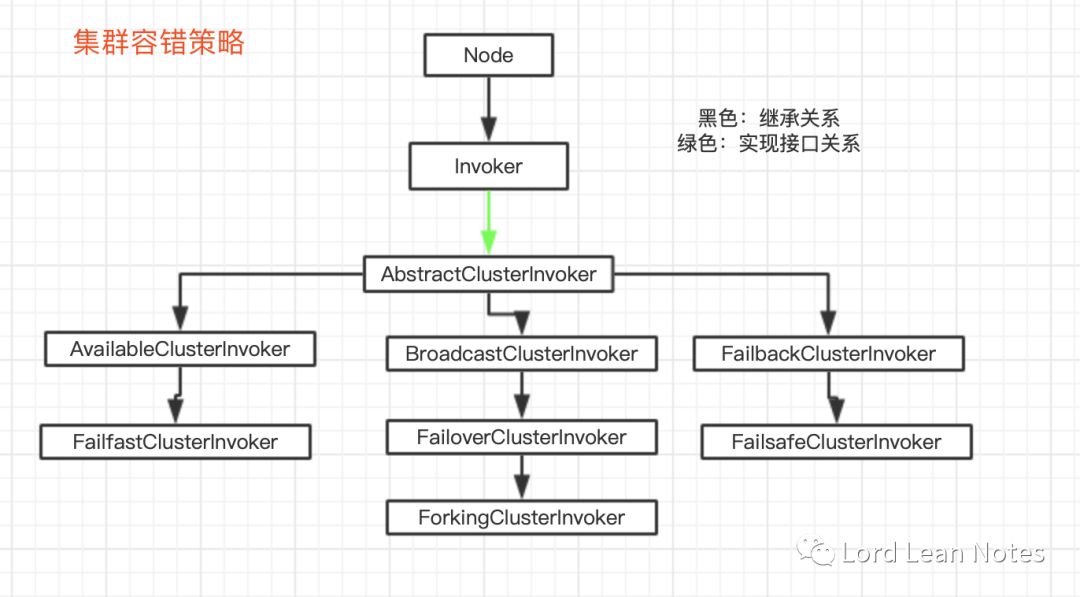
failover策略
public Result doInvoke(Invocation invocation, List<Invoker<T>> invokers, LoadBalance loadbalance) throws RpcException {List<Invoker<T>> copyinvokers = invokers;/* 校验invokers列表是否为null,是的话则抛出异常 */this.checkInvokers(invokers, invocation);/* 获取重试次数,+1是因为第一次调用不算 */int len = this.getUrl().getMethodParameter(invocation.getMethodName(), "retries", 2) + 1;if (len <= 0) {len = 1;}RpcException le = null;List<Invoker<T>> invoked = new ArrayList(invokers.size());Set<String> providers = new HashSet(len);for(int i = 0; i < len; ++i) {/* 重试时,校验invoker列表会否发生变化,如果发生变化,则抛出异常 */if (i > 0) {this.checkWheatherDestoried();copyinvokers = this.list(invocation);this.checkInvokers(copyinvokers, invocation);}/* 通过负载均衡获取下一个服务提供者 */Invoker<T> invoker = this.select(loadbalance, invocation, copyinvokers, invoked);invoked.add(invoker);RpcContext.getContext().setInvokers(invoked);try {Result result = invoker.invoke(invocation);if (le != null && logger.isWarnEnabled()) {logger.warn("Although retry the method " + invocation.getMethodName() + " in the service " + this.getInterface().getName() + " was successful by the provider " + invoker.getUrl().getAddress() + ", but there have been failed providers " + providers + " (" + providers.size() + "/" + copyinvokers.size() + ") from the registry " + this.directory.getUrl().getAddress() + " on the consumer " + NetUtils.getLocalHost() + " using the dubbo version " + Version.getVersion() + ". Last error is: " + le.getMessage(), le);}Result var12 = result;return var12;} catch (RpcException var18) {if (var18.isBiz()) {/* 如果是业务异常,直接抛出异常 */throw var18;}le = var18;} catch (Throwable var19) {le = new RpcException(var19.getMessage(), var19);} finally {providers.add(invoker.getUrl().getAddress());/* 记录调用失败信息 */}}throw new RpcException(le != null ? le.getCode() : 0, "Failed to invoke the method " +invocation.getMethodName() + " in the service " + this.getInterface().getName() + ". Tried " + len +" times of the providers " + providers + " (" + providers.size() + "/" + copyinvokers.size() +") from the registry " + this.directory.getUrl().getAddress() + " on the consumer " +NetUtils.getLocalHost() + " using the dubbo version " + Version.getVersion() + ". Last error is: " +(le != null ? le.getMessage() : ""), (Throwable)(le != null && le.getCause() != null ? le.getCause() : le));}
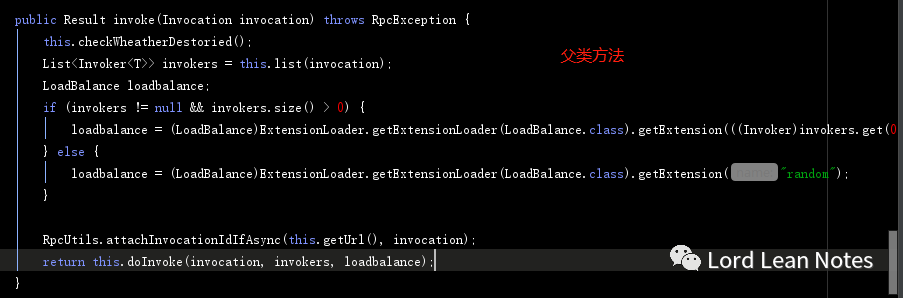
这种策略主要用在通知所有提供者更新缓存或日志等本地资源信息,现在我们来看下代码:
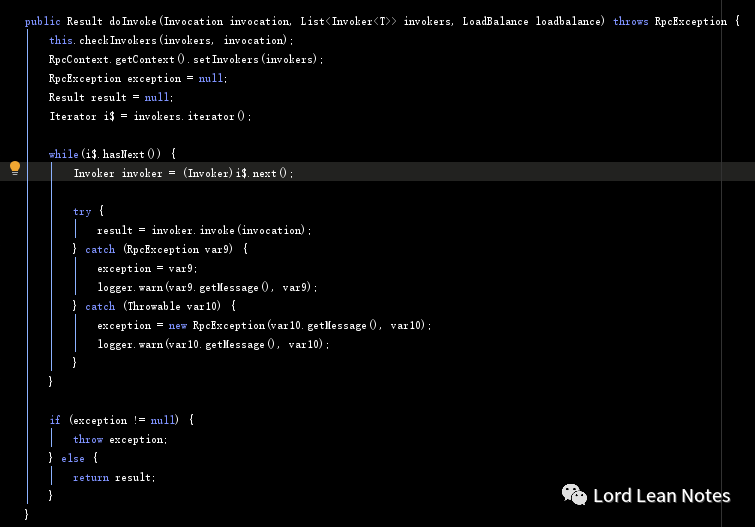
通过上图我们可以看到在校验完invokers列表后,会循环把所有的invoker调用一遍,覆盖掉以前的结果。如果其中有一个失败,则抛出异常。
Failback策略是失败之后会自动回复,并在等待一段时间之后利用调度器进行重试。现在我们来看下代码:
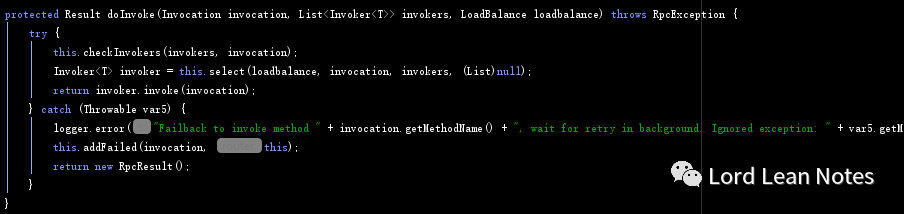
我们可以看到仍然是校验完invokers列表后,直接调用select通过负载的方法获取invoker对象,如果invoker失败,则调用addFailed方法,加入调度器。现在来看下此方法的代码:
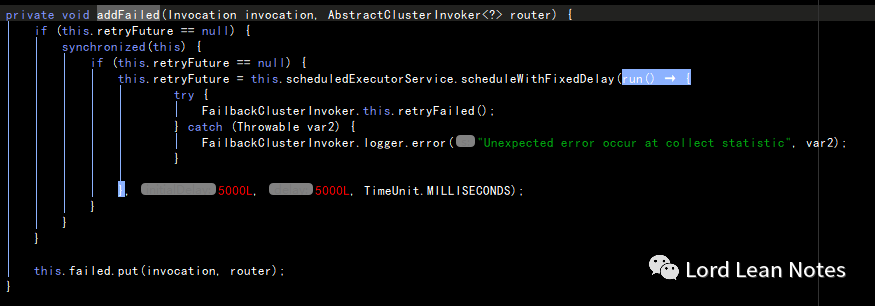
我们可以看到通过双检锁来保证创建的线程池的单例化,此线程池每5秒执行一次restryFailed方法,把实例放入map中。接下来看下restryFailed方法,这才是调用的核心:
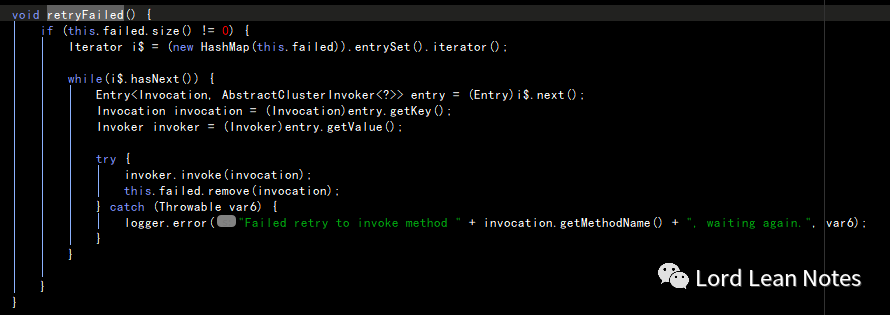
此方法主要是从failied中获取到调用环境栈,并循环执行调用,如果调用成功则移除,失败则打印日志。
Failsafe策略如果在调用过程中出现异常,记录异常信息,不对异常做处理。通常可用于写入审计日志操作。下面我们来看下代码:
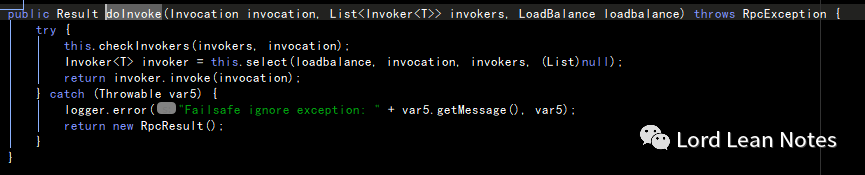
看代码逻辑是比较简单的,通过负载策略选出一个invoker对象进行调用,如果出现异常记录异常,然后空值。
Failfast策略是只发生一次调用,如若捕获到异常,则直接抛出异常。可用于非幂等的操作,比如新增记录。现在来看下代码:
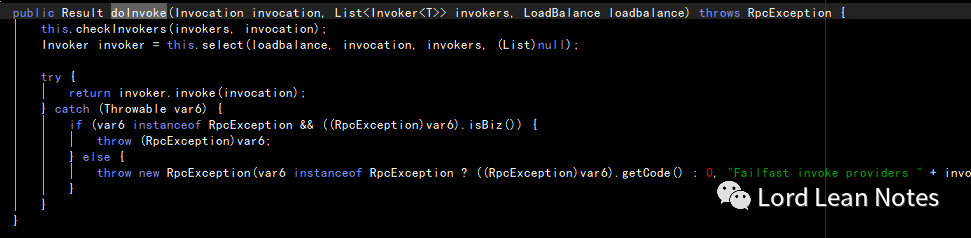
看代码逻辑是比较简单的,通过负载策略选出一个invoker对象进行调用,如果出现异常则直接抛出异常,终止操作。
我们可以看到available策略是简单的调用第一个到达的服务。当都不可达时,则抛出异常。
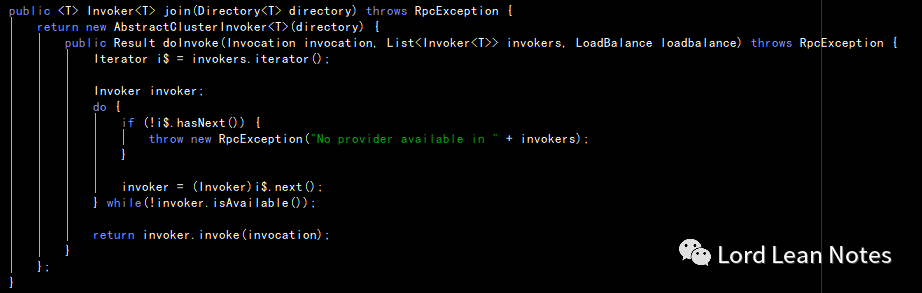
现在我们来回想一下创建代理时的过程,当invokers其中有一个url的协议头等于registry时,就把容错策略设为available。所以再结合上图我们可以看到需要获取到一个可用的服务,如若为获取到就抛出异常。获取到就进行调用。
这种策略是并行调用多个服务器,只要一个成功就返回,主要应用在实时性较高的场景。但是如果并行个数较多,会消耗服务器资源。所以一般都是设置为fork=2。现在来看下代码:
public Result doInvoke(final Invocation invocation, List<Invoker<T>> invokers, LoadBalance loadbalance) throws RpcException {this.checkInvokers(invokers, invocation);/* 获取并行获取服务器个数,默认是2 */int forks = this.getUrl().getParameter("forks", 2);/* 超时时间,默认是1s */int timeout = this.getUrl().getParameter("timeout", 1000);final Object selected;if (forks > 0 && forks < invokers.size()) {selected = new ArrayList();/* 通过负载均衡策略选出要并行调用的invoker,并放入selected列表 */for(int i = 0; i < forks; ++i) {/*在invoker列表(排除selected)后,如果没有选够,则存在重复循环问题.见select实现.*/Invoker<T> invoker = this.select(loadbalance, invocation, invokers, (List)selected);if (!((List)selected).contains(invoker)) {/* 防止重复添加 */((List)selected).add(invoker);}}} else {selected = invokers;}RpcContext.getContext().setInvokers((List)selected);final AtomicInteger count = new AtomicInteger();final BlockingQueue<Object> ref = new LinkedBlockingQueue();Iterator i$ = ((List)selected).iterator();/* 遍历selected列表,通过线程池并发调用 */while(i$.hasNext()) {final Invoker<T> invoker = (Invoker)i$.next();this.executor.execute(new Runnable() {public void run() {try {Result result = invoker.invoke(invocation);ref.offer(result);} catch (Throwable var3) {int value = count.incrementAndGet();/* 所有的都异常了,才把异常加入到对了尾部这就保证了,只要有一个成功,ref.poll()方法从队列头部就能取得到结果返回。 */if (value >= ((List)selected).size()) {ref.offer(var3);}}}});}try {/* 从队列头部获取结果返回,如若是异常,就抛出 */Object ret = ref.poll((long)timeout, TimeUnit.MILLISECONDS);if (ret instanceof Throwable) {Throwable e = (Throwable)ret;throw new RpcException(e instanceof RpcException ? ((RpcException)e).getCode() : 0, "Failed to forking invoke provider " + selected + ", but no luck to perform the invocation. Last error is: " + e.getMessage(), e.getCause() != null ? e.getCause() : e);} else {return (Result)ret;}} catch (InterruptedException var11) {throw new RpcException("Failed to forking invoke provider " + selected + ", but no luck to perform the invocation. Last error is: " + var11.getMessage(), var11);}}
通过对Forking策略代码的学习,我们可以看到在获取到并行服务器个数后,通过线程池和阻塞队列来保证了并发安全性。在处理完成之后,异步的获取返回结果。如若是异常,则直接抛出。
protected Invoker<T> select(LoadBalance loadbalance, Invocation invocation, List<Invoker<T>> invokers, List<Invoker<T>> selected) throws RpcException {if (invokers != null && invokers.size() != 0) {/* 如果invocation为null的话,就返回空否则返回invocation的方法名 */String methodName = invocation == null ? "" : invocation.getMethodName();/* 是否启用sticky粘滞连接,让客户端总是连接一个提供者 */boolean sticky = ((Invoker)invokers.get(0)).getUrl().getMethodParameter(methodName, "sticky", false);/* 如果粘滞连接的可提供者列表null并且invokers不包含这个可提供者,则设为Null */if (this.stickyInvoker != null && !invokers.contains(this.stickyInvoker)) {this.stickyInvoker = null;}/* 如果允许粘滞连接,并且stickyInvoker不为Null,并且没有在已选列表中。并校验这个stickyInvoker的可用性。如果为真,则直接返回stickyInvoker由于stickyInvoker不能包含在selected列表中,所以forking和failover策略没有办法采用粘滞连接 */if (sticky && this.stickyInvoker != null && (selected == null || !selected.contains(this.stickyInvoker))&& this.availablecheck && this.stickyInvoker.isAvailable()) {return this.stickyInvoker;} else {/* 否则利用负载均衡策略选择一个invoker,如果需要粘滞连接,则把invoker赋值给stickyInvoker,并返回 */Invoker<T> invoker = this.doselect(loadbalance, invocation, invokers, selected);if (sticky) {this.stickyInvoker = invoker;}return invoker;}} else {return null;}}
通过select方法,可以总结出如果允许粘滞连接,那么则粘滞连接的提供者不允许出现在已选列表中并是可用的。如果达到要求,则返回stickyInvoker,否则则通过doSelect选择出一个invoker。接下来看下doSelect方法:
private Invoker<T> doselect(LoadBalance loadbalance, Invocation invocation, List<Invoker<T>> invokers, List<Invoker<T>> selected) throws RpcException {if (invokers != null && invokers.size() != 0) {if (invokers.size() == 1) {/* 如果invoker列表长度为1,则直接获取第一个返回 */return (Invoker)invokers.get(0);/* 如果invoker列表长度为2并且selected列表长度>0,则判断selected列表的第一个和invoekr列表的第一个是否相等,为真返回invoker第二个,否则返回第一个 */} else if (invokers.size() == 2 && selected != null && selected.size() > 0) {return selected.get(0) == invokers.get(0) ? (Invoker)invokers.get(1) : (Invoker)invokers.get(0);} else {/* 大于两个的话利用负载均衡选择一个 */Invoker<T> invoker = loadbalance.select(invokers, this.getUrl(), invocation);/* invoker包含在已选列表中或者invoker不可用,则重新选择 */if (selected != null && selected.contains(invoker) || !invoker.isAvailable()&& this.getUrl() != null && this.availablecheck) {try {/* 重新选择 */Invoker<T> rinvoker = this.reselect(loadbalance, invocation, invokers, selected, this.availablecheck);if (rinvoker != null) {invoker = rinvoker;} else {/* 如果重新选择失败,看下一次选的位置,如果不是最后,选+1位置 */int index = invokers.indexOf(invoker);try {/* 避免碰撞 */invoker = index < invokers.size() - 1 ? (Invoker)invokers.get(index + 1) : invoker;} catch (Exception var9) {logger.warn(var9.getMessage() + " may because invokers list dynamic change, ignore.", var9);}}} catch (Throwable var10) {logger.error("clustor relselect fail reason is :" + var10.getMessage() + " if can not slove ,you can set cluster.availablecheck=false in url", var10);}}return invoker;}} else {return null;}}
我们可以看到在doSelect方法在获取invoker对象时,主要是通过invokers列表的长度来进行选择的。如果长度为1,则直接获取第一个。长度等于两个,则轮询。如果长度>2,则利用负载均衡选择一个。当选择出来的invoker在已选列表中,并且不可用时,重新选择。否则直接返回invoker对象。重新选择失败的话获取到下一次选择的位置,如果不是最后一位,则获取+1位置的invoker,否则直接获取invoker。现在我们来看下重新选择reselect方法,这个方法的作用就是尽量不要从已选列表中选择invoker。
这里我们对dubbo框架中的其中集群容错策略进行了学习。dubbo默认的容错策略是失败重试。可以看到dubbo的每种策略所应用的场景是不尽相同的。
