



数据库短连接风暴触发oracle bug 32164034
环境背景:
linux 7.5 oracle 19.8 rac
问题现象:
业务反馈,凌晨业务数据写入慢
问题分析:
1.看看凌晨期间,有什么特别的事务
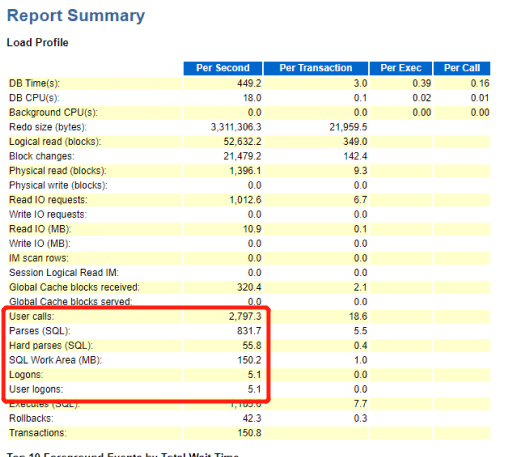
AWR报告显示:
- 期间每秒连接数较高
- 硬解析很高
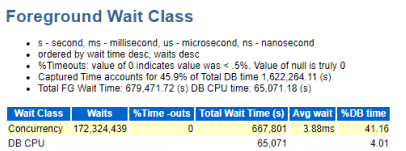
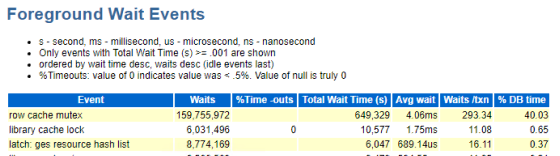
- 存在row cache mutex等待事件
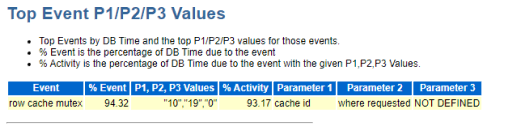
- row cache mutex事件p1=10 p2=19



2.从数据库查看row cache mutex信息


3.mos查知识库
High “row Cache Mutex” Waits (Doc ID 2735198.1)
CAUSE
Dictionary Cache Stats shows high gets on a cache such as dc_users
Cache Get Requests Pct Miss Scan Reqs Pct Miss Mod Reqs Final Usage
**dc_users ** 157,598,547 0.00 0 0 252 <<<<<<<<<<<<<<<<<<<<<<<<
dc_users 与库中查看v$rowcache 相对应。
Bug 30623138 - High row cache mutex wait on looking up dc_users (Doc ID 30623138.8)
Description
High waits on “row cache mutex” when looking up user or role information in user row cache (dc_users).
REDISCOVERY INFORMATION:
If there are lots of requests for mutex on user$ row cache, this bug could have been hit.
当rowcache为dc_users时,是有大量请求表user$。
SOLUTION
Recommend to apply patch 31933451.
It contains enhancement fix to reduce waits on ROW CACHE MUTEX.
Bug 32164034 - Database Hang Updating USER$ When LSLT (LAST SUCCESSFUL LOGIN TIME) Is Enabled (Doc ID 32164034.8)
Description
Database hung and application users not able to login to database.
Below query is blocking so many sessions:
update user$ set spare6=DECODE(to_char(:2, ‘YYYY-MM-DD’), ‘0000-00-00’, to_date(NULL), :2) where user#=:1
To Avoid this issue we need to apply the patch 32164034. With this patch we can disable the LSLT feature at PDB level
(making the setting effective to individual PDBs).
Note: This fix has been superseded by the fix in bug 33121934. For interim patches please use that fix instead of this one to address both issue
Bug 33121934 - Library cache lock / load lock / mutex x during connection storm (Doc ID 33121934.8)
Description
Concurrent logons for user may be affected due to Last Successful Logon Time (LSLT) update
REDISCOVERY INFORMATION:
If the concurrent logons for a user may be slow when the system is under heavy load and/or logon storm happens, all waiting for the Last Successful
Logon Time (LSLT) update to happen, this bug may have been rediscovered.
During a connection storm you may see wait events like:
- library cache: mutex X
- library cache load lock
- library cache lock
- gc buffer busy acquire
The fix introduces the parameter _disable_last_successful_login_time.
Two hidden system parameters have been added to optimize LSLT writes in
high load scenarios.
 _disable_last_successful_login_time_unlimited_iat - This controls whether users associated with a password profile with UNLIMITED Inactive Account Time will not have their LSLT updated.

 _granularity_last_successful_login_time - This controls the granularity
 of LSLT update for _ALL_ users. Say, it is set to 30 seconds and then all
 users logons within that period of 30 seconds will NOT update the LSLT
 for that user.
4.查看监听日志,分析是否存在大量连接数据库的请求
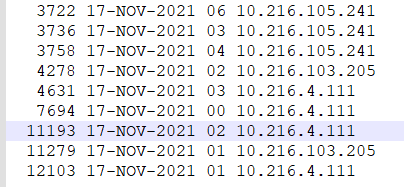
结果:确实存在大量的连接请求
解决办法
1.数据库打补丁,同时开启隐含参数规避更新表user$登陆时间字段
补丁:
p33121934_198000DBRU_Linux-x86-64.zip
隐含参数:
alter system set “_disable_last_successful_login_time”=true scope=spfile;
2.应用改变连接数据库方式
连接池的作用:
连接池是将已经创建好的连接保存在池中,当有请求来时,直接使用已经创建好的连接对数据库进行访问。这样省略了创建连接和销毁连接的过程。这样性能上得到了提高。
基本原理:
(1)建立数据库连接池对象(服务器启动)。
(2)按照事先指定的参数创建初始数量的数据库连接(即:空闲连接数)。
(3)对于一个数据库访问请求,直接从连接池中得到一个连接。如果数据库连接池对象中没有空闲的连接,且连接数没有达到最大(即:最大活跃连接数),创建一个新的数据库连接。
(4)存取数据库。
(5)关闭数据库,释放所有数据库连接(此时的关闭数据库连接,并非真正关闭,而是将其放入空闲队列中。如实际空闲连接数大于初始空闲连接数则释放连接)。
(6)释放数据库连接池对象(服务器停止、维护期间,释放数据库连接池对象,并释放所有连接)。
连接池的优点
连接池一般比直接连接更有优越性,因为它提高了性能的同时还保存了宝贵的资源。在整个应用程序的使用过程,当中重复的打开直接连接将导致性能的下降。而池连接只在服务器启动时打开一次,从而消除了这种性能问题。
连接池主要考虑的是性能,每次获取连接和释放连接都有很大的工作量,会对性能有很大影响;而对资源来说起的是反作用,因为保存一定数量的连接是要消耗内存的。应用程序每次从池里获得Connection对象,而不是直接从数据里获得,这样不占用服务器的内存资源。所以一般要建立连接池,而连接的数量要适当,不能太大,太大会过多消耗资源。(所以,考虑2个方面,一个是内存,另一个是资源)。
