



DG的备库有2种类型,物理和逻辑。今天主要分享物理备库的搭建过程
一、环境准备
| dg1(主库) | dg2(备库) | |
|---|---|---|
| ip | 192.168.59.249 | 192.168.59.250 |
| db_name | orcl11g | orcl11g |
| db_unique_name | orcl11g | orcl11gdg |
| ORACLE_BASE | /u01/app/oracle | /u01/app/oracle |
| ORACLE_HOME | /u01/app/oracle/product/11.2.0/db_1 | /u01/app/oracle/product/11.2.0/db_1 |
| 主机名 | primarynode | standbynode |
| 数据库版本 | 11.2.0.4 | 11.2.0.4 |
| 操作系统 | centos7 | centos7 |
| instance_name | orcl11g | orcl11g |
| service_name | orcl11g | orcl11g |
| 数据库安装 | 安装数据库软件,创建监听和数据库实例 | 安装数据库软件 |
二、安装数据库
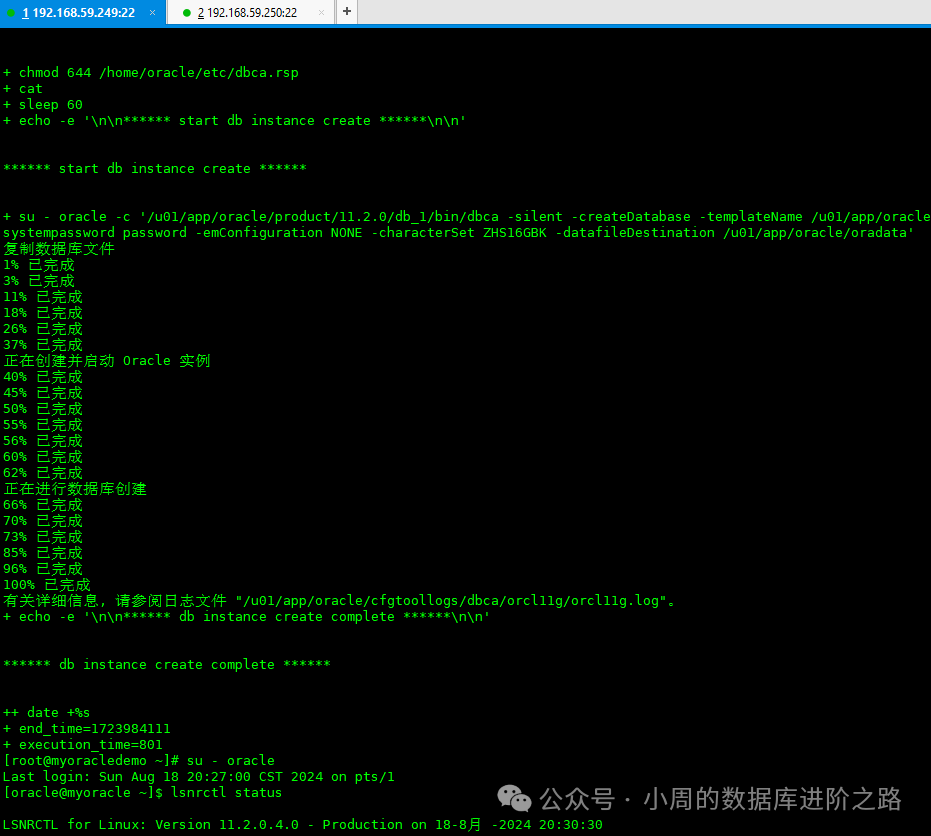
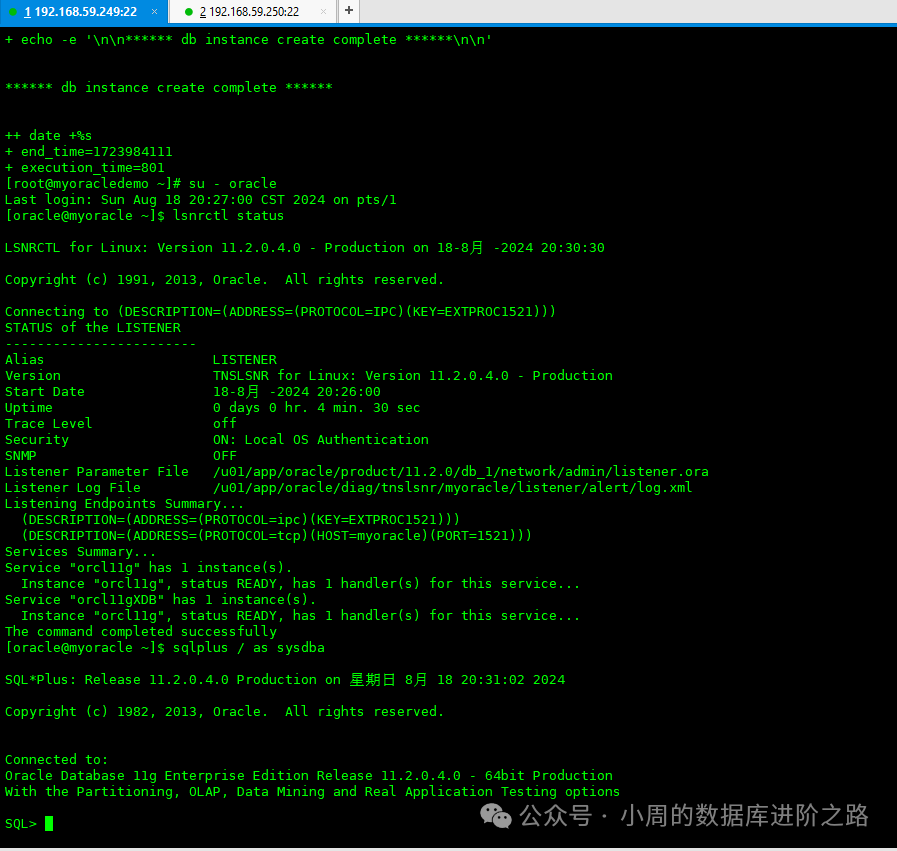
1、dg1:
安装数据库软件,创建监听和数据库实例
执行一键安装脚本
安装脚本可以参考我的这篇文章:https://mp.weixin.qq.com/s/2B_QyFGOAEhb_0xydog0zw
2、dg2:
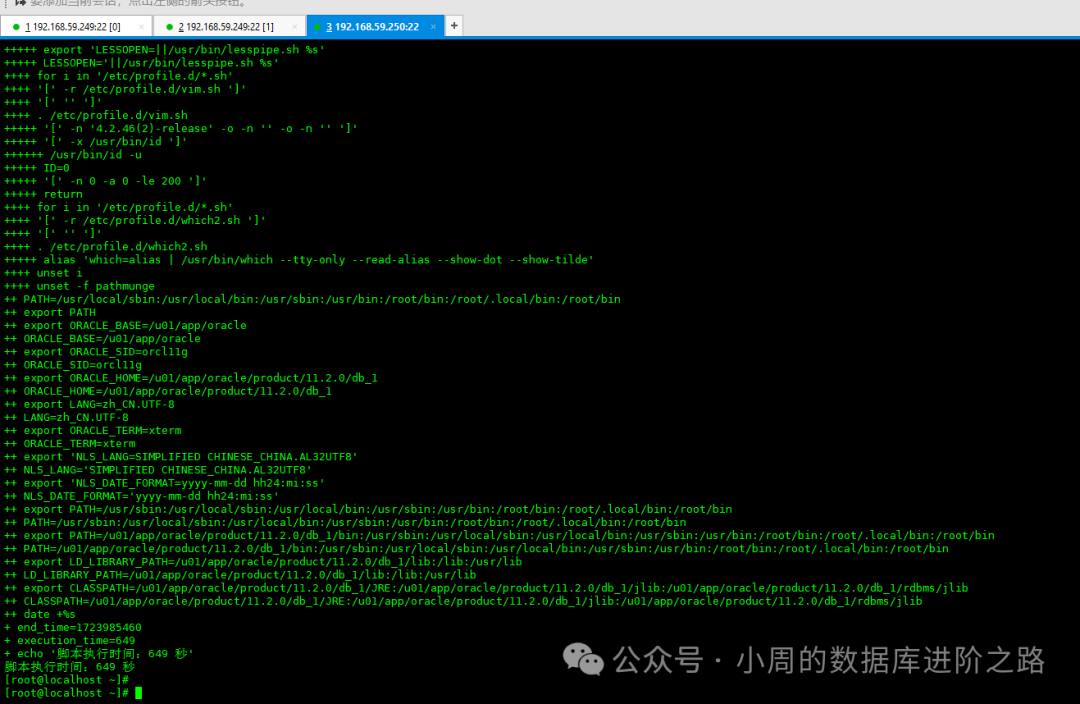
只安装数据库软件
执行以下脚本
#!/bin/bash
#一键安装oracle数据库
start_time=$(date +%s)
#修改主机名
hostnamectl set-hostname myoracle
#添加主机名与IP对应记录
public_ip=$(hostname -I| grep -o -e '[0-9]\{1,3\}.[0-9]\{1,3\}.[0-9]\{1,3\}.[0-9]\{1,3\}' |head -n 1)
node_name=$(hostname)
echo -e "${public_ip} ${node_name}">> /etc/hosts
cat /etc/hosts
#关闭Selinux
sed -i "s/SELINUX=enforcing/SELINUX=disabled/" /etc/selinux/config
setenforce 0
#关闭防火墙
systemctl stop firewalld
systemctl disable firewalld
# 获取当前所在目录位置
current_dir=$(pwd)
echo "当前所在目录位置: $current_dir"
# 目标路径
target_dir="/soft"
# 检查目标路径是否存在,如果不存在则创建
if [ ! -d "$target_dir" ]; then
    mkdir -p "$target_dir"
    echo "已创建目录: $target_dir"
fi
# 移动当前目录下的所有文件到目标路径
mv $current_dir/* $target_dir
echo "已将当前目录下所有文件移动至 $target_dir"
#添加离线yum源
cd soft
tar -xvf oracle_repo.tar.gz
cd soft/my_oracle_repo
rpm -ivh *.rpm --nodeps --force
#在线yum源
cd etc/yum.repos.d/
rm -rf ./*
sleep 20
wget -O etc/yum.repos.d/CentOS-Base.repo  http://mirrors.aliyun.com/repo/Centos-7.repo
#添加用户组及用户
groupadd oinstall
groupadd dba
useradd -g oinstall -G dba oracle
echo oracle | passwd --stdin oracle
chmod 644 etc/sysctl.conf
#修改环境变量
cat <<EOF >>/etc/sysctl.conf
fs.aio-max-nr = 1048576
fs.file-max = 6815744
kernel.shmall = 2097152
kernel.shmmax = 536870912
kernel.shmmni = 4096
kernel.sem = 250 32000 100 128
net.ipv4.ip_local_port_range = 9000 65500
net.core.rmem_default = 262144
net.core.rmem_max = 4194304
net.core.wmem_default = 262144
net.core.wmem_max = 1048576
EOF
sysctl -p
chmod 644 etc/security/limits.conf
cat <<EOF >>/etc/security/limits.conf
oracle soft nproc 2047
oracle hard nproc 16384
oracle soft nofile 1024
oracle hard nofile 65536
oracle soft stack 10240
oracle hard stack 10240
EOF
chmod 644 etc/pam.d/login
cat <<EOF >>/etc/pam.d/login
session required lib64/security/pam_limits.so
session required pam_limits.so
EOF
chmod 644 etc/profile
cat <<EOF >>/etc/profile
if [ $USER = "oracle" ]; then
   if [ $SHELL = "/bin/ksh" ]; then
       ulimit -p 16384
       ulimit -n 65536
    else
       ulimit -u 16384 -n 65536
   fi
fi
EOF
source etc/profile
mkdir -p u01/app/
chown -R oracle:oinstall u01/app/
chmod -R 775 u01/app/
mkdir -p usr/local/src
cd  usr/local/src
#解压oracle安装包
mv soft/*.zip  usr/local/src/
cd usr/local/src/
unzip p13390677_112040_Linux-x86-64_1of7.zip
unzip p13390677_112040_Linux-x86-64_2of7.zip
mkdir home/oracle/etc
chown -R oracle.oinstall home/oracle/etc
cp  usr/local/src/database/response/* home/oracle/etc/
chmod 777 home/oracle/etc/*.rsp
chown -R  oracle:oinstall home/oracle/etc/
cat <<EOF >/home/oracle/etc/db_install.rsp
####################################################################
## Copyright(c) Oracle Corporation 1998,2013. All rights reserved.##
##                                                                ##
## Specify values for the variables listed below to customize     ##
## your installation.                                             ##
##                                                                ##
## Each variable is associated with a comment. The comment        ##
## can help to populate the variables with the appropriate        ##
## values.                              ##
##                                                                ##
## IMPORTANT NOTE: This file contains plain text passwords and    ##
## should be secured to have read permission only by oracle user  ##
## or db administrator who owns this installation.                ##
##                                                                ##
####################################################################
#------------------------------------------------------------------------------
# Do not change the following system generated value.
#------------------------------------------------------------------------------
oracle.install.responseFileVersion=/oracle/install/rspfmt_dbinstall_response_schema_v11_2_0
#------------------------------------------------------------------------------
# Specify the installation option.
# It can be one of the following:
#   - INSTALL_DB_SWONLY
#   - INSTALL_DB_AND_CONFIG
#   - UPGRADE_DB
#-------------------------------------------------------------------------------
oracle.install.option=INSTALL_DB_SWONLY
#-------------------------------------------------------------------------------
# Specify the hostname of the system as set during the install. It can be used
# to force the installation to use an alternative hostname rather than using the
# first hostname found on the system. (e.g., for systems with multiple hostnames
# and network interfaces)
#-------------------------------------------------------------------------------
ORACLE_HOSTNAME=myoracle
#-------------------------------------------------------------------------------
# Specify the Unix group to be set for the inventory directory.
#-------------------------------------------------------------------------------
UNIX_GROUP_NAME=oinstall
#-------------------------------------------------------------------------------
# Specify the location which holds the inventory files.
# This is an optional parameter if installing on
# Windows based Operating System.
#-------------------------------------------------------------------------------
INVENTORY_LOCATION=/u01/app/oraInventory
#-------------------------------------------------------------------------------
# Specify the languages in which the components will be installed.
#
# en   : English                  ja   : Japanese
# fr   : French                   ko   : Korean
# ar   : Arabic                   es   : Latin American Spanish
# bn   : Bengali                  lv   : Latvian
# pt_BR: Brazilian Portuguese     lt   : Lithuanian
# bg   : Bulgarian                ms   : Malay
# fr_CA: Canadian French          es_MX: Mexican Spanish
# ca   : Catalan                  no   : Norwegian
# hr   : Croatian                 pl   : Polish
# cs   : Czech                    pt   : Portuguese
# da   : Danish                   ro   : Romanian
# nl   : Dutch                    ru   : Russian
# ar_EG: Egyptian                 zh_CN: Simplified Chinese
# en_GB: English (Great Britain)  sk   : Slovak
# et   : Estonian                 sl   : Slovenian
# fi   : Finnish                  es_ES: Spanish
# de   : German                   sv   : Swedish
# el   : Greek                    th   : Thai
# iw   : Hebrew                   zh_TW: Traditional Chinese
# hu   : Hungarian                tr   : Turkish
# is   : Icelandic                uk   : Ukrainian
# in   : Indonesian               vi   : Vietnamese
# it   : Italian
#
# all_langs   : All languages
#
# Specify value as the following to select any of the languages.
# Example : SELECTED_LANGUAGES=en,fr,ja
#
# Specify value as the following to select all the languages.
# Example : SELECTED_LANGUAGES=all_langs
#------------------------------------------------------------------------------
SELECTED_LANGUAGES=en
#------------------------------------------------------------------------------
# Specify the complete path of the Oracle Home.
#------------------------------------------------------------------------------
ORACLE_HOME=/u01/app/oracle/product/11.2.0/db_1
#------------------------------------------------------------------------------
# Specify the complete path of the Oracle Base.
#------------------------------------------------------------------------------
ORACLE_BASE=/u01/app/oracle
#------------------------------------------------------------------------------
# Specify the installation edition of the component.
#
# The value should contain only one of these choices.
#   - EE     : Enterprise Edition
#   - SE     : Standard Edition
#   - SEONE  : Standard Edition One
#   - PE     : Personal Edition (WINDOWS ONLY)
#------------------------------------------------------------------------------
oracle.install.db.InstallEdition=EE
#------------------------------------------------------------------------------
# This variable is used to enable or disable custom install and is considered
# only if InstallEdition is EE.
#
# true  : Components mentioned as part of 'optionalComponents' property
#         are considered for install.
# false : Value for 'optionalComponents' is not considered.
#------------------------------------------------------------------------------
oracle.install.db.EEOptionsSelection=false
#------------------------------------------------------------------------------
# This variable is considered only if 'EEOptionsSelection' is set to true.
#
# Description: List of Enterprise Edition Options you would like to enable.
#
#              The following choices are available. You may specify any
#              combination of these choices.  The components you choose should
#              be specified in the form "internal-component-name:version"
#              Below is a list of components you may specify to enable.
#
#              oracle.oraolap:11.2.0.4.0 - Oracle OLAP
#              oracle.rdbms.dm:11.2.0.4.0 - Oracle Data Mining
#              oracle.rdbms.dv:11.2.0.4.0 - Oracle Database Vault
#              oracle.rdbms.lbac:11.2.0.4.0 - Oracle Label Security
#              oracle.rdbms.partitioning:11.2.0.4.0 - Oracle Partitioning
#              oracle.rdbms.rat:11.2.0.4.0 - Oracle Real Application Testing
#------------------------------------------------------------------------------
oracle.install.db.optionalComponents=oracle.rdbms.partitioning:11.2.0.4.0,oracle.oraolap:11.2.0.4.0,oracle.rdbms.dm:11.2.0.4.0,oracle.rdbms.dv:11.2.0.4.0,oracle.rdbms.lbac:11.2.0.4.0,oracle.rdbms.rat:11.2.0.4.0
###############################################################################
#                                                                             #
# PRIVILEGED OPERATING SYSTEM GROUPS                                            #
# ------------------------------------------                                  #
# Provide values for the OS groups to which OSDBA and OSOPER privileges       #
# needs to be granted. If the install is being performed as a member of the   #
# group "dba", then that will be used unless specified otherwise below.          #
#                                                                             #
# The value to be specified for OSDBA and OSOPER group is only for UNIX based #
# Operating System.                                                           #
#                                                                             #
###############################################################################
#------------------------------------------------------------------------------
# The DBA_GROUP is the OS group which is to be granted OSDBA privileges.
#------------------------------------------------------------------------------
oracle.install.db.DBA_GROUP=dba
#------------------------------------------------------------------------------
# The OPER_GROUP is the OS group which is to be granted OSOPER privileges.
# The value to be specified for OSOPER group is optional.
#------------------------------------------------------------------------------
oracle.install.db.OPER_GROUP=oinstall
#------------------------------------------------------------------------------
# Specify the cluster node names selected during the installation.
# Example : oracle.install.db.CLUSTER_NODES=node1,node2
#------------------------------------------------------------------------------
oracle.install.db.CLUSTER_NODES=
#------------------------------------------------------------------------------
# This variable is used to enable or disable RAC One Node install.
#
#   - true  : Value of RAC One Node service name is used.
#   - false : Value of RAC One Node service name is not used.
#
# If left blank, it will be assumed to be false
#------------------------------------------------------------------------------
oracle.install.db.isRACOneInstall=
#------------------------------------------------------------------------------
# Specify the name for RAC One Node Service.
#------------------------------------------------------------------------------
oracle.install.db.racOneServiceName=
#------------------------------------------------------------------------------
# Specify the type of database to create.
# It can be one of the following:
#   - GENERAL_PURPOSE/TRANSACTION_PROCESSING
#   - DATA_WAREHOUSE
#------------------------------------------------------------------------------
oracle.install.db.config.starterdb.type=GENERAL_PURPOSE
#------------------------------------------------------------------------------
# Specify the Starter Database Global Database Name.
#------------------------------------------------------------------------------
oracle.install.db.config.starterdb.globalDBName=orcl
#------------------------------------------------------------------------------
# Specify the Starter Database SID.
#------------------------------------------------------------------------------
oracle.install.db.config.starterdb.SID=dbsrv2
#------------------------------------------------------------------------------
# Specify the Starter Database character set.
#
# It can be one of the following:
# AL32UTF8, WE8ISO8859P15, WE8MSWIN1252, EE8ISO8859P2,
# EE8MSWIN1250, NE8ISO8859P10, NEE8ISO8859P4, BLT8MSWIN1257,
# BLT8ISO8859P13, CL8ISO8859P5, CL8MSWIN1251, AR8ISO8859P6,
# AR8MSWIN1256, EL8ISO8859P7, EL8MSWIN1253, IW8ISO8859P8,
# IW8MSWIN1255, JA16EUC, JA16EUCTILDE, JA16SJIS, JA16SJISTILDE,
# KO16MSWIN949, ZHS16GBK, TH8TISASCII, ZHT32EUC, ZHT16MSWIN950,
# ZHT16HKSCS, WE8ISO8859P9, TR8MSWIN1254, VN8MSWIN1258
#------------------------------------------------------------------------------
oracle.install.db.config.starterdb.characterSet=AL32UTF8
#------------------------------------------------------------------------------
# This variable should be set to true if Automatic Memory Management
# in Database is desired.
# If Automatic Memory Management is not desired, and memory allocation
# is to be done manually, then set it to false.
#------------------------------------------------------------------------------
oracle.install.db.config.starterdb.memoryOption=true
#------------------------------------------------------------------------------
# Specify the total memory allocation for the database. Value(in MB) should be
# at least 256 MB, and should not exceed the total physical memory available
# on the system.
# Example: oracle.install.db.config.starterdb.memoryLimit=512
#------------------------------------------------------------------------------
oracle.install.db.config.starterdb.memoryLimit=8192
#------------------------------------------------------------------------------
# This variable controls whether to load Example Schemas onto
# the starter database or not.
#------------------------------------------------------------------------------
oracle.install.db.config.starterdb.installExampleSchemas=false
#------------------------------------------------------------------------------
# This variable includes enabling audit settings, configuring password profiles
# and revoking some grants to public. These settings are provided by default.
# These settings may also be disabled.
#------------------------------------------------------------------------------
oracle.install.db.config.starterdb.enableSecuritySettings=true
###############################################################################
#                                                                             #
# Passwords can be supplied for the following four schemas in the          #
# starter database:                                    #
#   SYS                                                                       #
#   SYSTEM                                                                    #
#   SYSMAN (used by Enterprise Manager)                                       #
#   DBSNMP (used by Enterprise Manager)                                       #
#                                                                             #
# Same password can be used for all accounts (not recommended)               #
# or different passwords for each account can be provided (recommended)       #
#                                                                             #
###############################################################################
#------------------------------------------------------------------------------
# This variable holds the password that is to be used for all schemas in the
# starter database.
#-------------------------------------------------------------------------------
oracle.install.db.config.starterdb.password.ALL=oracle
#-------------------------------------------------------------------------------
# Specify the SYS password for the starter database.
#-------------------------------------------------------------------------------
oracle.install.db.config.starterdb.password.SYS=
#-------------------------------------------------------------------------------
# Specify the SYSTEM password for the starter database.
#-------------------------------------------------------------------------------
oracle.install.db.config.starterdb.password.SYSTEM=
#-------------------------------------------------------------------------------
# Specify the SYSMAN password for the starter database.
#-------------------------------------------------------------------------------
oracle.install.db.config.starterdb.password.SYSMAN=
#-------------------------------------------------------------------------------
# Specify the DBSNMP password for the starter database.
#-------------------------------------------------------------------------------
oracle.install.db.config.starterdb.password.DBSNMP=
#-------------------------------------------------------------------------------
# Specify the management option to be selected for the starter database.
# It can be one of the following:
#   - GRID_CONTROL
#   - DB_CONTROL
#-------------------------------------------------------------------------------
oracle.install.db.config.starterdb.control=DB_CONTROL
#-------------------------------------------------------------------------------
# Specify the Management Service to use if Grid Control is selected to manage
# the database.
#-------------------------------------------------------------------------------
oracle.install.db.config.starterdb.gridcontrol.gridControlServiceURL=
###############################################################################
#                                                                             #
# SPECIFY BACKUP AND RECOVERY OPTIONS                                           #
# ------------------------------------                                      #
# Out-of-box backup and recovery options for the database can be mentioned    #
# using the entries below.                              #
#                                                                             #
###############################################################################
#------------------------------------------------------------------------------
# This variable is to be set to false if automated backup is not required. Else
# this can be set to true.
#------------------------------------------------------------------------------
oracle.install.db.config.starterdb.automatedBackup.enable=false
#------------------------------------------------------------------------------
# Regardless of the type of storage that is chosen for backup and recovery, if
# automated backups are enabled, a job will be scheduled to run daily to backup
# the database. This job will run as the operating system user that is
# specified in this variable.
#------------------------------------------------------------------------------
oracle.install.db.config.starterdb.automatedBackup.osuid=
#-------------------------------------------------------------------------------
# Regardless of the type of storage that is chosen for backup and recovery, if
# automated backups are enabled, a job will be scheduled to run daily to backup
# the database. This job will run as the operating system user specified by the
# above entry. The following entry stores the password for the above operating
# system user.
#-------------------------------------------------------------------------------
oracle.install.db.config.starterdb.automatedBackup.ospwd=
#-------------------------------------------------------------------------------
# Specify the type of storage to use for the database.
# It can be one of the following:
#   - FILE_SYSTEM_STORAGE
#   - ASM_STORAGE
#------------------------------------------------------------------------------
oracle.install.db.config.starterdb.storageType=
#-------------------------------------------------------------------------------
# Specify the database file location which is a directory for datafiles, control
# files, redo logs.
#
# Applicable only when oracle.install.db.config.starterdb.storage=FILE_SYSTEM_STORAGE
#-------------------------------------------------------------------------------
oracle.install.db.config.starterdb.fileSystemStorage.dataLocation=
#-------------------------------------------------------------------------------
# Specify the backup and recovery location.
#
# Applicable only when oracle.install.db.config.starterdb.storage=FILE_SYSTEM_STORAGE
#-------------------------------------------------------------------------------
oracle.install.db.config.starterdb.fileSystemStorage.recoveryLocation=
#-------------------------------------------------------------------------------
# Specify the existing ASM disk groups to be used for storage.
#
# Applicable only when oracle.install.db.config.starterdb.storage=ASM_STORAGE
#-------------------------------------------------------------------------------
oracle.install.db.config.asm.diskGroup=
#-------------------------------------------------------------------------------
# Specify the password for ASMSNMP user of the ASM instance.
#
# Applicable only when oracle.install.db.config.starterdb.storage=ASM_STORAGE
#-------------------------------------------------------------------------------
oracle.install.db.config.asm.ASMSNMPPassword=
#------------------------------------------------------------------------------
# Specify the My Oracle Support Account Username.
#
#  Example   : MYORACLESUPPORT_USERNAME=abc@oracle.com
#------------------------------------------------------------------------------
MYORACLESUPPORT_USERNAME=
#------------------------------------------------------------------------------
# Specify the My Oracle Support Account Username password.
#
# Example    : MYORACLESUPPORT_PASSWORD=password
#------------------------------------------------------------------------------
MYORACLESUPPORT_PASSWORD=
#------------------------------------------------------------------------------
# Specify whether to enable the user to set the password for
# My Oracle Support credentials. The value can be either true or false.
# If left blank it will be assumed to be false.
#
# Example    : SECURITY_UPDATES_VIA_MYORACLESUPPORT=true
#------------------------------------------------------------------------------
SECURITY_UPDATES_VIA_MYORACLESUPPORT=false
#------------------------------------------------------------------------------
# Specify whether user doesn't want to configure Security Updates.
# The value for this variable should be true if you don't want to configure
# Security Updates, false otherwise.
#
# The value can be either true or false. If left blank it will be assumed
# to be false.
#
# Example    : DECLINE_SECURITY_UPDATES=false
#------------------------------------------------------------------------------
DECLINE_SECURITY_UPDATES=true
#------------------------------------------------------------------------------
# Specify the Proxy server name. Length should be greater than zero.
#
# Example    : PROXY_HOST=proxy.domain.com
#------------------------------------------------------------------------------
PROXY_HOST=
#------------------------------------------------------------------------------
# Specify the proxy port number. Should be Numeric and at least 2 chars.
#
# Example    : PROXY_PORT=25
#------------------------------------------------------------------------------
PROXY_PORT=
#------------------------------------------------------------------------------
# Specify the proxy user name. Leave PROXY_USER and PROXY_PWD
# blank if your proxy server requires no authentication.
#
# Example    : PROXY_USER=username
#------------------------------------------------------------------------------
PROXY_USER=
#------------------------------------------------------------------------------
# Specify the proxy password. Leave PROXY_USER and PROXY_PWD
# blank if your proxy server requires no authentication.
#
# Example    : PROXY_PWD=password
#------------------------------------------------------------------------------
PROXY_PWD=
#------------------------------------------------------------------------------
# Specify the proxy realm. This value is used if auto-updates option is selected.
#
# Example    : PROXY_REALM=metalink
#------------------------------------------------------------------------------
PROXY_REALM=
#------------------------------------------------------------------------------
# Specify the Oracle Support Hub URL.
#
# Example    : COLLECTOR_SUPPORTHUB_URL=https://orasupporthub.company.com:8080/
#------------------------------------------------------------------------------
COLLECTOR_SUPPORTHUB_URL=
#------------------------------------------------------------------------------
# Specify the auto-updates option. It can be one of the following:
#   - MYORACLESUPPORT_DOWNLOAD
#   - OFFLINE_UPDATES
#   - SKIP_UPDATES
#------------------------------------------------------------------------------
oracle.installer.autoupdates.option=
#------------------------------------------------------------------------------
# In case MYORACLESUPPORT_DOWNLOAD option is chosen, specify the location where
# the updates are to be downloaded.
# In case OFFLINE_UPDATES option is chosen, specify the location where the updates
# are present.
#------------------------------------------------------------------------------
oracle.installer.autoupdates.downloadUpdatesLoc=
#------------------------------------------------------------------------------
# Specify the My Oracle Support Account Username which has the patches download privileges
# to be used for software updates.
#  Example   : AUTOUPDATES_MYORACLESUPPORT_USERNAME=abc@oracle.com
#------------------------------------------------------------------------------
AUTOUPDATES_MYORACLESUPPORT_USERNAME=
#------------------------------------------------------------------------------
# Specify the My Oracle Support Account Username password which has the patches download privileges
# to be used for software updates.
#
# Example    : AUTOUPDATES_MYORACLESUPPORT_PASSWORD=password
#------------------------------------------------------------------------------
AUTOUPDATES_MYORACLESUPPORT_PASSWORD=
EOF
chown -R  oracle:oinstall home/oracle/etc/db_install.rsp
chmod 660 home/oracle/etc/db_install.rsp
cd usr/local/src/database/
su - oracle -c "/usr/local/src/database/runInstaller -silent -responseFile home/oracle/etc/db_install.rsp"
sleep 500
/u01/app/oraInventory/orainstRoot.sh
/u01/app/oracle/product/11.2.0/db_1/root.sh
cat <<EOF >>/home/oracle/.bash_profile
#for oracle
export  ORACLE_BASE=/u01/app/oracle
export  ORACLE_SID=orcl11g
export  ORACLE_HOME=/u01/app/oracle/product/11.2.0/db_1
export  LANG="zh_CN.UTF-8"
export  ORACLE_TERM=xterm
export  NLS_LANG="SIMPLIFIED CHINESE_CHINA.AL32UTF8"
export  NLS_DATE_FORMAT='yyyy-mm-dd hh24:mi:ss'
export  PATH=/usr/sbin:\$PATH
export  PATH=\$ORACLE_HOME/bin:\$PATH
export  LD_LIBRARY_PATH=\$ORACLE_HOME/lib:/lib:/usr/lib
export  CLASSPATH=\$ORACLE_HOME/JRE:\$ORACLE_HOME/jlib:\$ORACLE_HOME/rdbms/jlib
EOF
####使配置文件生效###
source home/oracle/.bash_profile
end_time=$(date +%s)
execution_time=$((end_time - start_time))
echo "脚本执行时间:${execution_time} 秒"
三、部署DG
(一)基础环境配置
两个节点都执行:
修改主备库的主机名并进行hosts文件配置
[root@myoracle ~]# hostnamectl set-hostname primarynode  #主库
[root@myoracle ~]# hostnamectl set-hostname standbynode  #备库
cat <<EOF >>/etc//etc/hosts
192.168.59.249 primarynode
192.168.59.250 standbynode
EOF
注意:使用一键脚本安装的需要注意修改listener.ora和tnsnames.ora两个文件对应的HOST。
路径为/u01/app/oracle/product/11.2.0/db_1/network/admin
(二)DG1配置:
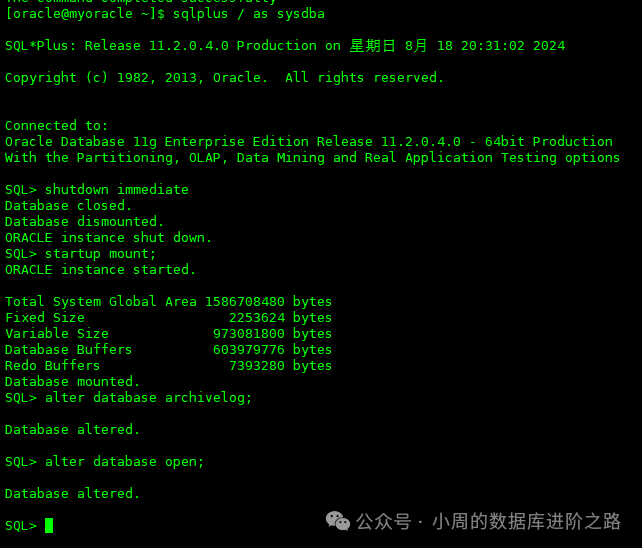
1、开启归档
关闭数据库
SQL> shutdown immediate
启动数据库到 mount
SQL> startup mount;
开启归档
SQL> alter database archivelog;
打开数据库
SQL> alter database open;
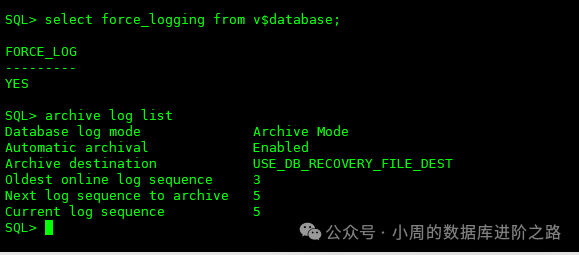
查询是否启用归档
SQL>archive log list
2、主库启用强制记录日志功能
查询是否启用强制记录日志
SQL>select force_logging from v$database;
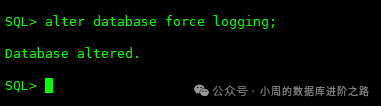
如果未启用,则使用下面语句来开启强制记录日志
SQL> alter database force logging;
3、主库参数配置
一共11个参数需要进行配置。这是关键,如果参数有误,那么搭建会失败。
1、db_unique_name
SQL> alter system set db_unique_name = 'orcl11g' scope=spfile;
2、log_archive_config
SQL> alter system set log_archive_config='DG_CONFIG=(orcl11g,orcl11gdg)' scope=spfile;
3、log_archive_dest_1
查看归档日志的目录位置
SQL> SELECT NAME, ARCHIVED, DEST_ID, COMPLETION_TIME FROM V$ARCHIVED_LOG ORDER BY COMPLETION_TIME DESC;
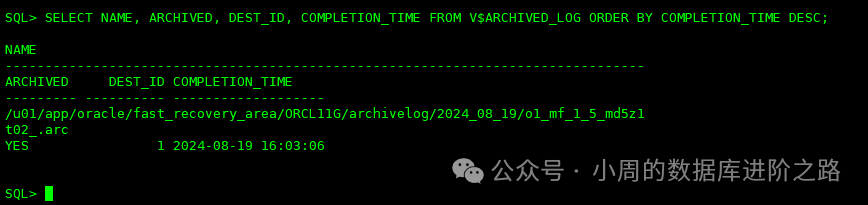
SQL> alter system set log_archive_dest_1='LOCATION=/u01/app/oracle/fast_recovery_area/ORCL11G/archivelog VALID_FOR=(ALL_LOGFILES,ALL_ROLES) DB_UNIQUE_NAME=orcl11g' scope=both;
4、log_archive_dest_2
SQL> alter system set log_archive_dest_2='SERVICE=tnsorcl11gstandby LGWR SYNC AFFIRM VALID_FOR=(ONLINE_LOGFILES,PRIMARY_ROLE) DB_UNIQUE_NAME=orcl11gdg' scope=spfile;
5、log_archive_dest_state_1
SQL> alter system set log_archive_dest_state_1 = ENABLE;
6、log_archive_dest_state_2
SQL> alter system set log_archive_dest_state_2 = ENABLE;
7、db_file_name_convert
查找数据文件的位置
SQL> select name from v$datafile;
SQL> alter system set db_file_name_convert='/u01/app/oracle/oradata/orcl11g','/u01/app/oracle/oradata/orcl11g' scope=spfile;

8、log_file_name_convert
查看在线日志文件的位置:
SQL> select member from v$logfile;
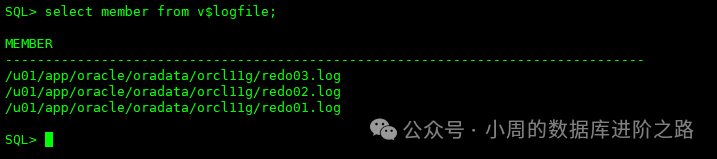
SQL> alter system set db_file_name_convert='/u01/app/oracle/oradata/orcl11g','/u01/app/oracle/oradata/orcl11g' scope=spfile;
9、standby_file_management
SQL> alter system set standby_file_management=auto scope=spfile;
10、fal_client
SQL> alter system set fal_client='tnsorcl11g' scope=both;
11、fal_server
SQL> alter system set fal_server='tnsorcl11gstandby' scope=both;
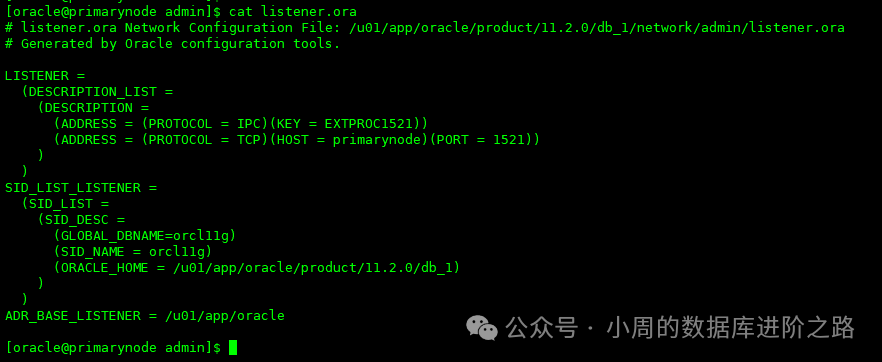
4、主库静态监听配置
[oracle@primarynode admin]$cd /u01/app/oracle/product/11.2.0/db_1/network/admin
[oracle@primarynode admin]$ cat listener.ora
# listener.ora Network Configuration File: /u01/app/oracle/product/11.2.0/db_1/network/admin/listener.ora
# Generated by Oracle configuration tools.

LISTENER =
  (DESCRIPTION_LIST =
    (DESCRIPTION =
      (ADDRESS = (PROTOCOL = IPC)(KEY = EXTPROC1521))
      (ADDRESS = (PROTOCOL = TCP)(HOST = primarynode)(PORT = 1521))
    )
  )
SID_LIST_LISTENER =
  (SID_LIST =
    (SID_DESC =
      (GLOBAL_DBNAME=orcl11g)  #修改GLOBAL_DBNAME
      (SID_NAME = orcl11g)      #修改SID_NAME
      (ORACLE_HOME = /u01/app/oracle/product/11.2.0/db_1)
    )
  )
ADR_BASE_LISTENER = /u01/app/oracle
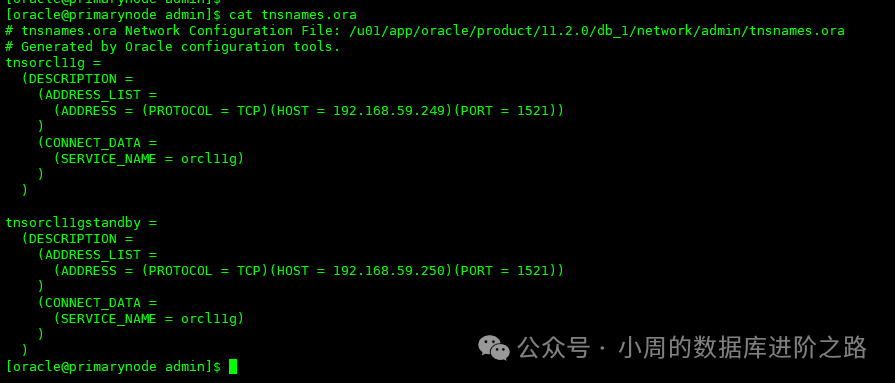
[oracle@primarynode admin]$ cat tnsnames.ora
# tnsnames.ora Network Configuration File: /u01/app/oracle/product/11.2.0/db_1/network/admin/tnsnames.ora
# Generated by Oracle configuration tools.
tnsorcl11g =
  (DESCRIPTION =
    (ADDRESS_LIST =
      (ADDRESS = (PROTOCOL = TCP)(HOST = 192.168.59.249)(PORT = 1521))
    )
    (CONNECT_DATA =
      (SERVICE_NAME = orcl11g)
    )
  )

tnsorcl11gstandby =
  (DESCRIPTION =
    (ADDRESS_LIST =
      (ADDRESS = (PROTOCOL = TCP)(HOST = 192.168.59.250)(PORT = 1521))
    )
    (CONNECT_DATA =
      (SERVICE_NAME = orcl11g)
    )
  )
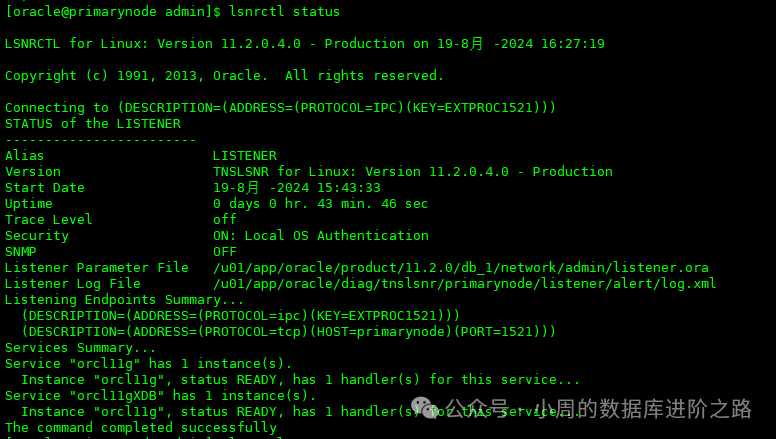
查看监听的状态
[oracle@primarynode admin]$ lsnrctl status
(三)DG2配置
1、密码文件
在dataguard中,主库与备库sys密码需一致,需要将主库的密码文件拷贝到备库中。
[oracle@primarynode admin]$ cd $ORACLE_HOME/dbs
[oracle@primarynode dbs]$ scp orapworcl11g oracle@192.168.59.250:/u01/app/oracle/product/11.2.0/db_1/dbs

如果不拷贝密码文件,直接使用orapwd生成一个新的密码文件,密码需与主库一致:
[oracle@primarynode dbs]$ orapwd file=orapworcl11g password=’password’;
2、初始化参数文件
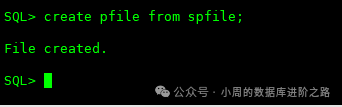
1、在主库生成初始化参数文件
SQL> create pfile from spfile;
2、拷贝主库的参数文件到备库
[oracle@primarynode dbs]$ scp initorcl11g.ora oracle@192.168.59.250:/u01/app/oracle/product/11.2.0/db_1/dbs
3、修改备库的参数文件内容
[oracle@standbynode dbs]$ cat initorcl11g.ora
orcl11g.__db_cache_size=654311424
orcl11g.__java_pool_size=16777216
orcl11g.__large_pool_size=33554432
orcl11g.__oracle_base='/u01/app/oracle'#ORACLE_BASE set from environment
orcl11g.__pga_aggregate_target=637534208
orcl11g.__sga_target=956301312
orcl11g.__shared_io_pool_size=0
orcl11g.__shared_pool_size=234881024
orcl11g.__streams_pool_size=0
*.audit_file_dest='/u01/app/oracle/admin/orcl11g/adump'
*.audit_trail='db'
*.compatible='11.2.0.4.0'
*.control_files='/u01/app/oracle/oradata/orcl11g/control01.ctl','/u01/app/oracle/fast_recovery_area/orcl11g/control02.ctl'
*.db_block_size=8192
*.db_domain=''
*.db_file_name_convert='/u01/app/oracle/oradata/orcl11g','/u01/app/oracle/oradata/orcl11g'
*.log_file_name_convert='/u01/app/oracle/oradata/orcl11g','/u01/app/oracle/oradata/orcl11g'
*.db_name='orcl11g'
*.db_recovery_file_dest='/u01/app/oracle/fast_recovery_area'
*.db_recovery_file_dest_size=4385144832
*.db_unique_name='orcl11gdg'
*.diagnostic_dest='/u01/app/oracle'
*.dispatchers='(PROTOCOL=TCP) (SERVICE=orcl11gXDB)'
*.fal_client='tnsorcl11gstandby'
*.fal_server='tnsorcl11g'
*.log_archive_config='DG_CONFIG=(orcl11g,orcl11gdg)'
*.log_archive_dest_1='LOCATION=/u01/app/oracle/fast_recovery_area/ORCL11GDG/archivelog VALID_FOR=(ALL_LOGFILES,ALL_ROLES) DB_UNIQUE_NAME=orcl11gdg'
*.log_archive_dest_2='SERVICE=tnsorcl11g LGWR SYNC AFFIRM VALID_FOR=(ONLINE_LOGFILES,PRIMARY_ROLE) DB_UNIQUE_NAME=orcl11g'
*.log_archive_dest_state_1='ENABLE'
*.log_archive_dest_state_2='ENABLE'
*.memory_target=1580204032
*.open_cursors=300
*.processes=150
*.remote_login_passwordfile='EXCLUSIVE'
*.standby_file_management='AUTO'
*.undo_tablespace='UNDOTBS1'
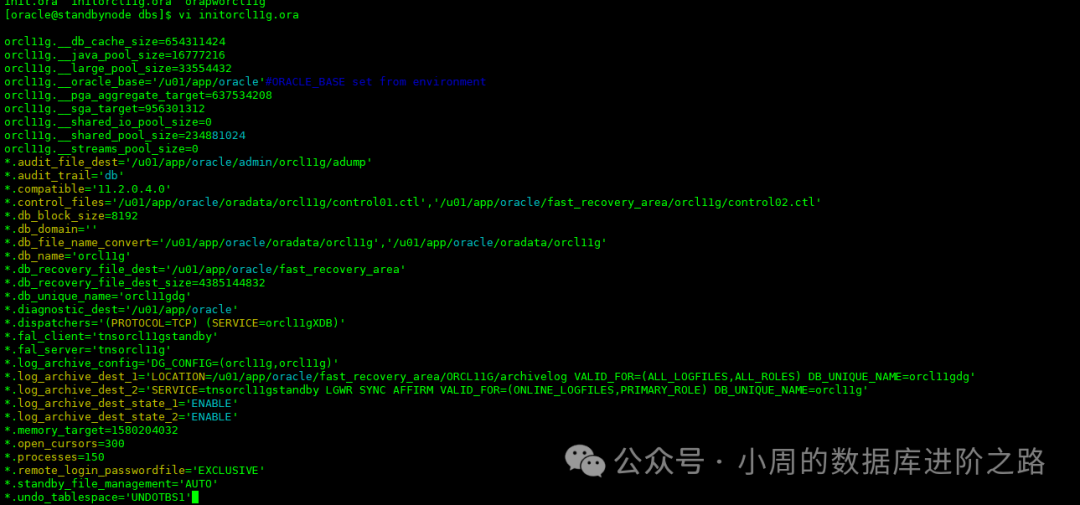
注意:里面涉及到路径的需要手动创建
[oracle@standbynode dbs]$ mkdir -p /u01/app/oracle/admin/orcl11g/adump
[oracle@standbynode oracle]$ mkdir -p /u01/app/oracle/fast_recovery_area/ORCL11G/archivelog
[oracle@standbynode dbs]$ mkdir -p /u01/app/oracle/oradata/orcl11g
[oracle@standbynode fast_recovery_area]$ mkdir -p /u01/app/oracle/fast_recovery_area/orcl11g/
使用pfile文件创建spfile文件
登陆到idle数据库
[oracle@standbynode dbs]$sqlplus / as sysdba;
SQL> create spfile from pfile;
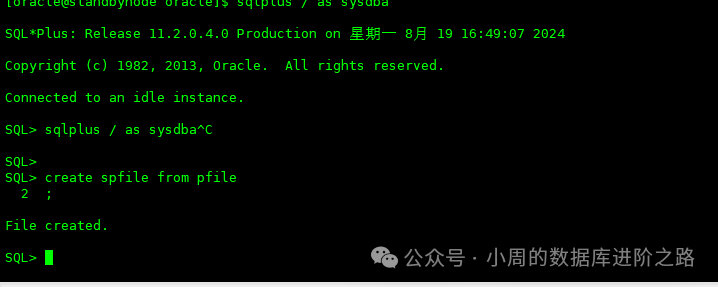
SQL> startup nomount
如有以下报错,需要进行以下配置:
vi /etc/fstab
新增
tmpfs                   /dev/shm                tmpfs   defaults,size=4096M        0 0
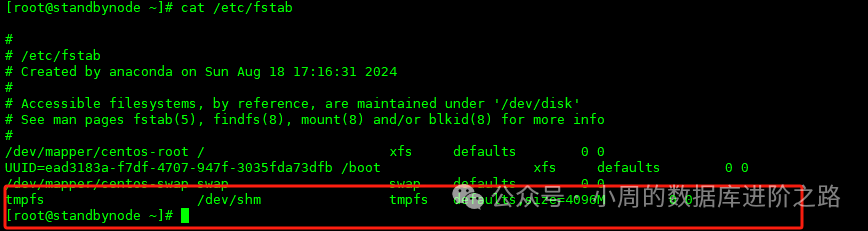
[root@standbynode ~]# mount -o remount /dev/shm
然后继续执行 startup nomount
SQL> startup nomount
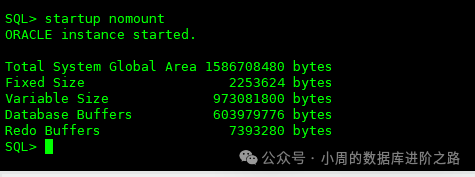
4、配置静态监听
[oracle@standbynode dbs]$ cd /u01/app/oracle/product/11.2.0/db_1/network/admin/
[oracle@standbynode admin]$ vi listener.ora
新增以下内容
# listener.ora Network Configuration File: /u01/oracle/product/11.2.0/db_1/network/admin/listener.ora
# Generated by Oracle configuration tools.

LISTENER =
  (DESCRIPTION_LIST =
    (DESCRIPTION =
      (ADDRESS_LIST =
        (ADDRESS = (PROTOCOL = TCP)(HOST = standbynode)(PORT = 1521))
      )
    )
  )

SID_LIST_LISTENER =
  (SID_LIST =
    (SID_DESC =
      (GLOBAL_DBNAME=orcl11g)
      (SID_NAME = orcl11g)
      (ORACLE_HOME = /u01/app/oracle/product/11.2.0/db_1)
    )
  )

ADR_BASE_LISTENER = /u01/oracle
配置tnsnames.ora 文件
[oracle@standbynode admin]$ cat tnsnames.ora
tnsorcl11g =
  (DESCRIPTION =
    (ADDRESS_LIST =
      (ADDRESS = (PROTOCOL = TCP)(HOST = 192.168.59.249)(PORT = 1521))
    )
    (CONNECT_DATA =
      (SERVICE_NAME = orcl11g)
    )
  )

tnsorcl11gstandby =
  (DESCRIPTION =
    (ADDRESS_LIST =
      (ADDRESS = (PROTOCOL = TCP)(HOST = 192.168.59.250)(PORT = 1521))
    )
    (CONNECT_DATA =
      (SERVICE_NAME = orcl11g)
    )
  )
6、测试网络连通性
主备之间互相测试连通性
[oracle@standbynode admin]$ tnsping tnsorcl11g
[oracle@primarynode dbs]$ tnsping tnsorcl11gstandby


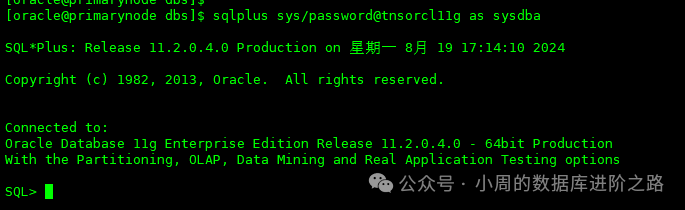
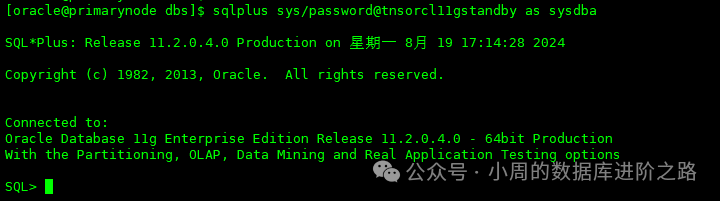
7、在主库进行登录测试
[oracle@primarynode dbs]$ sqlplus sys/password@tnsorcl11g as sysdba
[oracle@primarynode dbs]$ sqlplus sys/password@tnsorcl11gstandby as sysdba
8、使用duplicate创建物理standby(有很多种办法,今天只分享这一种)
(1)连接到主备库
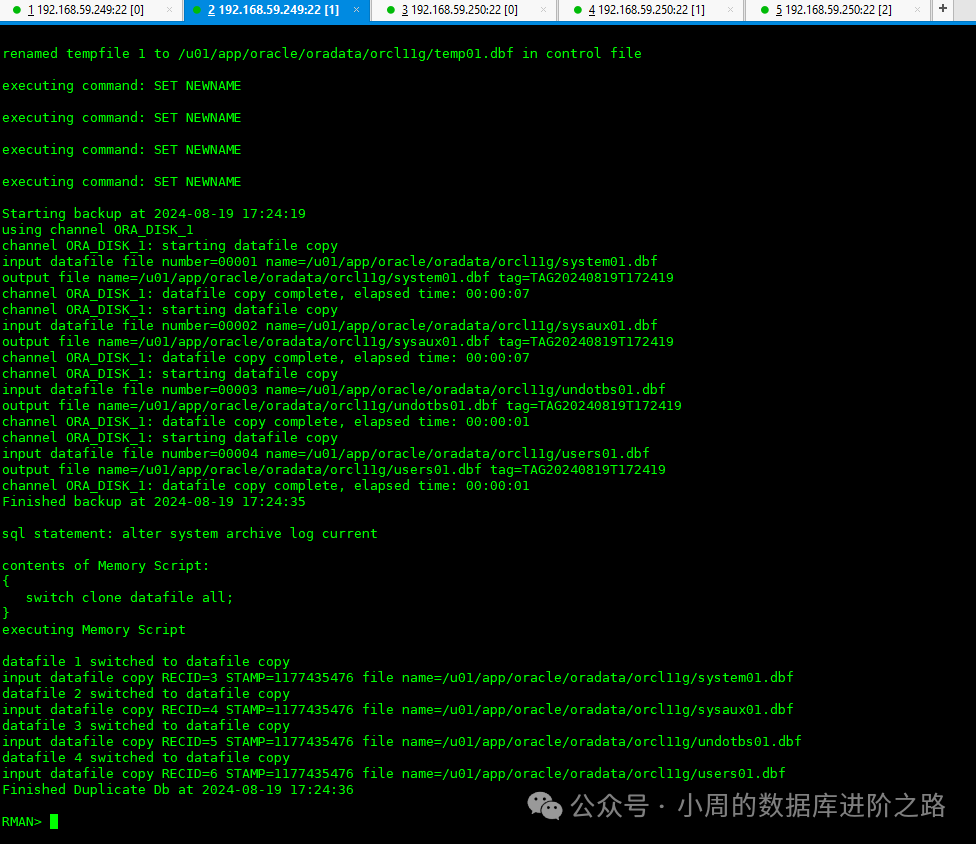
[oracle@primarynode dbs]$ rman target sys/password@tnsorcl11g auxiliary sys/password@tnsorcl11gstandby nocatalog
(2)使用duplicate复制数据库
RMAN> duplicate target database for standby from active database nofilenamecheck;
9、添加主库和备库的standby日志组
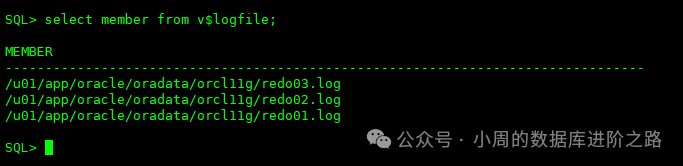
先查看redo日志的位置
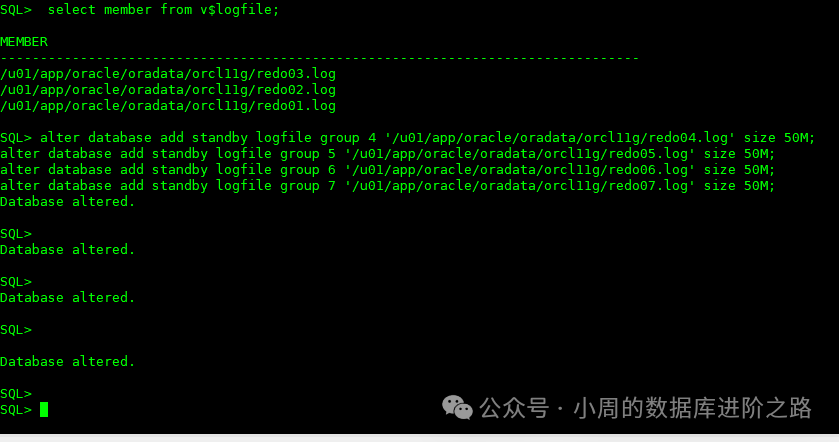
SQL> select member from v$logfile;
添加主库的standby日志组
编写4个日志组,根据上面查出来的编号进行排序。
SQL> alter database add standby logfile group 4 '/u01/app/oracle/oradata/orcl11g/redo04.log' size 50M;
SQL> alter database add standby logfile group 5 '/u01/app/oracle/oradata/orcl11g/redo05.log' size 50M;
SQL> alter database add standby logfile group 6 '/u01/app/oracle/oradata/orcl11g/redo06.log' size 50M;
SQL> alter database add standby logfile group 7 '/u01/app/oracle/oradata/orcl11g/redo07.log' size 50M;
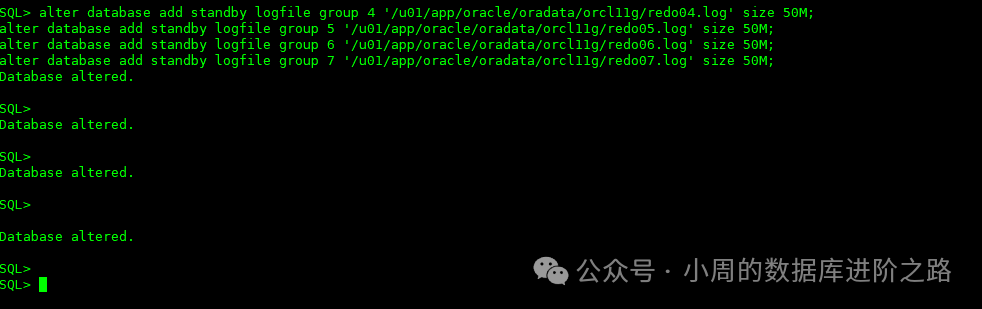
添加备库的standby日志组
SQL>alter database add standby logfile group 4 '/u01/app/oracle/oradata/orcl11g/redo04.log' size 50M;
SQL>alter database add standby logfile group 5 '/u01/app/oracle/oradata/orcl11g/redo05.log' size 50M;
SQL>alter database add standby logfile group 6 '/u01/app/oracle/oradata/orcl11g/redo06.log' size 50M;
SQL>alter database add standby logfile group 7 '/u01/app/oracle/oradata/orcl11g/redo07.log' size 50M;
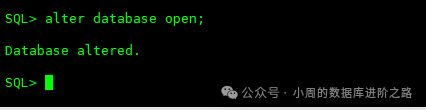
10、开始同步数据库,在备库上执行
SQL>alter database open;
11、开启实时同步
SQL> alter database recover managed standby database using current logfile disconnect from session;

至此DG搭建完成。
四、查看主备库状态
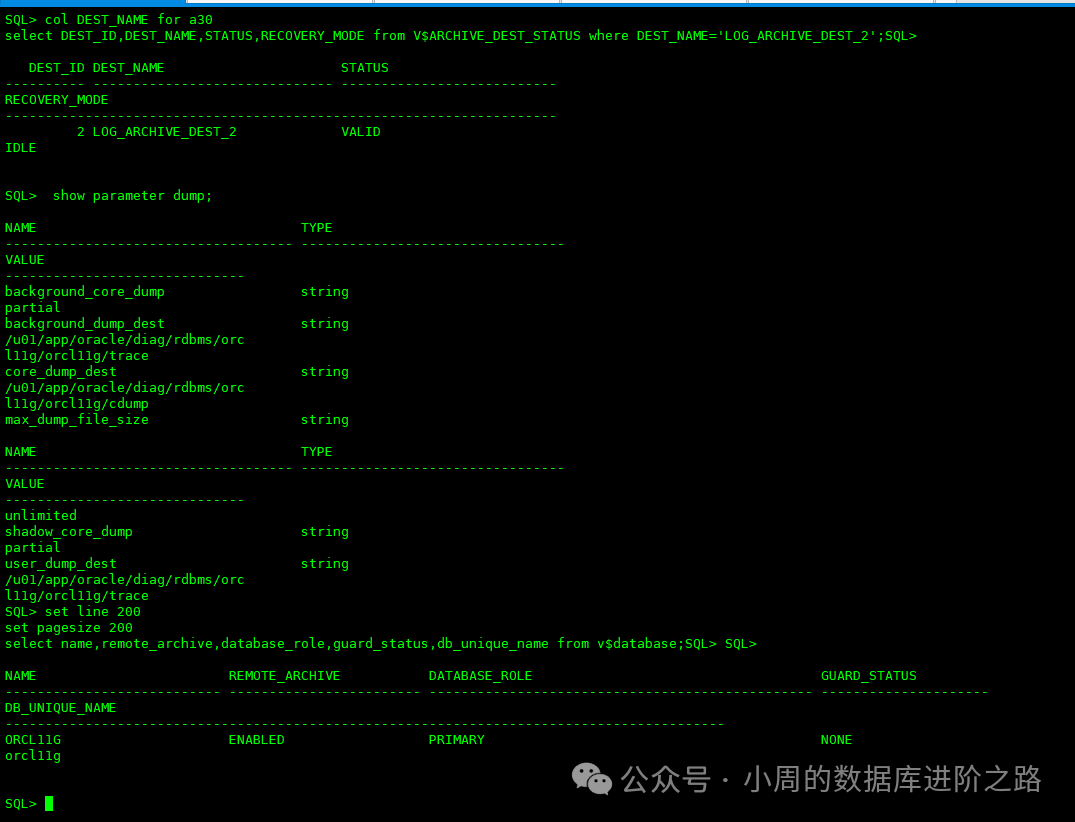
主库检查
SQL>set line 200
set pagesize 200
select name,remote_archive,database_role,guard_status,db_unique_name from v$database;
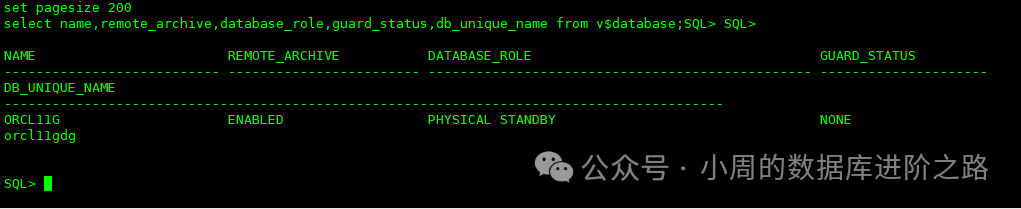
备库检查
SQL>set line 200
set pagesize 200
select name,remote_archive,database_role,guard_status,db_unique_name from v$database;
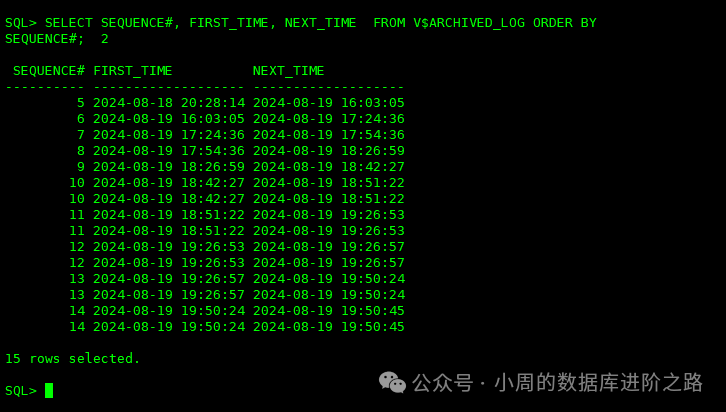
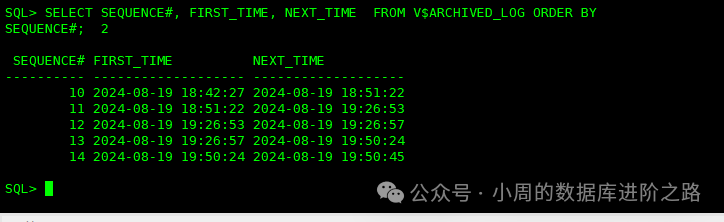
查询主备库日志是否同步(确保最大 SEQUENCE#相同)
SQL>SELECT SEQUENCE#, FIRST_TIME, NEXT_TIME  FROM V$ARCHIVED_LOG ORDER BY
SEQUENCE#;
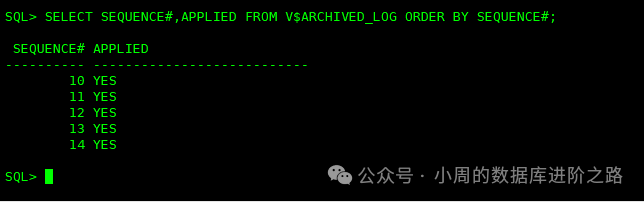
检查日志是否被备库使用(APPLIED 值为 yes)
SQL> SELECT SEQUENCE#,APPLIED FROM V$ARCHIVED_LOG ORDER BY SEQUENCE#;
五、DataGuard测试
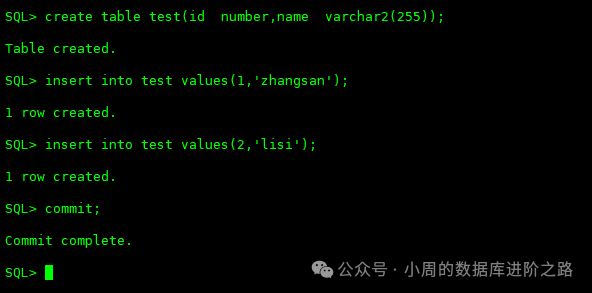
在主库上创建测试表并插入数据
SQL> create table test(id  number,name  varchar2(255));
insert into test values(1,'zhangsan');
insert into test values(2,'lisi');
commit;
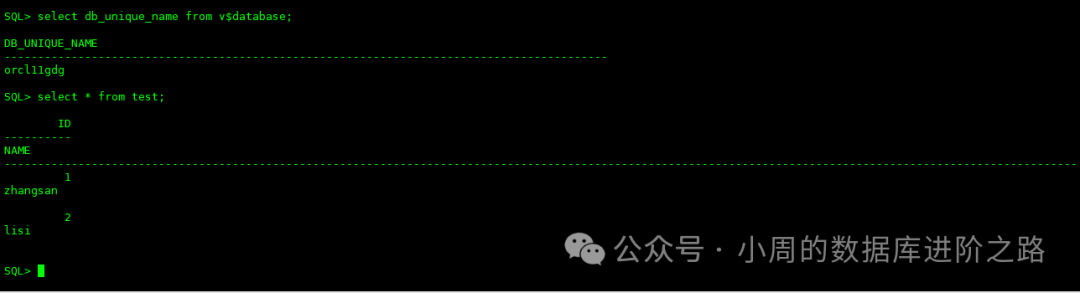
在standby数据库上查询测试表,验证数据同步成功
SQL> select * from test;
六、日常运维必备命令
主备库角色状态查询
SQL> select switchover_status,database_role from v$database;


查看dataguard最新状态
alter session set nls_date_format='yyyy-mm-dd hh24:mi:ss';
set line 160
set pagesize 1000
col type for a20
select process, status, thread#,sequence#, block#, blocks from v$managed_standby;
select GROUP#,THREAD#,SEQUENCE#,STATUS,LAST_CHANGE#,LAST_TIME from v$standby_log;
select START_TIME,TYPE, ITEM,UNITS,SOFAR,TIMESTAMP from v$recovery_progress where ITEM='Last Applied Redo';
查看redo_log
主库查看redo log
SQL> select group#,thread#,bytes/1024/1024 M,status from v$log;
备库查看standby log
SQL> select group#,thread#,bytes/1024/1024M,status,last_change#,last_time from v$standby_log;
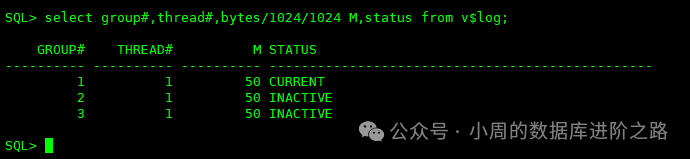
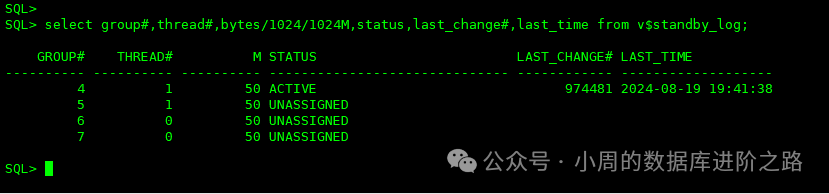
主、备库查看当前日志状况
SQL> select sequence#,status from v$log;
手动启动MRP0进程
SQL> alter database recover managed standby database disconnect from session
SQL> select open_mode,current_scn from v$database;
SQL> select * from v$standby_log;
SQL> select process,client_process,sequence#,status,BLOCK#,BLOCKS,THREAD# from v$managed_standby;
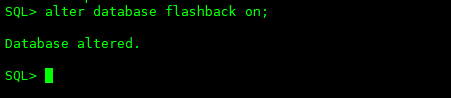
开启数据库闪回
SQL> alter database flashback on;
重启监听并查看状态
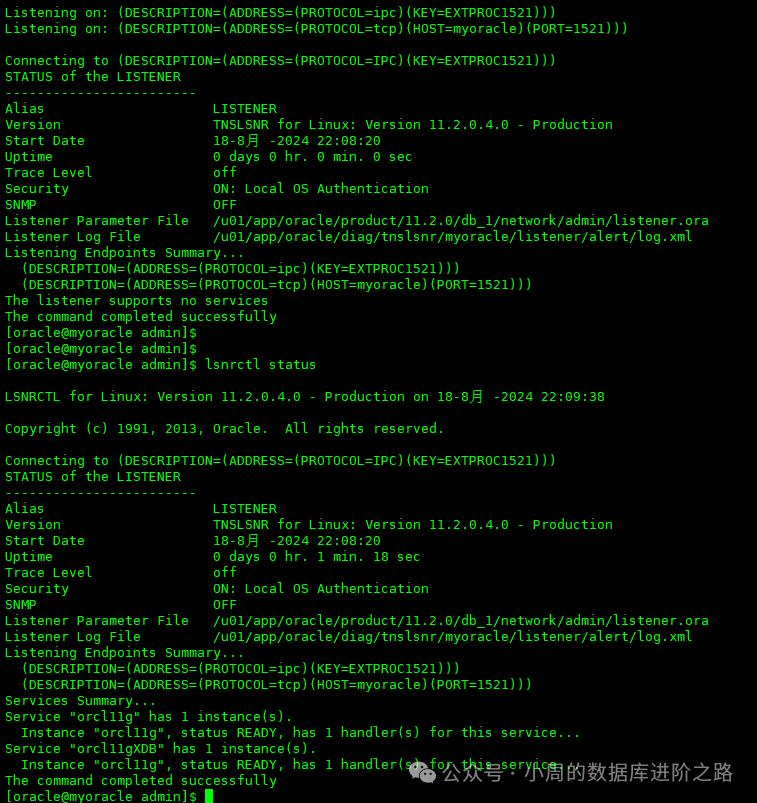
[oracle@myoracle admin]$ lsnrctl stop
[oracle@myoracle admin]$ lsnrctl start
[oracle@myoracle admin]$ lsnrctl status
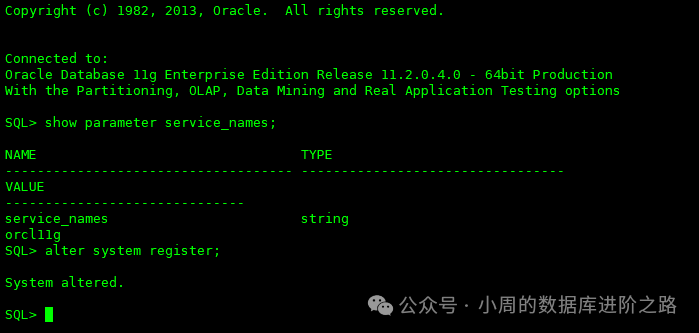
如看不到服务,需执行以下命令:
显示服务名:
SQL>show parameter service_names
强制注册服务:
SQL>alter system register;
主备库切换演练
1、主库切换到备库
SQL> alter database commit to switchover to physical standby;
SQL> alter database commit to switchover to physical standby with session shutdown;
--如果状态显示SESSION ACTIVE,在切换的时候可以指定with session shutdown 子句强制关闭活动的会话。
SQL> shutdown immediate
SQL> startup mount
2、备库切换到主库
SQL> alter database commit to switchover to primary;
SQL> alter database open;
原主库(新备库)执行APPLY LOG命令
--启用备库mount状态下的APPLY LOG
SQL> alter database recover managed standby database disconnect from session;
--启用open状态(READ ONLY WITH APPLY)下的APPLY LOG
SQL> alter database recover managed standby database cancel;
SQL> alter database open;
SQL> alter database recover managed standby database disconnect from session;
SQL> select switchover_status,database_role,open_mode from v$database;
恢复主备GAP(适用于11g以后版本)
SQL> recover database from service orcl11g noredo using compressed backupset;
同步情况检查
SQL>archive log list; #检查当前log号 Current log sequence和主库一致
查看DG库归档是否有缺失
SQL> select thread#,low_sequence#,high_sequence# from v$archive_gap;
开启归档应用
SQL>alter database recover managed standby database disconnect from session;
如果开启了实时归档,可以执行以下命令
SQL>alter database recover managed standby database cancel;
SQL>alter database open;
SQL>alter database recover managed standby database using current logfile disconnect;
开启和关闭 DG
开启 DG
启动备库(mount)——启动主库(open)——启动备库日志同步
登录备库:$lsnrctl start
SQL>startup mount;
登录主库:$lsnrctl start
SQL>startup
登录备库:
SQL> alter database recover managed standby database disconnect from session;
关闭 DG(请确保应用程序已经断开数据库连接或关闭)
关闭备库日志同步——关闭主库——关闭备库
登录备库:
SQL> ALTER DATABASE RECOVER MANAGED STANDBY DATABASE CANCEL;
登录主库:
SQL>shutdown  immediate
$lsnrctl  stop
登录备库
SQL>shutdown  immediate
$lsnrctl  stop
参考链接:https://zhuanlan.zhihu.com/p/669889767
文中的概念来源于互联网,如有侵权,请联系我删除。
欢迎关注公众号:小周的数据库进阶之路,一起交流数据库、中间件和云计算等技术。欢迎觉得读完本文有收获,可以转发给其他朋友,大家一起学习进步!感兴趣的朋友可以加我微信,拉您进群与业界的大佬们一起交流学习。
