



前言

从今天开始我们来整理 Redis 相关的知识体系, 因为 MySQL 的调优涉及到很多地方, 所以 loger 正在构思怎么去写, 当然中间不能闲着, 所以就拿 Redis 来填补一下空缺 😀
为什么要使用 Redis ?
相信点开文章的大家一定对 Redis 已经有了一定程度的了解, 如果不了解也没关系, 可以看一下它的官网 :
https://redis.io/topics/introduction
第一句话就是 Redis 的简介 : Redis 是一种开源(BSD 许可)、内存中数据结构存储,用作数据库、缓存和消息代理
剩余部分就不进行赘述了, loger 这里直接提取出重点 :
Redis 基于内存, 常用作缓存技术
为 key - value 方式存储
AOF, RDB 磁盘持久化
Lua 脚本保证原子性
如果大家用过 GitHub 或者网上下载的 Guava 或 hutool 工具类库, 就会发现在类库中存在一个用 Map 做的缓存工具类, 那么我们为什么要用 Redis 而不用 Map 在程序中做缓存呢 ?
首先无论是自己用 Map 实现的, 还是类库中提供的使用的应该是本地缓存, 这种缓存是不具有分布式下一致性的, 并且此种缓存最大的优点在于轻量, 快速, 生命周期是跟随 JVM 的销毁而结束的
Redis 中的缓存为分布式缓存, 就算是多台机器, 应该是每个实例共享一份缓存, 具有一致性
Redis 和 Map 实现的缓存存储量不同, 使用 Map 时, JVM 如果内存占用过大容易挂掉, 而缓存数据也会随之消失; Redis 的缓存容量相较来说大了很多, 并且提供了持久化机制, 确保在宕机, 掉电等情况下数据的恢复问题
使用 Map 操作无法使用 Redis 中各种方便的机制, 如各种数据结构, 过期机制, 淘汰策略等
关于 Redis 的应用场景可以参考 :
http://www.scienjus.com/redis-use-case/
为什么在程序中要使用缓存 ?
在关系型数据库中, 读写操作一般都是要经过磁盘的, 而磁盘的读写速度相对于内存的读写速度来说很慢, 而遇到一些业务场景时, 关系型数据库已经不能满足业务场景了, 比如秒杀场景, 访问流量高峰等这种情况下如果直接去操作数据库, 很容易就会打穿数据库, 崩溃, 宕机也就接踵而至, 这些情况下就时缓存出场的时候了
让 CPU 告诉你硬盘和网络到底有多慢
https://cizixs.com/2017/01/03/how-slow-is-disk-and-network/
Redis 与 Memcached
其实缓存有多种实现方式, 而最常见用来与 Redis 进行比较的就是 Memcached, 这两者都是非关系型内存键值数据库, 我们整理一下不同之处 :
数据类型不同
Memcached 仅支持字符串类型
Redis 支持 5 种不同数据类型
持久化不同
Memcached 不支持持久化
Redis 存在 AOF 与 RDB
分布式不同
Memcached 不支持分布式, 可以在客户端通过一致性哈希的方式实现分布式
Redis Cluster 支持分布式
内存管理机制不同
Memcached 将内存分割成特定长度的块来存储数据, 以完全解决内存碎片的问题, 但这种方式会使内存的利用率不高, 例如块的大小为 128 bytes, 只存储 100 bytes 的数据, 那么剩下的 28 bytes 就浪费掉了
Redis 中, 并不是所有数据都一直存储在内存中, 可以将一些很久没用的 value 交换到磁盘, 而 Memcached 的数据则会一直在内存中
数据类型与常见操作
Redis 中存在 5 种数据类型 : STRING, LIST, HASH, SET, ZSET (sorted set), 这个在官网中有介绍
| 数据类型 | 可存储 | 操作 |
|---|---|---|
| STRING | 字符串, 整数, 浮点数 | 对整个字符串或者字符串的其中一部分执行操作, 对整数和浮点数执行自增或者自减操作 |
| LIST | 列表 | 从两端压入或者弹出元素, 对单个或者多个元素进行修剪, 只保留一个范围内的元素 |
| SET | 无序集合 | 添加、获取、移除单个元素, 检查一个元素是否存在于集合中, 计算交集、并集、差集 |
| HASH | 包含键值对的无序散列表 | 添加、获取、移除单个键值对, 获取所有键值对, 检查某个键是否存在 |
| ZSET | 有序集合 | 添加、获取、删除元素, 根据分值范围或者成员来获取元素, 计算一个键的排名 |
What Redis data structures look like
https://redis.com/ebook/part-1-getting-started/chapter-1-getting-to-know-redis/1-2-what-redis-data-structures-look-like/
关于常见操作, 十分简单这里就不水文章了, 如果手痒痒的话, 可以用下面两个网站对照着试一下, 不用安装 Redis 即可操作 :
Redis 的命令参考
http://doc.redisfans.com/
在线尝试 Redis 命令
https://try.redis.io/
数据结构
上面忘了讲, Redis 是用 C 语言进行编写的, 实不相瞒 loger 压根就不会 C 语言, 但是这并不耽误咱们去看它的实现逻辑对吧 😀
1
字典
dictht 是一个散列表结构,使用拉链法解决哈希冲突
/* This is our hash table structure. Every dictionary has two of this as we* implement incremental rehashing, for the old to the new table. */typedef struct dictht {dictEntry **table; // 哈希表数组unsigned long size; // 哈希表大小unsigned long sizemask; // 哈希表大小掩码,计算索引值unsigned long used; // 哈希表已有节点数量} dictht;
typedef struct dictEntry {void *key; // 键union { // 值void *val;uint64_t u64;int64_t s64;double d;} v;struct dictEntry *next; // 指向下个哈希节点,组成链表} dictEntry;
Redis 的字典 dict 中包含两个哈希表 dictht, 方便进行 rehash 操作, 在扩容时, 将其中一个 dictht 上的键值对 rehash 到另一个 dictht 上面, 完成之后释放空间并交换两个 dictht 的角色
typedef struct dict {dictType *type; // 类型特定函数void *privdata; // 私有数据dictht ht[2]; // 哈希表long rehashidx; // rehash索引, 当rehash不进行时, 值为-1unsigned long iterators; // 当前运行的迭代器数量} dict;
typedef struct dictType{unsigned int (*hashFunction)(const void * key); // 计算哈希值的函数void *(*keyDup)(void *private, const void *key); // 复制键的函数void *(*valDup)(void *private, const void *obj); // 复制值的函数int (*keyCompare)(void *privdata , const void *key1, const void *key2); // 对比键的函数void (*keyDestructor)(void *private, void *key); // 销毁键的函数void (*valDestructor)(void *private, void *obj); // 销毁值的函数}dictType
从代码实现上我们可以发现,Redis 中有实际存在两个哈希表 :
ht[0] :用于存放真实的 key - vlaue 数据
ht[1] :用于扩容 (rehash)
Redis 中哈希算法和哈希冲突与 Java 实现的差不多, 他们的不同在于 :
Redis 出现哈希冲突会将新节点放在链表头部
Java 在 JDK 1.8 之后出现哈希冲突, 会放在链表尾部
下面我们来看一下 rehash, rehash 操作不是一次性完成, 而是采用渐进方式, 这是为了避免一次性执行过多的 rehash 操作给服务器带来过大的负担
渐进式 rehash 通过记录 dict 的 rehashidx 完成, 它从 0 开始, 然后每执行一次 rehash 都会递增, 例如在一次 rehash 中, 要把 dict[0] rehash 到 dict[1], 这一次会把 dict[0] 上 table[rehashidx] 的键值对 rehash 到 dict[1] 上, dict[0] 的 table[rehashidx] 指向 null, 并令 rehashidx++
在 rehash 期间, 每次对字典执行添加、删除、查找或者更新操作时, 都会执行一次渐进式 rehash
采用渐进式 rehash 会导致字典中的数据分散在两个 dictht 上, 因此对字典的查找操作也需要到对应的 dictht 去执行
/* Performs N steps of incremental rehashing. Returns 1 if there are still* keys to move from the old to the new hash table, otherwise 0 is returned.** Note that a rehashing step consists in moving a bucket (that may have more* than one key as we use chaining) from the old to the new hash table, however* since part of the hash table may be composed of empty spaces, it is not* guaranteed that this function will rehash even a single bucket, since it* will visit at max N*10 empty buckets in total, otherwise the amount of* work it does would be unbound and the function may block for a long time. */int dictRehash(dict *d, int n) {int empty_visits = n * 10; /* Max number of empty buckets to visit. */if (!dictIsRehashing(d)) return 0;while (n-- && d->ht[0].used != 0) {dictEntry *de, *nextde;/* Note that rehashidx can't overflow as we are sure there are more* elements because ht[0].used != 0 */assert(d->ht[0].size > (unsigned long) d->rehashidx);while (d->ht[0].table[d->rehashidx] == NULL) {d->rehashidx++;if (--empty_visits == 0) return 1;}de = d->ht[0].table[d->rehashidx];/* Move all the keys in this bucket from the old to the new hash HT */while (de) {uint64_t h;nextde = de->next;/* Get the index in the new hash table */h = dictHashKey(d, de->key) & d->ht[1].sizemask;de->next = d->ht[1].table[h];d->ht[1].table[h] = de;d->ht[0].used--;d->ht[1].used++;de = nextde;}d->ht[0].table[d->rehashidx] = NULL;d->rehashidx++;}/* Check if we already rehashed the whole table... */if (d->ht[0].used == 0) {zfree(d->ht[0].table);d->ht[0] = d->ht[1];_dictReset(&d->ht[1]);d->rehashidx = -1;return 0;}/* More to rehash... */return 1;}
2
跳跃表
是有序集合的底层实现之一
跳跃表是基于多指针有序链表实现的, 可以看成多个有序链表
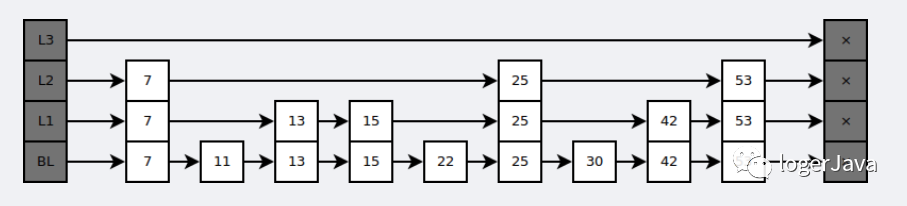
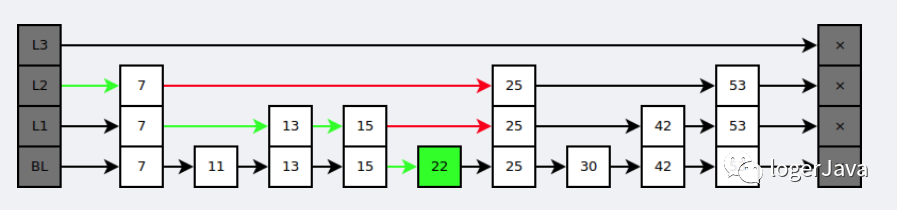
在查找时,从上层指针开始查找,找到对应的区间之后再到下一层去查找。下图演示了查找 22 的过程
与红黑树等平衡树相比,跳跃表具有以下优点 :
插入速度非常快速, 因为不需要进行旋转等操作来维护平衡性
更容易实现
支持无锁操作
参考
Redis 的设计与实现 - 黄健宏 / 著
http://redisbook.com/index.html
CyC2018
https://github.com/CyC2018/CS-Notes
结尾
本篇文章借鉴的博客与书籍比较多, 文内附加的链接大家一定要看哦
我是 loger, 关注 logerJava 更多知识分享等你来看

扫描识别二维码
带你领略不同世界
