



点击上方【蓝色】字体 关注我们


日常饮食应该注意哪些细节?如何提高睡眠质量?哪些坏习惯要尽量避免……随着生活质量的提高,越来越多人开始关注健康的生活方式。今天就和大家分享一些有利于健康的生活好习惯。
01 场景描述
有7个会议室,每个会议室每天都有人开会,某一天的开会时间如下:
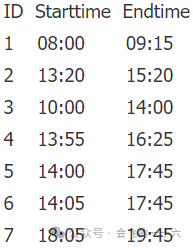
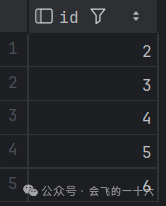
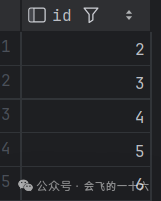
查询出开会时间有重叠的是哪几个会议室?上面预期结果是 ID 2 3 4 5 6
02 数据准备
create table meeting as(select 1 id,'08:00' starttime,'09:15' endtimeunion allselect 2,'13:20','15:20'union allselect 3,'10:00','14:00'union allselect 4,'13:55','16:25'union allselect 5,'14:00','17:45'union allselect 6,'14:05','17:45'union allselect 7,'18:05','19:45')

03 问题分析
方法1:利用 lateral view posexplode()函数将表展开成时间明细表
具体SQL如下:
select id, starttime + pos as hourfrom (select id, substr(starttime, 1, 2) starttime, substr(endtime, 1, 2) endtime, substr(endtime, 1, 2) - substr(starttime, 1, 2) difffrom meeting) tlateral view posexplode(split(space(cast(diff as int)), space(1))) tmp as pos, val
ID HOUR1 81 92 132 142 153 103 113 123 133 144 134 144 154 165 145 155 165 176 146 156 166 177 187 19
select id,count(1) over(partition by hour) flgfrom (select id, starttime + pos as hourfrom (select id, substr(starttime, 1, 2) starttime, substr(endtime, 1, 2) endtime, substr(endtime, 1, 2) - substr(starttime, 1, 2) difffrom meeting) tlateral view posexplode(split(space(cast(diff as int)), space(1))) tmp as pos, val) t
1 8 11 9 13 10 13 11 13 12 14 13 32 13 33 13 34 14 56 14 55 14 53 14 52 14 55 15 46 15 42 15 44 15 45 16 36 16 34 16 35 17 26 17 27 18 17 19 1
(2)过滤出大于等于2的id,并去重获取最终结果
select idfrom (select id, hour, count(1) over (partition by hour) flgfrom (select id, starttime + pos as hourfrom (select id, substr(starttime, 1, 2) starttime, substr(endtime, 1, 2) endtime, substr(endtime, 1, 2) - substr(starttime, 1, 2) difffrom meeting) tlateral view posexplode(split(space(cast(diff as int)), space(1))) tmp as pos, val) t) twhere flg >= 2group by id
方法2:利用数学区间讨论思想求解
详情具体参考文章:
具体讨论方法如下图1所示:
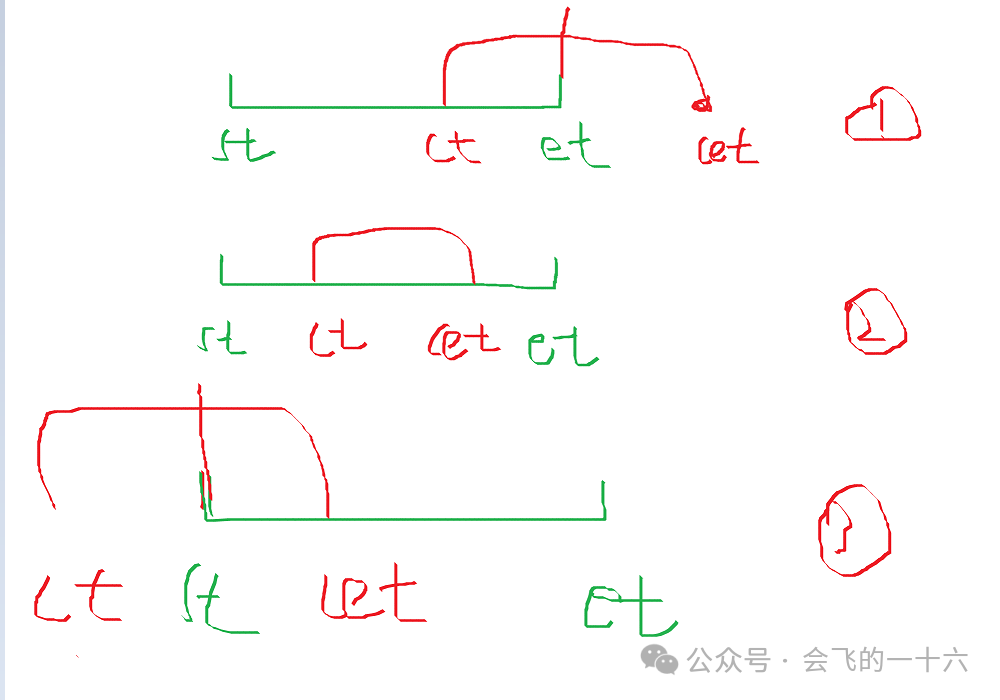
情况1:区间在右
判断条件 cet >= et and ct <= et 重叠区间为【ct,et]】
情况2:区间在内
判断条件为 ct>= st and cet <= et 重叠区间为 【ct,cet】
情况3:区间在左
判断条件 ct <= st and cet >= st 重叠区间为【st,cet】
第一步:先自关联,生成全量行行比较的数据集
selectfrom meeting a,meeting b
1 08:00 09:15 1 08:00 09:152 13:20 15:20 1 08:00 09:153 10:00 14:00 1 08:00 09:154 13:55 16:25 1 08:00 09:155 14:00 17:45 1 08:00 09:156 14:05 17:45 1 08:00 09:157 18:05 19:45 1 08:00 09:151 08:00 09:15 2 13:20 15:202 13:20 15:20 2 13:20 15:203 10:00 14:00 2 13:20 15:204 13:55 16:25 2 13:20 15:205 14:00 17:45 2 13:20 15:206 14:05 17:45 2 13:20 15:207 18:05 19:45 2 13:20 15:201 08:00 09:15 3 10:00 14:002 13:20 15:20 3 10:00 14:003 10:00 14:00 3 10:00 14:004 13:55 16:25 3 10:00 14:005 14:00 17:45 3 10:00 14:006 14:05 17:45 3 10:00 14:007 18:05 19:45 3 10:00 14:001 08:00 09:15 4 13:55 16:252 13:20 15:20 4 13:55 16:253 10:00 14:00 4 13:55 16:254 13:55 16:25 4 13:55 16:255 14:00 17:45 4 13:55 16:256 14:05 17:45 4 13:55 16:257 18:05 19:45 4 13:55 16:251 08:00 09:15 5 14:00 17:452 13:20 15:20 5 14:00 17:453 10:00 14:00 5 14:00 17:454 13:55 16:25 5 14:00 17:455 14:00 17:45 5 14:00 17:456 14:05 17:45 5 14:00 17:457 18:05 19:45 5 14:00 17:451 08:00 09:15 6 14:05 17:452 13:20 15:20 6 14:05 17:453 10:00 14:00 6 14:05 17:454 13:55 16:25 6 14:05 17:455 14:00 17:45 6 14:05 17:456 14:05 17:45 6 14:05 17:457 18:05 19:45 6 14:05 17:451 08:00 09:15 7 18:05 19:452 13:20 15:20 7 18:05 19:453 10:00 14:00 7 18:05 19:454 13:55 16:25 7 18:05 19:455 14:00 17:45 7 18:05 19:456 14:05 17:45 7 18:05 19:457 18:05 19:45 7 18:05 19:45
最终SQL如下:
select distinct b.idfrom meeting a,meeting bwhere ((a.starttime >= b.starttime and a.starttime <= b.endtime)or (a.endtime >= b.starttime and a.endtime <= b.endtime))and a.id <> b.id
三种情况合并为:
a.endtime >= b.starttime and a.starttime <= b.endtime
最终优化调整后的SQL为:
select distinct b.idfrom meeting a,meeting bwhere a.endtime >= b.starttimeand a.starttime <= b.endtimeand a.id <> b.id
04 小 结
本文利用SQL语言,通过两种方式给出了一种时间区间重叠问题的解决方案,并以实际场景为例子进行了详细讲解,其中方法2最为优雅,但需要通过区间讨论得出如下判断表达式,为本题的关键。
a.endtime >= b.starttime and a.starttime <= b.endtime
对应图1关系为:
ct <= et and cet >= st
该表达式包含了图1三种 所有情况。

会飞的一十六
扫描右侧二维码关注我们
点个【在看】 你最好看

文章转载自会飞的一十六,如果涉嫌侵权,请发送邮件至:contact@modb.pro进行举报,并提供相关证据,一经查实,墨天轮将立刻删除相关内容。
