



在本 AI 代理教程中,我们使用语义路由器来选择从 OpenAI LLM 和其他 AI 工具检索信息的最佳方式。
译自How to Build an AI Agent With Semantic Router and LLM Tools,作者 Janakiram MSV。
在上一篇文章中,我介绍了语义路由器: 一种使AI 代理能够为正确的任务选择正确的 LLM 的模式,同时还减少了它们对 LLM 的依赖。在本教程的后续内容中,我们将使用语义路由器项目通过选择最佳信息检索方式(例如是否使用向量数据库和/或基于工具的实时数据检索器)来智能地处理用户查询。
与之前的教程类似,在我们的示例中,我们将使用FlightAware 的 AeroAPI中的数据实时跟踪飞机的航班状态。
首先,请注意,路由器会根据意图动态路由查询,确保检索到最相关的上下文,这使得这种方法独一无二。语义路由器采用 OpenAI 的 LLM 和结构化检索方法,并将它们结合起来,创建了一个自适应的、高响应的助手,可以快速处理对话查询和特定于数据的请求。
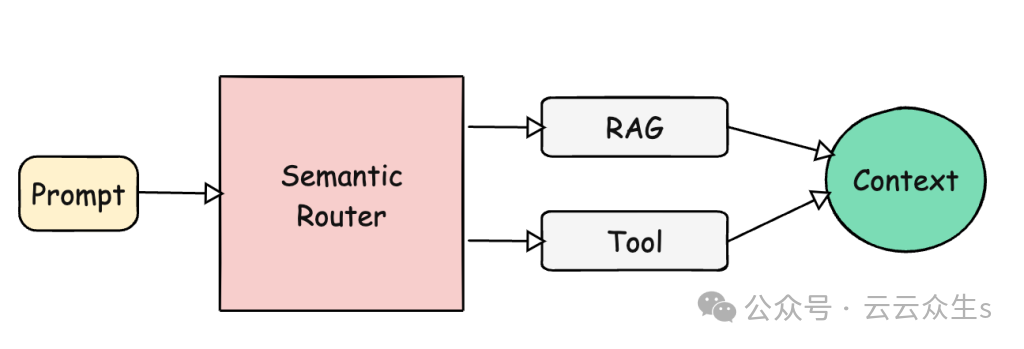
语义路由器建议调用该工具来查询航班时刻表和状态,同时将有关行李政策的查询路由到提供上下文的搜索功能。
让我们逐步分解一下。
步骤 1:设置您的环境
在我们深入研究代码之前,请确保您已安装所需的库。您可以使用 pip 来完成此操作:
pip install openai chromadb requests pytz semantic-router
让我们导入所需的模块。
import osfrom typing import Dict, Anyfrom datetime import datetime, timedeltaimport pytzimport requestsfrom openai import OpenAIimport chromadbfrom chromadb.utils import embedding_functionsfrom semantic_router import Route, RouteLayerfrom semantic_router.encoders import OpenAIEncoderfrom semantic_router.llms.openai import get_schemas_openaifrom semantic_router.llms import OpenAILLM
接下来,为 OpenAI 和 FlightAware AeroAPI 密钥设置您的环境变量:
export OPENAI_API_KEY="your_openai_api_key"export AEROAPI_KEY="your_flightaware_api_key"
这些密钥对于访问教程中使用的外部服务至关重要。
步骤 2:初始化 OpenAI 和 ChromaDB 客户端
我们首先初始化 OpenAI 和 ChromaDB 的客户端。OpenAI 将为我们的查询生成嵌入,而 ChromaDB 将存储和检索上下文数据的嵌入,例如行李政策。
# Initialize OpenAI clientopenai_client = OpenAI(api_key=os.environ["OPENAI_API_KEY"])# Initialize ChromaDB client with a persistent storage pathchroma_client = chromadb.PersistentClient(path="./chroma_db")# Set up embedding function using OpenAI's modelembedding_function = embedding_functions.OpenAIEmbeddingFunction(api_key=os.environ["OPENAI_API_KEY"],model_name="text-embedding-3-small")COLLECTION_NAME = "baggage_policy"
步骤 3:从 AeroAPI 获取航班数据
FlightAware 的 AeroAPI 提供实时航班数据。函数get_flight_context
检索特定航班 ID 的航班信息,包括出发、到达时间和状态。
AEROAPI_BASE_URL = "https://aeroapi.flightaware.com/aeroapi"AEROAPI_KEY = os.getenv("AEROAPI_KEY")def get_flight_context(flight_id: str) -> str:def _get_flight_data() -> dict:session = requests.Session()session.headers.update({"x-apikey": AEROAPI_KEY})start_date = datetime.now().strftime('%Y-%m-%d')end_date = (datetime.now() + timedelta(days=1)).strftime('%Y-%m-%d')response = session.get(f"{AEROAPI_BASE_URL}/flights/{flight_id}?start={start_date}&end={end_date}")response.raise_for_status()return response.json()['flights'][0]def _utc_to_local(utc_date_str: str, local_timezone_str: str) -> str:utc_datetime = datetime.strptime(utc_date_str, '%Y-%m-%dT%H:%M:%SZ').replace(tzinfo=pytz.utc)local_timezone = pytz.timezone(local_timezone_str)local_datetime = utc_datetime.astimezone(local_timezone)return local_datetime.strftime('%Y-%m-%d %H:%M:%S')flight_data = _get_flight_data()depart_time = _utc_to_local(flight_data['scheduled_out'], flight_data['origin']['timezone'])arrival_time = _utc_to_local(flight_data['scheduled_in'], flight_data['destination']['timezone'])return (f"Flight {flight_id} from {flight_data['origin']['city']} to {flight_data['destination']['city']} "f"departs at {depart_time} and arrives at {arrival_time} with a status of {flight_data['status']}.")
此函数从 AeroAPI 获取航班数据,并将 UTC 时间转换为出发和到达机场的当地时区,作为 LLM 提供有关航班时刻表的实时信息的上下文。
步骤 4:使用 ChromaDB 查询行李政策
接下来,我们定义一个查询行李政策信息的方法。这些信息存储在矢量数据库 ChromaDB 中,我们可以使用基于用户输入的嵌入来查询它。
def get_baggage_context(query: str) -> str:collection = chroma_client.get_collection(name=COLLECTION_NAME, embedding_function=embedding_function)results = collection.query(query_texts=[query], n_results=3)if results and results['documents']:return " ".join(results['documents'][0])return "No relevant baggage information found."
在这里,我们通过搜索 ChromaDB 集合,根据用户的查询获取相关的行李政策信息。
现在,我们将使用 OpenAI 的 GPT-40-mini 生成包含上下文(航班状态或行李政策)的响应。
def get_llm_response(query: str, context: str) -> str:response = openai_client.chat.completions.create(model="gpt-4o-mini",messages=[{"role": "system", "content": "You are a helpful airline assistant. Answer the user query based on the context provided."},{"role": "user", "content": f"Query: {query}\nContext: {context}"},],)return response.choices[0].message.content
语言模型接收用户查询和上下文(即航班状态或行李政策),并生成响应。
步骤 6:索引行李政策
让我们在 ChromaDB 中索引行李政策规则,以便我们可以在需要时查询它们。
def index_baggage_policy():baggage_rules = ["Emirates Airlines offers a generous baggage policy that varies based on route, fare type, and cabin class.","Economy passengers are allowed one carry-on bag up to 7 kg with dimensions of 55 x 38 x 20 cm.",# ... more rules]if COLLECTION_NAME not in [col.name for col in chroma_client.list_collections()]:collection = chroma_client.create_collection(name=COLLECTION_NAME,embedding_function=embedding_function,metadata={"hnsw:space": "cosine"})for idx, rule in enumerate(baggage_rules):collection.add(documents=[rule], ids=[f"baggage_rule_{idx}"])print(f"Stored {len(baggage_rules)} baggage rules in ChromaDB.")else:collection = chroma_client.get_collection(name=COLLECTION_NAME)return collection
步骤 7:使用语义路由器路由查询
为了增强用户体验,我们设置了一个路由器,可以智能地确定查询是与航班、行李相关,还是与笑话或诗歌等其他对话任务相关。
def setup_router():encoder = OpenAIEncoder()flight_info = Route(name="flight_info",utterances=["What's the status of my flight?", "When does my flight depart?"],function_schemas=get_schemas_openai([get_flight_context]))baggage_policy = Route(name="baggage_policy",utterances=["What's the baggage allowance?", "How many bags can I bring?"],function_schemas=get_schemas_openai([get_baggage_context]))chat = Route(name="chat",utterances=["Write a poem", "Tell me a joke"])llm = OpenAILLM()return RouteLayer(encoder, routes=[flight_info, baggage_policy, chat], llm=llm)
这一步至关重要。它设置了一个语义路由器,根据意图将用户查询智能路由到适当的函数。它定义了航班信息、行李政策和一般对话的路由。每个路由都使用 OpenAIEncoder 将特定语句链接到函数,以理解查询上下文。路由器随后确定查询是需要来自 ChromaDB 的航班数据和行李详细信息,还是需要对话响应,从而确保系统内正确的处理程序能够准确有效地处理查询。
请注意,我们有三个路由映射到可能的 用户查询。第一个路由通过将函数和参数映射到get_flight_context
函数来映射到 FlightAware API。第二个路由包含与行李政策相关的语句,这些语句指向负责从向量数据库检索数据的get_baggage_context
函数。第三条路线没有关联的函数;它充当“包罗万象”的路线。
步骤 8:处理用户查询和调用工作流
最后,我们通过路由器处理用户查询并提供适当的响应。
def process_query(query: str, router_layer: RouteLayer):response = router_layer(query)context = "No relevant context found."if response.function_call:for call in response.function_call:if call["function_name"] == "get_flight_context":context = get_flight_context(**call["arguments"])elif call["function_name"] == "get_baggage_context":context = get_baggage_context(**call["arguments"])llm_response = get_llm_response(query, context)print(f"Query: {query}")print(f"Context: {context}")print(f"LLM Response: {llm_response}\n")
这是将所有内容联系在一起的主要功能。
def main():index_baggage_policy()router_layer = setup_router()queries = ["What's the status of flight EK524?","What's the size limit for cabin baggage?","Write a poem about a cat."]for query in queries:process_query(query, router_layer)if __name__ == "__main__":main()
完整的代码可在GitHub Gist中找到。
import osfrom typing import Dict, Anyfrom datetime import datetime, timedeltaimport pytzimport requestsfrom openai import OpenAIimport chromadbfrom chromadb.utils import embedding_functionsfrom semantic_router import Route, RouteLayerfrom semantic_router.encoders import OpenAIEncoderfrom semantic_router.llms.openai import get_schemas_openaifrom semantic_router.llms import OpenAILLM# ConstantsAEROAPI_BASE_URL = "https://aeroapi.flightaware.com/aeroapi"export AEROAPI_KEY="your_flightaware_api_key"COLLECTION_NAME = "baggage_policy"# Initialize clientsopenai_client = OpenAI(api_key=os.environ["OPENAI_API_KEY"])embedding_function = embedding_functions.OpenAIEmbeddingFunction(api_key=os.environ["OPENAI_API_KEY"],model_name="text-embedding-3-small")chroma_client = chromadb.PersistentClient(path="./chroma_db")def get_flight_context(flight_id: str) -> str:def _get_flight_data() -> Dict[str, Any]:session = requests.Session()session.headers.update({"x-apikey": AEROAPI_KEY})start_date = datetime.now().date().strftime('%Y-%m-%d')end_date = (datetime.now().date() + timedelta(days=1)).strftime('%Y-%m-%d')api_resource = f"/flights/{flight_id}?start={start_date}&end={end_date}"response = session.get(f"{AEROAPI_BASE_URL}{api_resource}")response.raise_for_status()flights = response.json().get('flights', [])if not flights:raise ValueError(f"No flight data found for flight ID {flight_id}.")return flights[0]def _utc_to_local(utc_date_str: str, local_timezone_str: str) -> str:utc_datetime = datetime.strptime(utc_date_str, '%Y-%m-%dT%H:%M:%SZ').replace(tzinfo=pytz.utc)local_timezone = pytz.timezone(local_timezone_str)local_datetime = utc_datetime.astimezone(local_timezone)return local_datetime.strftime('%Y-%m-%d %H:%M:%S')flight_data = _get_flight_data()dep_key = 'estimated_out' if flight_data.get('estimated_out') else 'scheduled_out'arr_key = 'estimated_in' if flight_data.get('estimated_in') else 'scheduled_in'flight_details = {'source': flight_data['origin']['city'],'destination': flight_data['destination']['city'],'depart_time': _utc_to_local(flight_data[dep_key], flight_data['origin']['timezone']),'arrival_time': _utc_to_local(flight_data[arr_key], flight_data['destination']['timezone']),'status': flight_data['status']}return (f"The current status of flight {flight_id} from {flight_details['source']} to {flight_details['destination']} "f"is {flight_details['status']} with departure time at {flight_details['depart_time']} and arrival time at "f"{flight_details['arrival_time']}.")def get_baggage_context(query: str) -> str:collection = chroma_client.get_collection(name=COLLECTION_NAME, embedding_function=embedding_function)results = collection.query(query_texts=[query], n_results=3)if results and results['documents']:return " ".join(results['documents'][0])return "No relevant baggage information found."def get_llm_response(query: str, context: str) -> str:response = openai_client.chat.completions.create(model="gpt-4o-mini",messages=[{"role": "system", "content": "You are a helpful airline assistant. Answer the user query based on the context provided."},{"role": "user", "content": f"Query: {query}\nContext: {context}"},],)return response.choices[0].message.contentdef index_baggage_policy():baggage_rules = ["Emirates Airlines offers a generous baggage policy that varies based on route, fare type, and cabin class.","For carry-on luggage, Economy passengers are allowed one piece weighing up to 7 kg with dimensions not exceeding 55 x 38 x 20 cm.",# ... (rest of the rules)]if COLLECTION_NAME not in [col.name for col in chroma_client.list_collections()]:collection = chroma_client.create_collection(name=COLLECTION_NAME,embedding_function=embedding_function,metadata={"hnsw:space": "cosine"})for idx, rule in enumerate(baggage_rules):collection.add(documents=[rule], ids=[f"baggage_rule_{idx}"])print(f"Stored {len(baggage_rules)} baggage rules in ChromaDB.")else:collection = chroma_client.get_collection(name=COLLECTION_NAME, embedding_function=embedding_function)return collectiondef setup_router():encoder = OpenAIEncoder()schemas = get_schemas_openai([get_flight_context, get_baggage_context])flight_info = Route(name="flight_info",utterances=["What's the status of my flight?", "When does my flight depart?", "Is my flight on time?", "What's the status of flight EK524?"],function_schemas=schemas)baggage_policy = Route(name="baggage_policy",utterances=["What's the baggage allowance?", "How many bags can I bring?", "What are the luggage restrictions?"],function_schemas=schemas)chitchat = Route(name="chat",utterances=["Write a poem about a cat.", "Tell me a joke about a rat.", "Why did the chicken cross the road?", "Give me a fun fact."])llm = OpenAILLM()return RouteLayer(encoder, routes=[flight_info, baggage_policy, chitchat], llm=llm)def process_query(query: str, router_layer: RouteLayer):response = router_layer(query)context = "No relevant context found."if response.function_call:for call in response.function_call:if call["function_name"] == "get_flight_context":context = get_flight_context(**call["arguments"])elif call["function_name"] == "get_baggage_context":context = get_baggage_context(**call["arguments"])llm_response = get_llm_response(query, context)print(f"Query: {query}")print(f'Function call: {response.function_call}')print(f"Context: {context}")print(f"LLM Response: {llm_response}\n")def main():index_baggage_policy()router_layer = setup_router()queries = ["What's the status of flight EK524?","What's the size limit for cabin baggage?","Write a poem about a cat."]for query in queries:print(f"\nProcessing query: {query}")process_query(query, router_layer)if __name__ == "__main__":main()
