



在上一篇文章中我们分析完了rocketMq的映射文件的创建和获取以及文件预热相关过程,本篇我们来分析刷盘相关的东西,rocketMq提供了2种刷盘策略,同步刷盘和异步刷盘,首先我们来简单看看rocketMq刷盘的差异性
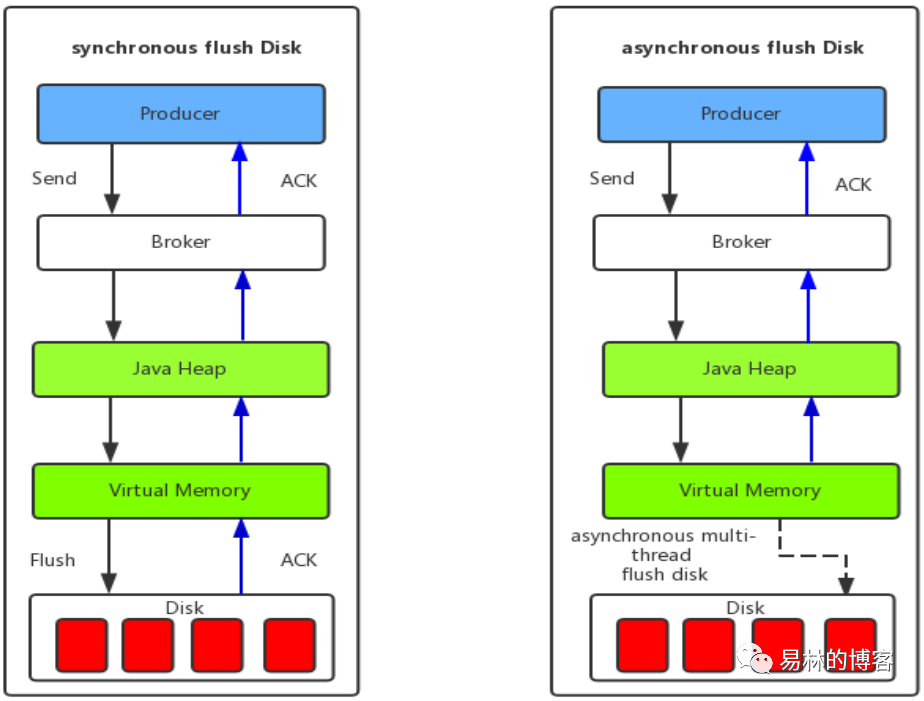
主要就是同步刷盘需要等到真正的刷盘到磁盘后,然后返回给producer才完成整个消息发送过程,而异步刷盘只需要把消息发送的pacheCache中,然后由异步线程自己完成刷盘
1.同步刷盘
1.1.同步刷盘流程分析
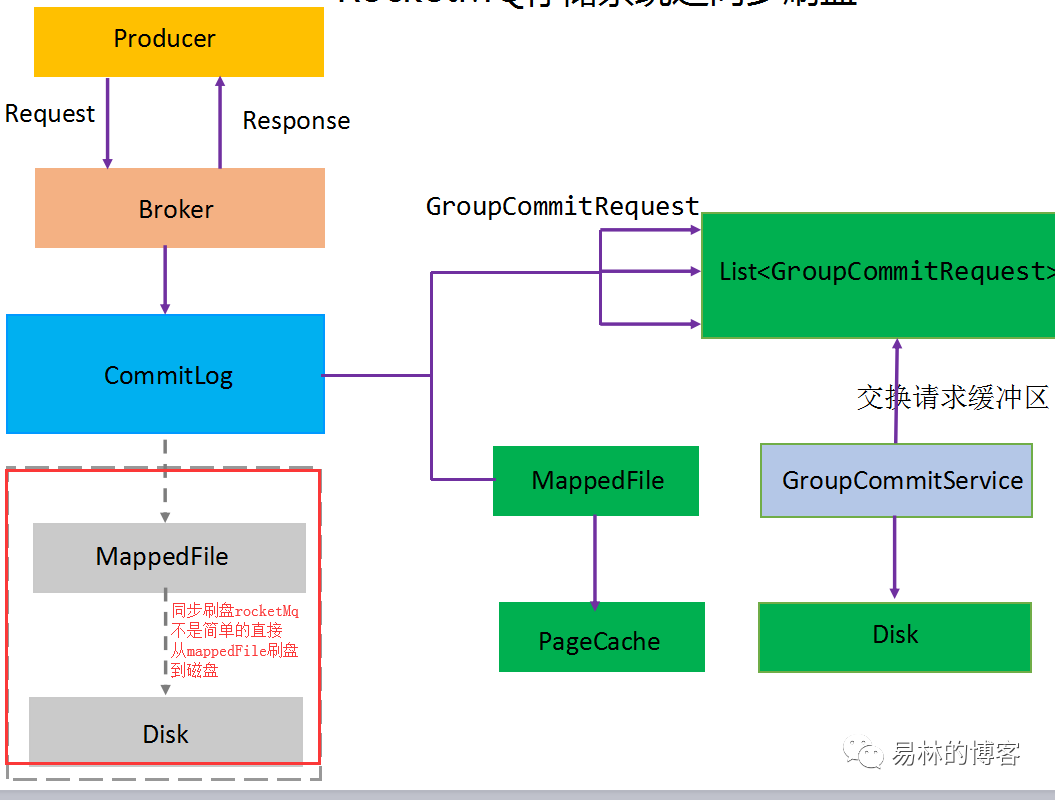
同步刷盘整个过程是消息写入到缓存pageCache后,groupCommitRequest会被唤醒,最终由GroupCommitService完成整个刷盘,为什么这么设计呢,其实在同步刷盘时,如果我们配置不立即刷盘,每次刷盘时会把刷盘请求放入List<GroupCommitRequest中>。然后GroupCommitService线程被唤醒,批量消息刷盘(其实就是从同步退化到异步了,可以简单这么理解)
1.2.源码分析
入口 CommitLog.handleDiskFlush
   public void handleDiskFlush(AppendMessageResult result, PutMessageResult putMessageResult, MessageExt messageExt) {
        // Synchronization flush
        //同步刷盘
        if (FlushDiskType.SYNC_FLUSH == this.defaultMessageStore.getMessageStoreConfig().getFlushDiskType()) {
            final GroupCommitService service = (GroupCommitService) this.flushCommitLogService;
            //需要等到刷盘成功
            if (messageExt.isWaitStoreMsgOK()) {

                //构造刷盘请求
                GroupCommitRequest request = new GroupCommitRequest(result.getWroteOffset() + result.getWroteBytes());
                service.putRequest(request);
                //等待刷盘
                boolean flushOK = request.waitForFlush(this.defaultMessageStore.getMessageStoreConfig().getSyncFlushTimeout());
                if (!flushOK) {
                    log.error("do groupcommit, wait for flush failed, topic: " + messageExt.getTopic() + " tags: " + messageExt.getTags()
                        + " client address: " + messageExt.getBornHostString());
                    //刷盘超时
                    putMessageResult.setPutMessageStatus(PutMessageStatus.FLUSH_DISK_TIMEOUT);
                }
            } else {
                //相当于是异步刷盘,唤醒相关线程
                service.wakeup();
            }
        }
        // Asynchronous flush
        else {
            if (!this.defaultMessageStore.getMessageStoreConfig().isTransientStorePoolEnable()) {
                //异步刷盘之-开启堆外内存方式
                flushCommitLogService.wakeup();
            } else {
                //异步刷盘之 pacheCache方式
                commitLogService.wakeup();
            }
        }
    }
接下来我们分析同步刷盘处理线程,groupCommitService
1.3.GroupCommitService 执行刷盘
       private void doCommit() {
            synchronized (this.requestsRead) {
                if (!this.requestsRead.isEmpty()) {
                    for (GroupCommitRequest req : this.requestsRead) {
                        // There may be a message in the next file, so a maximum of
                        // two times the flush
                        boolean flushOK = false;
                        //之所以是循环2次是因为有些messsage可能是在下一个映射文件中,刷盘2次,保证消息都落盘了
                        for (int i = 0; i < 2 && !flushOK; i++) {

                            //如果刷盘的位置已经大于了或等于当前请求的偏移,说明,该message已经刷盘
                            flushOK = CommitLog.this.mappedFileQueue.getFlushedWhere() >= req.getNextOffset();

                            //没有刷盘,则执行刷盘
                            if (!flushOK) {
                                CommitLog.this.mappedFileQueue.flush(0);
                            }
                        }
                        //唤醒前面等待的request线程
                        req.wakeupCustomer(flushOK);
                    }

                 //更新下刷盘的最新时间
                    long storeTimestamp = CommitLog.this.mappedFileQueue.getStoreTimestamp();
                    if (storeTimestamp > 0) {
                        CommitLog.this.defaultMessageStore.getStoreCheckpoint().setPhysicMsgTimestamp(storeTimestamp);
                    }
                    //清除当前请求
                    this.requestsRead.clear();
                } else {
                    // Because of individual messages is set to not sync flush, it
                    // will come to this process
                    //个别mesage设置为不同步的刷盘策略,将会走这条路劲
                    CommitLog.this.mappedFileQueue.flush(0);
                }
            }
        }

        public void run() {
            CommitLog.log.info(this.getServiceName() + " service started");

            while (!this.isStopped()) {
                try {
                    this.waitForRunning(10);
                    this.doCommit();
                } catch (Exception e) {
                    CommitLog.log.warn(this.getServiceName() + " service has exception. ", e);
                }
            }
上面就是整个刷盘的流程,接下来我们继续分析整个刷盘的过程
  //flushLeastPages  0
  public boolean flush(final int flushLeastPages) {
        boolean result = true;
        //根据要刷盘的位置,获取对应的mappedFile
        MappedFile mappedFile = this.findMappedFileByOffset(this.flushedWhere, this.flushedWhere == 0);
        if (mappedFile != null) {
            long tmpTimeStamp = mappedFile.getStoreTimestamp();
            //刷盘,并返回刷盘的偏移
            int offset = mappedFile.flush(flushLeastPages);
            //记录新的刷盘位置
            long where = mappedFile.getFileFromOffset() + offset;
            result = where == this.flushedWhere;
            this.flushedWhere = where;
            if (0 == flushLeastPages) {
                this.storeTimestamp = tmpTimeStamp;
            }
        }

        return result;
    }


     public int flush(final int flushLeastPages) {
        //做一些条件判断,看是否刷盘,看下面的分析
        if (this.isAbleToFlush(flushLeastPages)) {
            if (this.hold()) {
                int value = getReadPosition();

                try {
                    //We only append data to fileChannel or mappedByteBuffer, never both.
                    if (writeBuffer != null || this.fileChannel.position() != 0) {
                        //开启了堆外内存的方式的刷盘
                        this.fileChannel.force(false);
                    } else {
                        //执行刷盘 ,没有开启堆外内存的方式
                        this.mappedByteBuffer.force();
                    }
                } catch (Throwable e) {
                    log.error("Error occurred when force data to disk.", e);
                }

                this.flushedPosition.set(value);
                this.release();
            } else {
                log.warn("in flush, hold failed, flush offset = " + this.flushedPosition.get());
                this.flushedPosition.set(getReadPosition());
            }
        }
        return this.getFlushedPosition();
    }


        private boolean isAbleToFlush(final int flushLeastPages) {
        //获取当当前的刷盘位置
        int flush = this.flushedPosition.get();
        //获取到写入文件的位置
        int write = getReadPosition();

        //如果文件已经写满了,执行刷盘
        if (this.isFull()) {
            return true;
        }
        //如果    flushLeastPages 延迟刷盘
        if (flushLeastPages > 0) {
            return ((write / OS_PAGE_SIZE) - (flush / OS_PAGE_SIZE)) >= flushLeastPages;
        }
        //写入的message大于已经刷盘的message,执行刷盘
        return write > flush;
    }
大家跟着注释读,应该比较清楚,这样我们就分析完了整个同步刷盘的过程
2.异步刷盘
2.1.异步刷盘流程
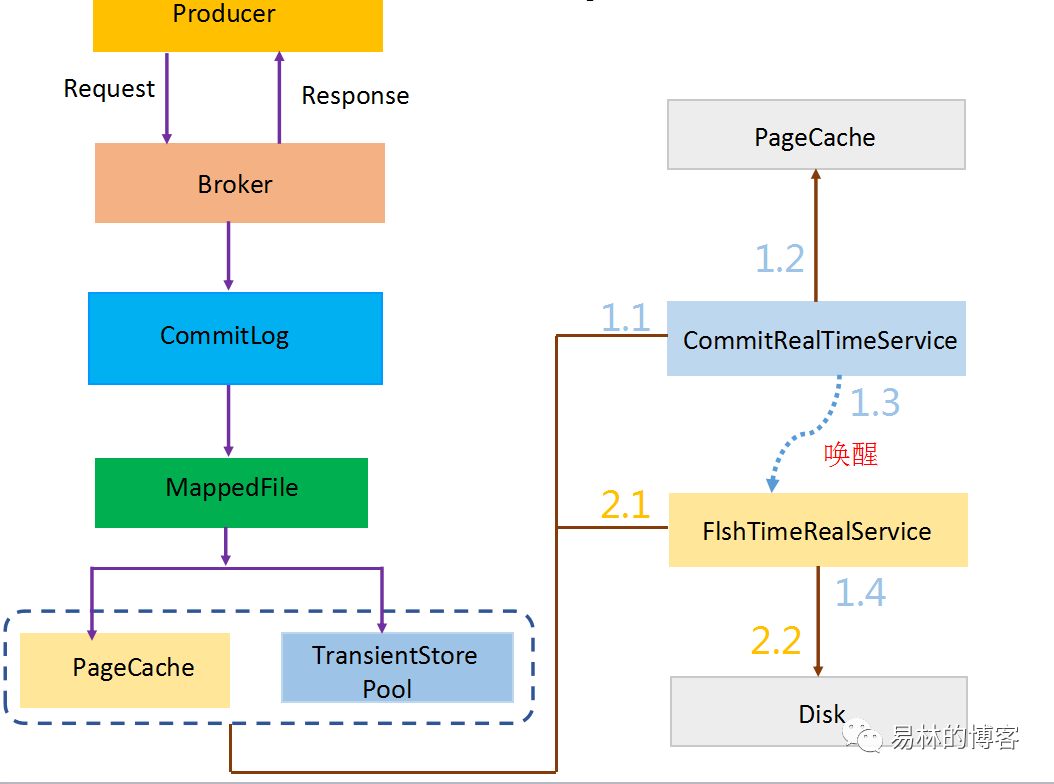
异步刷盘和同步刷盘不同的是,异步刷盘数据写入到缓存后,就完成了,异步刷盘根据是否开启堆外内存有两种方式:
一种是基于pacheCache+FlshTimeRealService完成刷盘过程
另一种是基于TransientStorePoll+CommitRealService-》第一次刷盘到(commit)pacheCache(channel),唤醒FlshTimeRealService,再次执行刷盘,有两次刷盘的动作
2.2.源码分析
入口 CommitLog.handleDiskFlush
   public void handleDiskFlush(AppendMessageResult result, PutMessageResult putMessageResult, MessageExt messageExt) {
        // Synchronization flush
        //同步刷盘
        if (FlushDiskType.SYNC_FLUSH == this.defaultMessageStore.getMessageStoreConfig().getFlushDiskType()) {
          //省略同步刷盘流程
        }
        // Asynchronous flush
        else {
            if (!this.defaultMessageStore.getMessageStoreConfig().isTransientStorePoolEnable()) {
                //异步刷盘之-开启堆外内存方式
                flushCommitLogService.wakeup();
            } else {
                //异步刷盘之 pacheCache方式
                commitLogService.wakeup();
            }
        }
    }
2.3.堆外内存刷盘 CommitRealTimeService
     @Override
        public void run() {
            CommitLog.log.info(this.getServiceName() + " service started");
            while (!this.isStopped()) {

                //commit的间隔
                int interval = CommitLog.this.defaultMessageStore.getMessageStoreConfig().getCommitIntervalCommitLog();

                //每次commit的最小页面
                int commitDataLeastPages = CommitLog.this.defaultMessageStore.getMessageStoreConfig().getCommitCommitLogLeastPages();

                //即使没有达到commit页面的要求,超过一定时间也进行刷盘
                int commitDataThoroughInterval =
                    CommitLog.this.defaultMessageStore.getMessageStoreConfig().getCommitCommitLogThoroughInterval();

                long begin = System.currentTimeMillis();
                //就算刷盘的消息的数量达不到,但是时间达到了也进行刷盘
                if (begin >= (this.lastCommitTimestamp + commitDataThoroughInterval)) {
                    this.lastCommitTimestamp = begin;
                    commitDataLeastPages = 0;
                }

                try {
                    //进行刷盘(其实就是写入pacheCache,还没有真正的刷盘)
                    boolean result = CommitLog.this.mappedFileQueue.commit(commitDataLeastPages);
                    long end = System.currentTimeMillis();
                    if (!result) {
                        this.lastCommitTimestamp = end; // result = false means some data committed.
                        //now wake up flush thread.
                        //如果message写入cache成功,真正执行刷盘
                        flushCommitLogService.wakeup();
                    }

                    if (end - begin > 500) {
                        log.info("Commit data to file costs {} ms", end - begin);
                    }
                    this.waitForRunning(interval);
                } catch (Throwable e) {
                    CommitLog.log.error(this.getServiceName() + " service has exception. ", e);
                }
            }

            boolean result = false;
            //重试刷盘
            for (int i = 0; i < RETRY_TIMES_OVER && !result; i++) {
                result = CommitLog.this.mappedFileQueue.commit(0);
                CommitLog.log.info(this.getServiceName() + " service shutdown, retry " + (i + 1) + " times " + (result ? "OK" : "Not OK"));
            }
            CommitLog.log.info(this.getServiceName() + " service end");
        }
    }
上面是推外内存的刷盘过程,接下来我们继续分析mappedFileQueue.commit
    public boolean commit(final int commitLeastPages) {
        boolean result = true;
        //根据提交位置找到对应的映射文件
        MappedFile mappedFile = this.findMappedFileByOffset(this.committedWhere, this.committedWhere == 0);
        if (mappedFile != null) {
            //数据写入cache
            int offset = mappedFile.commit(commitLeastPages);
            //记录新的提交位置
            long where = mappedFile.getFileFromOffset() + offset;
            result = where == this.committedWhere;
            this.committedWhere = where;
        }

        return result;
    }

  public int commit(final int commitLeastPages) {
        if (writeBuffer == null) {
            //no need to commit data to file channel, so just regard wrotePosition as committedPosition.
            return this.wrotePosition.get();
        }

        //一些刷盘条件的判断,我们上面已经分析过了
        if (this.isAbleToCommit(commitLeastPages)) {
            if (this.hold()) {
                //数据commit
                commit0(commitLeastPages);
                this.release();
            } else {
                log.warn("in commit, hold failed, commit offset = " + this.committedPosition.get());
            }
        }

        // All dirty data has been committed to FileChannel.
        if (writeBuffer != null && this.transientStorePool != null && this.fileSize == this.committedPosition.get()) {
            this.transientStorePool.returnBuffer(writeBuffer);
            this.writeBuffer = null;
        }

        return this.committedPosition.get();
    }


     protected void commit0(final int commitLeastPages) {
        //得到写入位置
        int writePos = this.wrotePosition.get();
        //上一次的写入位置
        int lastCommittedPosition = this.committedPosition.get();

        if (writePos - this.committedPosition.get() > 0) {
            try {
                ByteBuffer byteBuffer = writeBuffer.slice();
                //从上一个位置开始写
                byteBuffer.position(lastCommittedPosition);
                byteBuffer.limit(writePos);
                this.fileChannel.position(lastCommittedPosition);
                //写入到pacheCache中
                this.fileChannel.write(byteBuffer);
                this.committedPosition.set(writePos);
            } catch (Throwable e) {
                log.error("Error occurred when commit data to FileChannel.", e);
            }
        }
    }
到这里我们已经分析完了整个堆外内存的刷盘过程,还有一部唤醒FlshTimeRealService执行真正的刷盘,我们在接下来进行分析
2.4.pacheCache刷盘(非堆外内存)刷盘 FlushRealTimeService
 public void run() {
            CommitLog.log.info(this.getServiceName() + " service started");

            while (!this.isStopped()) {
                //定时刷盘的开关
                boolean flushCommitLogTimed = CommitLog.this.defaultMessageStore.getMessageStoreConfig().isFlushCommitLogTimed();
                //定时刷盘的间隔
                int interval = CommitLog.this.defaultMessageStore.getMessageStoreConfig().getFlushIntervalCommitLog();

                //每次刷盘的最少页面
                int flushPhysicQueueLeastPages = CommitLog.this.defaultMessageStore.getMessageStoreConfig().getFlushCommitLogLeastPages();

                //即使没有达到的刷盘的页面要求,超出一定时间,也要刷盘
                int flushPhysicQueueThoroughInterval =
                    CommitLog.this.defaultMessageStore.getMessageStoreConfig().getFlushCommitLogThoroughInterval();

                boolean printFlushProgress = false;

                // Print flush progress  打印整个刷盘流程
                long currentTimeMillis = System.currentTimeMillis();
                if (currentTimeMillis >= (this.lastFlushTimestamp + flushPhysicQueueThoroughInterval)) {
                    this.lastFlushTimestamp = currentTimeMillis;
                    flushPhysicQueueLeastPages = 0;
                    printFlushProgress = (printTimes++ % 10) == 0;
                }

                try {
                    if (flushCommitLogTimed) {
                        Thread.sleep(interval);
                    } else {
                        this.waitForRunning(interval);
                    }

                    if (printFlushProgress) {
                        this.printFlushProgress();
                    }

                    long begin = System.currentTimeMillis();

                    //刷盘(和上面同步刷盘的过程是一样了,就不再分析了)
                    CommitLog.this.mappedFileQueue.flush(flushPhysicQueueLeastPages);
                    long storeTimestamp = CommitLog.this.mappedFileQueue.getStoreTimestamp();
                    if (storeTimestamp > 0) {
                        //更新最新的刷盘时间
                        CommitLog.this.defaultMessageStore.getStoreCheckpoint().setPhysicMsgTimestamp(storeTimestamp);
                    }
                    long past = System.currentTimeMillis() - begin;
                    if (past > 500) {
                        log.info("Flush data to disk costs {} ms", past);
                    }
                } catch (Throwable e) {
                    CommitLog.log.warn(this.getServiceName() + " service has exception. ", e);
                    this.printFlushProgress();
                }
            }

            // Normal shutdown, to ensure that all the flush before exit
            boolean result = false;
            for (int i = 0; i < RETRY_TIMES_OVER && !result; i++) {
                result = CommitLog.this.mappedFileQueue.flush(0);
                CommitLog.log.info(this.getServiceName() + " service shutdown, retry " + (i + 1) + " times " + (result ? "OK" : "Not OK"));
            }

            this.printFlushProgress();

            CommitLog.log.info(this.getServiceName() + " service end");
        }
到这里我们就分析完了,整个异步刷盘的流程,下面我们把异步刷盘的流程进行总结下
2.5.总结
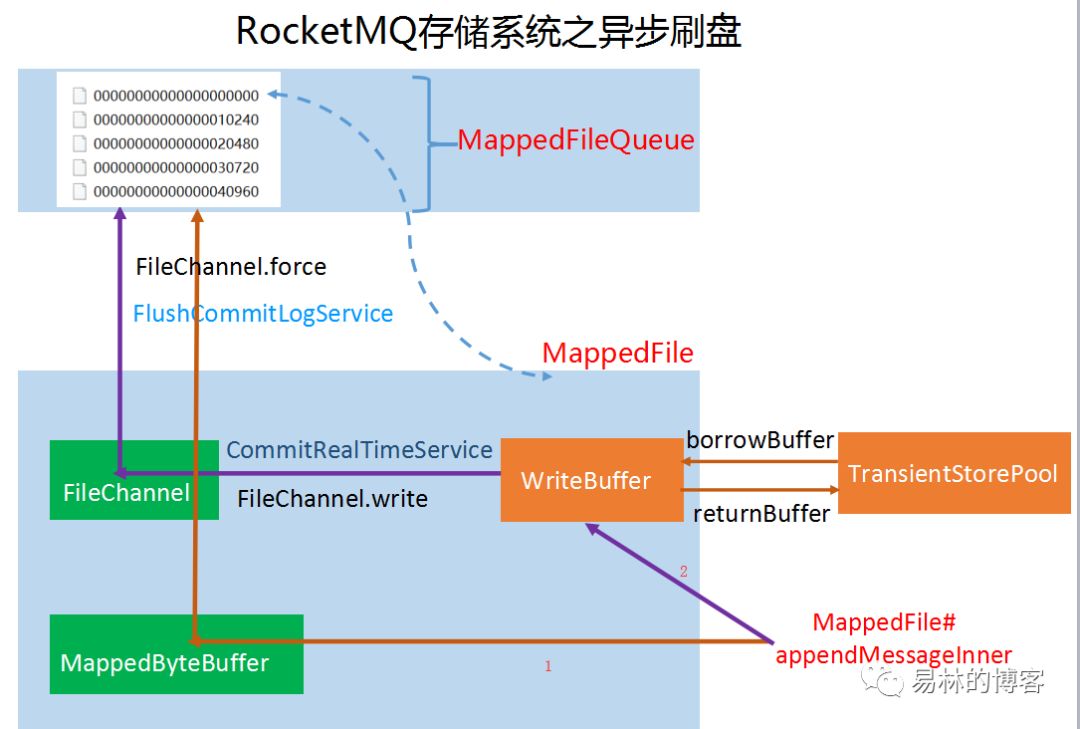
构建映射文件mappedFile有两种方式,一种是基于pacheCache(mappedByteBuffer)一种是基于堆外内存池(writeBuffer),mappedByteBuffer可以直接刷盘到disk,而writeBuffer需要经过commit后到fileChannel(pacheCache)然后执行flush到disk
3.TransientStorePool的总结
来自社区胡宗棠老师的总结
一般有两种,有两种方式进行读写
(1)第一种,Mmap+PageCache的方式,读写消息都走的是pageCache,这样子读写都在pagecache里面不可避免会有锁的问题,在并发的读写操作情况下,会出现缺页中断降低,内存加锁,污染页的回写。
(2)第二种,DirectByteBuffer(堆外内存)+PageCache的两层架构方式,这样子可以实现读写消息分离,写入消息时候写到的是DirectByteBuffer——堆外内存中,读消息走的是PageCache(对于,DirectByteBuffer是两步刷盘,一步是刷到PageCache,还有一步是刷到磁盘文件中),带来的好处就是,避免了内存操作的很多容易堵的地方,降低了时延,比如说缺页中断降低,内存加锁,污染页的回写。
备注:参考了社区陈厚道老师官方社区的分享
