



SQL SERVER 中 window function 的实现
由于上述约束,SQL SERVER 对 window function 的支持程度没有 mysql 高;但是因为有了“窗口的起始和结束位置都与 current row 的数据没有关系”这个约束, SQL SERVER 对 window function 的实现非常简洁,对 IMCI的实现有一定的参考意义,因此这里做一个简单描述。
不带 frame 的 window function
在没有指定 frame 的时候(e.g., SUM(profit) OVER(PARTITION BY country)),window expression 的作用范围是整个 partition,因此 window function 的实现相对简单,只要将输入数据分区,然后计算 window expression 即可;例如下面的 SQL:
SELECT
year,
country,
product,
profit,
SUM(profit) OVER(PARTITION BY country) AS country_profit
FROM
sales;
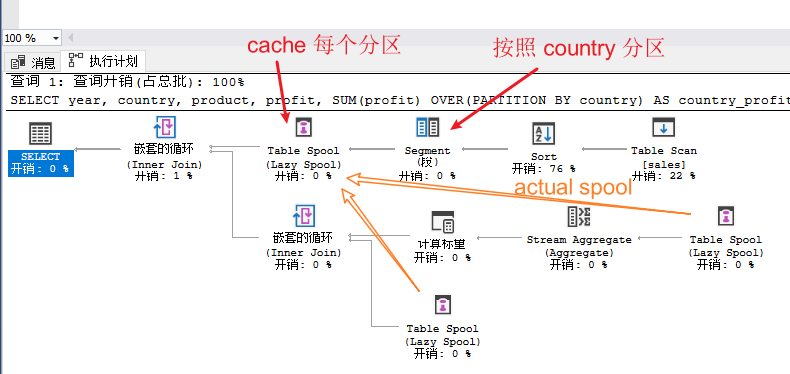
在 SQL SERVER 里面,执行计划如下:
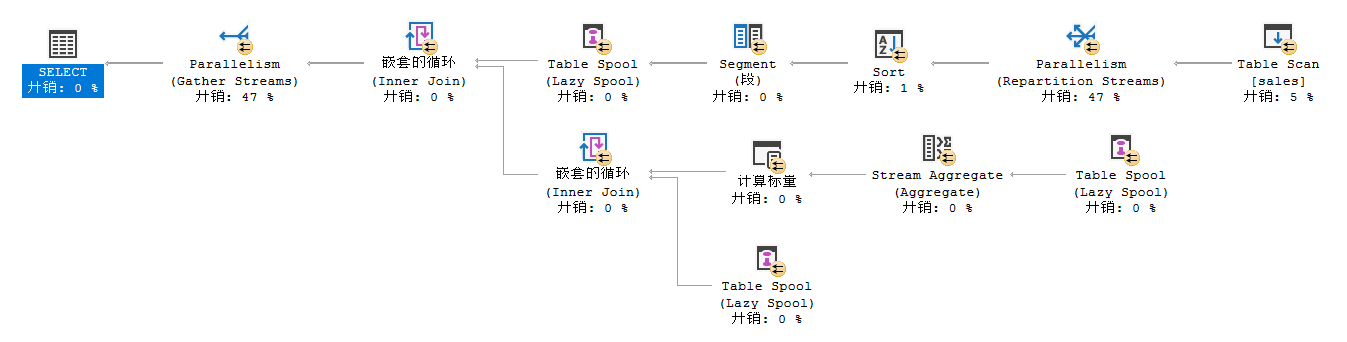
并行的执行计划加了 exchange:
其中比较关键的两个算子是 Segment 和 Table Spool:
- Segment 用于对输入数据进行分区,分成不同的“segment”;在上面的 query 里面,会按照 window 里面的 country 这一列进行分区;这个 Segment 类似于 IMCI 的 HashJoin 和 HashGroupby 里面的 partition,区别在于这个 Segment 算子依赖于前面的 Sort 算子做“streaming”的分区,而 IMCI 的 partition 直接用 hash 的方式进行分区,速度上会有一些优势;
- Table Spool 用于“cache”输入的数据,类似于 IMCI 的 Materialize 算子,区别在于:
- table spool 有 lazy spool 和 eager spool 的区别,lazy spool 只会被动 cache 那些“流经它的数据”;
- spool 下面如果是 segement 算子,则会有“segment spool”的行为,下面会描述;
- spool 算子有 primary spool 和非 primary spool 的区分;primary spool 是真正保存数据的,非 primary spool 则是对 primary spool 的引用;上图中,上面的 spool 是 primary spool,下面两个 spool 是非 primary spool;区分这两种 spool 的一个用处是,可以保持一个树状的执行计划,而不是有 common child 的 DAG;比如一个 query 如果在多个地方引用了同一个 VIEW,那么只需要一个地方物化这个 VIEW(i.e., primary spool),其他地方引用这个 spool 就行(非 primary spool);又比如在子查询的处理中,也可以这么处理 shared sub-plan;
这个执行计划的执行过程是:
- table scan -> sort -> segment 首先将数据分区
- table spool 的每次 fetch from segment,都会取一个完整的 segment
- 顶层的 nested loop join 驱动下面 nested loop join 执行
下面的 nested loop join 的 predicate 是 true,其子节点分别
- 从 table spool 中取每个 segment (i.e., 每个 partition)的数据,进行 stream aggregate(i.e., SUM(profit));
- 从 table spool 中取每个 segment
将两个子节点 join 起来,就可以得到一个 partition 的结果集;
需要说明的是:
- 真正对每个 partition 进行运算的是第二个 nested loop join,第一个 nested loop join (i.e., SELECT 后面那个)只是为了驱动 table scan -> sort -> segment -> table spool 这条 pipeline,将每个 segment 保存到 spool 里面;
- 这里的 table spool 下面挂着一个 segment 算子,因此每次 cache 都只是 cache 一个“分区”
带 frame 的 window function
在指定 frame 的 window function 里面,当窗口移动到下一行,窗口的范围都会随之改变,因此如何在这种情况下快速计算不同窗口的值,就需要一定技巧。
与 MySQL 不同的是,在 SQL SERVER 的 window function 里面,“窗口的起始和结束位置都与 current row 的数据没有关系”,也就是说,
- 窗口是定长的,或者
- 窗口从 partition 的第一行/最后一行开始不断扩张/缩小(e.g, ROWS BETWEEN UNBOUNDED PRECEDING AND CURRENT ROW)
因此在带 frame 的 window function 里面,SQL SERVER 使用一个 “window spool”来实现。例如下面的 SQL:
SELECT
year,
country,
product,
profit,
SUM(profit) OVER(
PARTITION BY country
ORDER BY profit
ROWS BETWEEN 3 PRECEDING and CURRENT ROW --- 窗口范围是前三行到当前行
) AS country_profit0
FROM
sales;
在这个例子里面,窗口的访问是前三行到当前行,其执行计划是:

其中的 window spool 的主要作用是:
- 将 segment 中的每个分区 cache 住(与上文的 table spool 类似);
- 在往上吐数据时,为每个 window 的数据增加一个 “WindowCount”,使得同一个 window 中的行拥有相同的 WindowCount,可以被聚合到一起;
例如,对于如下属于同一个分区的数据:
+------+---------+---------+--------+
| year | country | product | profit |
+------+---------+---------+--------+
| 1999 | FINLAND | P0 | 100 |
| 2000 | FINLAND | P1 | 100 |
| 2001 | FINLAND | P2 | 100 |
| 2002 | FINLAND | P3 | 100 |
| 2003 | FINLAND | P4 | 100 |
| 2004 | FINLAND | P5 | 100 |
+------+---------+---------+--------+
Window spool 向上吐数据时,其中一个方式是:
第 1 次吐数据:
+------+---------+---------+--------+-------------+
| year | country | product | profit | WindowCount |
+------+---------+---------+--------+-------------+
| 1999 | FINLAND | P0 | 100 | 1 |
+------+---------+---------+--------+-------------+
第 2 次吐数据:
+------+---------+---------+--------+-------------+
| year | country | product | profit | WindowCount |
+------+---------+---------+--------+-------------+
| 1999 | FINLAND | P0 | 100 | 2 |
| 2000 | FINLAND | P1 | 100 | 2 |
+------+---------+---------+--------+-------------+
第 3 次吐数据:
+------+---------+---------+--------+-------------+
| year | country | product | profit | WindowCount |
+------+---------+---------+--------+-------------+
| 1999 | FINLAND | P0 | 100 | 3 |
| 2000 | FINLAND | P1 | 100 | 3 |
| 2001 | FINLAND | P2 | 100 | 3 |
+------+---------+---------+--------+-------------+
第 4 次吐数据:
+------+---------+---------+--------+-------------+
| year | country | product | profit | WindowCount |
+------+---------+---------+--------+-------------+
| 1999 | FINLAND | P0 | 100 | 4 |
| 2000 | FINLAND | P1 | 100 | 4 |
| 2001 | FINLAND | P2 | 100 | 4 |
| 2002 | FINLAND | P3 | 100 | 4 |
+------+---------+---------+--------+-------------+
第 5 次吐数据:
+------+---------+---------+--------+-------------+
| year | country | product | profit | WindowCount |
+------+---------+---------+--------+-------------+
| 2000 | FINLAND | P1 | 100 | 5 |
| 2001 | FINLAND | P2 | 100 | 5 |
| 2002 | FINLAND | P3 | 100 | 5 |
| 2003 | FINLAND | P4 | 100 | 5 |
+------+---------+---------+--------+-------------+
(当然,也可以把这个 5 次合并成一次)
由于每个 window 的 WindowCount 是相同的,因此上面的 stream aggr 只需要 group by WindowCount 就可以得到正确的结果。
不难看出,因为做了重复运算,因此这里的复杂度是 O(N * M),N 是数据量,M 是窗口长度。
对多个 window function 的处理
当一个 query block 里面出现多个 window function 时,e.g.,:
SELECT
col0,
col1,
window_expr0(...) over (window0),
window_expr1(...) over (window1)
FROM
tables;
SQL SERVER 的处理方法是:
- 当多个 window function 里面的 window 定义相同时,做合并(e.g., 使用同一个 window spool);
- 当多个window function 里面的 window 定义不同时(e.g., partition columns 不同,或者 frame 的定义不同),在一个 window spool 上叠加另一个 window spool。
其他数据库中 window function 的实现
window function 三要素(partition、order、frame)中 partition 、sort 的处理都比较通用(要么是排序要么是哈希,同时考虑上并行处理时的如何对数据分区),因此这里忽略。
不同数据库对 frame 的处理却不太一样,这里简单描述一下:
POSTGRESQL
在窗口移动的过程中保存一个 “running aggregation”,因此对于那种不断扩张的窗口定义(e.g., range between unbounded preceding and current row),有加速作用;但是对于定长的移动窗口(e.g., sum(b) over (order by a rows between 5 preceding and 5 following)),作用不大;
(注:从 paper 里面读的,没有读代码)
MYSQL
从 mysql80 的 sql/sql_executor.cc 文件的里 process_buffered_windowing_record() 这个函数上方的长注释大概可以看出 mysql 的处理和优化逻辑:
- 对于 range between unbounded preceding and current row 这种可以用 running aggregation 的情况,使用 running aggregation;
- 对于 sum(b) over (order by a rows between 5 preceding and 5 following) 这种定长窗口移动,且 window expression 是 SUM / AVG 等函数时,可以在窗口移动的时候,把上一个窗口的边界值去掉(i.e, Removable Cumulative Aggregation);这种优化在某些情况下会有精度问题,因此可以通过 windowing_use_high_precision 这个开关选择是否打开;
- 对于其他的情况,利用一个 window buffer,在窗口移动的时候将数据拷到这个 buffer 里面,然后算 window expression;这种算法 worst case 的复杂度还是 O(n * m), n 是数据量,m 是窗口的最大长度;
看起来 mysql 的优化还是比较到位的。
ORACLE
暂时没找到相关资料。
HYPER
对于常见窗口定义,维持“running aggregation”,或者 “Removable Cumulative Aggregation”,来快速得到window expression 的值;对于其他情况,利用一个线段树(segment tree)来保证无论窗口如何变化,使得取某一个窗口的 window expression 值,最多只需 log n 的时间,因此 worst case 的性能是 O(n log(n)); 参考 《Efficient Processing of Window Functions in Analytical SQL Queries》这篇 paper。
这种方式既不会影响一般情况下的性能,又能够限制 worst case 的复杂度,是比较好的处理方式。
