



本文主讲kafka在发送数据时会经历哪些,以及他是如何保证分区有序,以及失败后处理等。
开篇流程图
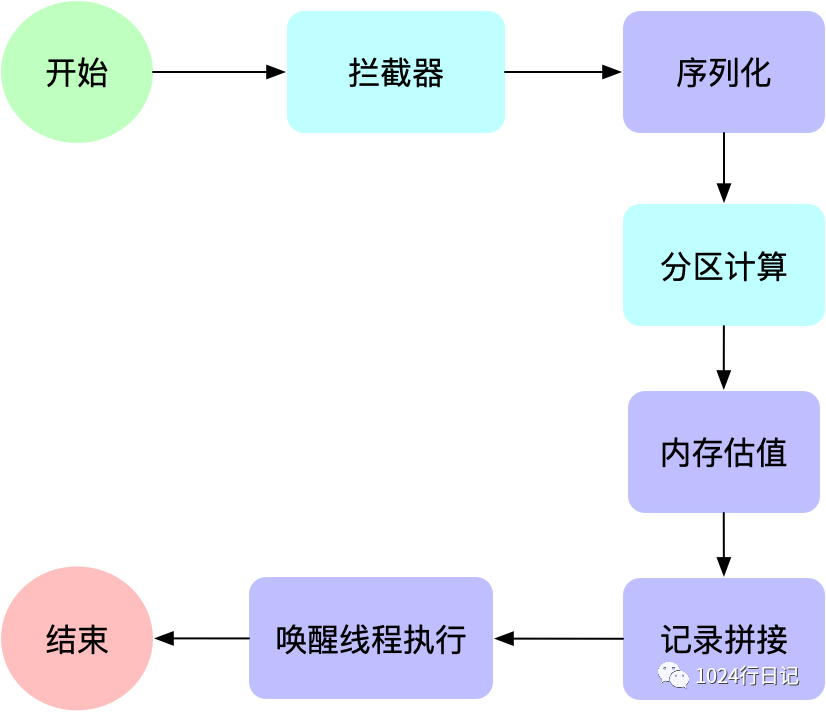
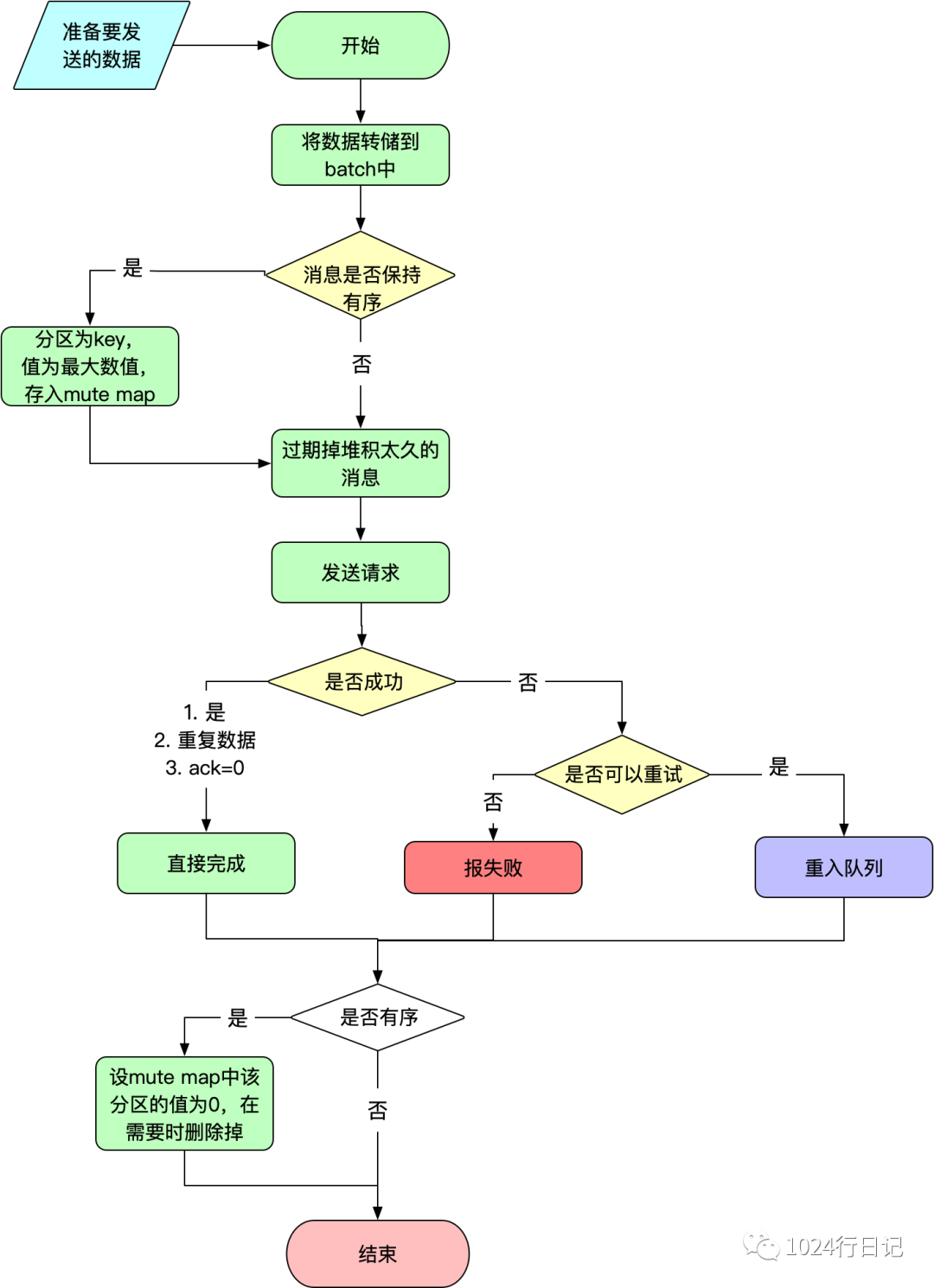
大家都知道kafka发送是异步的,所以他有两个阶段——一个是预备发送阶段,一个是发送阶段。
下面看图速览,下面看完代码可以回过头来在看下图,加深印象。
预备流程图
预备流程图
其中,蓝色部分表示可以定制的部分。
发送流程图
发送流程图
代码分析
开始发送
kafka的发送方法org.apache.kafka.clients.producer.KafkaProducer#send(org.apache.kafka.clients.producer.ProducerRecord<K,V>, org.apache.kafka.clients.producer.Callback)
中:
  public Future<RecordMetadata> send(ProducerRecord<K, V> record, Callback callback) {
        // kafka拦截器,可以对全局所有消息进行处理。这个方法不会抛出异常
        ProducerRecord<K, V> interceptedRecord = this.interceptors.onSend(record);
        return doSend(interceptedRecord, callback);
    }
关于拦截器,另有一文叙议。
从上面进入到关注的重点——发送方法org.apache.kafka.clients.producer.KafkaProducer#doSend
:
    private Future<RecordMetadata> doSend(ProducerRecord<K, V> record, Callback callback) {
        TopicPartition tp = null;
        try {
            throwIfProducerClosed();
            // 首先检测元数据可用
            ClusterAndWaitTime clusterAndWaitTime;
            try {
                clusterAndWaitTime = waitOnMetadata(record.topic(), record.partition(), maxBlockTimeMs);
            } catch (KafkaException e) {
                if (metadata.isClosed())
                    throw new KafkaException("Producer closed while send in progress", e);
                throw e;
            }
           // 剩余等待时间 = 总阻塞时间 - 在等待集群元数据上花费的时间
            long remainingWaitMs = Math.max(0, maxBlockTimeMs - clusterAndWaitTime.waitedOnMetadataMs);
            Cluster cluster = clusterAndWaitTime.cluster;
            byte[] serializedKey;
            try {
                // key的序列化
                serializedKey = keySerializer.serialize(record.topic(), record.headers(), record.key());
            } catch (ClassCastException cce) {
                throw new SerializationException("Can't convert key of class " + record.key().getClass().getName() +
                        " to class " + producerConfig.getClass(ProducerConfig.KEY_SERIALIZER_CLASS_CONFIG).getName() +
                        " specified in key.serializer", cce);
            }
            byte[] serializedValue;
            try {
                // value的序列化
                serializedValue = valueSerializer.serialize(record.topic(), record.headers(), record.value());
            } catch (ClassCastException cce) {
                throw new SerializationException("Can't convert value of class " + record.value().getClass().getName() +
                        " to class " + producerConfig.getClass(ProducerConfig.VALUE_SERIALIZER_CLASS_CONFIG).getName() +
                        " specified in value.serializer", cce);
            }
            // 计算分区(如果指定,则直接用,否则走分区器)
            int partition = partition(record, serializedKey, serializedValue, cluster);
            tp = new TopicPartition(record.topic(), partition);

            setReadOnly(record.headers());
            Header[] headers = record.headers().toArray();
            // 估算数据最大可用多少大小
            int serializedSize = AbstractRecords.estimateSizeInBytesUpperBound(apiVersions.maxUsableProduceMagic(),
                    compressionType, serializedKey, serializedValue, headers);
            //校验大小(默认范围:小于1M,)
            ensureValidRecordSize(serializedSize);
            //记录的时间设置
            long timestamp = record.timestamp() == null ? time.milliseconds() : record.timestamp();
            log.trace("Sending record {} with callback {} to topic {} partition {}", record, callback, record.topic(), partition);
            // 生产者回调:将确保调用你提供的callback和interceptor的callback
            Callback interceptCallback = new InterceptorCallback<>(callback, this.interceptors, tp);

            if (transactionManager != null && transactionManager.isTransactional())
                transactionManager.maybeAddPartitionToTransaction(tp);
            // 记录的拼接
            RecordAccumulator.RecordAppendResult result = accumulator.append(tp, timestamp, serializedKey,
                    serializedValue, headers, interceptCallback, remainingWaitMs);
            // 如果满了(队列长度大于1 或者 已写字节>=写入上限(batch.size))或者是新批次,就唤醒线程
            if (result.batchIsFull || result.newBatchCreated) {
                log.trace("Waking up the sender since topic {} partition {} is either full or getting a new batch", record.topic(), partition);
                // 此时将sender从selector()方法中唤醒,要传输数据了。
                this.sender.wakeup();
            }
            return result.future;
        } catch (...) {
         //...省略异常
        }
    }
记录拼接
下面重点看一下记录的拼接这一部分,将数据拼接到双向队列deque中。
    public RecordAppendResult append(TopicPartition tp,
                                     long timestamp,
                                     byte[] key,
                                     byte[] value,
                                     Header[] headers,
                                     Callback callback,
                                     long maxTimeToBlock) throws InterruptedException {
        // 跟踪追加线程的数量,以确保我们不会丢批次
        appendsInProgress.incrementAndGet();
        ByteBuffer buffer = null;
        if (headers == null) headers = Record.EMPTY_HEADERS;
        try {
            // 检查是否有在处理中的批次(因为一个分区只有一个deque)
            Deque<ProducerBatch> dq = getOrCreateDeque(tp);
           // 锁住deque,添加数据
            synchronized (dq) {
                if (closed)
                    throw new KafkaException("Producer closed while send in progress");
                RecordAppendResult appendResult = tryAppend(timestamp, key, value, headers, callback, dq);
                if (appendResult != null)
                    return appendResult;
            }

            byte maxUsableMagic = apiVersions.maxUsableProduceMagic();
            int size = Math.max(this.batchSize, AbstractRecords.estimateSizeInBytesUpperBound(maxUsableMagic, compression, key, value, headers));
            log.trace("Allocating a new {} byte message buffer for topic {} partition {}", size, tp.topic(), tp.partition());
            //分配大小,默认为batch.size大小。16384,即16K
            buffer = free.allocate(size, maxTimeToBlock);
            synchronized (dq) {
                if (closed)
                    throw new KafkaException("Producer closed while send in progress");

                RecordAppendResult appendResult = tryAppend(timestamp, key, value, headers, callback, dq);
                if (appendResult != null) {
                    return appendResult;
                }

                MemoryRecordsBuilder recordsBuilder = recordsBuilder(buffer, maxUsableMagic);
                ProducerBatch batch = new ProducerBatch(tp, recordsBuilder, time.milliseconds());
                // 如果是第一次,直接看这里。上面的都添加不成功。
                // 添加到batch
                FutureRecordMetadata future = Utils.notNull(batch.tryAppend(timestamp, key, value, headers, callback, time.milliseconds()));
                // 将batch添加到deque中
                dq.addLast(batch);
                incomplete.add(batch);

                buffer = null;
                // 返回结果。此处可以看到队列长度大于1或者队列已满就认为队列已满
                return new RecordAppendResult(future, dq.size() > 1 || batch.isFull(), true);
            }
        } finally {
            if (buffer != null)
                free.deallocate(buffer);
            appendsInProgress.decrementAndGet();
        }
    }
下面来看下上面的tryAppend方法org.apache.kafka.clients.producer.internals.RecordAccumulator#tryAppend
。这个方法是在deque中已经有数据的时候会执行到这里的。取出最后一个,然后append上去。
 private RecordAppendResult tryAppend(long timestamp, byte[] key, byte[] value, Header[] headers,
                                         Callback callback, Deque<ProducerBatch> deque) {
        ProducerBatch last = deque.peekLast();
        if (last != null) {
            FutureRecordMetadata future = last.tryAppend(timestamp, key, value, headers, callback, time.milliseconds());
            if (future == null)
                last.closeForRecordAppends();
            else
                return new RecordAppendResult(future, deque.size() > 1 || last.isFull(), false);
        }
        return null;
    }
开始准备发送数据org.apache.kafka.clients.producer.internals.Sender#sendProducerData
。
private long sendProducerData(long now) {
        Cluster cluster = metadata.fetch();

        // 获取要发送数据的分区清单
        RecordAccumulator.ReadyCheckResult result = this.accumulator.ready(cluster, now);

        // 如果leader不知道有任何分区,强制更新元数据信息
        if (!result.unknownLeaderTopics.isEmpty()) {

            for (String topic : result.unknownLeaderTopics)
                this.metadata.add(topic);

            log.debug("Requesting metadata update due to unknown leader topics from the batched records: {}", result.unknownLeaderTopics);

            this.metadata.requestUpdate();
        }

        // 移除不需要发送的节点
        Iterator<Node> iter = result.readyNodes.iterator();
        long notReadyTimeout = Long.MAX_VALUE;
        while (iter.hasNext()) {
            Node node = iter.next();
            if (!this.client.ready(node, now)) {
                iter.remove();
                notReadyTimeout = Math.min(notReadyTimeout, this.client.pollDelayMs(node, now));
            }
        }

        // 创建生产请求
        // 将指定节点的数据转储到batch中
        Map<Integer, List<ProducerBatch>> batches = this.accumulator.drain(cluster, result.readyNodes,
                this.maxRequestSize, now);
         // 消息是否保持有序,guaranteeMessageOrder默认为false。
         // MAX_IN_FLIGHT_REQUESTS_PER_CONNECTION设置为1时,该order为true。
        if (guaranteeMessageOrder) {
            // 将要发送消息的分区放入mute map中,value为long类型最大值
            for (List<ProducerBatch> batchList : batches.values()) {
                for (ProducerBatch batch : batchList)
                    this.accumulator.mutePartition(batch.topicPartition);
            }
        }
         // 防止批次在累加器accumulator中呆太久,即消息堆积,过期掉他们
        List<ProducerBatch> expiredBatches = this.accumulator.expiredBatches(this.requestTimeoutMs, now);
        if (!expiredBatches.isEmpty())
            log.trace("Expired {} batches in accumulator", expiredBatches.size());
        for (ProducerBatch expiredBatch : expiredBatches) {
         // 失败批次的处理,同时返回超时异常
            failBatch(expiredBatch, -1, NO_TIMESTAMP, expiredBatch.timeoutException(), false);
            if (transactionManager != null && expiredBatch.inRetry()) {
                transactionManager.markSequenceUnresolved(expiredBatch.topicPartition);
            }
        }
         // 更新生产者统计数据,每一个topic发送的大小、数量、压缩速率等
        sensors.updateProduceRequestMetrics(batches);

        long pollTimeout = Math.min(result.nextReadyCheckDelayMs, notReadyTimeout);
        if (!result.readyNodes.isEmpty()) {
            log.trace("Nodes with data ready to send: {}", result.readyNodes);
            pollTimeout = 0;
        }
         // 发送请求
        sendProduceRequests(batches, now);

        return pollTimeout;
    }
开始发送生产者请求org.apache.kafka.clients.producer.internals.Sender#sendProduceRequest
。
private void sendProduceRequest(long now, int destination, short acks, int timeout, List<ProducerBatch> batches) {
        if (batches.isEmpty())
            return;

        Map<TopicPartition, MemoryRecords> produceRecordsByPartition = new HashMap<>(batches.size());
        final Map<TopicPartition, ProducerBatch> recordsByPartition = new HashMap<>(batches.size());

        // 头部魔数处理,用于校对请求协议版本等信息,忽略掉
        byte minUsedMagic = apiVersions.maxUsableProduceMagic();
        for (ProducerBatch batch : batches) {
            if (batch.magic() < minUsedMagic)
                minUsedMagic = batch.magic();
        }

        for (ProducerBatch batch : batches) {
            TopicPartition tp = batch.topicPartition;
            MemoryRecords records = batch.records();

            if (!records.hasMatchingMagic(minUsedMagic))
                records = batch.records().downConvert(minUsedMagic, 0, time).records();
            produceRecordsByPartition.put(tp, records);
            recordsByPartition.put(tp, batch);
        }

        String transactionalId = null;
        if (transactionManager != null && transactionManager.isTransactional()) {
            transactionalId = transactionManager.transactionalId();
        }
         // 构建请求
        ProduceRequest.Builder requestBuilder = ProduceRequest.Builder.forMagic(minUsedMagic, acks, timeout,
                produceRecordsByPartition, transactionalId);
        RequestCompletionHandler callback = new RequestCompletionHandler() {
            public void onComplete(ClientResponse response) {
                // 处理生产者响应体
                handleProduceResponse(response, recordsByPartition, time.milliseconds());
            }
        };

        String nodeId = Integer.toString(destination);
         // 这个callback就是上面注册的 处理响应体的 方法
        ClientRequest clientRequest = client.newClientRequest(nodeId, requestBuilder, now, acks != 0,
                requestTimeoutMs, callback);
         // 发送请求
        client.send(clientRequest, now);
        log.trace("Sent produce request to {}: {}", nodeId, requestBuilder);
    }
处理响应
下面看处理响应体方法org.apache.kafka.clients.producer.internals.Sender#handleProduceResponse
:
private void handleProduceResponse(ClientResponse response, Map<TopicPartition, ProducerBatch> batches, long now) {
        RequestHeader requestHeader = response.requestHeader();
        long receivedTimeMs = response.receivedTimeMs();
        int correlationId = requestHeader.correlationId();
        // 连接断开处理
        if (response.wasDisconnected()) {
            log.trace("Cancelled request with header {} due to node {} being disconnected",
                    requestHeader, response.destination());
            for (ProducerBatch batch : batches.values())
                completeBatch(batch, new ProduceResponse.PartitionResponse(Errors.NETWORK_EXCEPTION), correlationId, now, 0L);
          // 版本不匹配处理
        } else if (response.versionMismatch() != null) {
            log.warn("Cancelled request {} due to a version mismatch with node {}",
                    response, response.destination(), response.versionMismatch());
            for (ProducerBatch batch : batches.values())
                completeBatch(batch, new ProduceResponse.PartitionResponse(Errors.UNSUPPORTED_VERSION), correlationId, now, 0L);
        } else {
            log.trace("Received produce response from node {} with correlation id {}", response.destination(), correlationId);
            // 如果响应还有响应体的处理
            // 发送成功会进入到这里
            if (response.hasResponse()) {
                ProduceResponse produceResponse = (ProduceResponse) response.responseBody();
                for (Map.Entry<TopicPartition, ProduceResponse.PartitionResponse> entry : produceResponse.responses().entrySet()) {
                    TopicPartition tp = entry.getKey();
                    ProduceResponse.PartitionResponse partResp = entry.getValue();
                    ProducerBatch batch = batches.get(tp);
                    completeBatch(batch, partResp, correlationId, now, receivedTimeMs + produceResponse.throttleTimeMs());
                }
                this.sensors.recordLatency(response.destination(), response.requestLatencyMs());
            } else {
                // 剩下的都是ack=0的,全部完成就完了
                for (ProducerBatch batch : batches.values()) {
                    completeBatch(batch, new ProduceResponse.PartitionResponse(Errors.NONE), correlationId, now, 0L);
                }
            }
        }
    }
可以看到上面的每一个分支都会走到completeBatch方法,这个方法负责完成或者重试给定的batch。那么我们来看下这个方法org.apache.kafka.clients.producer.internals.Sender#completeBatch(org.apache.kafka.clients.producer.internals.ProducerBatch, org.apache.kafka.common.requests.ProduceResponse.PartitionResponse, long, long, long)
:
private void completeBatch(ProducerBatch batch, ProduceResponse.PartitionResponse response, long correlationId,
                               long now, long throttleUntilTimeMs) {
        Errors error = response.error;
        // 如果错误是消息太大,且记录数>1且(魔数不对 或 是压缩批次)
        if (error == Errors.MESSAGE_TOO_LARGE && batch.recordCount > 1 &&
                (batch.magic() >= RecordBatch.MAGIC_VALUE_V2 || batch.isCompressed())) {
            // 如果消息体太大,分割消息成小批次,并将消息小批发送过去
            log.warn("Got error produce response in correlation id {} on topic-partition {}, splitting and retrying ({} attempts left). Error: {}",
                     correlationId,
                     batch.topicPartition,
                     this.retries - batch.attempts(),
                     error);
            // 事务,忽略掉
            if (transactionManager != null)
                transactionManager.removeInFlightBatch(batch);
            // 分割然后重入队列(这个时候是从头部直接插入的)
            this.accumulator.splitAndReenqueue(batch);
            this.accumulator.deallocate(batch);
            this.sensors.recordBatchSplit();
        } else if (error != Errors.NONE) {
            // 重试条件:1)次数小于最大次数,2)属于重试错误或事务管理器允许重试
            // 一般是没有事务管理器的,需要ack=all
            if (canRetry(batch, response)) {
                log.warn("Got error produce response with correlation id {} on topic-partition {}, retrying ({} attempts left). Error: {}",
                        correlationId,
                        batch.topicPartition,
                        this.retries - batch.attempts() - 1,
                        error);
                if (transactionManager == null) {
                    // 重入队列
                    reenqueueBatch(batch, now);
                } else if (transactionManager.hasProducerIdAndEpoch(batch.producerId(), batch.producerEpoch())) {
                    log.debug("Retrying batch to topic-partition {}. ProducerId: {}; Sequence number : {}",
                            batch.topicPartition, batch.producerId(), batch.baseSequence());
                    reenqueueBatch(batch, now);
                } else {
                    failBatch(batch, response, new OutOfOrderSequenceException("Attempted to retry sending a " +
                            "batch but the producer id changed from " + batch.producerId() + " to " +
                            transactionManager.producerIdAndEpoch().producerId + " in the mean time. This batch will be dropped."), false);
                }
            } else if (error == Errors.DUPLICATE_SEQUENCE_NUMBER) {
                // 事务部分
                completeBatch(batch, response);
            } else {
                final RuntimeException exception;
                if (error == Errors.TOPIC_AUTHORIZATION_FAILED)
                    exception = new TopicAuthorizationException(batch.topicPartition.topic());
                else if (error == Errors.CLUSTER_AUTHORIZATION_FAILED)
                    exception = new ClusterAuthorizationException("The producer is not authorized to do idempotent sends");
                else
                    exception = error.exception();
                // 重试耗尽
                failBatch(batch, response, exception, batch.attempts() < this.retries);
            }
            // 元数据信息错误,强制更新元数据
            if (error.exception() instanceof InvalidMetadataException) {
                if (error.exception() instanceof UnknownTopicOrPartitionException) {
                    log.warn("Received unknown topic or partition error in produce request on partition {}. The " +
                            "topic/partition may not exist or the user may not have Describe access to it", batch.topicPartition);
                } else {
                    log.warn("Received invalid metadata error in produce request on partition {} due to {}. Going " +
                            "to request metadata update now", batch.topicPartition, error.exception().toString());
                }
                metadata.requestUpdate();
            }

        } else {
            completeBatch(batch, response);
        }

        // 消息是否保持有序,guaranteeMessageOrder默认为false。
        // MAX_IN_FLIGHT_REQUESTS_PER_CONNECTION设置为1时(但默认为5),该order为true。
        if (guaranteeMessageOrder)
           // 将已发送完消息的分区放入mute map中,value一般为0
            this.accumulator.unmutePartition(batch.topicPartition, throttleUntilTimeMs);
    }
失败重入
失败后,重入队列。从头部直接插入。
    public void reenqueue(ProducerBatch batch, long now) {
        batch.reenqueued(now);
        Deque<ProducerBatch> deque = getOrCreateDeque(batch.topicPartition);
        synchronized (deque) {
            if (transactionManager != null)
                insertInSequenceOrder(deque, batch);
            else
                deque.addFirst(batch);
        }
    }
分区有序性保证
关于kafka保证分区的有序性,是将当前TopicPartition放入mute的map中,在需要时执行下面的方法进行校验。如果结果为false,即muted的value是<=now的,然后会移除这个tp,那么此时可以发送,否则就不可以发送。
    private boolean isMuted(TopicPartition tp, long now) {
        boolean result = muted.containsKey(tp) && muted.get(tp) > now;
        if (!result)
            muted.remove(tp);
        return result;
    }
附录
重试异常类图
关于重试异常的子类,看下面这个图,全是集群什么异常,所有很少有机会去重试的。
重要的参数
下面的参数都在org.apache.kafka.clients.producer.ProducerConfig
类中:
| - | 参数java常量 | 参数属性 | 参数含义 | 默认值 |
|---|---|---|---|---|
| 1 | MAX_REQUEST_SIZE_CONFIG | max.request.size | 每一个请求的最大字节数 同时也是批处理记录上限值 | 1024*1024(1M) |
| 2 | BUFFER_MEMORY_CONFIG | buffer.memory | 生产者client的最大使用缓存大小 | 32*1024*1024(32M) |
| 3 | MAX_BLOCK_MS_CONFIG | max.block.ms | 一次发送最大阻塞时间 | 60*1000(1min) |
| 4 | BATCH_SIZE_CONFIG | batch.size | 批处理大小 太小会降低吞吐率 太大会造成浪费 | 16384(16K) |
| 5 | LINGER_MS_CONFIG | linger.ms | 本地缓存延迟发送时间 如果分区累计到达BATCH_SIZE_CONFIG大小,则忽略该值,立即发送 | 0(0ms) |
16K在很多软件设计时都使用到了。比如mysql的页,netty最小的page等都是16K。
