



本节是系列课程《利用JNI实现线程池》的第二节,本节将分享如何实现线程池
完整课程获取方式:关注启明南后回复:jni线程池
文章中贴出的是核心代码,完整代码获取方式:关注本公众号后回复:jni线程池源码
学习本章节需要什么基础
1、第一章节需要的所有基础
2、对Java的线程池有一定的了解
3、对Linux下的互斥锁、条件变量有一定的了解
线程池理论知识
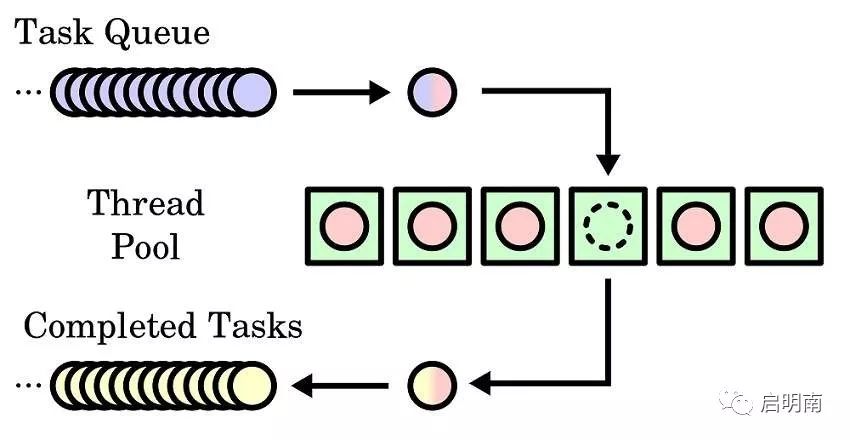
一个完整的线程池是由线程池、任务池两部分组成
线程池的功能包含:
1、线程池初始化,并启动最小线程数成功运行
2、线程池的资源回收
3、线程池的扩容与释放空闲线程
4、关闭线程池
本章节完成线程的前两个功能
Java端代码
1、线程池类代码
package com.qimingnan.jni.threadpool.mythreadpool;public class MyThreadPool {public native void init(int minSize, int maxSize);public native void destroy();}
2、main函数所在类代码
package com.qimingnan.jni.threadpool.mythreadpool;public class ThreadPoolApplication {public static MyThreadPool threadPool;public static void main(String[] args) {System.loadLibrary("hello");threadPool = new MyThreadPool();threadPool.init(2, 5);threadPool.destroy();}}
JNI端核心代码
1、线程池结构
typedef struct thread_pool_t {/* 互斥锁,用于在多线程环境下操作本结构体保证同步性 */pthread_mutex_t lock;/* 所有工作线程的ID的集合 */pthread_t* worker_tids;/* 线程池的最小线程数 */jint thr_min_size;/* 线程池的最大线程数 */jint thr_max_size;/* 线程池的存活线程数 */jint thr_live_size;/* 线程池的繁忙线程数 */jint thr_busy_size;}thread_pool, *pthread_pool;
2、init方法
JNIEXPORT void JNICALL Java_com_qimingnan_jni_threadpool_mythreadpool_MyThreadPool_init(JNIEnv *jEnv, jobject jobj, jint minSize, jint maxSize) {if (0 != thread_pool_init(jEnv, minSize, maxSize)) {throwRuntimeException(jEnv, "初始化线程池失败");return;}}
3、线程池初始化方法
jint thread_pool_init(JNIEnv *jEnv, jint minSize, jint maxSize) {/* 为线程池申请内存 */g_pthread_pool = calloc(1, sizeof(thread_pool));if (NULL == g_pthread_pool) {throwRuntimeException(jEnv, "为线程池分配内存失败");goto return1;}/* 为工作线程集合分配内存 */g_pthread_pool->worker_tids = calloc(maxSize, sizeof(pthread_t));if (NULL == g_pthread_pool->worker_tids) {throwRuntimeException(jEnv, "为工作线程集合分配内存失败");goto return2;}/* 初始化互斥锁 */if (0 != pthread_mutex_init(&g_pthread_pool->lock, NULL)) {throwRuntimeException(jEnv, "初始化互斥锁失败");goto return3;}g_pthread_pool->thr_min_size = minSize;g_pthread_pool->thr_max_size = maxSize;g_pthread_pool->thr_live_size = minSize;g_pthread_pool->thr_busy_size = 0;/* 启动最小工作线程 */for (int i = 0; i < g_pthread_pool->thr_live_size; ++i) {pthread_create(&g_pthread_pool->worker_tids[i], NULL, worker_thread_fn, NULL);}return 0;return3:free(g_pthread_pool->worker_tids);g_pthread_pool->worker_tids = NULL;return2:free(g_pthread_pool);g_pthread_pool = NULL;return1:return -1;}
编译运行
1、编译(MAC端)
jcc -dynamiclib -I /Library/Java/JavaVirtualMachines/openjdk-12.0.2.jdk/Contents/Home/include/com_qimingnan_jni_threadpool_MyThread.c common.c-o libhello.jnilib
2、运行结果
我是工作线程我是工作线程【线程池销毁程序】任务执行结束,开始释放资源
各位童鞋在阅读源码或实践的过程中有任何疑惑可留言,我会抽时间一一回复
文章转载自重塑之路,如果涉嫌侵权,请发送邮件至:contact@modb.pro进行举报,并提供相关证据,一经查实,墨天轮将立刻删除相关内容。
