前言
你好,我是A哥(YourBatman)。
在本系列中间,用几篇文章彻彻底底的把JDK日期时间系列深入讲解了一遍,此系列有可能是把JDK日期时间讲得最好最全的,强烈建议你前往看它一看。
本系列的上篇文章 对格式化器Formatter进行了剖析,Spring对日期时间、数字、钱币等常用类型都内置了相应的格式化器实现,开发者可拿来就用。但是,这在使用上依旧有一定门槛:开发者需要知道对应API的细节。比如若需要对Date、LocalDate进行格式化操作的话,就需要分别了解处理他俩的正确API,这在使用上是存在一定“难度”的。
另外,在面向元数编程大行其道的今天,硬编码往往是被吐槽甚至被拒绝的,声明式才会受到欢迎。Spring自3.0起大量的引入了“更为时尚”的元数据编程支持,从而稳固了其“江湖地位”。@DateTimeFormat和@NumberFormat两个注解是Spring在类型转换/格式化方面的元编程代表,本文一起来探讨下。
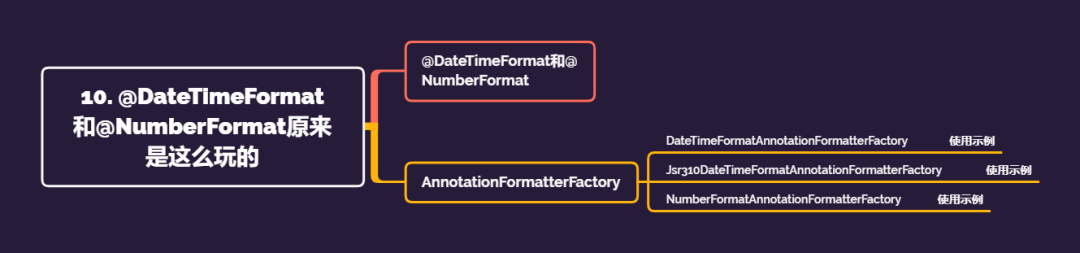
本文提纲
版本约定
Spring Framework:5.3.x Spring Boot:2.4.x
正文
据我了解,@DateTimeFormat是开发中出镜率很高的一个注解,其作用见名之意很好理解:对日期时间格式化。但使用起来常常迷糊。比如:使用它还是com.fasterxml.jackson.annotation.JsonFormat
注解呢?能否使用在Long类型上?能否使用在JSR 310日期时间类型上?
有这些问号其实蛮正常,但切忌囫囵吞枣,也不建议强记这些问题的答案,而是通过规律在原理层面去理解,不仅能更牢靠而且更轻松,这或许是学习编程最重要的必备技巧之一。
@DateTimeFormat和@NumberFormat
在类型转换/格式化方面注解,Spring提供了两个:
@DateTimeFormat
:将Field/方法参数格式化为日期/时间类型@NumberFormat
:将Field/方法参数格式化为数字类型
值得关注的是:这里所说的日期/时间类型有很多,如最古老的java.util.Date类型、JSR 310的LocalDate类型甚至时间戳Long类型都可称作日期时间类型;同样的,数字类型也是个泛概念,如Number类型、百分数类型、钱币类型也都属此范畴。
❝话外音:这两个注解能够作用的类型很广很广
❞
分别看看这两个注解定义,不可谓不简单:
@Target({ElementType.METHOD, ElementType.FIELD, ElementType.PARAMETER, ElementType.ANNOTATION_TYPE})
public @interface DateTimeFormat {

 String style() default "SS";
 ISO iso() default ISO.NONE;
 String pattern() default "";

}
@Target({ElementType.METHOD, ElementType.FIELD, ElementType.PARAMETER, ElementType.ANNOTATION_TYPE})
public @interface NumberFormat {

 Style style() default Style.DEFAULT;
 String pattern() default "";
}
哥俩有两个共通的点:
都支持标注在方法Method、字段Field、方法参数Parameter上 均支持灵活性极大的pattern属性,此属性支持Spring占位符书写形式 对于pattern属性你既可以用字面量写死,也可以用形如 ${xxx.xxx.pattern}
占位符形式这种更富弹性的写法
咱们在使用这两个注解时,最最最常用的是pattern这个属性没有之一,理由是它非常的灵活强大,能满足各式各样格式化需求。从这一点也侧面看出,咱们在日期/时间、数字方面的格式化,并不遵循国际标准(如ISO),而普遍使用的“中国标准”。
由于这两个注解几乎所有同学都在Spring MVC上使用过,那么本文就先原理再示例。在知晓了其背后原理后再去使用,别有一番体会。
AnnotationFormatterFactory
说到格式化注解,就不得不提该工厂类,它是实现原理的核心所在。
字面含义:注解格式化工厂。用大白话解释:该工厂用于为标注在Field字段上的注解创建对应的格式化器进而对值进行格式化处理。从这句话里可提取出几个关键因素:
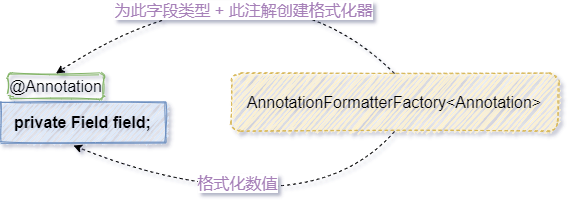
注解 字段Field 这里Field并不只表示 java.lang.reflect.Field
,像方法返回类型、参数类型都属此范畴,下面使用示例会有所体会格式化器Formatter
接口定义:
public interface AnnotationFormatterFactory<A extends Annotation> {

 Set<Class<?>> getFieldTypes();

 Printer<?> getPrinter(A annotation, Class<?> fieldType);
 Parser<?> getParser(A annotation, Class<?> fieldType);
}
接口共定义了三个方法:
getFieldTypes:支持的类型。注解标注在这些类型上时该工厂就能够处理,否则不管 getPrinter:为标注有annotation注解的fieldType类型生成一个Printer getParser:为标注有annotation注解的fieldType类型生成一个Parser
此接口Spring内建有如下实现:

虽然实现有5个之多,但其实只有两类,也就是说面向使用者而言只需做两种区分即可,分别对应上面所讲的两个注解。这里A哥把它绘制成图所示:
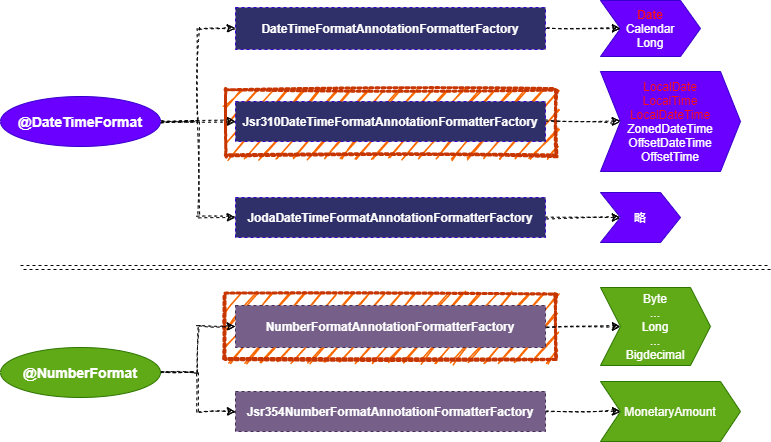
红色框框部分(以及其处理的Field类型)是咱们需要关注的重点,其它的留个印象即可。
关于日期时间类型,我在多篇文章里不再推荐使用java.util.Date类型(更不建议使用Long类型喽),而是使用Java 8提供的JSR 310日期时间类型100%代替(包括代替joda-time)。但是呢,在当下阶段java.util.Date类型依旧不可忽略(庞大存量市场,庞大“存量”程序员的存在),因此决定把DateTimeFormatAnnotationFormatterFactory依旧还是抬到桌面上来叙述叙述,但求做得更全面些。
❝关于JDK的日期时间我写了一个非常全的系列,详情点击这里直达:日期时间系列,建议先行了解
❞
DateTimeFormatAnnotationFormatterFactory
对应的格式化器API是:org.springframework.format.datetime.DateFormatter
。
@since 3.2版本就已存在,专用于对java.util.Date体系 + @DateTimeFormat的支持:创建出相应的Printer/Parser。下面解读其源码:

①:该工厂类专为@DateTimeFormat注解服务②:借助Spring的StringValueResolver对占位符(若存在)做替换
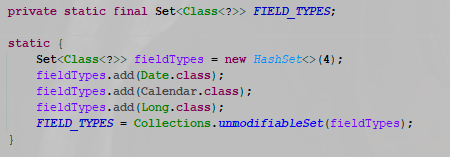
这部分源码告诉我们:@DateTimeFormat注解标注在如图的这些类型上时才有效,才能被该工厂处理从而完成相应创建工作。
❝注意:除了Date和Calendar类型外,还有Long类型哦,请不要忽略了
❞
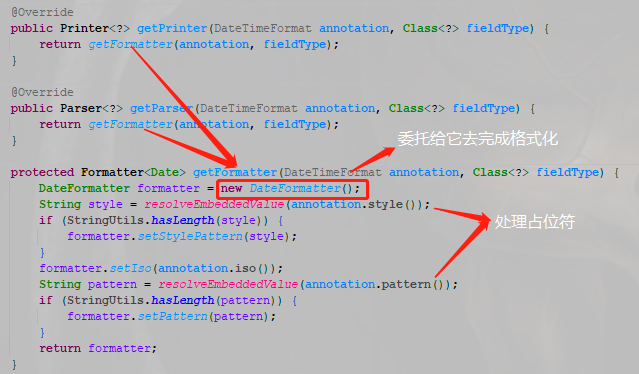
核心处理逻辑也比较好理解:不管是Printer还是Parser最终均委托给DateFormatter去完成,而此API在本系列前面文章已做了详细讲解。电梯直达
值得注意的是:DateFormatter 只能 处理Date类型。换句话讲getFormatter()方法的第二个参数fieldType在此方法里并没有被使用,也就是说缺省情况下@DateTimeFormat
注解并不能正常处理其标注在Calendar、Long类型的Case。若要得到支持,需自行重写其getPrinter/getParser等方法。
使用示例
由于@DateTimeFormat
可以标注在成员属性、方法参数、方法(返回值)上,且当其标注在Date、Calendar、Long等类型上时方可交给本工厂类来处理生成相应的处理类,本文共用三个案例case进行覆盖。
case1:成员属性 + Date类型。输入 + 输出
准备一个标注有@DateTimeFormat注解的Field属性,为Date类型
@Data
@AllArgsConstructor
class Person {

    @DateTimeFormat(pattern = "yyyy-MM-dd HH:mm:ss")
    private Date birthday;

}
书写测试程序:
@Test
public void test1() throws Exception {
    AnnotationFormatterFactory annotationFormatterFactory = new DateTimeFormatAnnotationFormatterFactory();

    // 找到该field
    Field field = Person.class.getDeclaredField("birthday");
    DateTimeFormat annotation = field.getAnnotation(DateTimeFormat.class);
    Class<?> type = field.getType();

    // 输出:
    System.out.println("输出:Date -> String====================");
    Printer printer = annotationFormatterFactory.getPrinter(annotation, type);
    Person person = new Person(new Date());
    System.out.println(printer.print(person.getBirthday(), Locale.US));

    // 输入:
    System.out.println("输入:String -> Date====================");
    Parser parser = annotationFormatterFactory.getParser(annotation, type);
    Object output = parser.parse("2021-02-06 19:00:00", Locale.US);
    person = new Person((Date) output);
    System.out.println(person);
}
运行程序,输出:
输出:Date -> String====================
2021-02-06 22:21:56
输入:String -> Date====================
Person(birthday=Sat Feb 06 19:00:00 CST 2021)
完美。
case2:方法参数 + Calendar。输入
@Test
public void test2() throws NoSuchMethodException, ParseException {
    AnnotationFormatterFactory annotationFormatterFactory = new DateTimeFormatAnnotationFormatterFactory();

    // 拿到方法入参
    Method method = this.getClass().getDeclaredMethod("method", Calendar.class);
    Parameter parameter = method.getParameters()[0];
    DateTimeFormat annotation = parameter.getAnnotation(DateTimeFormat.class);
    Class<?> type = parameter.getType();

    // 输入:
    System.out.println("输入:String -> Calendar====================");
    Parser parser = annotationFormatterFactory.getParser(annotation, type);
    Object output = parser.parse("2021-02-06 19:00:00", Locale.US);
 // 给该方法传入“转换好的”参数,表示输入
    method((Calendar) output);
}

public void method(@DateTimeFormat(pattern = "yyyy-MM-dd HH:mm:ss") Calendar calendar) {
    System.out.println(calendar);
    System.out.println(calendar.getTime());
}
运行程序,报错:
输入:String -> Calendar====================

java.lang.ClassCastException: java.util.Date cannot be cast to java.util.Calendar
 ...
通过文上的阐述,这个错误是在意料之中的。下面通过自定义一个增强实现来达到目的:
class MyDateTimeFormatAnnotationFormatterFactory extends DateTimeFormatAnnotationFormatterFactory {

    @Override
    public Parser<?> getParser(DateTimeFormat annotation, Class<?> fieldType) {
        if (fieldType.isAssignableFrom(Calendar.class)) {
            return new Parser<Calendar>() {
                @Override
                public Calendar parse(String text, Locale locale) throws ParseException {
                    // 先翻译为Date
                    Formatter<Date> formatter = getFormatter(annotation, fieldType);
                    Date date = formatter.parse(text, locale);

                    // 再翻译为Calendar
                    Calendar calendar = Calendar.getInstance(TimeZone.getDefault());
                    calendar.setTime(date);
                    return calendar;
                }

            };
        }
        return super.getParser(annotation, fieldType);
    }
}
将测试程序中的工厂类换为自定义的增强实现:
AnnotationFormatterFactory annotationFormatterFactory = new MyDateTimeFormatAnnotationFormatterFactory();
再次运行程序,输出:
输入:String -> Calendar====================
java.util.GregorianCalendar[time=1612609200000, ...
Sat Feb 06 19:00:00 CST 2021
完美。
case3:方法返回值 + Long。输出 建议自行实现,略
❝时间戳被经常用来做时间传递,那么传输中的Long类型如何被自动封装 为Date类型(输入)呢?动动手巩固下吧~
❞
Jsr310DateTimeFormatAnnotationFormatterFactory
对应的格式化器API是:Spring的org.springframework.format.datetime.standard.DateTimeFormatterFactory
以及JDK的java.time.format.DateTimeFormatter
。
@since 4.0。JSR 310时间是伴随着Java 8的出现而出现的,Spring自4.0 开始支持 Java 8,自5.0至少基于 Java 8,因此此类since 4.0就不好奇喽。
从类名能读出它用于处理JSR 310日期时间。下面解读一下它的部分源码,透过现象看其本质:

①:该工厂专为@DateTimeFormat注解服务②:借助Spring的StringValueResolver对占位符(若存在)做替换
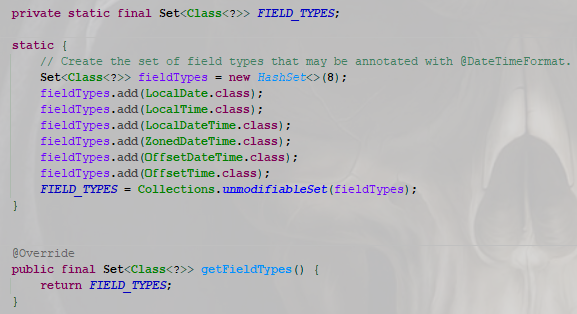
@DateTimeFormat注解标注在这些类型上时,就会交给此工厂类来负责其格式化器的创建工作。
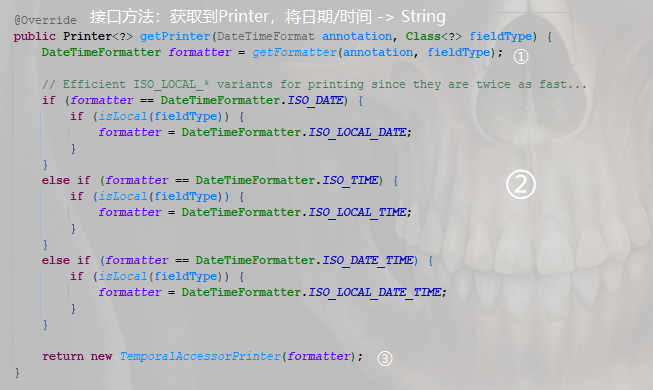
①:得到一个JDK的java.time.format.DateTimeFormatter
,由它负责将 日期/时间 -> String类型的格式化。由于JSR 310日期/时间的格式化JDK自己实现得已经非常完善,Spring只需要将它整合进来就成。但是呢,DateTimeFormatter它是线程安全的无法同时设置iso、pattern等个性化参数,于是Spring就造了DateTimeFormatterFactory工厂类,用它用来抹平使用上的差异,达到(和java.util.Date)一致的使用体验。当然喽,这个知识点属于上篇文章的内容,欲回顾详情可点击这里电梯直达。
回到本处,getFormatter()方法得到格式化器实例是关键,具体代码如下:
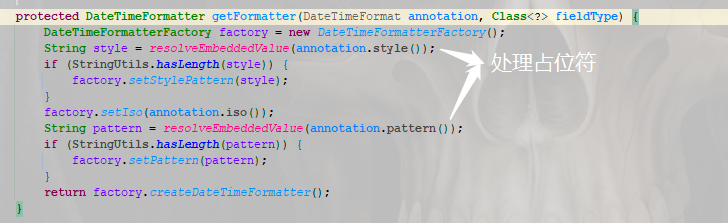
使用Spring的工厂类DateTimeFormatterFactory构建出一个JSR 310的日期时间格式化器DateTimeFormatter来处理。有了上篇文章的铺垫,相信这个逻辑无需再多费一言解释了哈。
②:这一大块是对LocalXXX(含LocalDate/Time)标准格式化器做的特殊处理:将ISO_XXX格式化模版适配为更加适用的ISO_Local_XXX格式化模版,更加精确。③:TemporalAccessorPrinter它就是个Printer<TemporalAccessor>
,实际的格式化器依旧是DateTimeFormatter,只不过它的作用是兼容到了上下文级别(和当前线程绑定)的格式化器,从而有能力用到上下文级别的格式化参数,具有更好的可定制性,如下图所示(源码来自TemporalAccessorPrinter):

强调:别看这个特性很小,但非常有用,有四两拨千斤的功效。因为它和我们业务系统息息相关,掌握这个点可轻松实现事半功倍的效果,别人加班你加薪。关于此知识点的应用,A哥觉得值得专门写篇文章来描述,敬请期待下文。
接下来再看看getParser()部分的实现:

①:TemporalAccessorParser是个Parser<TemporalAccessor>
,同样的也是利用了具有Context上下文特性的DateTimeFormatter来完成String -> TemporalAccessor工作的。熟悉这个方向的转换逻辑的同学就知道,因为都是静态方法调用,所以必须用“枚举”的方式一一处理,截图如下(源码来自TemporalAccessorParser):
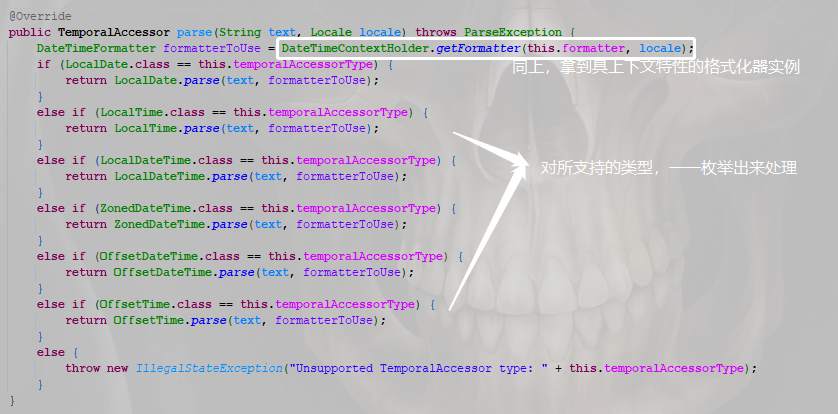
到此,整个Jsr310DateTimeFormatAnnotationFormatterFactory的源码就分析完了,总结一下:
此工厂专为标注在JSR 310日期/时间类型的@DateTimeFormat注解服务 底层格式化器双向均使用的是和上下文相关的的DateTimeFormatter,具有高度可定制化的特性。此特性虽小却有四两拨千斤的效果,后面会专文给出使用场景 @DateTimeFormat注解的style和pattern属性都是支持占位符形式书写的,更富弹性
使用示例
它不像DateTimeFormatAnnotationFormatterFactory只提供了部分支持,而是提供了全部功能,感受一下。
case1:成员属性 + LocalDate类型。输入 + 输出
@Data
@AllArgsConstructor
class Father {
    @DateTimeFormat(iso = DateTimeFormat.ISO.DATE)
    private LocalDate birthday;
}
测试代码:
@Test
public void test4() throws NoSuchFieldException, ParseException {
    AnnotationFormatterFactory annotationFormatterFactory = new Jsr310DateTimeFormatAnnotationFormatterFactory();

    // 找到该field
    Field field = Father.class.getDeclaredField("birthday");
    DateTimeFormat annotation = field.getAnnotation(DateTimeFormat.class);
    Class<?> type = field.getType();

    // 输出:
    System.out.println("输出:LocalDate -> String====================");
    Printer printer = annotationFormatterFactory.getPrinter(annotation, type);
    Father father = new Father(LocalDate.now());
    System.out.println(printer.print(father.getBirthday(), Locale.US));

    // 输入:
    System.out.println("输入:String -> Date====================");
    Parser parser = annotationFormatterFactory.getParser(annotation, type);
    Object output = parser.parse("2021-02-07", Locale.US);
    father = new Father((LocalDate) output);
    System.out.println(father);
}
运行程序,输出:
输出:LocalDate -> String====================
2021-02-07
输入:String -> Date====================
Father(birthday=2021-02-07)
完美。
case2:方法参数 + LocalDate类型。输入
@Test
public void test5() throws ParseException, NoSuchMethodException {
    AnnotationFormatterFactory annotationFormatterFactory = new Jsr310DateTimeFormatAnnotationFormatterFactory();

    // 拿到方法入参
    Method method = this.getClass().getDeclaredMethod("methodJSR310", LocalDate.class);
    Parameter parameter = method.getParameters()[0];
    DateTimeFormat annotation = parameter.getAnnotation(DateTimeFormat.class);
    Class<?> type = parameter.getType();


    // 输入:
    System.out.println("输入:String -> LocalDate====================");
    Parser parser = annotationFormatterFactory.getParser(annotation, type);
    Object output = parser.parse("2021-02-06", Locale.US);
    // 给该方法传入“转换好的”参数,表示输入
    methodJSR310((LocalDate) output);
}

public void methodJSR310(@DateTimeFormat(iso = DateTimeFormat.ISO.DATE) LocalDate localDate) {
    System.out.println(localDate);
}
运行程序,输出:
输入:String -> LocalDate====================
2021-02-06
case3:方法返回值 + LocalDate类型。输入
@Test
public void test6() throws NoSuchMethodException {
    AnnotationFormatterFactory annotationFormatterFactory = new Jsr310DateTimeFormatAnnotationFormatterFactory();

    // 拿到方法返回值类型
    Method method = this.getClass().getDeclaredMethod("method1JSR310");
    DateTimeFormat annotation = method.getAnnotation(DateTimeFormat.class);
    Class<?> type = method.getReturnType();


    // 输出:
    System.out.println("输出:LocalDate -> 时间格式的String====================");
    Printer printer = annotationFormatterFactory.getPrinter(annotation, type);

    LocalDate returnValue = method1JSR310();
    System.out.println(printer.print(returnValue, Locale.US));
}

@DateTimeFormat(iso = DateTimeFormat.ISO.DATE)
public LocalDate method1JSR310() {
    return LocalDate.now();
}
完美。
NumberFormatAnnotationFormatterFactory
对应的格式化器API是:org.springframework.format.number.AbstractNumberFormatter
的三个子类
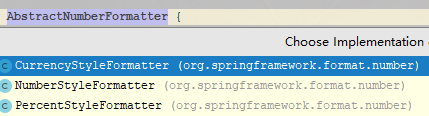
@since 3.0。直奔主题,源码喽几眼:

有了上面的“经验”,此part不用解释了吧。
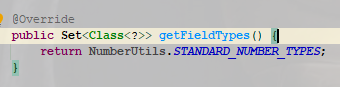
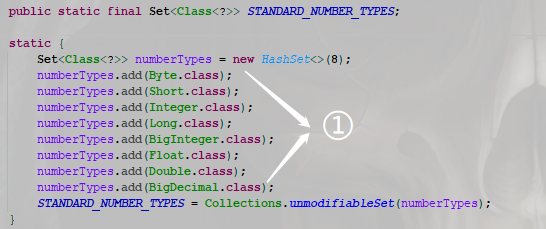
①:@NumberFormat可以标注在Number的子类型上,并生成对应的格式化器处理。
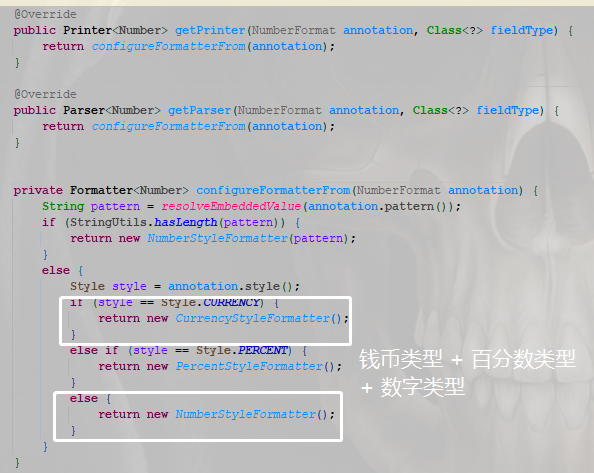
底层实现:实际的格式化动作Printer/Parser如下图所示,全权委托给前面已介绍过的格式化器来完成,就不做过多介绍啦。有知识盲区的可乘坐电梯前往本系列前面文章查看~
使用示例
@NumberFormat支持标注在多种类型上,如小数、百分数、钱币等等,由于文上已做好了铺垫,所以这里只给出个简单使用案例即可,举一反三。
@Test
public void test2() throws NoSuchMethodException, ParseException {
    AnnotationFormatterFactory annotationFormatterFactory = new NumberFormatAnnotationFormatterFactory();

    // 获取待处理的目标类型(方法参数、字段属性、方法返回值等等)
    Method method1 = this.getClass().getMethod("method2", double.class);
    Parameter parameter = method1.getParameters()[0];
    NumberFormat annotation = parameter.getAnnotation(NumberFormat.class);
    Class<?> fieldType = parameter.getType();

    // 1、根据注解和field类型生成一个解析器,完成String -> LocalDateTime
    Parser parser = annotationFormatterFactory.getParser(annotation, fieldType);
    // 2、模拟转换动作,并输出结果
    Object result = parser.parse("11%", Locale.US);
    System.out.println(result.getClass());
    System.out.println(result);

}

public void method2(@NumberFormat(style = NumberFormat.Style.PERCENT) double d) {
}
运行程序,输出:
class java.math.BigDecimal
0.11
完美的将11%
这种百分数数字转换为BigDecimal了。至于为何是BigDecimal类型而不是double,那都在PercentStyleFormatter里了。
总结
这两个注解更像是高层抽象:模糊掉开发者的使用成本,能够达到的效果是:
@DateTimeFormat:日期时间类型的格式化,找我就够了 @NumberFormat:数字类型的格式化,找我就够了
这两个由于过于常用Spring内置提供了,若你有特殊需求,Spring也提供了钩子,可以自定义注解 + 扩展AnnotationFormatterFactory
接口来实现。注解 + 工厂类组合在一起像是一个分发器,模糊掉类型上的差异,让使用者有统一感受。
有了本系列前面知识的铺垫,本文一路读下来毫不费力,底层基础决定上层建筑。这些都是在Spring MVC场景下使用的这些注解的底层原理,本系列对其抽丝剥茧后,那些使用上的问题自当无师自通,迎刃而解。
当然喽,在实际应用中不可能像本例一样这样编码实现,开发者应该只需知道注解使用在哪即可。既然要方便,那就需要整合。下篇文章将继续了解Spring是如何将此功能整合进注册中心,大大简化使用方式的。
本文思考题
本文所属专栏:Spring类型转换,后台回复专栏名即可获取全部内容,已被https://www.yourbatman.cn收录。
看完了不一定懂,看懂了不一定会。来,文末3个思考题帮你复盘:
传入Long类型时间戳,如何能支持自动封装到Date类型? @DateTimeFormat一般用于Controller层?那么它能用在Service层吗?如何做? 为什么并不建议在Service/Dao层使用@DateTimeFormat等注解呢?
系列推荐
9. 细节见真章,Formatter注册中心的设计很讨巧 8. 格式化器大一统 -- Spring的Formatter抽象 7. JDK拍了拍你:字符串拼接一定记得用MessageFormat#format

System.out.println("点个赞吧!");
print_r('关注【BAT的乌托邦】!');
var_dump('私聊A哥:fsx1056342982');
console.log("点个赞吧!");
NSLog(@"关注【BAT的乌托邦】!");
print("私聊A哥:fsx1056342982");
echo("点个赞吧!");
cout << "关注【BAT的乌托邦】!" << endl;
printf("私聊A哥:fsx1056342982");
Console.WriteLine("点个赞吧!");
fmt.Println("关注【BAT的乌托邦】!");
Response.Write("私聊A哥:fsx1056342982");
alert("点个赞吧!");
A哥(YourBatman)
:Spring Framework开源贡献者,Java架构师,领域专家。文章不标题党,不哗众取宠,每篇文章都成系列去系统的攻破一个知识点,每个系列可能是全网最佳/唯一。注重基本功修养,底层基础决定上层建筑。现有IDEA系列、Spring N多系列、Bean Validation系列、日期时间系列......关注免费获取