



IT infrastructure is the foundation of all Internet business and has become a core development element for all industry and all countries. Whereas data, it’s the Essential and spirit which keeps IT system live. With the advent of the era of big data, the value of data is becoming more and more important, now the data plays the role of the infrastructure of the intelligent business. So that what I’m gonna talk about today, how to establish IT system and how to mining data values for business.
mature market environment creates good conditions for technological change and innovation, that’s why China’s IT is thriving in the most innovative manner.
Let’s look into the marketing environment of China.This picture shows the global information technology industry, estimated 2019 spending at constant currency, according to IDC. the encompasses hardware, software, services and telecommunications. And China representing 26% of the total.
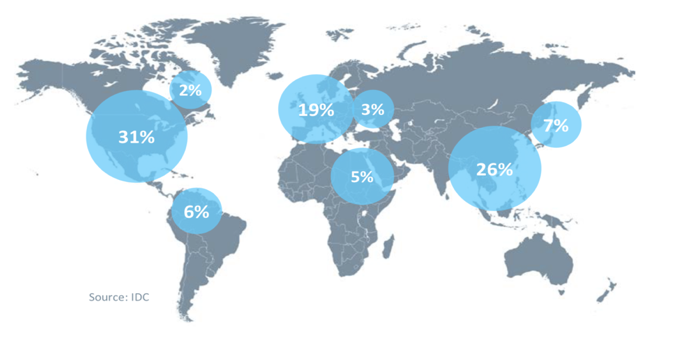
And also you might notice that the perctange of the Europe and America, that’s 31%.
So these two numbers, are you thinking what I am thinking right now? The world’s two largest economies also account for the highest proportion of IT revenue, which means IT is an important indicator to promote economic development. Right?
Let’s take a glimpse of Chinese life status, everywhere in China, you see people looking at their phones, you ever wondering what they are doing ? Chatting with their friends? browsing the news? Of course,everybody does.
But not only that, they can work, do shopping, book tickets, taking their classes, they can actually do everything on the phone and using their phones, for most people, the last time they using cash may back to 2011,2010. It’s years ago. It was that time, even the Thief need to find another job because they can’t get anything from people’s pockets or purses.
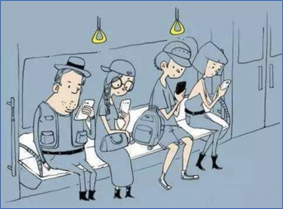
And also, people survive on other people’s phones, you may know a little joke about homeless person in China, when you across the bridge, they are lying there there, under the bridge and showing s QR code in front of them for begging. That’s weird right, it’s like can you give me some money? Sorry I don’t have any on me; that’s okay, you can scan my QR code and transfer to me. you may like say what??? You have a smart phone and QR code ,but you call yourself poor?
That’s actually the truth, you see in china, having a phone and a QR code doesn’t mean he got any money and ability to live, because internet is everywhere.
It’s not just for young people or smart people or educated people, it’s everywhere and for everyone.
So In the perspective of the IT marketing. what’s happening in China?
With the development of Internet technology, there are two main trends that continue to occur and bring huge changes to the Chinese market.
The first trend is: business are moving to mobile internet.
The mobile Internet is an emerging market in which the Internet and mobile communications are integrated together, Currently, the trend of Internet product mobilization is stronger than mobile products come with internet.
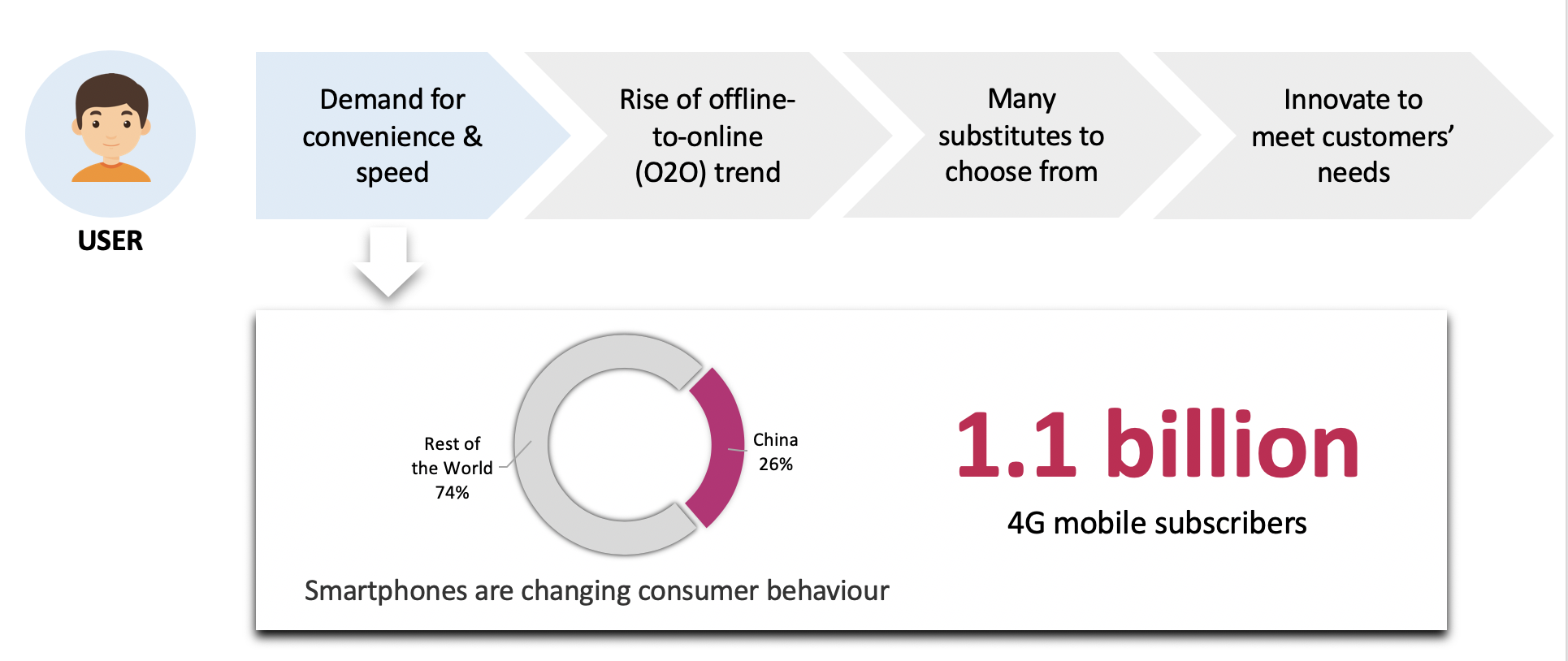
Smart phones are changing consumer‘s behavior, In China, there are 1.1 billion 4G mobile subscribers base on statistics 2018.The popularity of smartphones has made people’s demands for business responsiveness higher and higher. Before smartphones and mobile internet, people are used to waiting in line for everything, the long distance, but now if they can just buy things, top up their phones or taking classes sitting in their comfortable chairs with air conditioner around, why would they get dressed and walk long to Mobile business hall, or going from one store to another to find suitable shoes, in China, almost 98% of personal business can be done on internet, most of them can just handle by phones. When they going out, don’t need cash or cards or files with them, the only thing needed is their phones.
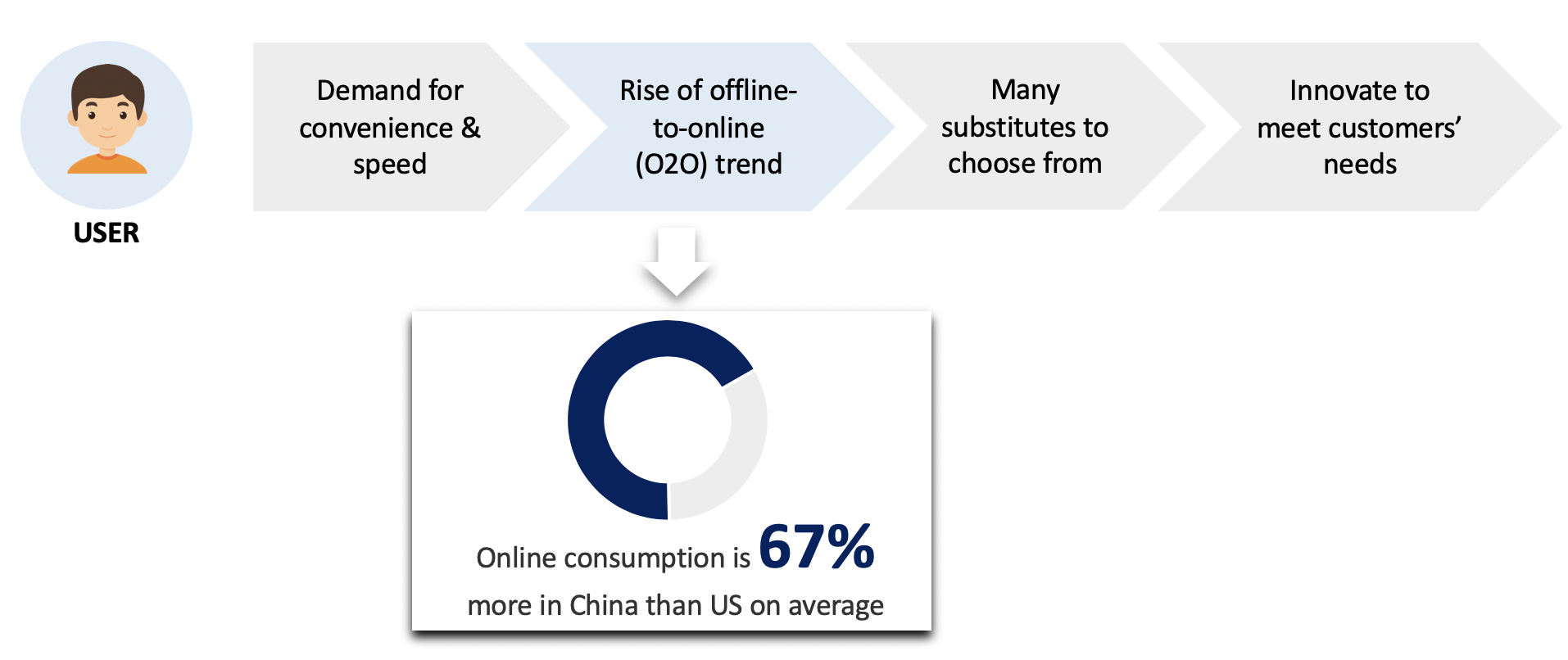
That means there are more substitutes of provider to choose from, and it’s very easy, just close one app, and open another one. So if the users they are not totally satisfied with the experiences In the app, they leave.
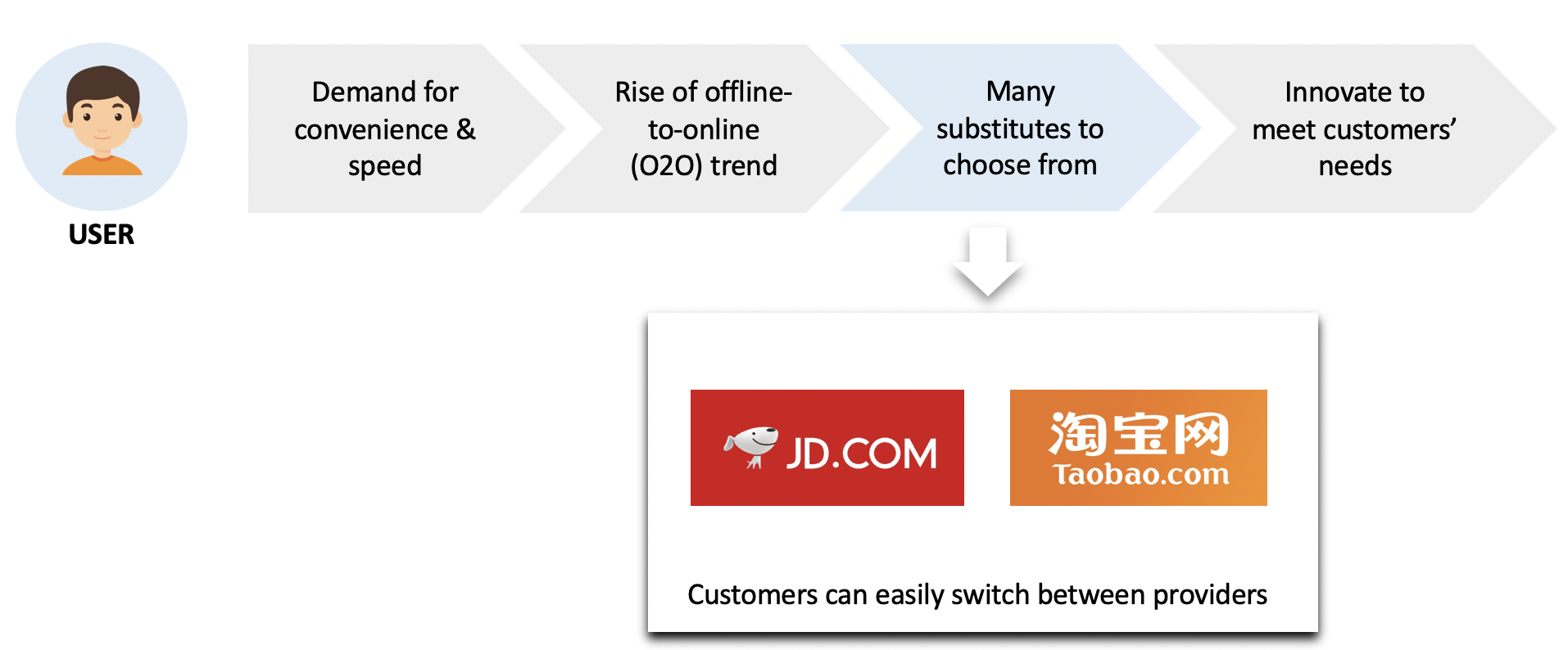
Think about it, when you top up your phones in Mobile business hall, you may usually going to the nearest Store from you home, or just do that on your way to somewhere passing by the store. Hypothetically,
The little girl responsible for handling the recharge business is a high school student who is doing her internship here. She Is not very familiar with the recharge business. When you give her money, she has tried many times and still has not recharged successfully. You may be angry, but if there is no other business hall nearby, you will choose to wait until she figure out the whole system to help you top up.
But if you try to top up your phone through airpay, and it hasn’t response over 2 mnites, you absolutely close the airpay and open the true money to try ,right?
It’s so easy to change the providers, and yes, for enterprise, it’s too easy to lose their customers as well, so they must make sure their app and processing are agile and smooth for user needs.
The second trend is: cross-industry competition
If I ask you, what does Ailibaba do? It’s an e-commerce company, some of you might say. Of course, Taobao.Other might say, it’s a e-pay company,if they have tried Alipay, 支付宝
But let’s find out what Alibaba does? Pull out your phone, open the Alipay, we see that Alibaba now expanding its business to many segments, financial service, game and entertainment, education and public warefare, such as booking tickets, maps and healthcare.
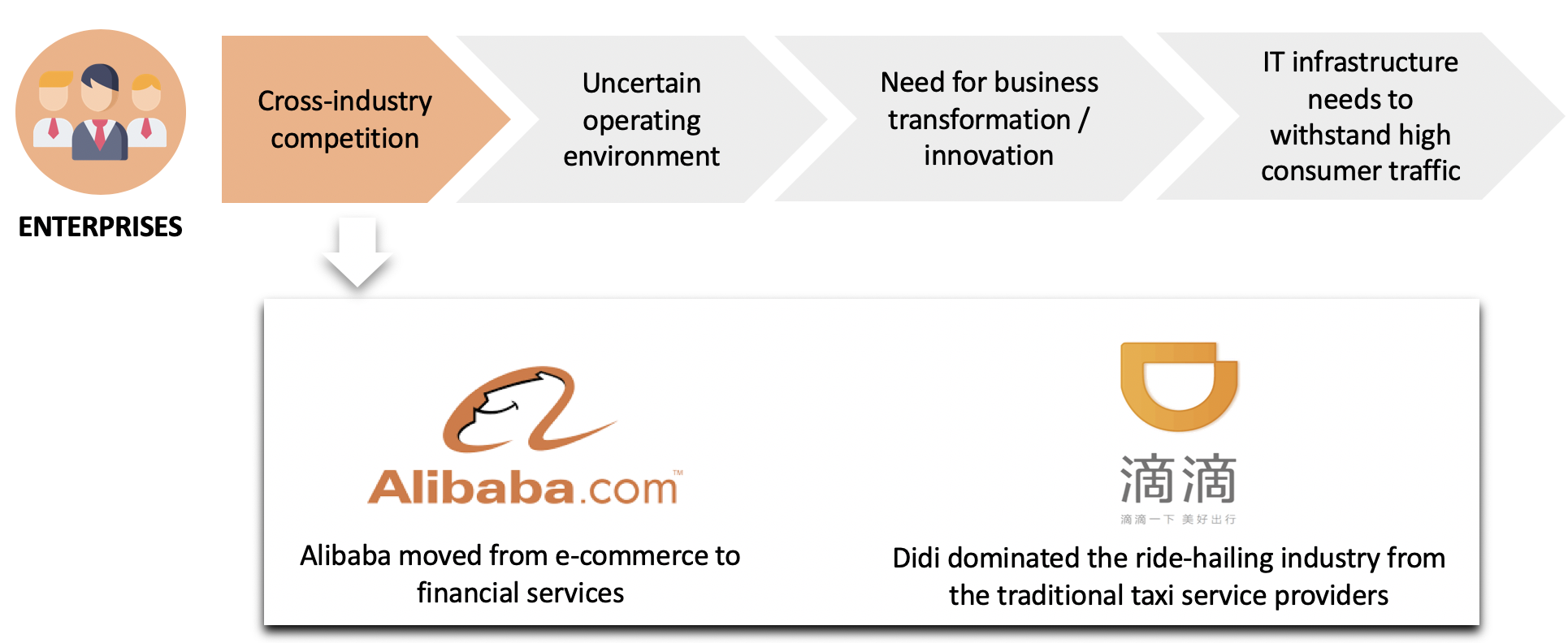
Another example for cross-industry competition is ride hailing. While traditional ride-hailing is just try to get a riding nearby, but now using the app on the phone, the opportunities and choices for both passengers and drivers become more, like didi and uber.
We see that Many enterprises, their business is not what they used to do and how they used to do anymore. So it’s hard to forecast which company would be your competitor, what kind of business would replace what you do right now.
For example, It’s the rising of high-speed rail make China Eastern Airlines’ loss in business, instead of China Southern Airlines; It’s mobile phone make Nikon’s failure instead of Fuji.
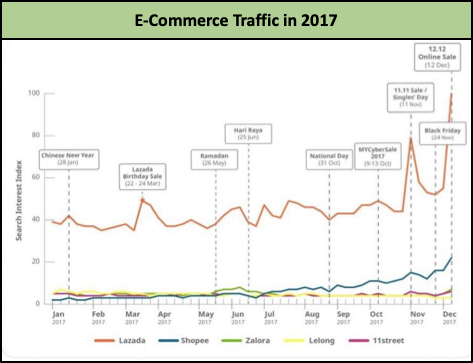
These two trends have brought high-frequency, high-concurrency attributes to online business transactions, and the probability of business peaks generated at any point in time has increased exponentially. there are more traffic on internet than ever. e-commerce traffic for Alibaba, Spring Festival peak traffic for Airline company, and movie star issue traffic for social media Platform.
In these kind of traffic, the most important thing is to make sure their system not crushed. How to do that?
Besides the application level which users can actually see and feel, the most important part is that the data can be storage and retrieved fast. All the business need is supported and complemented by IT system, that’s why a robust system is essential. To response the fast growing, high-frequency needs of business , IT system should be more automated, more concentrated, more standardized and smarter.
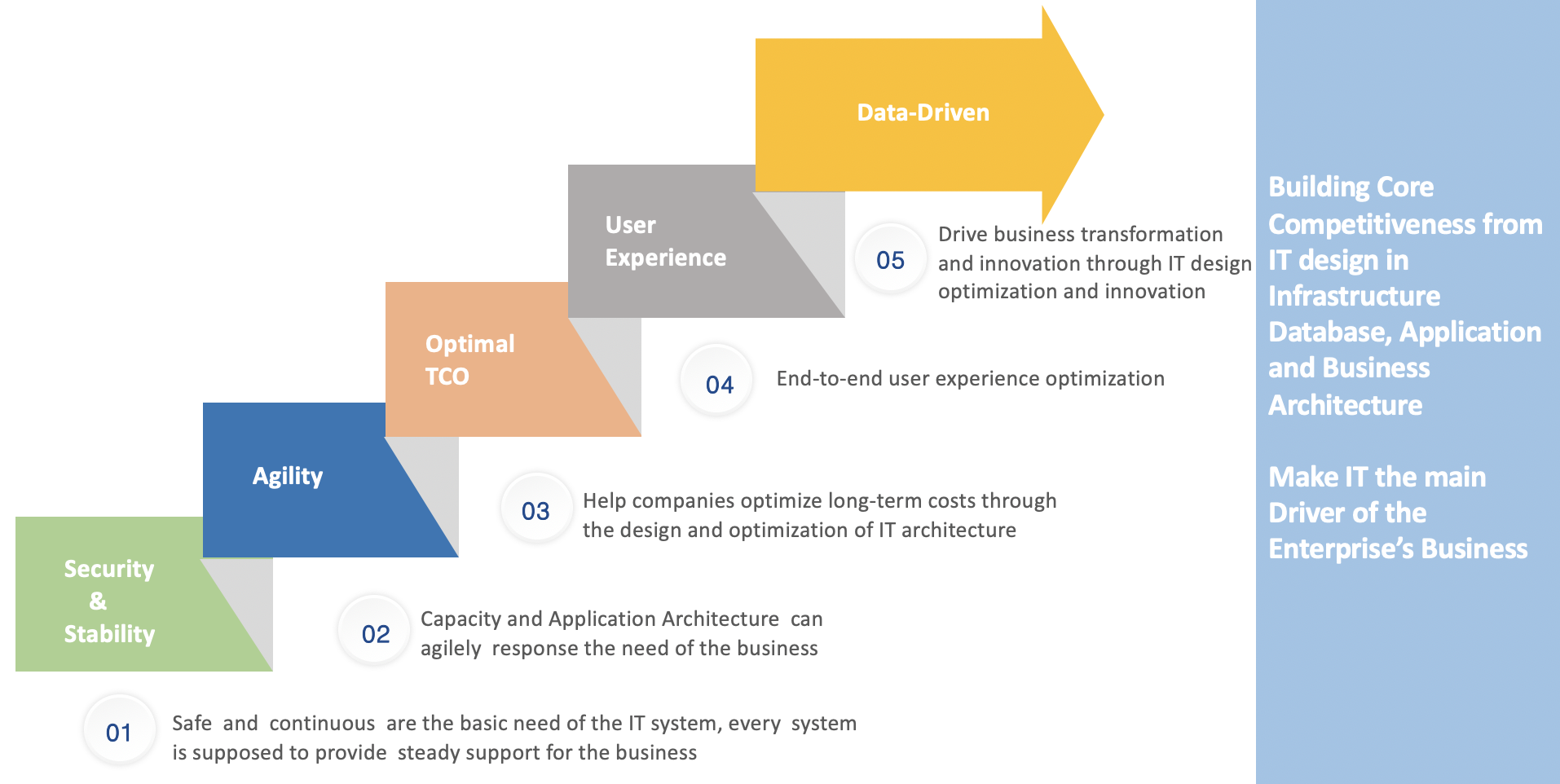
From the perspective of data and IT infrastructure management, the core needs has always been safety, continuity, efficiency, and intelligence, and also through IT help enterprise optimize their TCO and business structure.
-
Security and stability are the basic needs of IT systems and are prerequisites for ensuring business continuity.
-
Agility means the capacity and application architecture of the system can be flexibly changed according to the needs of the business, and quickly response to business front end .
-
The core objectives of TCO are reducing costs and increasing revenue, and optimize cost structure. Through TCO management, companies will focus on the long-term development and benefits of the business, support the efficient development of the business through the reasonable investment of IT to achieve value enhancement.
-
what is user experience? How to optimize user experience?Well, If a platform or app or website can help users get their jobs done faster and smoothly, means when we open the homepage, we can easily find what we want, after click a mouse, page switching is smooth, no unwanted advertisement or warnings.
However, if the system suddenly crushed, we don’t know and to be honest we don’t care what’s wrong with the system。So if we are not totally satisfied with it, we leave, and open another app. As we mentioned before, the difficulty and cost of switching are very low. That’s why it’s so important to provide good user experiences.
Through end-to-end analysis of entire business lifecycle, help enterprise find the bottleneck, to improve business efficiency and interaction processes, enhance user experience, and increase user stickiness.
- Data-Driven means analyze data by applying new technologies such as artificial intelligence and big data, help decisions-making of enterprise.
however , IT is not an independent part of enterprise, it’s actually inseparable with business. In this picture, we illustrate the relation between business architecture and IT architecture.
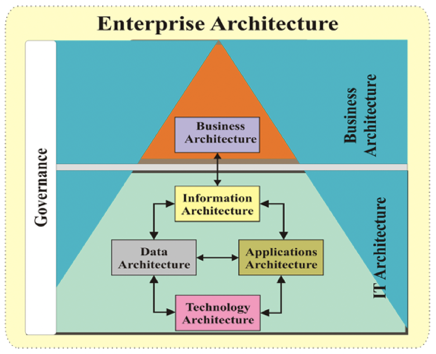
Basiclly, the IT architecture supports business development, IT architecture supposed to change as business needs change.
And the IT architecture consists of
- information architecture, which hold the user information of business
- data architecture, which Define the structure of the data and the storage management logic
- technology architecture, which decide what kind of technology, component or tools we use to management
- application architecture, which clarify the business processes and interactions.
Through these four architectures, IT architecture provide robust and supportive and data services for business architecture
In the past, the relationship between business architecture and IT architecture was: IT supported the development of the business, it was optimized and reconfigured according to changes in business needs. And Business transformation and change drive the transformation of IT.
But now, with the development of new technologies, through the mining of data values and the construction of new architectures, new possibilities have been created for business innovation and upgrades. IT no longer passively responds to demands from business front ends, and IT changes can also Drive the transformation of the business, enterprises pay more attention to IT investment. In some industries that rely heavily on IT architecture, such as banks and mobile internet operators, IT investment will be regarded as a strategic investment rather than an operating cost.
Which means the new trend of mutual driven between business and IT has come.
Therefore, the construction of IT systems needs to adopt a top-down strategy to maximize the needs of the business, while the innovation of the business must consider the IT architecture to achieve maximum adaptation.
In the Belt and Road development strategy, China expects to export advanced products, technologies and production capacity to countries along the route to help these countries build infrastructure, it will
promote trade between countries and enhance the interoperability of international supply chains.
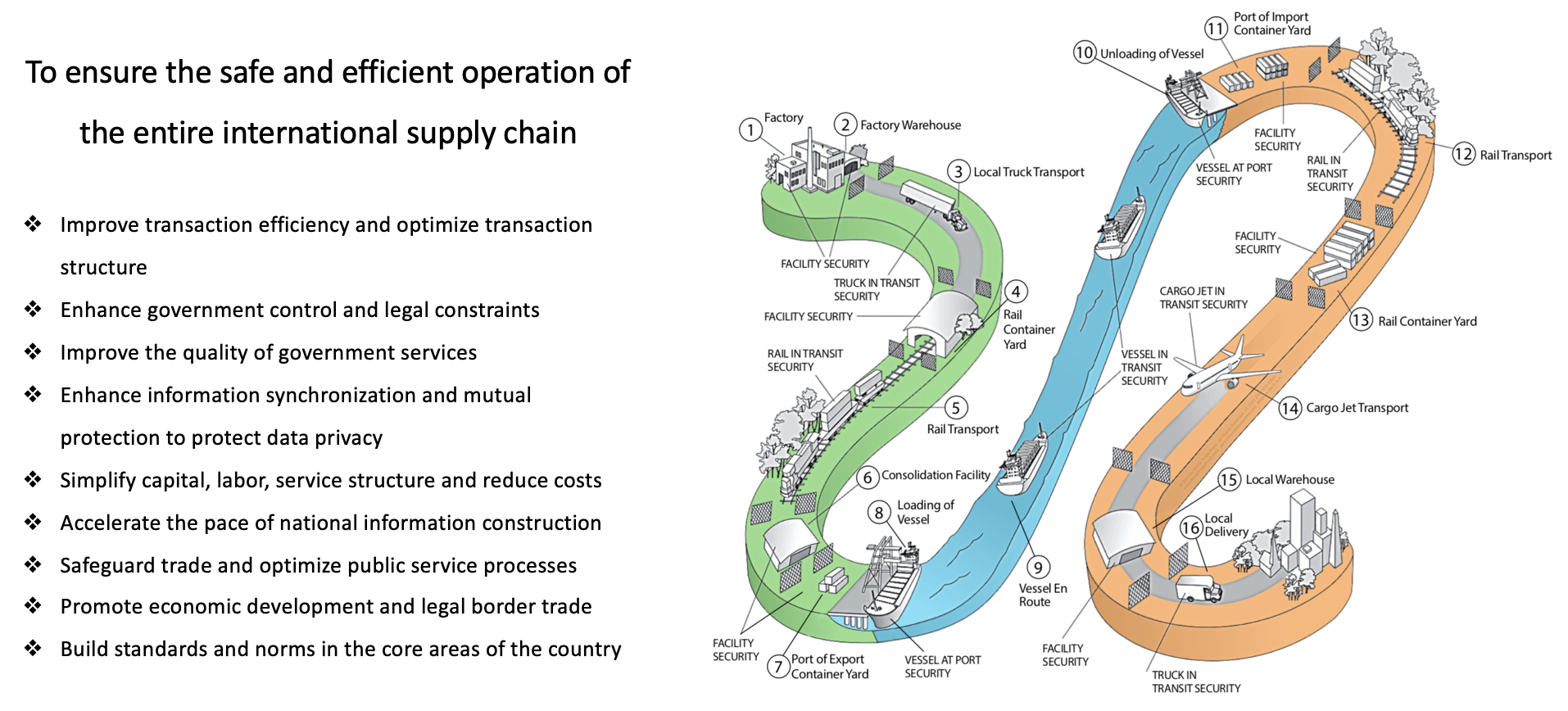
If we look at supply chain from the perspective of the IT, for each type of original product or item to be exported to the international market, from production to domestic transportation, and then pass international customs, there may be railway transportation, road transportation, sea transportation, air transportation and verification in different system to ensure the legality and security.
In the past, the traditional transportation channels, data and information are distinguished by functions and area. The IT system is designed for each different need of the agency or organization. These data doesn’t connect with each other.
Today, however, if we make a unified design plan from the perspective of the supply chain, we can open up a data island to complement data sharing and interconnection, and improve the efficiency and government control of the international supply chain.
Through IT’s top-down design planning, we can improve transaction structure, improve service quality, streamline processes, and reduce costs.
Couple days ago, I went to the customs seminar of developing countries in Beijing. in the meeting, we discussed the construction of smart customs. One of the keynote speakers, Dr. Wang said that Smart Customs is not a business-level innovation, but a total IT solution. Data has always been the center of business. Now a company or organization that uses the latest technology and architecture, make data a driving force.
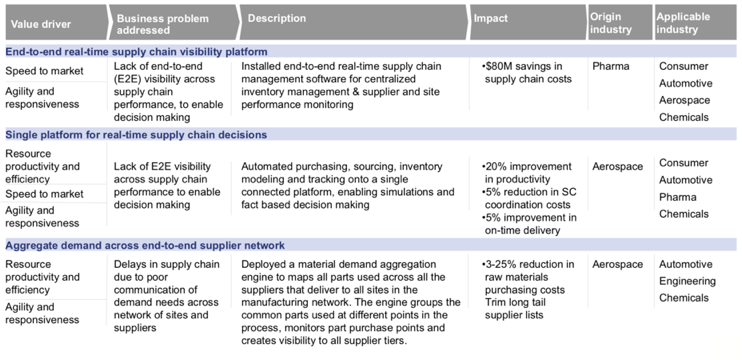
Let’s take a look at the huge impact of the development of the business through the drive of data and technology.
Here are a few examples of how to improve business efficiency and reduce costs through the effective use of data and IT in the operation of international supply chains.
The first example is in the pharmaceutical industry, due to the lack of end-to-end data on the supply chain, which affects the speed at which products are brought to market, as well as the efficiency and agility of business response.
Then through an end-to-end supply chain management platform, the system is managed in a unified manner, which saves 80$ Million of cost.
The second example is in aviation Industry. Due to the lack of communication between the demand side and the supplier, the production and delivery efficiency is very low.
By bring in the management platform of demand, 25% of raw material purchases has been saved.
These examples show the importance of IT for business operations, for both enterprise and organizations.
So how can we use IT to effectively help businesses and organizations? This should be analyzed according to different market needs.
let’s talk more about markets needs next chapter.
