



软件开发过程中,不可避免的是需要处理各种异常,就我自己来说,至少有一半以上的时间都是在处理各种异常情况。

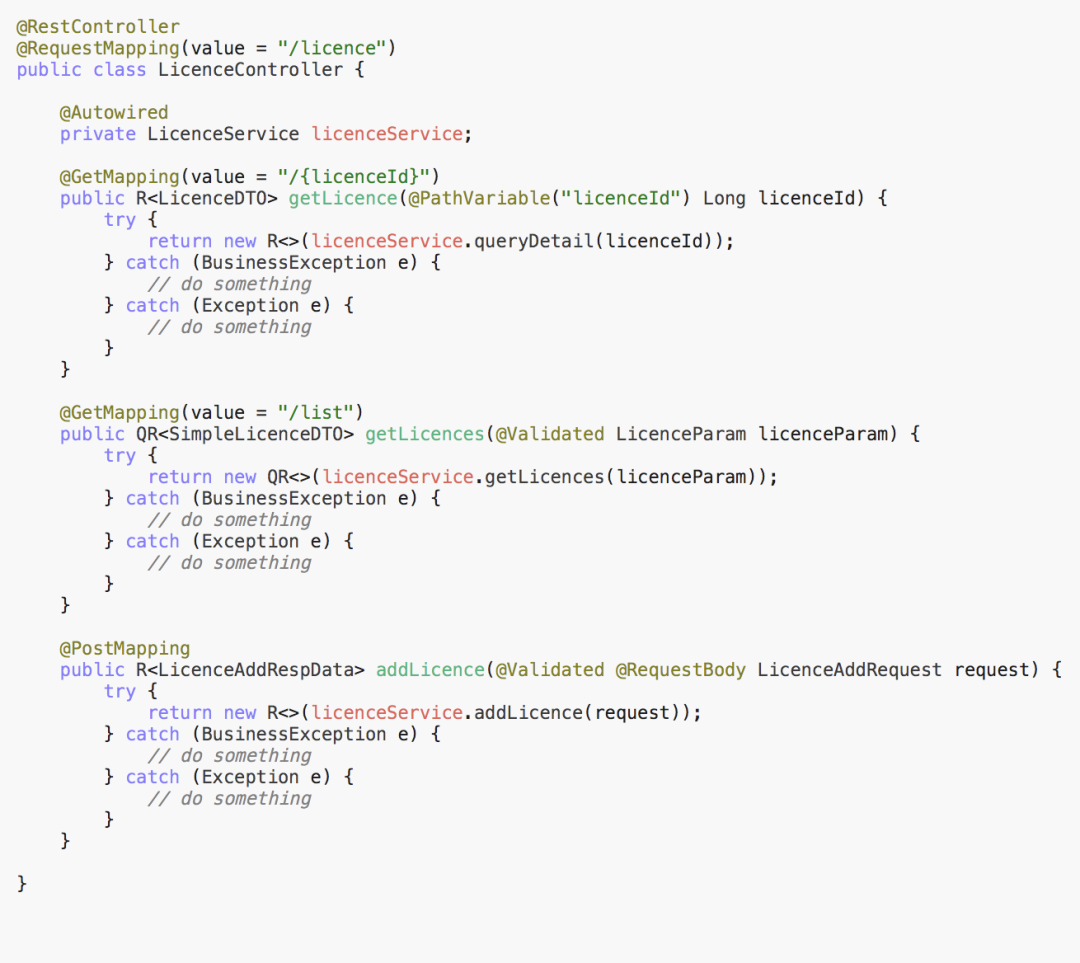
丑陋的 try catch 代码块,如下图:
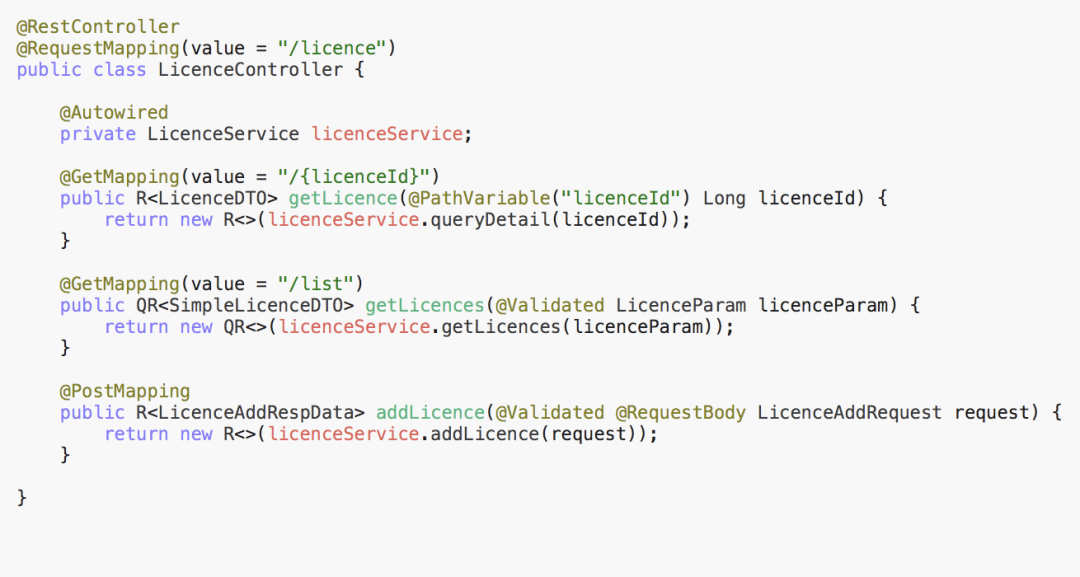
优雅的 Controller,如下图:
什么是统一异常处理
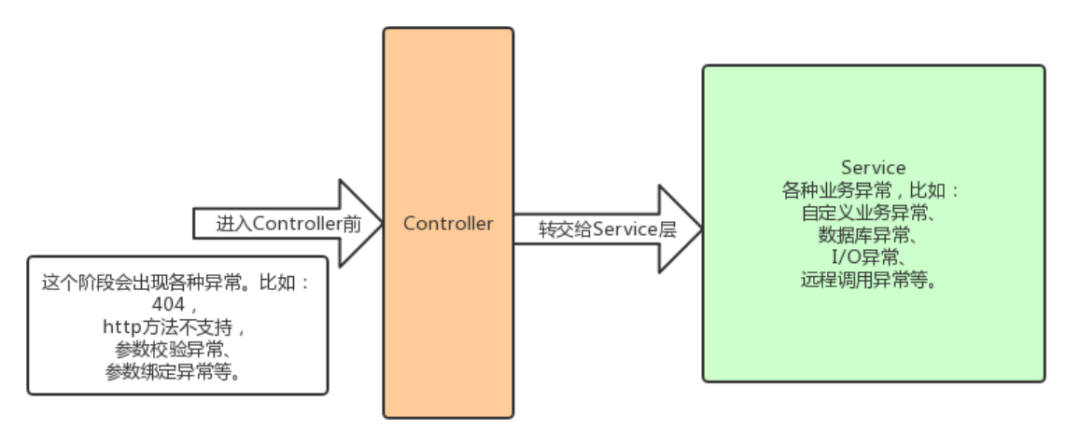
具体可以参考下图:
目标
统一异常处理实战
用 Assert(断言)替换 throw exception
比如:
@Test public void test1() { ... User user = userDao.selectById(userId); Assert.notNull(user, "用户不存在."); ... } @Test public void test2() { // 另一种写法 User user = userDao.selectById(userId); if (user == null) { throw new IllegalArgumentException("用户不存在."); } }
那么神奇的 Assert.notNull() 背后到底做了什么呢?下面是 Assert 的部分源码:
public abstract class Assert { public Assert() { } public static void notNull(@Nullable Object object, String message) { if (object == null) { throw new IllegalArgumentException(message); } }}
下面让我们来尝试一下:
public interface Assert { /** * 创建异常 * @param args * @return */ BaseException newException(Object... args); /** * 创建异常 * @param t * @param args * @return */ BaseException newException(Throwable t, Object... args); /** * <p>断言对象<code>obj</code>非空。如果对象<code>obj</code>为空,则抛出异常 * * @param obj 待判断对象 */ default void assertNotNull(Object obj) { if (obj == null) { throw newException(obj); } } /** * <p>断言对象<code>obj</code>非空。如果对象<code>obj</code>为空,则抛出异常 * <p>异常信息<code>message</code>支持传递参数方式,避免在判断之前进行字符串拼接操作 * * @param obj 待判断对象 * @param args message占位符对应的参数列表 */ default void assertNotNull(Object obj, Object... args) { if (obj == null) { throw newException(args); } }}
②善解人意的 Enum
如下:
public interface IResponseEnum { int getCode(); String getMessage();}/** * <p>业务异常</p> * <p>业务处理时,出现异常,可以抛出该异常</p> */public class BusinessException extends BaseException { private static final long serialVersionUID = 1L; public BusinessException(IResponseEnum responseEnum, Object[] args, String message) { super(responseEnum, args, message); } public BusinessException(IResponseEnum responseEnum, Object[] args, String message, Throwable cause) { super(responseEnum, args, message, cause); }}public interface BusinessExceptionAssert extends IResponseEnum, Assert { @Override default BaseException newException(Object... args) { String msg = MessageFormat.format(this.getMessage(), args); return new BusinessException(this, args, msg); } @Override default BaseException newException(Throwable t, Object... args) { String msg = MessageFormat.format(this.getMessage(), args); return new BusinessException(this, args, msg, t); }}@Getter@AllArgsConstructorpublic enum ResponseEnum implements BusinessExceptionAssert { /** * Bad licence type */ BAD_LICENCE_TYPE(7001, "Bad licence type."), /** * Licence not found */ LICENCE_NOT_FOUND(7002, "Licence not found.") ; /** * 返回码 */ private int code; /** * 返回消息 */ private String message;}
BAD_LICENCE_TYPE
LICENCE_NOT_FOUND
然后再来看下如何使用,假设 LicenceService 有校验 Licence 是否存在的方法,如下:
/** * 校验{@link Licence}存在 * @param licence */ private void checkNotNull(Licence licence) { ResponseEnum.LICENCE_NOT_FOUND.assertNotNull(licence); }
若不使用断言,代码可能如下:
private void checkNotNull(Licence licence) { if (licence == null) { throw new LicenceNotFoundException(); // 或者这样 throw new BusinessException(7001, "Bad licence type."); } }
定义统一异常处理器类
@Slf4j@Component@ControllerAdvice@ConditionalOnWebApplication@ConditionalOnMissingBean(UnifiedExceptionHandler.class)public class UnifiedExceptionHandler { /** * 生产环境 */ private final static String ENV_PROD = "prod"; @Autowired private UnifiedMessageSource unifiedMessageSource; /** * 当前环境 */ @Value("${spring.profiles.active}") private String profile; /** * 获取国际化消息 * * @param e 异常 * @return */ public String getMessage(BaseException e) { String code = "response." + e.getResponseEnum().toString(); String message = unifiedMessageSource.getMessage(code, e.getArgs()); if (message == null || message.isEmpty()) { return e.getMessage(); } return message; } /** * 业务异常 * * @param e 异常 * @return 异常结果 */ @ExceptionHandler(value = BusinessException.class) @ResponseBody public ErrorResponse handleBusinessException(BaseException e) { log.error(e.getMessage(), e); return new ErrorResponse(e.getResponseEnum().getCode(), getMessage(e)); } /** * 自定义异常 * * @param e 异常 * @return 异常结果 */ @ExceptionHandler(value = BaseException.class) @ResponseBody public ErrorResponse handleBaseException(BaseException e) { log.error(e.getMessage(), e); return new ErrorResponse(e.getResponseEnum().getCode(), getMessage(e)); } /** * Controller上一层相关异常 * * @param e 异常 * @return 异常结果 */ @ExceptionHandler({ NoHandlerFoundException.class, HttpRequestMethodNotSupportedException.class, HttpMediaTypeNotSupportedException.class, MissingPathVariableException.class, MissingServletRequestParameterException.class, TypeMismatchException.class, HttpMessageNotReadableException.class, HttpMessageNotWritableException.class, // BindException.class, // MethodArgumentNotValidException.class HttpMediaTypeNotAcceptableException.class, ServletRequestBindingException.class, ConversionNotSupportedException.class, MissingServletRequestPartException.class, AsyncRequestTimeoutException.class }) @ResponseBody public ErrorResponse handleServletException(Exception e) { log.error(e.getMessage(), e); int code = CommonResponseEnum.SERVER_ERROR.getCode(); try { ServletResponseEnum servletExceptionEnum = ServletResponseEnum.valueOf(e.getClass().getSimpleName()); code = servletExceptionEnum.getCode(); } catch (IllegalArgumentException e1) { log.error("class [{}] not defined in enum {}", e.getClass().getName(), ServletResponseEnum.class.getName()); } if (ENV_PROD.equals(profile)) { // 当为生产环境, 不适合把具体的异常信息展示给用户, 比如404. code = CommonResponseEnum.SERVER_ERROR.getCode(); BaseException baseException = new BaseException(CommonResponseEnum.SERVER_ERROR); String message = getMessage(baseException); return new ErrorResponse(code, message); } return new ErrorResponse(code, e.getMessage()); } /** * 参数绑定异常 * * @param e 异常 * @return 异常结果 */ @ExceptionHandler(value = BindException.class) @ResponseBody public ErrorResponse handleBindException(BindException e) { log.error("参数绑定校验异常", e); return wrapperBindingResult(e.getBindingResult()); } /** * 参数校验异常,将校验失败的所有异常组合成一条错误信息 * * @param e 异常 * @return 异常结果 */ @ExceptionHandler(value = MethodArgumentNotValidException.class) @ResponseBody public ErrorResponse handleValidException(MethodArgumentNotValidException e) { log.error("参数绑定校验异常", e); return wrapperBindingResult(e.getBindingResult()); } /** * 包装绑定异常结果 * * @param bindingResult 绑定结果 * @return 异常结果 */ private ErrorResponse wrapperBindingResult(BindingResult bindingResult) { StringBuilder msg = new StringBuilder(); for (ObjectError error : bindingResult.getAllErrors()) { msg.append(", "); if (error instanceof FieldError) { msg.append(((FieldError) error).getField()).append(": "); } msg.append(error.getDefaultMessage() == null ? "" : error.getDefaultMessage()); } return new ErrorResponse(ArgumentResponseEnum.VALID_ERROR.getCode(), msg.substring(2)); } /** * 未定义异常 * * @param e 异常 * @return 异常结果 */ @ExceptionHandler(value = Exception.class) @ResponseBody public ErrorResponse handleException(Exception e) { log.error(e.getMessage(), e); if (ENV_PROD.equals(profile)) { // 当为生产环境, 不适合把具体的异常信息展示给用户, 比如数据库异常信息. int code = CommonResponseEnum.SERVER_ERROR.getCode(); BaseException baseException = new BaseException(CommonResponseEnum.SERVER_ERROR); String message = getMessage(baseException); return new ErrorResponse(code, message); } return new ErrorResponse(CommonResponseEnum.SERVER_ERROR.getCode(), e.getMessage()); }}
进入 Controller 前的异常:handleServletException、handleBindException、handleValidException。
自定义异常:handleBusinessException、handleBaseException。
未知异常:handleException。
①异常处理器说明
handleServletException:一个 HTTP 请求,在到达 Controller 前,会对该请求的请求信息与目标控制器信息做一系列校验。
9.HttpMediaTypeNotAcceptableException:未知。
10.ServletRequestBindingException:未知。
11.ConversionNotSupportedException:未知。
12.MissingServletRequestPartException:未知。
13.AsyncRequestTimeoutException:未知。
handleBindException:参数校验异常,后文详细说明。
handleValidException:参数校验异常,后文详细说明。
handleBusinessException、handleBaseException:处理自定义的业务异常,只是 handleBaseException 处理的是除了 BusinessException 意外的所有业务异常。就目前来看,这 2 个是可以合并成一个的。
handleException:处理所有未知的异常,比如操作数据库失败的异常。
②异于常人的 404
但其实默认情况下不是这样,默认情况下会出现类似如下页面:
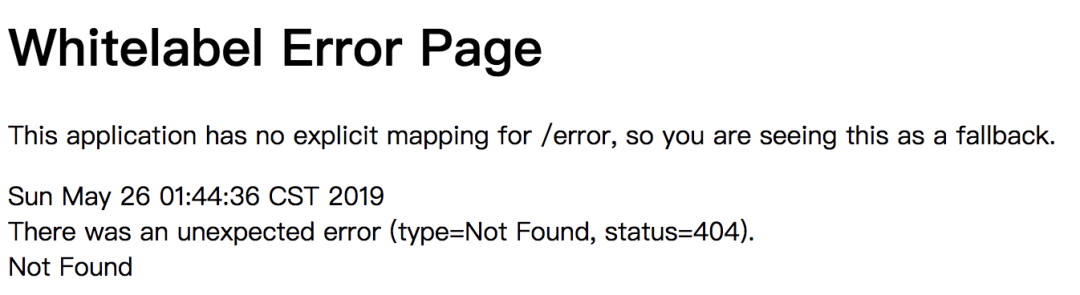
如下:
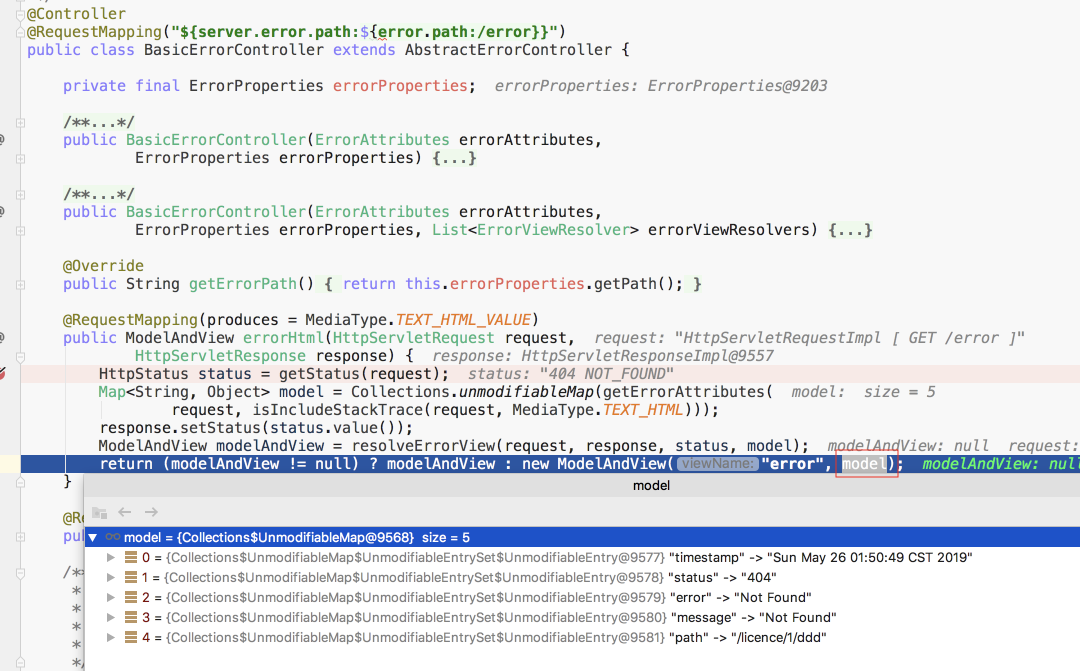
那么,如何让 404 也抛出异常呢,只需在 properties 文件中加入如下配置即可:
spring.mvc.throw-exception-if-no-handler-found=truespring.resources.add-mappings=false
统一返回结果
验证统一异常处理
主要代码
下面是用于验证的主要源码:
@Servicepublic class LicenceService extends ServiceImpl<LicenceMapper, Licence> { @Autowired private OrganizationClient organizationClient; /** * 查询{@link Licence} 详情 * @param licenceId * @return */ public LicenceDTO queryDetail(Long licenceId) { Licence licence = this.getById(licenceId); checkNotNull(licence); OrganizationDTO org = ClientUtil.execute(() -> organizationClient.getOrganization(licence.getOrganizationId())); return toLicenceDTO(licence, org); } /** * 分页获取 * @param licenceParam 分页查询参数 * @return */ public QueryData<SimpleLicenceDTO> getLicences(LicenceParam licenceParam) { String licenceType = licenceParam.getLicenceType(); LicenceTypeEnum licenceTypeEnum = LicenceTypeEnum.parseOfNullable(licenceType); // 断言, 非空 ResponseEnum.BAD_LICENCE_TYPE.assertNotNull(licenceTypeEnum); LambdaQueryWrapper<Licence> wrapper = new LambdaQueryWrapper<>(); wrapper.eq(Licence::getLicenceType, licenceType); IPage<Licence> page = this.page(new QueryPage<>(licenceParam), wrapper); return new QueryData<>(page, this::toSimpleLicenceDTO); } /** * 新增{@link Licence} * @param request 请求体 * @return */ @Transactional(rollbackFor = Throwable.class) public LicenceAddRespData addLicence(LicenceAddRequest request) { Licence licence = new Licence(); licence.setOrganizationId(request.getOrganizationId()); licence.setLicenceType(request.getLicenceType()); licence.setProductName(request.getProductName()); licence.setLicenceMax(request.getLicenceMax()); licence.setLicenceAllocated(request.getLicenceAllocated()); licence.setComment(request.getComment()); this.save(licence); return new LicenceAddRespData(licence.getLicenceId()); } /** * entity -> simple dto * @param licence {@link Licence} entity * @return {@link SimpleLicenceDTO} */ private SimpleLicenceDTO toSimpleLicenceDTO(Licence licence) { // 省略 } /** * entity -> dto * @param licence {@link Licence} entity * @param org {@link OrganizationDTO} * @return {@link LicenceDTO} */ private LicenceDTO toLicenceDTO(Licence licence, OrganizationDTO org) { // 省略 } /** * 校验{@link Licence}存在 * @param licence */ private void checkNotNull(Licence licence) { ResponseEnum.LICENCE_NOT_FOUND.assertNotNull(licence); }}
PS:这里使用的 DAO 框架是 mybatis-plus。启动时,自动插入的数据为:
-- licenceINSERT INTO licence (licence_id, organization_id, licence_type, product_name, licence_max, licence_allocated)VALUES (1, 1, 'user','CustomerPro', 100,5);INSERT INTO licence (licence_id, organization_id, licence_type, product_name, licence_max, licence_allocated)VALUES (2, 1, 'user','suitability-plus', 200,189);INSERT INTO licence (licence_id, organization_id, licence_type, product_name, licence_max, licence_allocated)VALUES (3, 2, 'user','HR-PowerSuite', 100,4);INSERT INTO licence (licence_id, organization_id, licence_type, product_name, licence_max, licence_allocated)VALUES (4, 2, 'core-prod','WildCat Application Gateway', 16,16);-- organizationsINSERT INTO organization (id, name, contact_name, contact_email, contact_phone)VALUES (1, 'customer-crm-co', 'Mark Balster', 'mark.balster@custcrmco.com', '823-555-1212');INSERT INTO organization (id, name, contact_name, contact_email, contact_phone)VALUES (2, 'HR-PowerSuite', 'Doug Drewry','doug.drewry@hr.com', '920-555-1212');
开始验证
捕获自定义异常
①获取不存在的 licence 详情:http://localhost:10000/licence/5。成功响应的请求:licenceId=1。
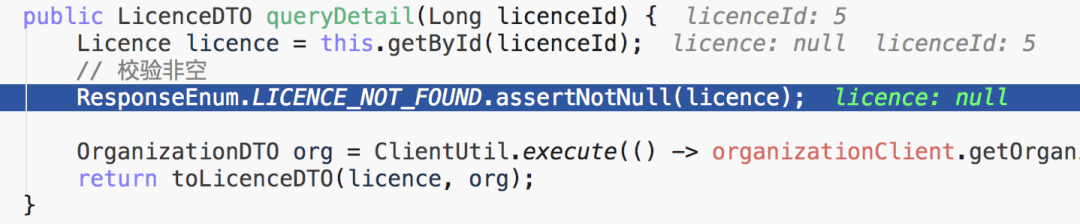
检验非空
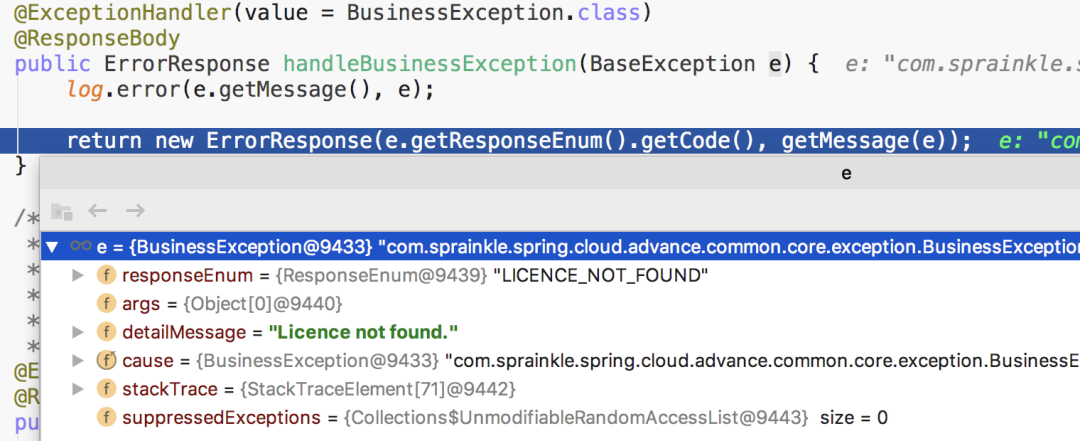
捕获 Licence not found 异常
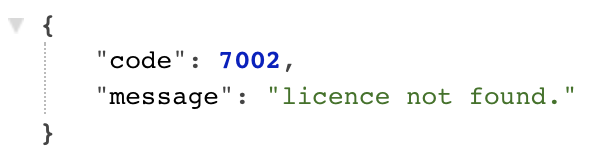
②根据不存在的 licence type 获取 licence 列表:http://localhost:10000/licence/list?licenceType=ddd。可选的 licence type 为:user、core-prod 。
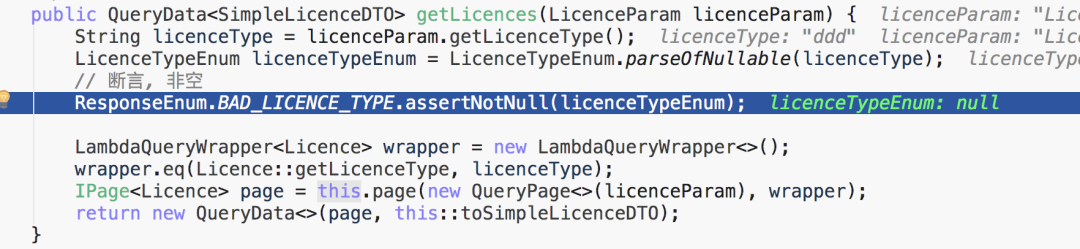
校验非空
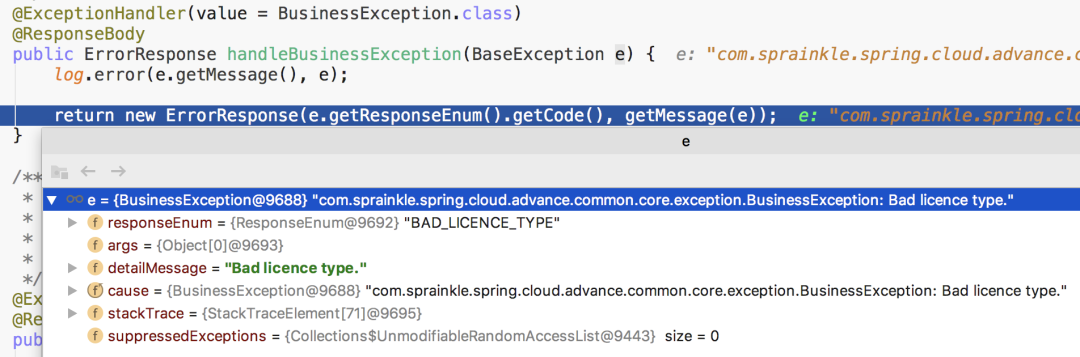
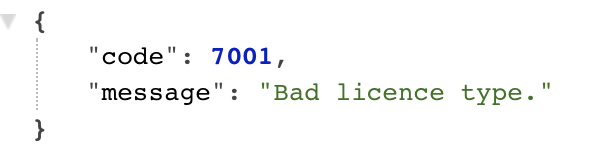
捕获 Bad licence type 异常
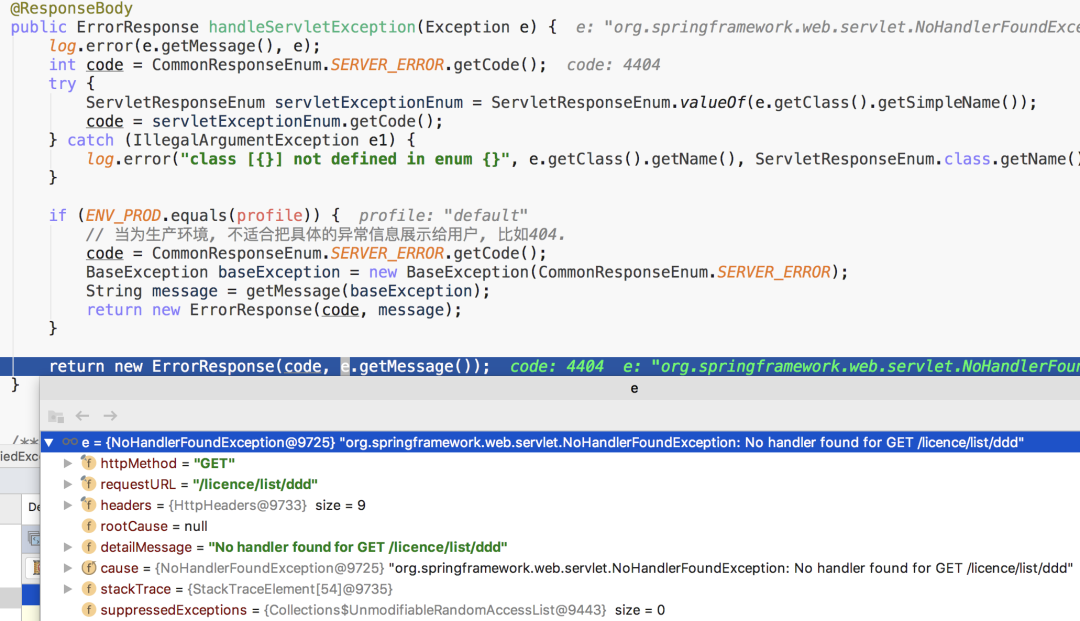
②HTTP 方法不支持:http://localhost:10000/licence。
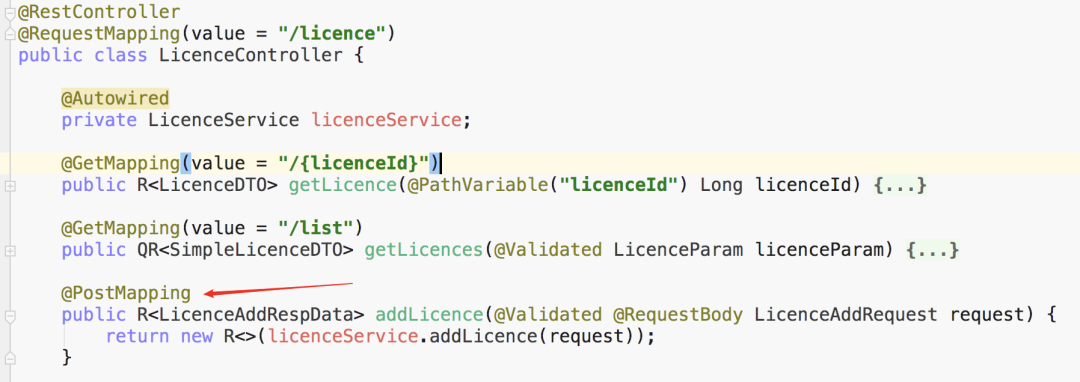
PostMapping
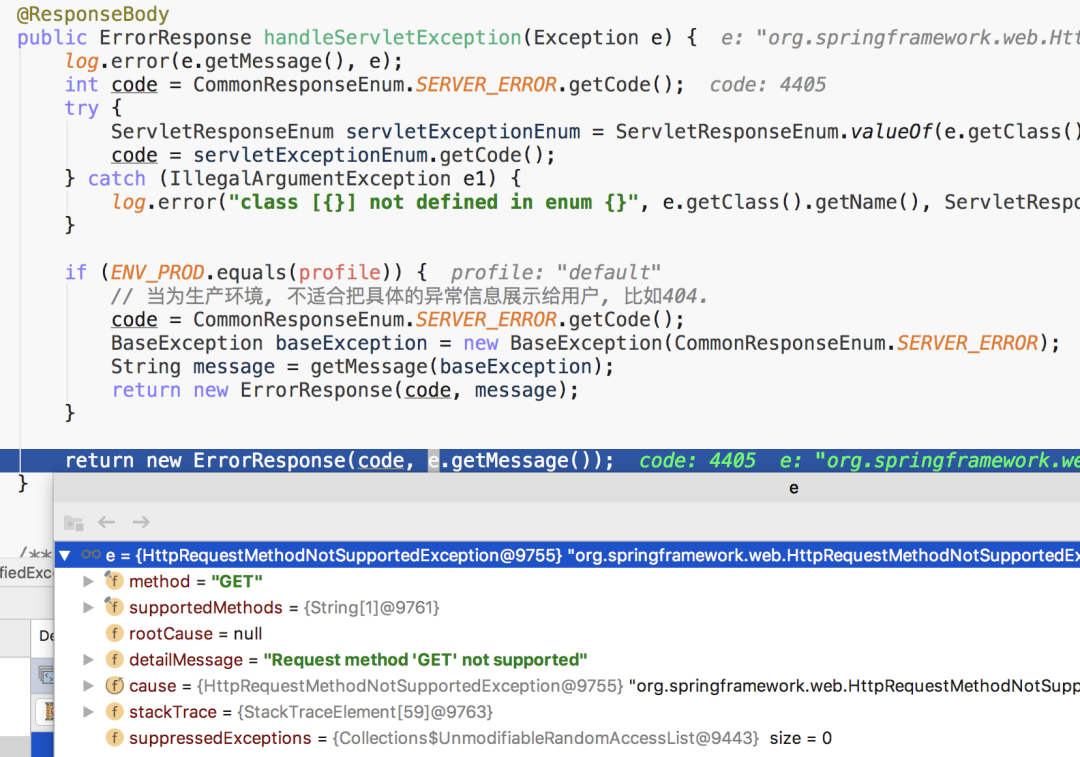
捕获 Request method not supported 异常

③校验异常 1:http://localhost:10000/licence/list?licenceType=

getLicences
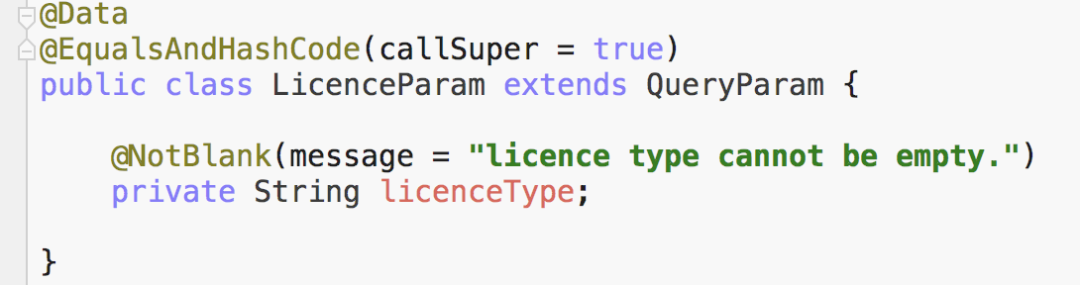
LicenceParam
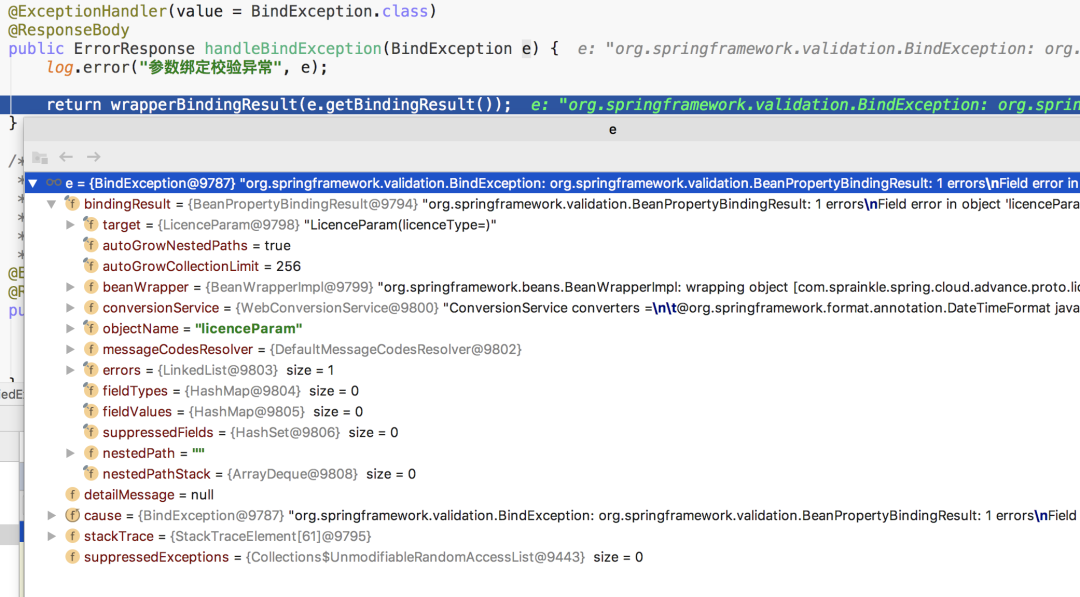
捕获参数绑定校验异常

④校验异常 2:post 请求,这里使用 postman 模拟。

addLicence
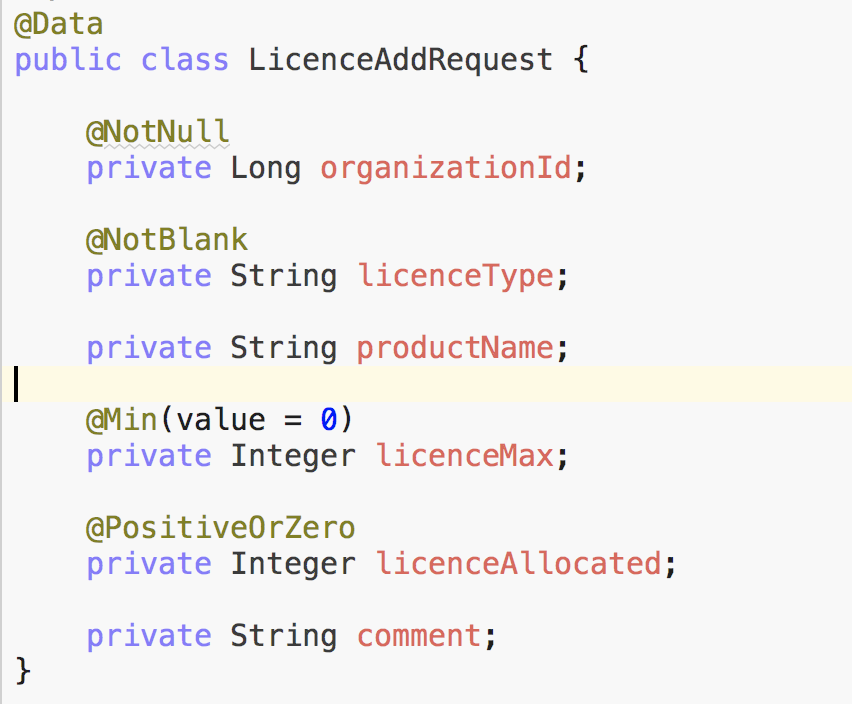
LicenceAddRequest
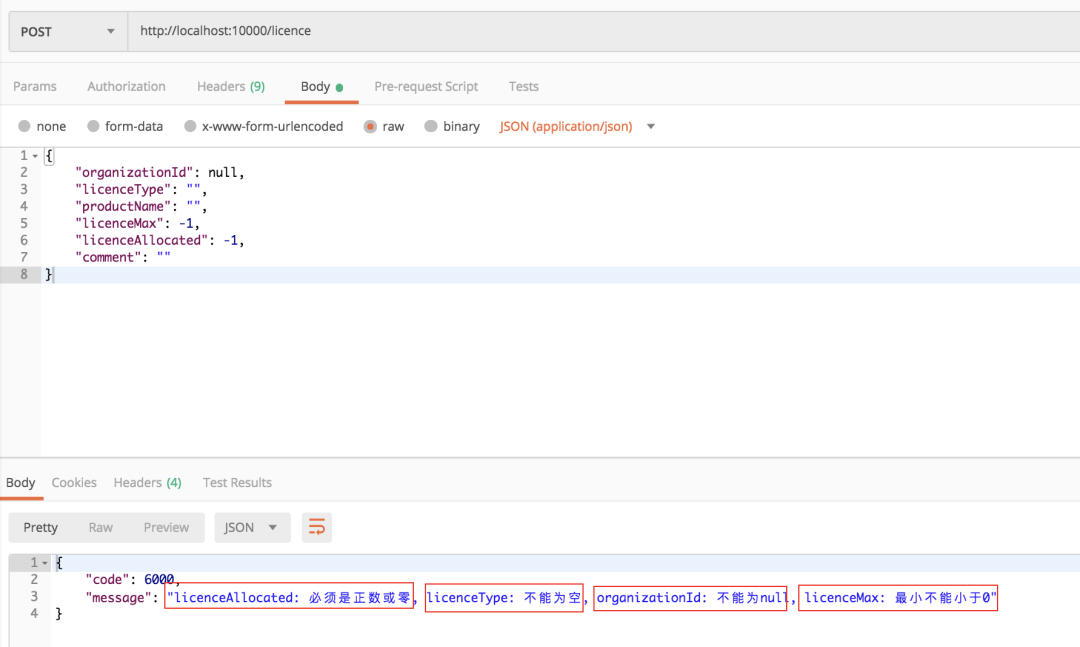
请求 url 即结果
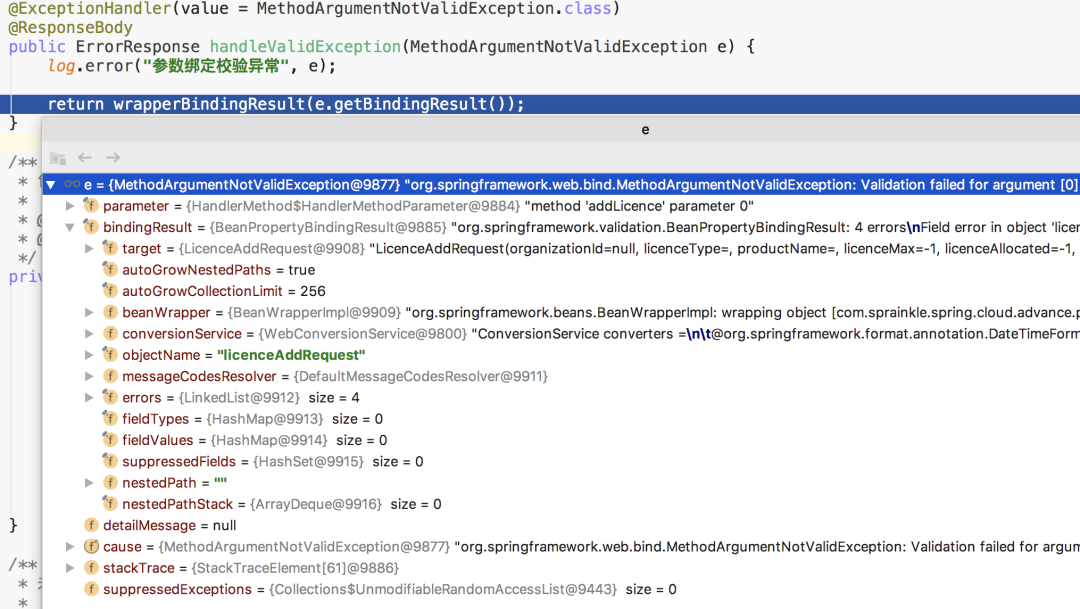
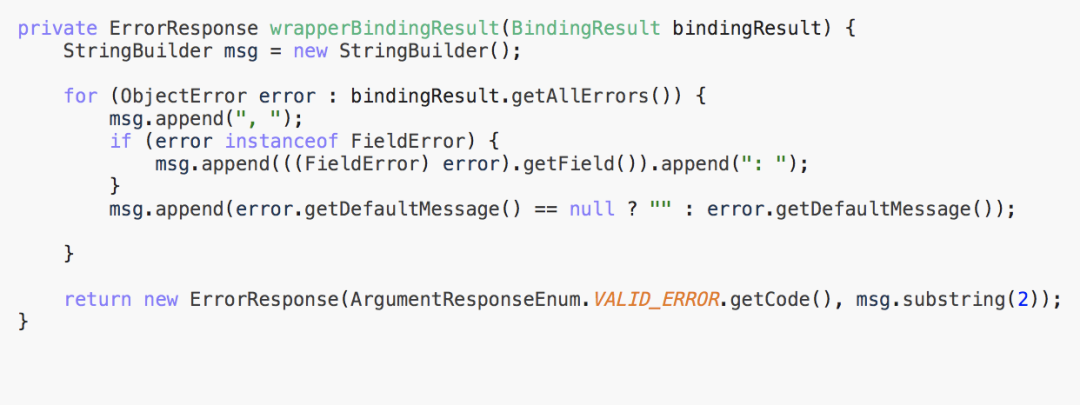
下面是异常信息的收集逻辑:
捕获未知异常
假设我们现在随便对 Licence 新增一个字段 test,但不修改数据库表结构,然后访问:http://localhost:10000/licence/1。
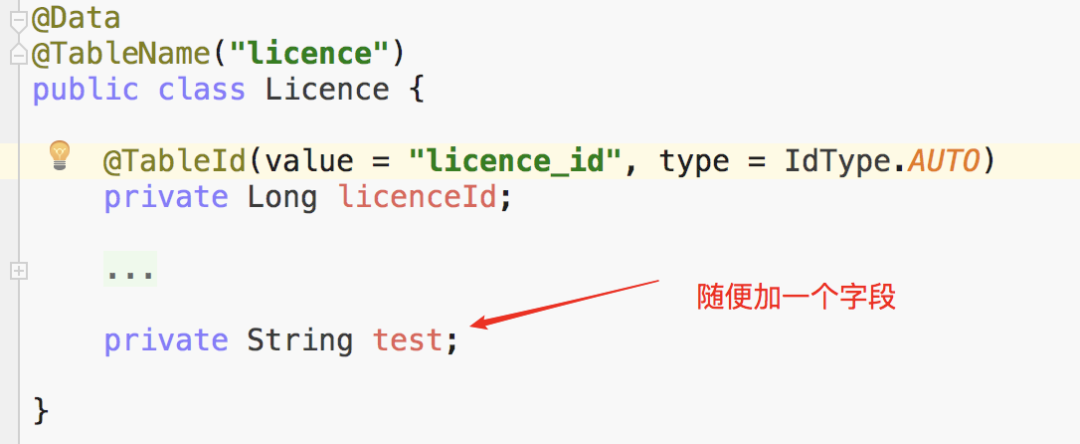
增加 test 字段
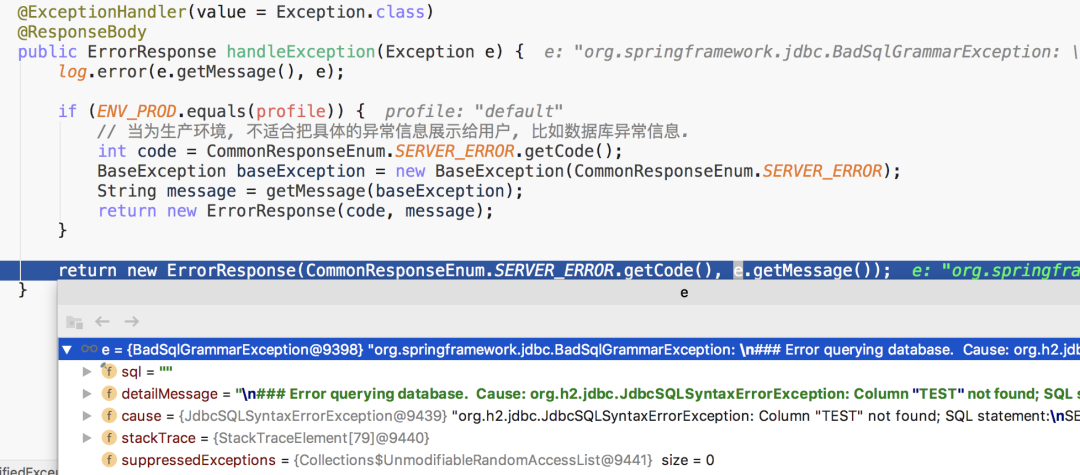
捕获数据库异常

小结:可以看到,测试的异常都能够被捕获,然后以 code、message 的形式返回。
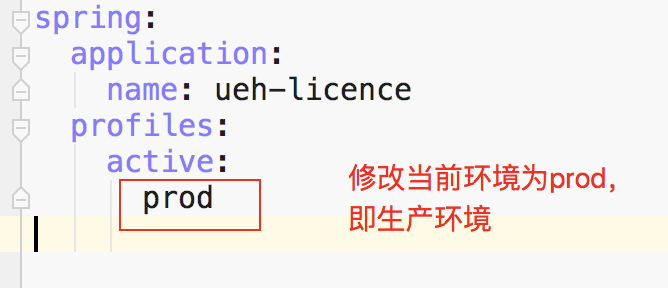
扩展:在生产环境,若捕获到未知异常或者 ServletException,因为都是一长串的异常信息,若直接展示给用户看,显得不够专业,于是,我们可以这样做:当检测到当前环境是生产环境,那么直接返回 "网络异常"。
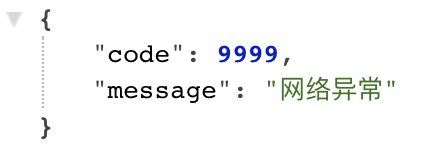
可以通过以下方式修改当前环境:
总结
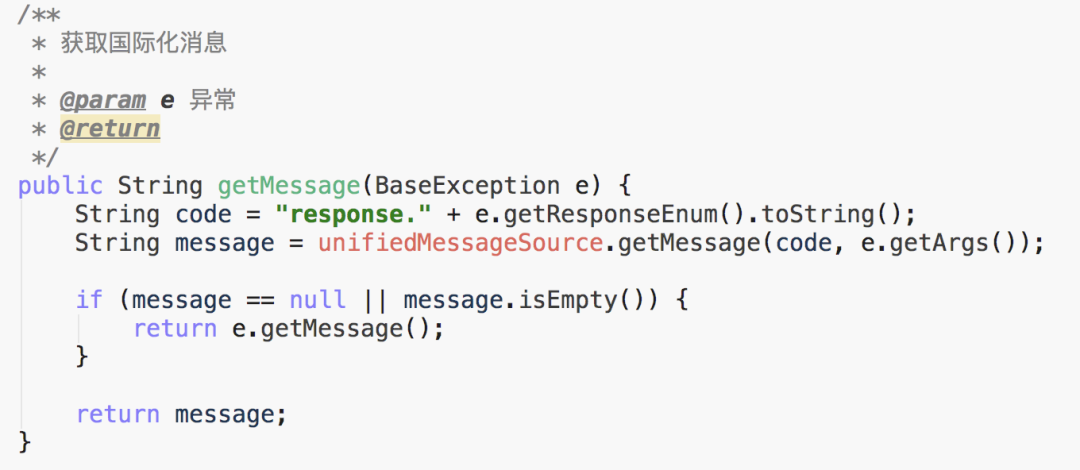
另外,当需要考虑国际化的时候,捕获异常后的异常信息一般不能直接返回,需要转换成对应的语言,不过本文已考虑到了这个,获取消息的时候已经做了国际化映射,逻辑如下:
也可以采用以下的 jsonResult 对象的方式进行处理,也贴出来代码:
@Slf4j@RestControllerAdvicepublic class GlobalExceptionHandler { /** * 没有登录 * @param request * @param response * @param e * @return */ @ExceptionHandler(NoLoginException.class) public Object noLoginExceptionHandler(HttpServletRequest request,HttpServletResponse response,Exception e) { log.error("[GlobalExceptionHandler][noLoginExceptionHandler] exception",e); JsonResult jsonResult = new JsonResult(); jsonResult.setCode(JsonResultCode.NO_LOGIN); jsonResult.setMessage("用户登录失效或者登录超时,请先登录"); return jsonResult; } /** * 业务异常 * @param request * @param response * @param e * @return */ @ExceptionHandler(ServiceException.class) public Object businessExceptionHandler(HttpServletRequest request,HttpServletResponse response,Exception e) { log.error("[GlobalExceptionHandler][businessExceptionHandler] exception",e); JsonResult jsonResult = new JsonResult(); jsonResult.setCode(JsonResultCode.FAILURE); jsonResult.setMessage("业务异常,请联系管理员"); return jsonResult; } /** * 全局异常处理 * @param request * @param response * @param e * @return */ @ExceptionHandler(Exception.class) public Object exceptionHandler(HttpServletRequest request,HttpServletResponse response,Exception e) { log.error("[GlobalExceptionHandler][exceptionHandler] exception",e); JsonResult jsonResult = new JsonResult(); jsonResult.setCode(JsonResultCode.FAILURE); jsonResult.setMessage("系统错误,请联系管理员"); return jsonResult; }}
作者:巨人大哥
编辑:陶家龙
出处:cnblogs.com/jurendage/p/11255197.html

精彩文章推荐:
