



在说Mybatis-Plus(后面简称MP)之前,我们先来了解了解Mybatis的工作流程。
Mybatis的执行流程的分析
先来认识一些Mybatis的主要的类和接口:
Configuration:将mybatis配置文件中的信息保存到该类中
SqlSessionFactory:解析Configuration类中的配置信息,获取SqlSession
SqlSession:负责和数据库交互,完成增删改查
Executor:mybatis的调度核心,负责SQL的生成
StatementHandler:封装了JDBC的statement操作
ParameterHandler:负责完成JavaType到jdbcType的转换
ResultSetHandler:负责完成结果集到Java Bean的转换
MappedStatement:代表一个select|update|insert|delete元素
SqlSource:根据传入的ParamterObject生成SQL
BoundSql:包含SQL和参数信息
获取SqlSession
的流程图: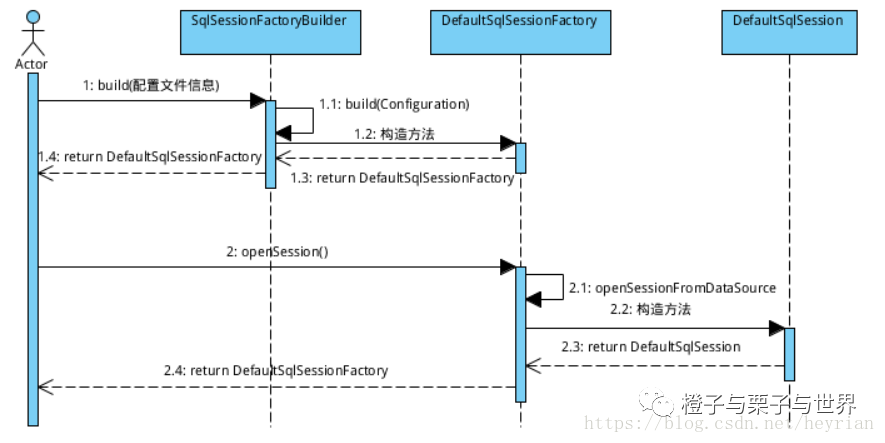
获取SqlSessionFactory
public SqlSessionFactory build(Reader reader, String environment, Properties properties) {
try {
XMLConfigBuilder parser = new XMLConfigBuilder(reader, environment, properties);
return build(parser.parse());
} catch (Exception e) {
throw ExceptionFactory.wrapException("Error building SqlSession.", e);
} finally {
ErrorContext.instance().reset();
try {
reader.close();
} catch (IOException e) {
// Intentionally ignore. Prefer previous error.
}
}
}
通过XMLConfigBuilder解析配置文件,解析的配置相关信息都会封装为一个Configuration对象,build(parser.parse())
这一步就是获取DefaultSqlSessionFactory
获取SqlSession
private SqlSession openSessionFromDataSource(ExecutorType execType, TransactionIsolationLevel level, boolean autoCommit) {
Transaction tx = null;
try {
final Environment environment = configuration.getEnvironment();
final TransactionFactory transactionFactory = getTransactionFactoryFromEnvironment(environment);
tx = transactionFactory.newTransaction(environment.getDataSource(), level, autoCommit);
final Executor executor = configuration.newExecutor(tx, execType);
return new DefaultSqlSession(configuration, executor, autoCommit);
} catch (Exception e) {
closeTransaction(tx); // may have fetched a connection so lets call close()
throw ExceptionFactory.wrapException("Error opening session.  Cause: " + e, e);
} finally {
ErrorContext.instance().reset();
}
}
configuration类里包含了Mybatis的相关配置信息,Environment包含了数据源和事务的配置,Executor是mybatis的调度核心(表面上是sqlSession完成与数据库的增删改查,实际上是通过Executor执行,因为它是对于Statement的封装)(Statement则是java操作数据库的重要对象)。上面代码获取了一个包含configuration和executor的DefaultSqlSession
对象。
sqlSession调用增删改查
查看DefaultSqlSession
源码可以看出,它的增删改查方法,最终都会走到其中三个方法上,如下:
@Override
public <E> List<E> selectList(String statement, Object parameter, RowBounds rowBounds) {
try {
MappedStatement ms = configuration.getMappedStatement(statement);
return executor.query(ms, wrapCollection(parameter), rowBounds, Executor.NO_RESULT_HANDLER);
} catch (Exception e) {
throw ExceptionFactory.wrapException("Error querying database.  Cause: " + e, e);
} finally {
ErrorContext.instance().reset();
}
}


@Override
public void select(String statement, Object parameter, RowBounds rowBounds, ResultHandler handler) {
try {
MappedStatement ms = configuration.getMappedStatement(statement);
executor.query(ms, wrapCollection(parameter), rowBounds, handler);
} catch (Exception e) {
throw ExceptionFactory.wrapException("Error querying database.  Cause: " + e, e);
} finally {
ErrorContext.instance().reset();
}
}


@Override
public int update(String statement, Object parameter) {
try {
dirty = true;
MappedStatement ms = configuration.getMappedStatement(statement);
return executor.update(ms, wrapCollection(parameter));
} catch (Exception e) {
throw ExceptionFactory.wrapException("Error updating database.  Cause: " + e, e);
} finally {
ErrorContext.instance().reset();
}
}
而最终的SQL执行都是使用Executor执行,Executor接口有一个抽象实现类BaseExecutor,而该类的query()
和update()
方法,最终都会走到其三个子类(SimpleExecutor、ReuseExecutor、BatchExecutor)上面,这三个子类也就是具体的实现:
SimpleExecutor:是Mybatis执行Mapper语句默认执行的Executor,从名称可以看出就是简单的执行器,执行每个语句都会创建一个新的预处理语句;
ReuseExecutor:指可以复用的执行器,执行每个语句会去检查是否有缓存的预处理语句(实际上是指缓存的Statement对象),有的话就直接使用,没有的会新建
BatchExecutor:批量处理的执行器,主要是用于做批量的更新操作的,其底层会调用Statement的
executeBatch()
方法实现批量操作
Mapper中的方法调用
首先,我们通过@Autowired来对mapper的进行注入,Spring扫描dao层,为每一个mapper接口创建一个MapperFactoryBean,
public class MapperFactoryBean<T> extends SqlSessionDaoSupport implements FactoryBean<T> {


private Class<T> mapperInterface;


public MapperFactoryBean(Class<T> mapperInterface) {
this.mapperInterface = mapperInterface;
}


@Override
public T getObject() throws Exception {
return getSqlSession().getMapper(this.mapperInterface);
}


}
mapperInterface就是dao的class对象,因为实现了FactoryBean接口,因此通过@Autowired获取对象时,实际是调用getObject方法获取对象,也就是sqlSession.getMapper()
;其流程如下: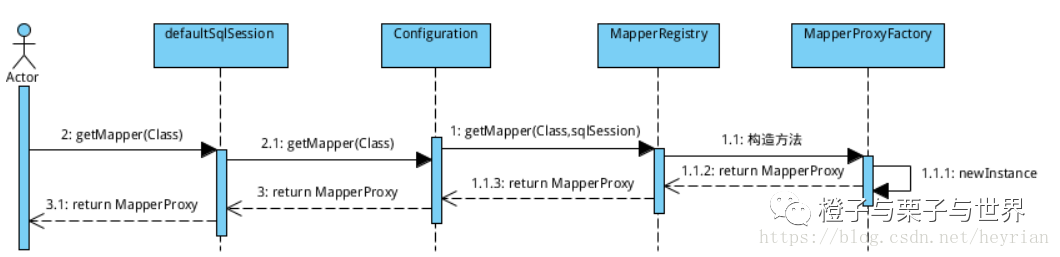
我们剥开一层又一层,来到了MapperRegistry,这里面getMapper实际上返回的是MapperProxyFactory,我们再来看看它:
public class MapperProxyFactory<T> {
//我们的Dao接口的class对象
private final Class<T> mapperInterface;


@SuppressWarnings("unchecked")
protected T newInstance(MapperProxy<T> mapperProxy) {
return (T) Proxy.newProxyInstance(mapperInterface.getClassLoader(), new Class[] { mapperInterface }, mapperProxy);
}


public T newInstance(SqlSession sqlSession) {
final MapperProxy<T> mapperProxy = new MapperProxy<T>(sqlSession, mapperInterface, methodCache);
return newInstance(mapperProxy);
}


}
可以看出,是通过了动态代理创建mapper接口的代理类对象,而对接口所有方法的调用,最后都会回到调用mapperProxy的invoke方法上(这就是JDK动态代理)。
什么是JDK的动态代理
我们去看看mapperProxy对象的invoke方法,我们去看看mapperProxy对象的invoke方法:
public class MapperProxy<T> implements InvocationHandler, Serializable {


private static final long serialVersionUID = -6424540398559729838L;
private final SqlSession sqlSession;
private final Class<T> mapperInterface;
private final Map<Method, MapperMethod> methodCache;


@Override
public Object invoke(Object proxy, Method method, Object[] args) throws Throwable {
try {
	//判断你调用的是否是已实现的方法
if (Object.class.equals(method.getDeclaringClass())) {
return method.invoke(this, args);
} else if (isDefaultMethod(method)) {
return invokeDefaultMethod(proxy, method, args);
}
} catch (Throwable t) {
throw ExceptionUtil.unwrapThrowable(t);
}
final MapperMethod mapperMethod = cachedMapperMethod(method);
return mapperMethod.execute(sqlSession, args);
}


}
if判断我们调用的方法是否是对象中的,我们调用的都是接口的方法,所以直接走mapperMethod.execute()
。mapperMethod标识我们调用接口中的那个方法
public class MapperMethod {


private final SqlCommand command;
private final MethodSignature method;


public MapperMethod(Class<?> mapperInterface, Method method, Configuration config) {
this.command = new SqlCommand(config, mapperInterface, method);
this.method = new MethodSignature(config, mapperInterface, method);
}


public Object execute(SqlSession sqlSession, Object[] args) {
Object result;
switch (command.getType()) {
case INSERT: {
Object param = method.convertArgsToSqlCommandParam(args);
result = rowCountResult(sqlSession.insert(command.getName(), param));
break;
}
case UPDATE: {
Object param = method.convertArgsToSqlCommandParam(args);
result = rowCountResult(sqlSession.update(command.getName(), param));
break;
}
case DELETE: {
Object param = method.convertArgsToSqlCommandParam(args);
result = rowCountResult(sqlSession.delete(command.getName(), param));
break;
}
case SELECT:
if (method.returnsVoid() && method.hasResultHandler()) {
executeWithResultHandler(sqlSession, args);
result = null;
} else if (method.returnsMany()) {
result = executeForMany(sqlSession, args);
} else if (method.returnsMap()) {
result = executeForMap(sqlSession, args);
} else if (method.returnsCursor()) {
result = executeForCursor(sqlSession, args);
} else {
Object param = method.convertArgsToSqlCommandParam(args);
result = sqlSession.selectOne(command.getName(), param);
}
break;
case FLUSH:
result = sqlSession.flushStatements();
break;
default:
throw new BindingException("Unknown execution method for: " + command.getName());
}
if (result == null && method.getReturnType().isPrimitive() && !method.returnsVoid()) {
throw new BindingException("Mapper method '" + command.getName()
+ " attempted to return null from a method with a primitive return type (" + method.getReturnType() + ").");
}
return result;
}
}
这样可以看出了,最终还是落到了sqlSession的update、select等;而这其实我们已经知道了,最后SqlSession其实是交给Statement执行SQL命令;
那问题又来了,Statement执行的sql是怎拼接出来的呢,这个我之后再去详细了解,(目前了解到时把Mapper.xml解析,然后把#{}的字符替换成?,最后包装成预表达式供给PrepareStatement执行)
Mybatis-Plus与Mybatis的异同点
前面我们大概了解到了Mybatis的工作原理,那MP是怎样在他之上只做增强不做改变的呢?
MP去Mybatis的区别在哪儿呢,MP继承了MapperRegistry这个类然后重写了addMapper方法
public <T> void addMapper(Class<T> type) {
if (type.isInterface()) {
if (hasMapper(type)) {
// TODO 如果之前注入 直接返回
return;
// throw new BindingException("Type " + type +
// " is already known to the MybatisPlusMapperRegistry.");
}
boolean loadCompleted = false;
try {
knownMappers.put(type, new MapperProxyFactory<>(type));
// It's important that the type is added before the parser is run
// otherwise the binding may automatically be attempted by the
// mapper parser. If the type is already known, it won't try.
// TODO 自定义无 XML 注入
MybatisMapperAnnotationBuilder parser = new MybatisMapperAnnotationBuilder(config, type);
parser.parse();
loadCompleted = true;
} finally {
if (!loadCompleted) {
knownMappers.remove(type);
}
}
}
}
将原方法中的MapperAnnotationBuilder替换成了自家的MybatisMapperAnnotationBuilder,在这里特别说明一下,mp为了不更改mybatis原有的逻辑,会用继承或者直接粗暴地将其复制过来,然后在原有的类名上加上前缀
Mybatis
然后关键是parser.parse()
这个方法:
@Override
public void parse() {
String resource = type.toString();
if (!configuration.isResourceLoaded(resource)) {
loadXmlResource();
configuration.addLoadedResource(resource);
assistant.setCurrentNamespace(type.getName());
parseCache();
parseCacheRef();
Method[] methods = type.getMethods();
// TODO 注入 CURD 动态 SQL (应该在注解之前注入)
if (GlobalConfigUtils.getSuperMapperClass(configuration).isAssignableFrom(type)) {
GlobalConfigUtils.getSqlInjector(configuration).inspectInject(assistant, type);
}
for (Method method : methods) {
try {
// issue #237
if (!method.isBridge()) {
parseStatement(method);
}
} catch (IncompleteElementException e) {
configuration.addIncompleteMethod(new MethodResolver(this, method));
}
}
}
parsePendingMethods();
}
sql注入器就是从这个方法里面添加上去的,首先判断Mapper是否是BaseMapper的超类或者超接口,BaseMapper是mp的基础Mapper,里面定义了很多默认的基础方法,意味着我们一旦使用上mp,通过sql注入器,很多基础的数据库单表操作都可以直接继承BaseMapper实现,如果是自定义的方法,sql注入器也会解析然后注入自定义的方法(这部分以后进一步了解后会补充)。
下面我们来看一个另一实例,ServiceImpl的saveBatch()方法(Service层调用的批量插入):
@Transactional(rollbackFor = Exception.class)
@Override
public boolean saveBatch(Collection<T> entityList, int batchSize) {
String sqlStatement = sqlStatement(SqlMethod.INSERT_ONE);
try (SqlSession batchSqlSession = sqlSessionBatch()) {
int i = 0;
for (T anEntityList : entityList) {
batchSqlSession.insert(sqlStatement, anEntityList);
if (i >= 1 && i % batchSize == 0) {
batchSqlSession.flushStatements();
}
i++;
}
batchSqlSession.flushStatements();
}
return true;
}
sqlSessionBatch()
是用来获取sqlSession
,并且指定Executor类型为BATCH,然后循环batchSqlSession.insert(sqlStatement, anEntityList)
,发现实际上是调用的BatchExecutor的doUpdate()方法,
@Override
public int doUpdate(MappedStatement ms, Object parameterObject) throws SQLException {
final Configuration configuration = ms.getConfiguration();
final StatementHandler handler = configuration.newStatementHandler(this, ms, parameterObject, RowBounds.DEFAULT, null, null);
final BoundSql boundSql = handler.getBoundSql();
final String sql = boundSql.getSql();
final Statement stmt;
if (sql.equals(currentSql) && ms.equals(currentStatement)) {
int last = statementList.size() - 1;
stmt = statementList.get(last);
applyTransactionTimeout(stmt);
handler.parameterize(stmt);//fix Issues 322
BatchResult batchResult = batchResultList.get(last);
batchResult.addParameterObject(parameterObject);
} else {
Connection connection = getConnection(ms.getStatementLog());
stmt = handler.prepare(connection, transaction.getTimeout());
handler.parameterize(stmt);    //fix Issues 322
currentSql = sql;
currentStatement = ms;
statementList.add(stmt);
batchResultList.add(new BatchResult(ms, sql, parameterObject));
}
// handler.parameterize(stmt);
handler.batch(stmt);
return BATCH_UPDATE_RETURN_VALUE;
}
循环添加多个Statement,但是没有但是还没有提交,一直要到batchSqlSession.flushStatements()
实际上是调用BatchExecutor的doFlushStatements(),这里才是真正的提交,把所有的Statement批量提交了
@Override
public List<BatchResult> doFlushStatements(boolean isRollback) throws SQLException {
try {
List<BatchResult> results = new ArrayList<BatchResult>();
if (isRollback) {
return Collections.emptyList();
}
for (int i = 0, n = statementList.size(); i < n; i++) {
Statement stmt = statementList.get(i);
applyTransactionTimeout(stmt);
BatchResult batchResult = batchResultList.get(i);
try {
batchResult.setUpdateCounts(stmt.executeBatch());
MappedStatement ms = batchResult.getMappedStatement();
List<Object> parameterObjects = batchResult.getParameterObjects();
KeyGenerator keyGenerator = ms.getKeyGenerator();
if (Jdbc3KeyGenerator.class.equals(keyGenerator.getClass())) {
Jdbc3KeyGenerator jdbc3KeyGenerator = (Jdbc3KeyGenerator) keyGenerator;
jdbc3KeyGenerator.processBatch(ms, stmt, parameterObjects);
} else if (!NoKeyGenerator.class.equals(keyGenerator.getClass())) { //issue #141
for (Object parameter : parameterObjects) {
keyGenerator.processAfter(this, ms, stmt, parameter);
}
}
// Close statement to close cursor #1109
closeStatement(stmt);
} catch (BatchUpdateException e) {
StringBuilder message = new StringBuilder();
message.append(batchResult.getMappedStatement().getId())
.append(" (batch index #")
.append(i + 1)
.append(")")
.append(" failed.");
if (i > 0) {
message.append(" ")
.append(i)
.append(" prior sub executor(s) completed successfully, but will be rolled back.");
}
throw new BatchExecutorException(message.toString(), e, results, batchResult);
}
results.add(batchResult);
}
return results;
} finally {
for (Statement stmt : statementList) {
closeStatement(stmt);
}
currentSql = null;
statementList.clear();
batchResultList.clear();
}
}
之前我有些疑惑,为什么要添加多个Statement,然后循环执行
stmt.executeBatch()
来提交,而MP的saveBatch()
只是做了一个表的批量提交,为什么不循环statement.addBatch
然后在statement.executeBatch()
一次就提交了,后来我猜想可能是为了无侵入吧,不在原来的Mybatis上修改太多的东西,只做增强,不做改变
以上内容来源于
https://blog.csdn.net/heyrian/article/details/81558109
https://cloud.tencent.com/developer/article/1445998
