



NULL值处理是应用开发人员最容易出错误的地方,主要的原因是大家习惯使用二元的布尔逻辑来思考判断,而数据库对于NULL值的处理逻辑是三值逻辑。事实上,数据库优化器中缺陷最多的其实也是和NULL值处理相关的逻辑。即使是有着几十年历史的DB2/Teradata等成熟的数据库软件,仍然有超过20%的缺陷和NULL处理相关。
本文深度解析NULL值陷阱出现的根本原因,总结了简单有效的判断逻辑;同时针对日常开发中四种常见陷阱,解释其适用条件及解决方案;最后介绍了PawSQL Advisor中和NULL值处理相关的优化规则及其实现原理。看完本篇文章,解决关于NULL值处理的所有疑问。
先说结论
下面的判断逻辑覆盖关系数据库中对于NULL值的所有场景,理解下面的逻辑,你就可以避免NULL陷阱。
NULL参与的所有的比较和算术运算符(>,=,<,<>,<=,>=,+,-,*,/)结果为unknown
unknown的逻辑运算(AND、OR、NOT)遵循三值运算的真值表
如果运算结果直接返回用户,使用NULL来标识unknown
如果运算结果是作为条件判断真假,那么需要通过三值逻辑进行运算,并最终通过以下映射逻辑确定整体判定
{false、unknown} -> false
{true} ->true
在UNION 或 INTERSECT等集合运算中,NULL 被视为彼此相等。
三值逻辑
在逻辑学中的三值逻辑(three-valued,也称为三元,或三价逻辑,有时缩写为3VL)是几个多值逻辑系统中的其中之一。有三种状态来表示真、假和一个表示不确定的第三值;这相对于基础的二元逻辑(比如布尔逻辑,它只提供真假两种状态)。
三值逻辑有三个真值(true、false、unknown),它的AND、OR、NOT运算的真值表如下:
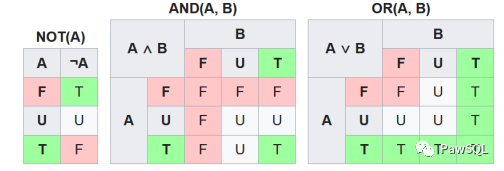
SQL中的NULL陷阱
1. 比较谓词与NULL
结论:=null
并不能判断表达式为空, 判断表达式为空应该使用is null
假设有一张客户表,记录客户的编号,姓名和电话,其中电话和国家代码可以为空。
CREATE TABLE customer (c_custkey int4 NOT NULL,c_name varchar(25) NOT NULL,c_nationcode char(8) NULL,c_phone varchar(15) NULL,c_regdate date NULL,CONSTRAINT customer_pkey PRIMARY KEY (c_custkey));insert into customer values(1, 'Randy', 'en', '13910010010', '20210911');insert into customer values(2, 'Mandy', null, '13910010012', '20200211');insert into customer values(3, 'Ray', 'us', null, '20180902');
通过下面的语句获取电话为空的客户是得不到的,它的结果永远为空
select * from customer where c_phone = null;
正确的写法应该是:
select * from customer where c_phone is null;
原因是:根据第一章节里的结论第一条c_phone = null的结果是unknown;然后根据结论里的4.1条unknown判断真假为false.
c_phone=null -> unknown -> false;
2. Case When与NULL
结论:case expr when null
l并不能判断表达式为空, 判断表达式为空应该case when expr is null
在where/having的筛选条件的错误写法还比较容易发现并纠正,而在藏在case 语句里使用null值判断就比较难以被发现,一般的SQL审核工具也难以处理。
譬如我们想要获取客户名称和国家的名称, 如果为空,默认是China:
select c_name, case c_nationcodewhen 'us' then 'USA'when 'cn' then 'China'when null then 'China'else 'Others' endfrom customer
以上的语句并不会把国家代码为null转换为China;因为when null
实际上是按c_nationcode=null
进行运算的;正确的写法应该是:
select c_name,case when c_nationcode = 'us' then 'USA'when c_nationcode = 'cn' then 'China'when c_nationcode is null then 'China'else 'Others' endfrom customer
Note: PawSQL Advisor会分析输入SQL所有的case expr when null
的条件,并重写为case expr is null
。
3. NOT IN 与NULL
结论:NOT IN子查询且选择列可空,这种情况不会返回任何记录
假设我们有一张订单表,其中客户编号和订单日期由于数据缺失可以为空
CREATE TABLE orders (o_orderkey int4 NOT NULL,o_custkey int4 NULL,o_orderdate date NULL,CONSTRAINT orders_pkey PRIMARY KEY (o_orderkey));insert into orders values(1, 1, '2021-01-01');insert into orders values(2, null, '2020-09-01');insert into orders values(3, 3, null);
现在我们想要获取没有订单的客户(客户号为2)进行营销,我们通常的写法可能是这样的,
select * from customerwhere c_custkey not in (select o_custkey from orders)
而事实上,上面的sql并没有返回我们预期的结果。原因就是子查询里的o_custkey有空值,而NOT IN的处理逻辑是这样的
c_custkey not in (1,3,null)→ c_custkey<>1 and c_custkey<>3 and c_custkey<>null→ c_custkey<>1 and c_custkey<>3 and unknown→ unknown -> false
事实上,如果子查询的结果集里有空值,这个SQL永远返回为空。
正确的写法有两种:
在子查询里加上非空限制(o_custkey is not null)
select * from customerwhere c_custkey not in (select o_custkey from orderswhere o_custkey is not null)
将NOT IN子查询改写为not exists子查询
select * from customerwhere not exists (select o_custkey from orderswhere o_custkey=c_custkey)
Notice: PawSQL Advisor采用第一种方式来进行重写优化,但是它的功能更强大,PawSQL Advisor先判定子查询里的列是否可能为空的,如果可能为空,它才会向用户推荐重写后的SQL。
4. 修饰符ALL与NULL
结论:ALL修饰的子查询选择列可空,这种情况不会返回任何记录
假设通过下面的sql来获取订单系统关闭后注册的用户
select * from customer where c_regdate> all(select o_orderdate from orders)
和上面的NOT IN类似的,由于子查询的结果中存在NULL,这个sql不会返回预期的结果。ALL 运算实际执行时也是与返回的结果集一一比较,然后进行AND的运算,最终结果unknown。而unknown作为条件进行评估,结果为false.
正确的写法有两种:
在子查询里加上非空限制(o_orderdate is not null)
select * from customerwhere c_regdate > all(select o_orderdate from orderswhere o_orderdate is not null)
将
expr > all
或expr >= all
改写为聚集函数expr > (select max()...)
(如果expr < all
或expr <= all
,则改写为expr < (select min() ...)
select * from customer wherec_regdate > (select max(o_custkey) from orders)
Notice: PawSQL Advisor的采用第二种方式来进行重写优化,原因是PawSQL Advisor对第二种重写后的sql还可以进一步通过重写(参加重写规则max/min子查询重写规则
)进行性能优化。
PawSQL Advisor关于NULL的重写优化
PawSQL Advisor 关于NULL处理的重写优化规则有三个,对应与上面的四种情况。
| 规则编码 | 规则描述 |
|---|---|
| UseEqual4NullRewrite | =null或是 case when nulll并不能判断表达式为空, 判断表达式为空应该使用 is null |
| NotInNullableSubQueryRewrite | NOT IN子查询且选择列可空,这种情况不会返回任何记录 |
| AllQualifierSubQueryRewrite | ALL修饰的子查询选择列可空,这种情况不会返回任何记录 |
PawSQL Advisor的功能更加强大,它会根据DDL中列的定义是否为nullable,以及作用在列上的运算是否会产生nullable的结果,来确定子查询里的查询列是否nullable的,如果可能为空,它才会向用户推荐重写后的SQL。
以NotInNullableSubQueryRewrite为例,它的处理逻辑是
1. 遍历Query语法树,获取所有的NOT IN 谓词1. 如果这个谓词是PredicateInValueSelect( 样式`expr not in (select ....)`)1. 判断子查询结果集的列是否可以为空1. 不可以为空,返回2. 可以为空,为结果集里的每个可以为空的列rc,判定在子查询的where条件里是否有 `rc is not null`谓词1. 如果没有,新增一个 `rc is not null`谓词,通过and连接符合并到子查询的where条件里2. 如果有,继续判定下个列2. 如果这个谓词是PredicateInValueList (`expr not in values(1,2,null)`)1.遍历值列表1. 如果值为null,删除
判断是否可以为空的逻辑如下:
isNullable(选择列expr){if (expr是数据库表的列) {if (列定义可以为NULL)return true;elsereturn true;} else if (选择列是NULL) {return true;} else if (选择列是非NULL常量或是变量) {return false;} else if (选择列是组合表达式){return 组合表达式的每个分项 的 or 结果;}else if (选择列是函数) {if(函数是"SUM"、"Count"、"AVG")return false;elsereturn isNullable(函数参数)} else if (expr是标量子查询) {return isNullable(标量子查询的选择列)} else{return true;}}
PawSQL Advisor对NULL值处理评测
接一下来我们通过7个案例来看一下PawSQL Advisor对于NULL值的优化能力,这七个案例基本上覆盖了SQL中对于NULL值处理的所有场景。
Notice:假设customer表定义中列c_phone及c_nationkey可空
-- 案例1: = null 重写为 is nullselect count(*) from customer where c_phone=null;-- 案例2:case expr when null 重写为 case when expr is nullselect case c_phone when null then 1 when '139%' then 0 else -1 end from customer where not c_phone = null;-- 案例 3: c_nationkey可空,增加 c_nationkey is not null条件select count(*) from nation where n_nationkey not in (select c_nationkey from customer);-- 案例 4: c_nationkey可空,所以max(c_nationkey)可空, 增加 c_nationkey is not null条件select count(*) from nation where n_nationkey not in (select max(c_nationkey) from customer group by c_mktsegment);-- 案例 5: count()/sum() 永远不为空,所以无需重写select count(*) from nation where (n_name,n_nationkey) not in (select 'China',c_nationkey from customer);-- 案例 6: c_name不为空,但是c_nationkey可空,所以需增加 c_nationkey is not null 条件select count(*) from nation where n_nationkey not in (select count(c_nationkey) from customer group by c_mktsegment);-- 案例 7: c_nationkey可空,所以重写为 > (select min(c_nationkey) from customer)select count(*) from customer where n_nationkey > all(select c_nationkey from customer);
PawSQL Advisor 输出(概要)
/********************************************************************\* ** PawSQL Optimization Summary ** ** Powered by PawSQL(2021- ) ** *\********************************************************************/1. Optimization Summary- There are 7 query analyzed;- There are 6 optimization rewrites for 6 queries;- There are 9 violations of optimization rule against 6 queries;- There are 1 indices recommended for 4 queries;- There is 12.91% performance improvement.2. Optimization Rule Violations- RuleUseEqual4Null: [null.sql-stmt2, null.sql-stmt1]- RuleAllQualifierSubQueryRewrite: [null.sql-stmt7]- RuleNoCond4NonAggSelect: [null.sql-stmt3, null.sql-stmt6, null.sql-stmt7]- RuleNotInNullableSubQueryRewrite: [null.sql-stmt4, null.sql-stmt3, null.sql-stmt6]...
PawSQL Advisor 输出(单SQL详情)
案例 1:
= null
重写为is null
-- 原SQLselect count(*) from customer where c_phone=null;-- 重写后的SQLselect count(*) from customer where customer.c_phone is null;
案例 2:
case expr when null
重写为case when expr is null
-- 原SQLselect case c_phone when null then 1 when '139%' then 0 else -1 end from customer;-- 重写后的SQLselect casewhen c_phone is null then 1when c_phone = '139%' then 0else -1endfrom customer;
案例 3: NOT IN 和NULL,
c_nationkey
可空,需增加c_nationkey is not null
-- 原SQLselect count(*) from nation where n_nationkey not in (select c_nationkey from customer);-- 重写后的SQLselect count(*) from nation where n_nationkey not in ( select c_nationkey from customerwhere c_nationkey is not null)
案例 4: NOT IN 和NULL,
c_nationkey
可空,所以max(c_nationkey)
可空, 增加c_nationkey is not null
条件-- 原SQL
select count(*) from nation where n_nationkey not in (select max(c_nationkey) from customer group by c_mktsegment);-- 重写后的SQLselect count(*) from nation where n_nationkey not in (select max(customer.c_nationkey)from customerwhere c_nationkey is not nullgroup by c_mktsegment)
案例 5: NOT IN 和NULL,
count(c_nationkey )
永远不为空,所以无需重写
select count(*) from nation where n_nationkey not in (select count(c_nationkey) from customer group by c_mktsegment);
案例 6: NOT IN 和NULL,
c_name
不为空,但是c_nationkey
可空,所以需增加c_nationkey is not null
条件
-- 原SQLselect count(*) from nation where (n_name,n_nationkey)not in (select 'China',c_nationkey from customer);-- 重写后的SQLselect count(*) from nation where (n_name,n_nationkey) not in ( select 'China', c_nationkey from customerwhere customer.c_nationkey is not null)
案例 7: 修饰符ALL与NULL,
c_nationkey
可空,所以重写为> (select min(c_nationkey) from customer)
-- 原SQLselect count(*) from customer where n_nationkey > all(select c_nationkey from customer);-- 重写后的SQLselect count(*)from customerwhere n_nationkey > (select min(c_nationkey) from customer)
PawSQL Advisor已在IntelliJ应用市场发布,大家可以通过IDE从市场直接下载安装。PawSQL专注数据库性能优化,有兴趣的小伙伴请关注公众号,
