



学习目标
学习表的约束、表的默认值、自增类型等技术
课程学习
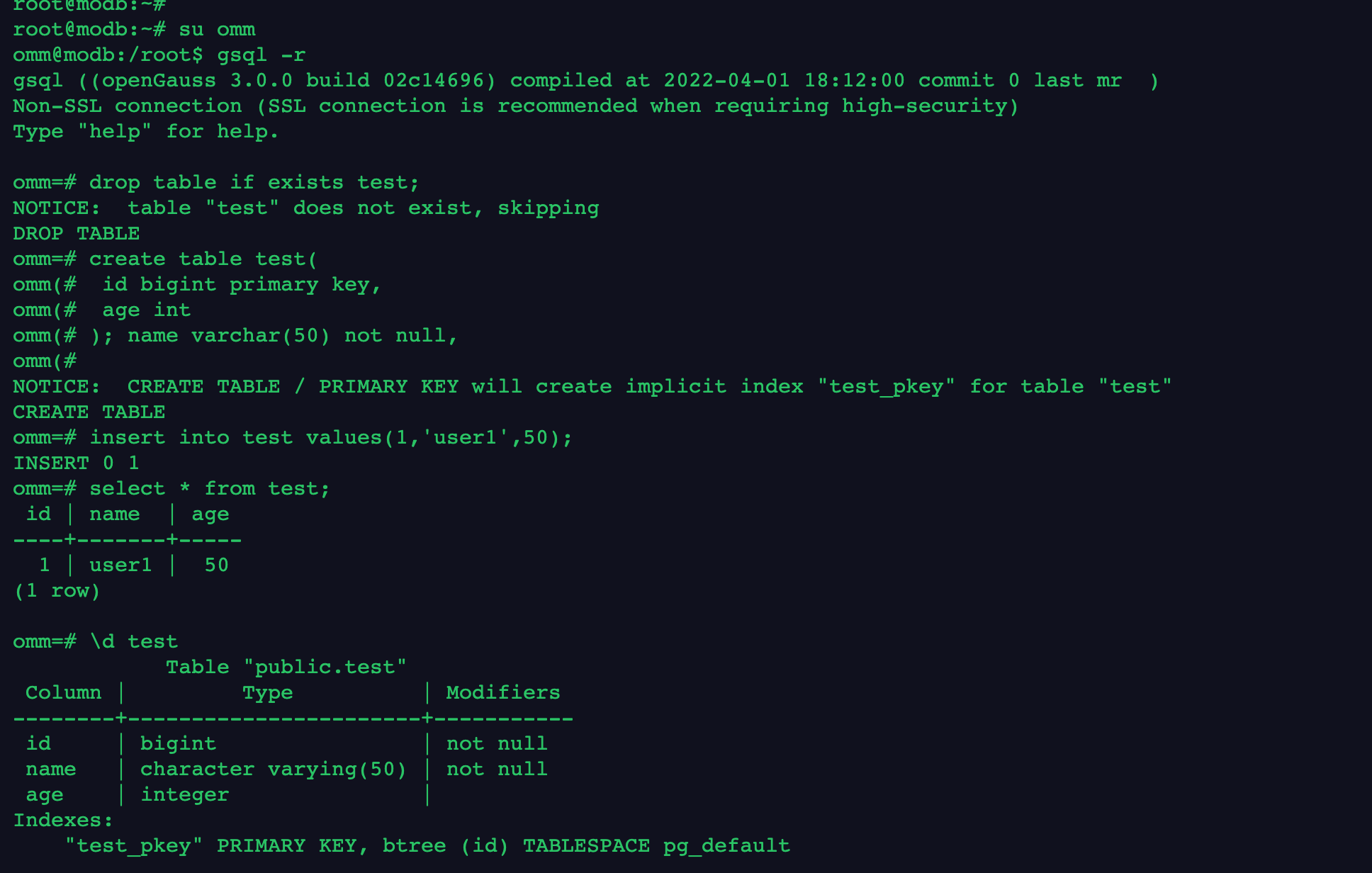
1.创建表的时候定义列级约束
-- 创建表的时候为表定义列级约束:在列级定义了primary key约束(id列)和not null约束(name列)。
drop table if exists test;
create table test(
 id bigint primary key,
 name varchar(50) not null,
 age int
);

--插入数据
insert into test values(1,'user1',50);

--查看数据
select * from test;

--查看约束
\d test
2.创建表的时候定义表级约束
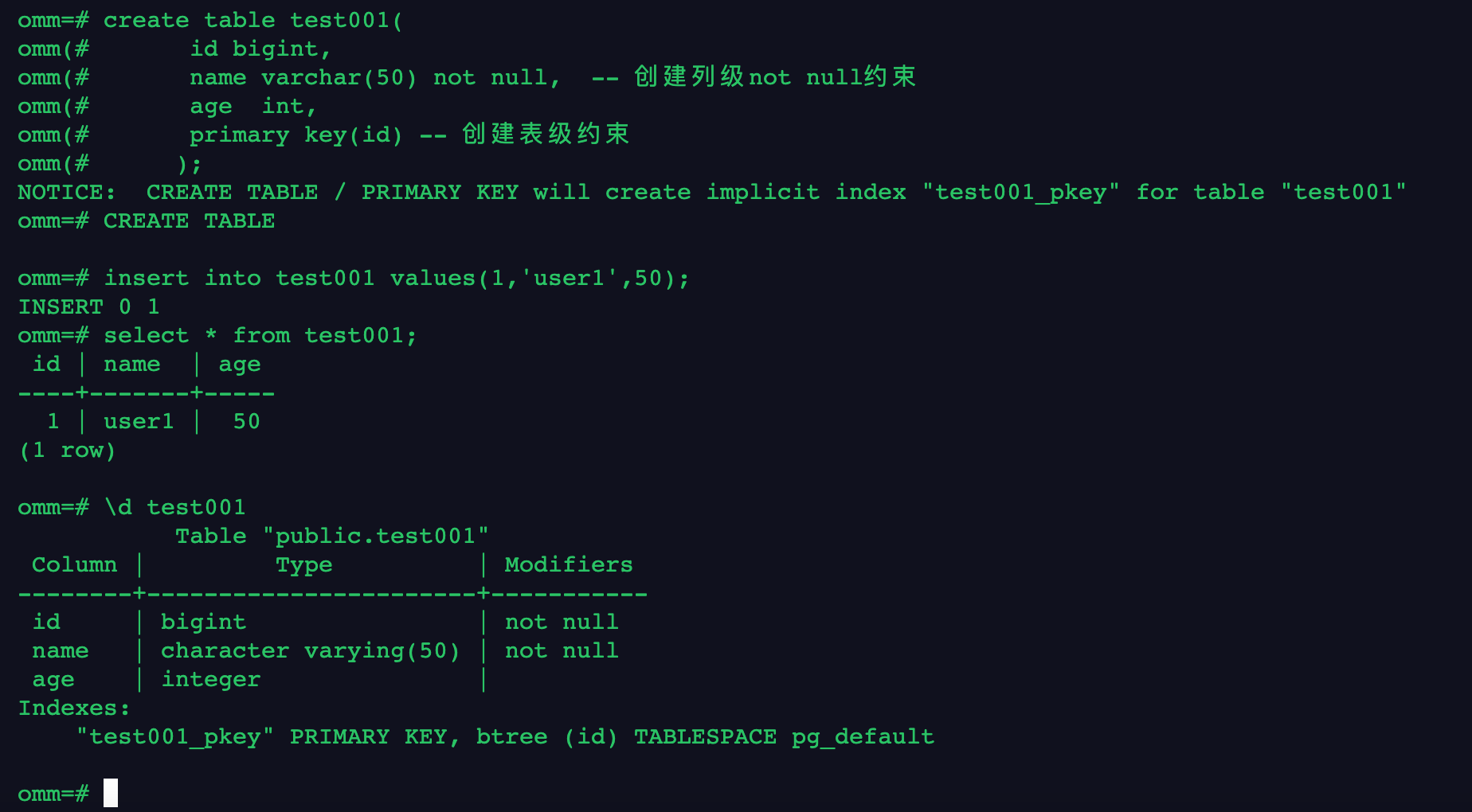
--创建表时定义表级约束  执行下面的SQL语句,在创建表的时候为表定义表级约束:
#这里在表列级定义了primary key约束(id列),在列级定义了not null约束(name列)。
drop table if exists test001;
create table test001(
      id bigint,
      name varchar(50) not null,  -- 创建列级not null约束
      age  int,
      primary key(id) -- 创建表级约束
     );

insert into test001 values(1,'user1',50);

select * from test001;

\d test001
3.为表的属性定义默认值
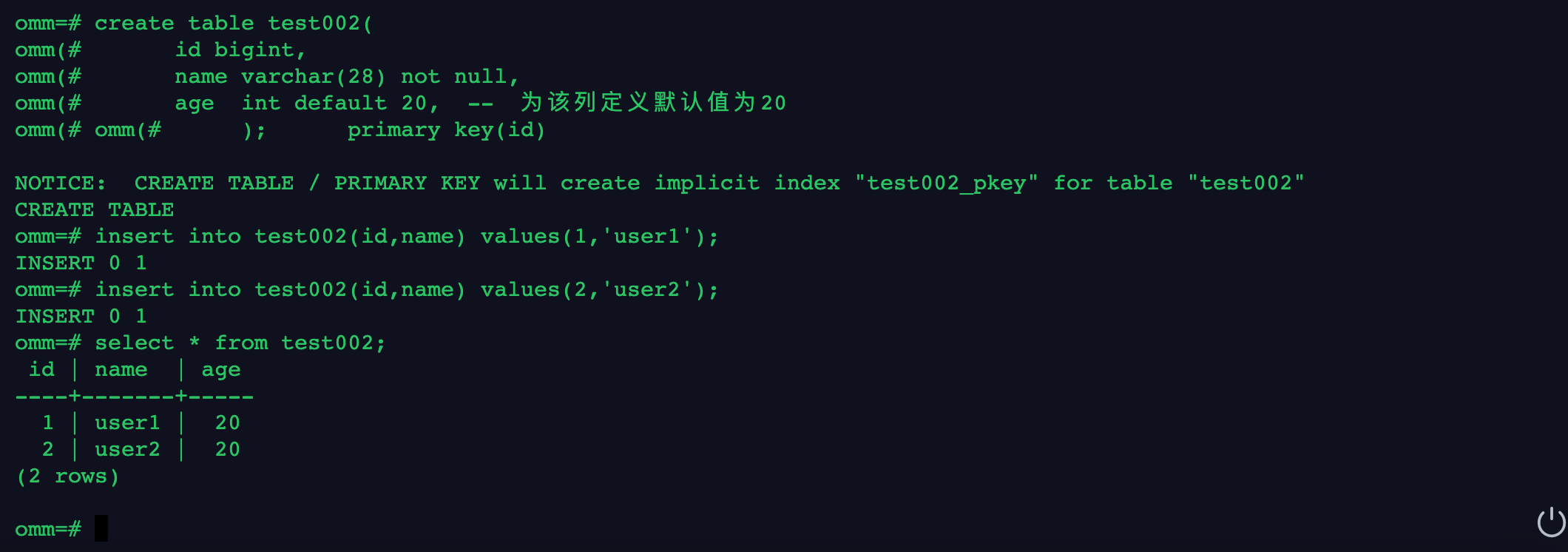
--执行下面的语句,在创建表的时候为表的某个列定义默认值:
drop table if exists test002;
create table test002(
      id bigint,
      name varchar(28) not null,
      age  int default 20,  --  为该列定义默认值为20
      primary key(id)
     );

--下面的SQL insert语句,在向表test插入数据时,没有提供age列的值:
insert into test002(id,name) values(1,'user1');
insert into test002(id,name) values(2,'user2');

select * from test002;
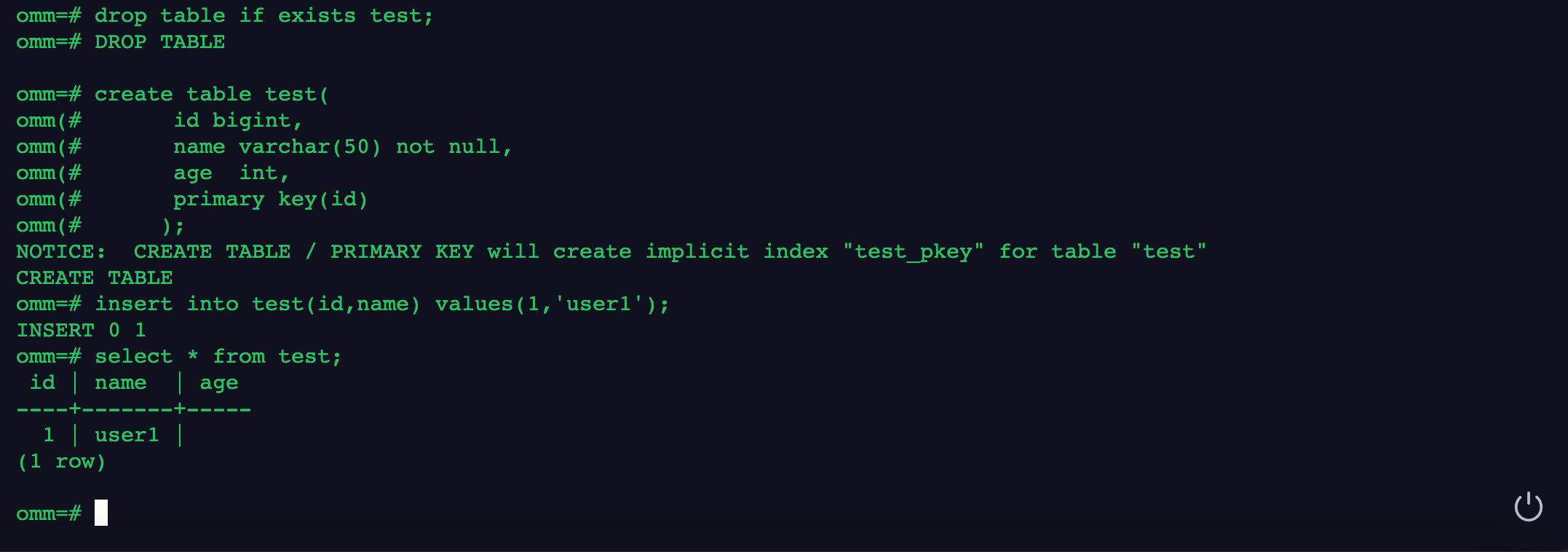
4.如果在创建表的时候,没有为某列定义默认值,缺省的默认值是空值null。
-- 未定义age列的默认值,如果插入数据时未提供该列的值,则将默认插入空值null
drop table if exists test;
create table test(
      id bigint,
      name varchar(50) not null,
      age  int,
      primary key(id)
     );
insert into test(id,name) values(1,'user1');
select * from test;
5.创建表时使用自增数据类型
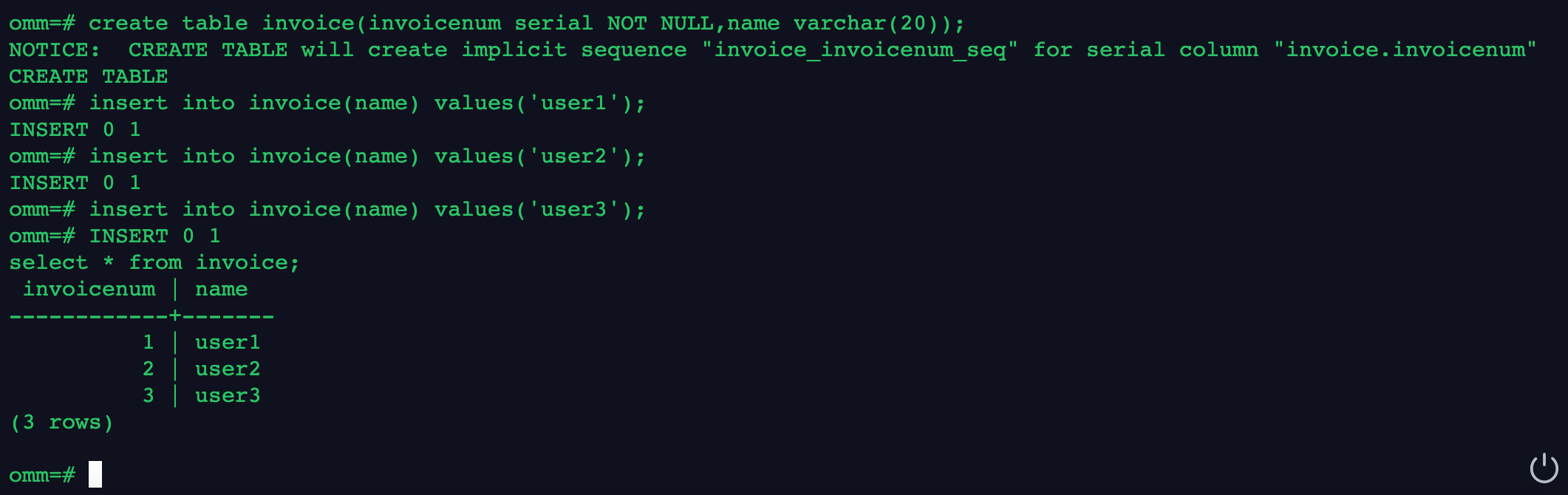
商品fapiao的编号通常按顺序递增。这种情况可以使用serial数据类型。最简单方法直接使用serial数据类型。
--创建一个带有serial数据类型的测试表invoice:
drop table if exists invoice;
create table invoice(invoicenum serial NOT NULL,name varchar(20));

--为表invoice插入3条记录,并查看插入数据后的表的数据:
insert into invoice(name) values('user1');
insert into invoice(name) values('user2');
insert into invoice(name) values('user3');

--可以看到每插入一条记录到表invoice后,列invoicenum的值会自增1。
select * from invoice;
6.使用现有的表创建新表
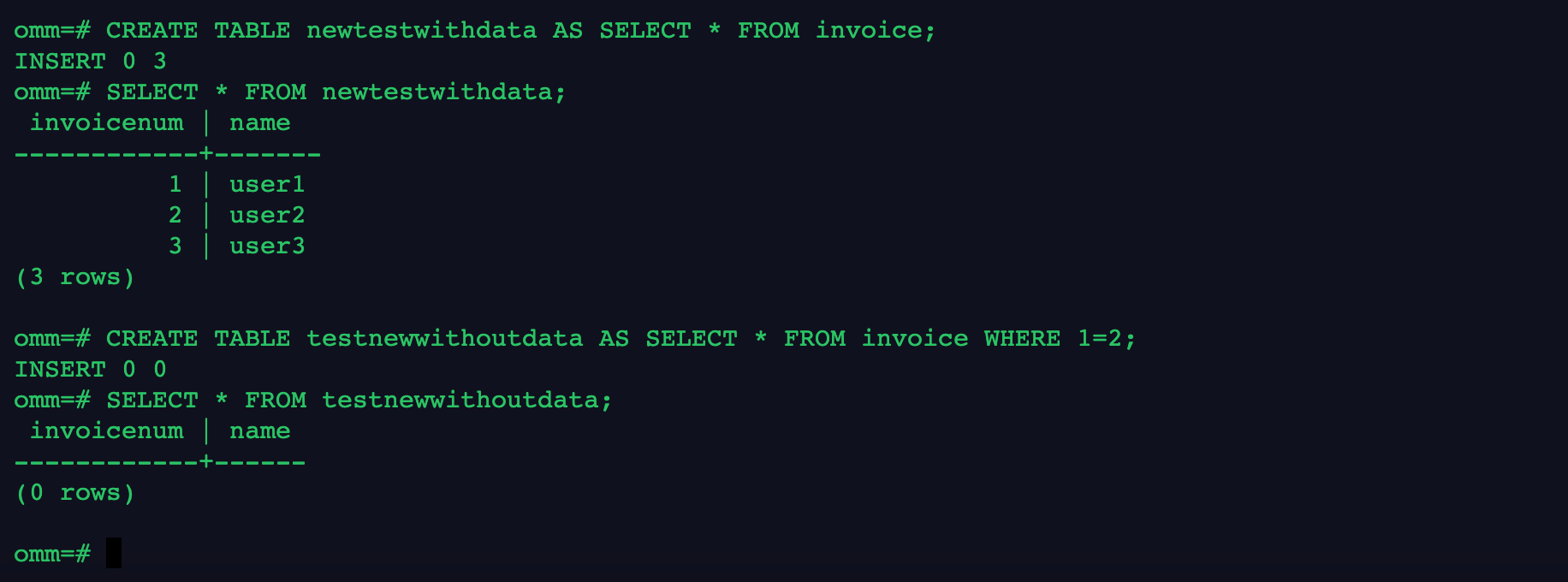
--执行下面的SQL语句,将创建新表,并且会将旧表的数据拷贝给新表:
DROP TABLE if exists newtestwithdata;
CREATE TABLE newtestwithdata AS SELECT * FROM invoice;
SELECT * FROM newtestwithdata;

--执行下面的SQL语句,创建和旧表的表结构相同的新表,但是不会将旧表的数据拷贝给新表:
DROP TABLE if exists testnewwithoutdata;
CREATE TABLE testnewwithoutdata AS SELECT * FROM invoice WHERE 1=2;
SELECT * FROM testnewwithoutdata;
课程作业
1.创建表的时候定义列级约束
drop table if exists test;
create table test(
 id bigint primary key,
 name varchar(50) not null,
 age int
);

--插入数据
insert into test values(1,'user1',50);

--查看数据
select * from test;

--查看约束
\d test
2.创建表的时候定义表级约束
drop table if exists test001;
create table test001(
      id bigint,
      name varchar(50) not null,  -- 创建列级not null约束
      age  int,
      primary key(id) -- 创建表级约束
     );
insert into test001 values(1,'user1',50);
select * from test001;
 \d test001
3.为表的属性定义默认值
drop table if exists test002;
create table test002(
      id bigint,
      name varchar(28) not null,
      age  int default 20,  --  为该列定义默认值为20
      primary key(id)
     );
--下面的SQL insert语句,在向表test插入数据时,没有提供age列的值:
insert into test002(id,name) values(1,'user1');
insert into test002(id,name) values(2,'user2');

select * from test002;
4.如果在创建表的时候,没有为某列定义默认值,缺省的默认值是空值null
drop table if exists test;
create table test(
       id bigint,
        name varchar(50) not null,
      age  int,
       primary key(id)
      );
insert into test(id,name) values(1,'user1');
select * from test;
5.创建表时使用自增数据类型
drop table if exists invoice;
create table invoice(invoicenum serial NOT NULL,name varchar(20));
--为表invoice插入3条记录,并查看插入数据后的表的数据:
insert into invoice(name) values('user1');
insert into invoice(name) values('user2');
insert into invoice(name) values('user3');

--可以看到每插入一条记录到表invoice后,列invoicenum的值会自增1。
select * from invoice;
6.使用现有的表创建新表
DROP TABLE if exists newtestwithdata;
CREATE TABLE newtestwithdata AS SELECT * FROM invoice;
SELECT * FROM newtestwithdata;
