




本文首发于Ressmix个人站点:https://www.tpvlog.com
本章,我将在上一章的项目基础上,实现库存服务的缓存与数据库的双写一致性。在开始之前,我们先来回顾下什么是双写一致性。在《系统整体架构》一章中,我画过下面这一张图:
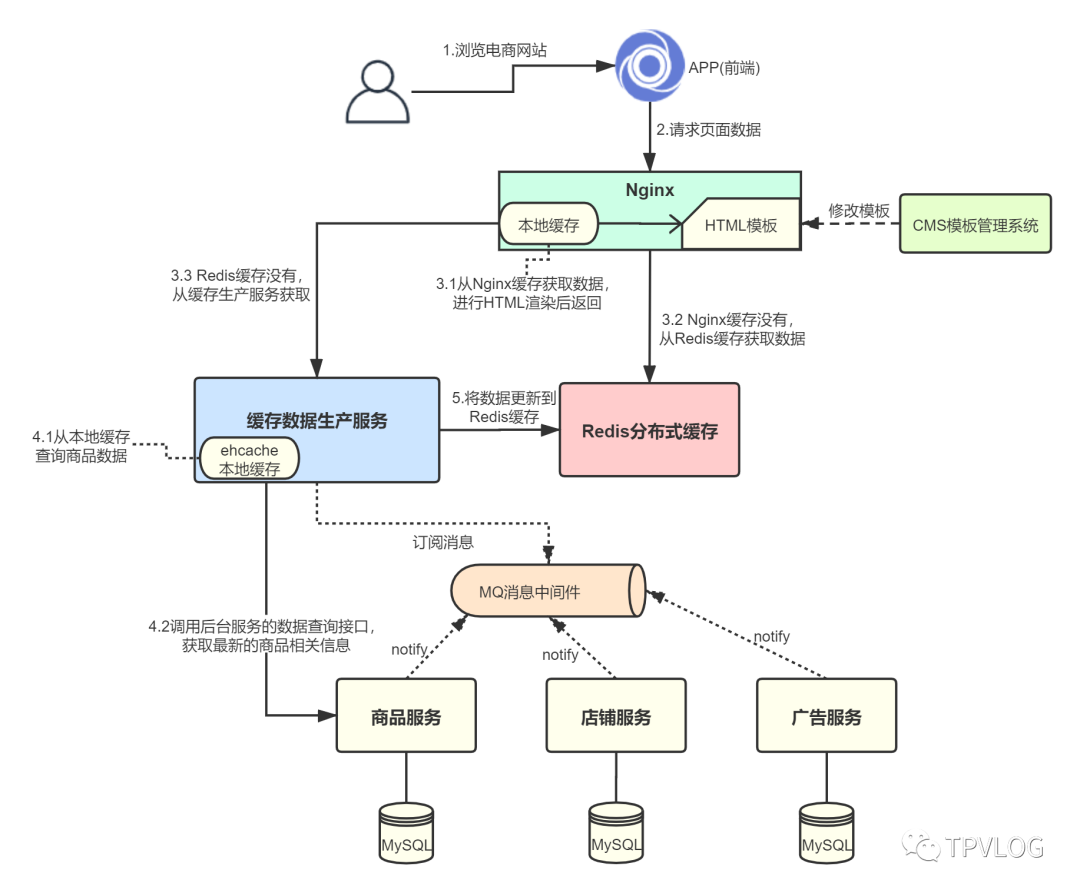
库存属于商品信息中对实时性要求非常高的数据,我画在了图的最右侧。库存服务的大体实现逻辑是:
当请求查询商品库存时,如果Redis缓存中不存在,则从数据库查询,然后写入Redis缓存,最后返回客户端;
当请求修改商品库存时,采用Cache Aside模式,先删除缓存,然后更新数据库。
采用Cache Aside模式时,存在高并发场景下的缓存一致性问题,读者可以先去看看我写的这篇文章——《分布式理论之高性能:分布式缓存》,然后回头来看本章,我将在本章中通过代码实现这种缓存一致性方案。
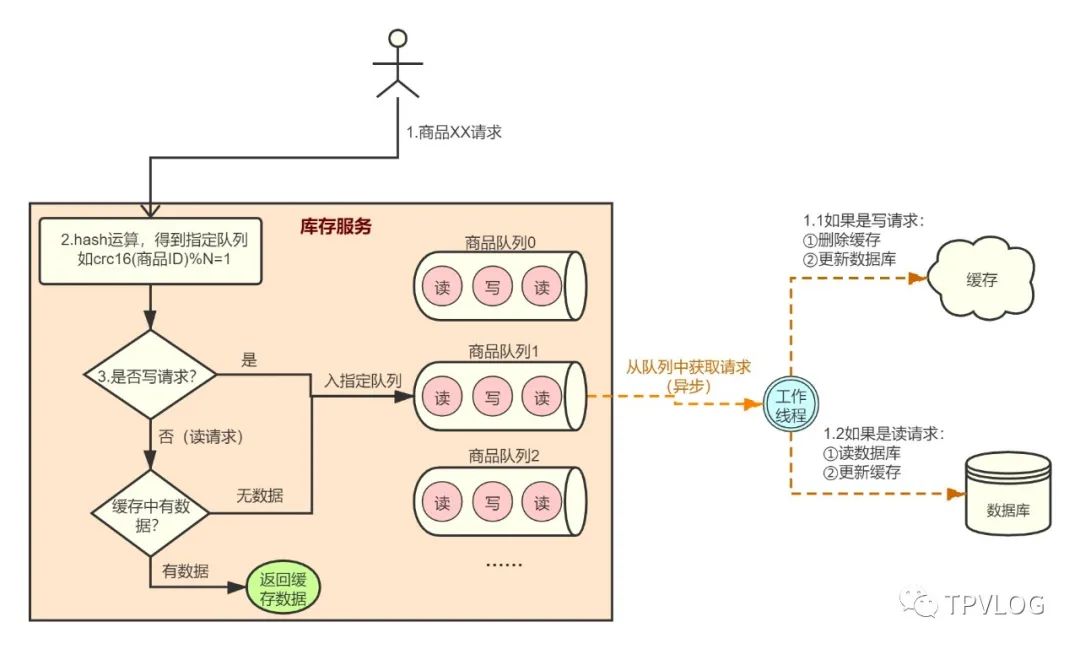
实现商品库存的缓存与数据库双写一致性,几个核心要点如下:
用内存队列保存同一商品的库存读写请求,每个处理线程关联一个内存队列;
对读请求和写请求进行封装,并提供统一的处理接口;
读请求去重优化,也就是说如果队列中已经有读请求,则当前读请求hang一会儿;
一、内存队列
首先,库存服务应用启动后,需要初始化一个线程池,线程池中的每一个线程去监听一个自己的内存队列。后续会从这个内存队列里消费读请求和写请求:
1.1 线程池
我这边直接使用J.U.C中的工具类进行内存队列的设计编码,对J.U.C不了解的童鞋可以先去学习下我的《透彻理解Java并发编程系列》。另外,如果要追求更高的性能,读者也可以自行尝试使用Disruptor(https://github.com/LMAX-Exchange/disruptor)这个高性能队列。
首先,我们创建10个固定线程数的线程池,每个工作线程负责监听一个内存队列:
 1 /**
 2 * 请求处理线程池,线程池中的每个线程监听一个任务
 3 *
 4 * @author ressmix
 5 */
 6@Component
 7public class RequestProcessorThreadPool {
 8
 9    private ExecutorService executor;
10
11    private final int size = 10;
12
13    @PostConstruct
14    private void init() {
15        // 10个线程的线程池
16        executor = new ThreadPoolExecutor(size, size, 0L, TimeUnit.MILLISECONDS,
17                new ArrayBlockingQueue<Runnable>(1024), Executors.defaultThreadFactory());
18
19        // 提交10个任务
20        RequestQueue requestQueue = RequestQueue.getInstance();
21        for (int i = 0; i < size; i++) {
22            // requestQueue内部保存着队列
23            ArrayBlockingQueue<Request> queue = new ArrayBlockingQueue<Request>(128);
24            requestQueue.addQueue(queue);
25
26            // 提交任务,每个任务关联一个队列
27            executor.submit(new RequestProcessorTask(queue));
28        }
29    }
30}
1.2 请求队列
请求队列为单例类,内部包含ArrayBlockingQueue列表,也就是我们的内存队列:
 1 /**
 2 * 请求队列,单例类
 3 *
 4 * @author ressmix
 5 */
 6public class RequestQueue {
 7
 8    private static final RequestQueue instance = new RequestQueue();
 9
10    /**
11     * 内存队列
12     */
13    private final List<ArrayBlockingQueue<Request>> queues = new ArrayList<ArrayBlockingQueue<Request>>();
14
15    private RequestQueue() {
16    }
17
18    public static RequestQueue getInstance() {
19        return instance;
20    }
21
22    /**
23     * 添加一个内存队列
24     *
25     * @param queue
26     */
27    public void addQueue(ArrayBlockingQueue<Request> queue) {
28        this.queues.add(queue);
29    }
30
31    /**
32     * 根据索引,获取一个内存队列
33     */
34    public ArrayBlockingQueue<Request> getQueue(int idx) {
35        return this.queues.get(idx);
36    }
37
38    /**
39     * 内存队列大小
40     */
41    public int size() {
42        return queues.size();
43    }
44}
1.3 请求处理任务
请求处理任务,会与一个内存队列绑定,并被提交到线程池中,然后由线程池中的一个工作线程监听执行:
 1/**
 2 * 请求处理任务
 3 * @author ressmix
 4 */
 5public class RequestProcessorTask implements Callable<Boolean> {
 6
 7    private final ArrayBlockingQueue<Request> queue;
 8
 9    public RequestProcessorTask(ArrayBlockingQueue<Request> queue) {
10        this.queue = queue;
11    }
12
13    @Override
14    public Boolean call() throws Exception {
15        while (true) {
16            try {
17                // 获取一个请求
18                Request request = queue.take();
19                // 执行
20                request.process();
21            } catch (Exception ex) {
22                ex.printStackTrace();
23            }
24        }
25    }
26}
生产环境,我们也可以使用分布式消息中间件来实现,将同一个商品的读写请求全部发送到一个队列(或主题)中,然后有一个消费者订阅该队列(主题),线性处理每一个请求。
之所以采用内存队列,另外一个考量点是内存队列比分布式MQ的性能更高,因为不涉及服务间的调用以及消息持久化。但也要注意,分布式环境下一个好的内存队列的设计是比较复杂的,需要综合考虑性能、线程安全、异常处理等方方面面的设计,特别是生产环境会部署多个对等服务,所以使用内存队列,必须保证对同一个商品的请求,路由到同一个服务节点。
二、请求封装
接着,我们需要封装两种类型的请求:商品库存查询请求和商品库存更新请求。先定义一个Request
接口:
1public interface Request {
2    void process();
3    Long getProductId();
4}
2.1 查询请求
查询请求主要做两件事:
从数据库查询商品库存;
更新Redis缓存中的商品库存。
 1/**
 2 * 商户库存查询请求:
 3 * 1.从数据库查询商品库存
 4 * 2.更新缓存
 5 */
 6public class ProductInventoryQueryRequest implements Request {
 7
 8    /**
 9     * 商品库存信息
10     */
11    private ProductInventory productInventory;
12
13    /**
14     * 商品库存服务
15     */
16    private ProductInventoryService productInventoryService;
17
18    public ProductInventoryQueryRequest(ProductInventory productInventory, ProductInventoryService productInventoryService) {
19        this.productInventory = productInventory;
20        this.productInventoryService = productInventoryService;
21    }
22
23    @Override
24    public void process() {
25        // 1.从数据库查询
26        ProductInventory productFromDB = productInventoryService.queryProductInventory(productInventory.getProductId());
27        if (productFromDB == null) {
28            return;
29        }
30        // 2.更新缓存
31        productInventoryService.setCachedProductInventory(productFromDB);
32    }
33
34    @Override
35    public Long getProductId() {
36        return this.productInventory.getProductId();
37    }
38}
2.2 更新请求
更新请求主要做两件事:
删除缓存中的商品库存;
更新商品库存至数据库。
 1/**
 2 * 商户库存更新请求:
 3 * 1.删除缓存
 4 * 2.更新数据库
 5 */
 6public class ProductInventoryUpdateRequest implements Request {
 7
 8    /**
 9     * 商品库存信息
10     */
11    private ProductInventory productInventory;
12
13    /**
14     * 商品库存服务
15     */
16    private ProductInventoryService productInventoryService;
17
18    public ProductInventoryUpdateRequest(ProductInventory productInventory, ProductInventoryService productInventoryService) {
19        this.productInventory = productInventory;
20        this.productInventoryService = productInventoryService;
21    }
22
23    @Override
24    public void process() {
25        // 1.删除缓存
26        boolean result = productInventoryService.removeCachedProductInventory(productInventory);
27
28        // 2.更新数据库
29        if (result) {
30            productInventoryService.updateProductInventory(productInventory);
31        }
32    }
33
34    @Override
35    public Long getProductId() {
36        return this.productInventory.getProductId();
37    }
38}
2.3 库存Bean
 1/**
 2 * 商品库存Bean
 3 */
 4public class ProductInventory {
 5
 6    private Long id;
 7
 8    /**
 9     * 商品id
10     */
11    private Long productId;
12    /**
13     * 库存数量
14     */
15    private Long inventoryCnt;
16
17    public ProductInventory() {
18    }
19
20    public ProductInventory(Long productId, Long inventoryCnt) {
21        this.productId = productId;
22        this.inventoryCnt = inventoryCnt;
23    }
24}
三、服务实现
接着,我们来看下库存服务和缓存服务的实现,主要就是针对数据库和Redis的增删改查操作。
3.1 库存服务
  1/**
  2 * 商品库存服务接口
  3 *
  4 * @author ressmix
  5 */
  6public interface ProductInventoryService {
  7
  8    /**
  9     * 根据商品id,查询数据库中的商品库存
 10     *
 11     * @param productId 商品id
 12     * @return 商品库存
 13     */
 14    ProductInventory queryProductInventory(Long productId);
 15
 16    /**
 17     * 更新数据库中的商品库存
 18     *
 19     * @param productInventory 商品库存
 20     */
 21    int updateProductInventory(ProductInventory productInventory);
 22
 23    /**
 24     * 根据商品id,从缓存查询商品库存
 25     *
 26     * @param productId 商品id
 27     * @return 商品库存
 28     */
 29    ProductInventory queryCachedProductInventory(Long productId);
 30
 31    /**
 32     * 设置缓存中的商品库存
 33     *
 34     * @param productInventory 商品库存
 35     */
 36    Boolean setCachedProductInventory(ProductInventory productInventory);
 37
 38    /**
 39     * 删除商品库存缓存
 40     *
 41     * @param productInventory 商品库存
 42     */
 43    Boolean removeCachedProductInventory(ProductInventory productInventory);
 44}
 45
 46
 47/**
 48 * 商品库存服务实现
 49 *
 50 * @author ressmix
 51 */
 52@Service("productInventoryService")
 53public class ProductInventoryServiceImpl implements ProductInventoryService {
 54
 55    private static final Logger log = LoggerFactory.getLogger(ProductInventoryServiceImpl.class);
 56
 57    @Autowired
 58    private RedisDao redisDao;
 59
 60    @Autowired
 61    private ProductInventoryMapper productInventoryMapper;
 62
 63    @Override
 64    public ProductInventory queryProductInventory(Long productId) {
 65        ProductInventory result = productInventoryMapper.queryProductInventory(productId);
 66        if (result == null || result.getId() == null) {
 67            return null;
 68        } else {
 69            return result;
 70        }
 71    }
 72
 73    @Override
 74    public int updateProductInventory(ProductInventory productInventory) {
 75        return productInventoryMapper.updateProductInventory(productInventory);
 76    }
 77
 78    @Override
 79    public ProductInventory queryCachedProductInventory(Long productId) {
 80        String key = "product:inventory:" + productId;
 81        String result = redisDao.get(key);
 82        if (StringUtils.isBlank(result)) {
 83            return null;
 84        }
 85        Long inventoryCnt = -1L;
 86        try {
 87            inventoryCnt = Long.valueOf(result);
 88        } catch (Exception ex) {
 89            log.error("库存数据格式错误:{}", result, ex);
 90            return null;
 91        }
 92        return new ProductInventory(productId, inventoryCnt);
 93    }
 94
 95    @Override
 96    public Boolean setCachedProductInventory(ProductInventory productInventory) {
 97        try {
 98            String key = "product:inventory:" + productInventory.getProductId();
 99            redisDao.set(key,String.valueOf(productInventory.getInventoryCnt()));
100            return true;
101        } catch (Exception ex) {
102            log.error("设置商品库存缓存失败:{}", productInventory, ex);
103        }
104        return false;
105    }
106
107    @Override
108    public Boolean removeCachedProductInventory(ProductInventory productInventory) {
109        try {
110            String key = "product:inventory:" + productInventory.getProductId();
111            redisDao.del(key);
112            return true;
113        } catch (Exception ex) {
114            log.error("删除商品库存缓存失败:{}", productInventory, ex);
115        }
116        return false;
117    }
118}
3.2 缓存服务
 1public interface RedisDao {
 2    <T> void set(String key, T value);
 3
 4    <T> void set(String key, T value, long expire, TimeUnit timeUnit);
 5
 6    <T> T get(String key);
 7
 8    boolean expire(String key, long expire);
 9
10    void del(String key);
11
12    void delBatch(Set<String> keys);
13
14    void delBatch(String keyPrefix);
15
16    <T> void setList(String key, List<T> list);
17
18    <T> void setList(String key, List<T> list, long expire, TimeUnit timeUnit);
19
20    <T> List<T> getList(String key, Class<T> clz);
21
22    boolean hasKey(String key);
23
24    long getExpire(String key);
25
26    Set<String> keySet(String keyPrefix);
27
28}
四、路由服务
我们需要一个路由服务对不同类型的请求进行路由,以及封装一些Cacha Aside模式的优化操作。
 1/**
 2 * 商品路由服务
 3 *
 4 * @author ressmix
 5 */
 6@Service("requestAsyncProcessorService")
 7public class RequestAsyncProcessorServiceImpl implements RequestAsyncProcessorService {
 8    private static final Logger log = LoggerFactory.getLogger(RequestAsyncProcessorServiceImpl.class);
 9
10    @Override
11    public void process(Request request) {
12        try {
13            Long productId = request.getProductId();
14            ArrayBlockingQueue<Request> queue = getRoutingQueue(productId);
15            queue.put(request);
16        } catch (Exception ex) {
17            log.error("处理异步请求失败:{}", request, ex);
18        }
19    }
20
21    /**
22     * 获取路由到的内存队列
23     *
24     * @param productId 商品id
25     * @return 内存队列
26     */
27    private ArrayBlockingQueue<Request> getRoutingQueue(Long productId) {
28        RequestQueue requestQueue = RequestQueue.getInstance();
29
30        // 获取productId的hash值
31        int hash = String.valueOf(productId).hashCode();
32        hash = hash ^ (hash >>> 16);
33
34        //  获取队列
35        int index = (requestQueue.size() - 1) & hash;
36        return requestQueue.getQueue(index);
37    }
38}
最后,来看下Controller中的请求封装处理。这里需要注意的是库存查询接口:首先需要把查询请求入队,然后再通过轮询的方式从缓存查,查不到再从数据库查询返回结果。后面我们需要对第一步“入队列”进行优化,避免每次读请求都进入队列:
 1@Controller
 2public class InventoryController {
 3
 4    private static final Logger log = LoggerFactory.getLogger(InventoryController.class);
 5
 6    @Autowired
 7    private ProductInventoryService inventoryService;
 8
 9    @Autowired
10    private RequestAsyncProcessorService requestAsyncProcessorService;
11
12    /**
13     * 查询商品库存
14     * @param productId
15     * @return
16     */
17    @RequestMapping("/getInventory/{productId}")
18    @ResponseBody
19    public ProductInventory getInventory(@PathVariable("productId") Long productId) {
20        ProductInventory result = null;
21        try {
22
23            // 1.入队列,异步处理查询请求
24            Request request = new ProductInventoryQueryRequest(new ProductInventory(productId, -1L), inventoryService);
25            requestAsyncProcessorService.process(request);
26
27            // 2.hang一会儿,尝试从缓存中查询
28            long startTime = System.currentTimeMillis();
29            long endTime = startTime;
30            while (endTime - startTime < 120L) {
31                result = inventoryService.queryCachedProductInventory(productId);
32                if (result == null) {
33                    // 等待20毫秒
34                    LockSupport.parkNanos(20 * 1000 * 1000L);
35                    endTime = System.currentTimeMillis();
36                } else {
37                    return result;
38                }
39            }
40
41            // 2.缓存中查不到,从数据库查
42            result = inventoryService.queryProductInventory(productId);
43        } catch (Exception ex) {
44            log.error("getInventory failed", ex);
45        }
46        return result;
47    }
48
49    /**
50     * 更新商品库存
51     * @param productId
52     * @return
53     */
54    @RequestMapping("/updateInventory")
55    @ResponseBody
56    public Response updateInventory(ProductInventory productInventory) {
57        Response response = null;
58        try {
59            // 封装更新请求
60            Request request = new ProductInventoryUpdateRequest(
61                    productInventory, inventoryService);
62            // 异步处理
63            requestAsyncProcessorService.process(request);
64            response = new Response(Response.SUCCESS);
65        } catch (Exception e) {
66            response = new Response(Response.FAILURE, e.getMessage());
67        }
68        return response;
69    }
70}
五、总结
本章,我通过代码实现了数据库和缓存的双写一致性解决方案,示例代码保存在Gitee:2.双写一致性实现(https://gitee.com/ressmix/epay/tree/master/2.双写一致性实现/epay-inventory)上,需要的读者可以自行下载参阅。
