作者
digoal
日期
2018-03-14
标签
PostgreSQL , 锁等待 , 行锁 , 批量更新 , 并发 , CTE , skip locked , for update
背景
在用户画像系统中,有一个非常常见的需求是给用户贴标签,更新用户的标签,删除用户的标签。
一个用户通常身上会有若干个标签,PostgreSQL支持数组类型,支持GIN倒排索引,已经有大量的用户使用PostgreSQL的数组和倒排索引来构建用户画像系统。
我们知道在数据库中数据相关的锁,最小粒度就是行级别了,目前还没有列级别的锁。
更新用户画像可能会带来一些锁冲突,举个例子:
create table t_label(
  uid int primary key,   -- 用户ID
  tag int[], -- 用户标签数组
  mod_time   -- 最后的修改时间
);
假设用户标签中包含关注店铺的信息,每天刷一次标签(表示用户取消了哪些店铺的关注,增加了哪些店铺的关注),分成多个并行的批量任务来刷。
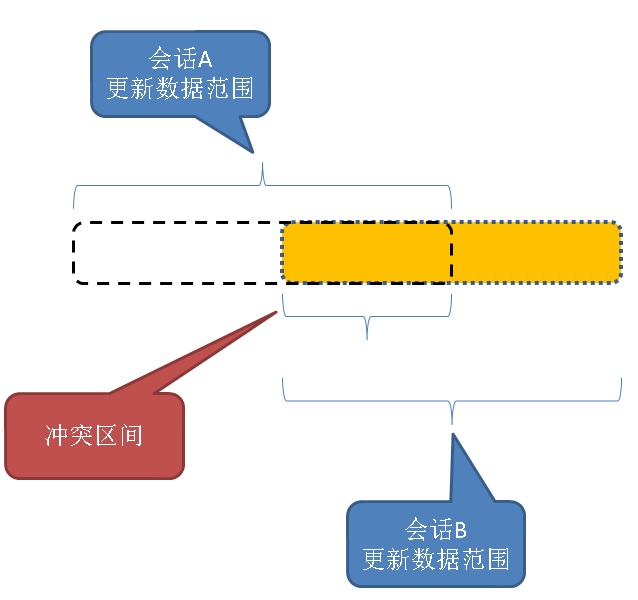
不同的任务,可能会操纵同一个用户,也就是同一条记录。那么就出现了任务之间的锁等待。
batch1
update t_label set tag=remove(t_label.tag, t1.tag) from t_batch1 t1 where t_label.uid=t1.uid;
batch2
update t_label set tag=remove(t_label.tag, t1.tag) from t_batch2 t1 where t_label.uid=t1.uid;
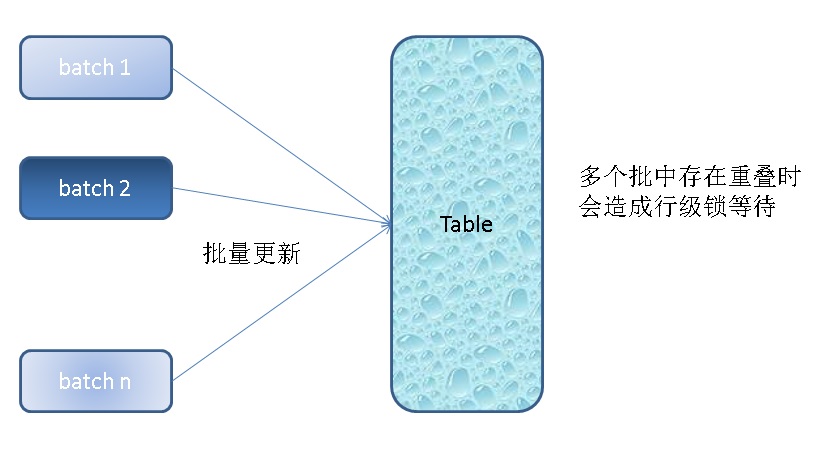
以上两个BATCH就有可能出现冲突。
如何解决呢?
思路
PostgreSQL提供了skip locked的功能,可以锁住一些行,同时跳过不可持锁(也就是别人已经持锁)的行。从而避免冲突。
也就是说我们在更新一批数据时,完全可以只更新能锁到的记录,而锁不到的记录,我们可以在更新完后再次发起更新请求。
那么就意味着,我们需要记录下来哪些已更新,哪些未更新,使用PostgreSQL的CTE语法,可以简单的实现这个目的。
步骤:
1、从BATCH中提取UID,并锁住目标表可以锁的行
2、更新锁住的行
3、从BATCH中删除已更新的行
重复以上动作,知道BATCH中没有任何记录。
例子
1、创建目标表
postgres=# create table t_dest(id int primary key, info text, crt_time timestamp);
CREATE TABLE
2、创建两个BATCH表,用于批量更新目标表
```
postgres=# create table t_batch1 (id int primary key, info text, crt_time timestamp);
CREATE TABLE
postgres=# create table t_batch2 (id int primary key, info text, crt_time timestamp);
CREATE TABLE
```
3、往目标表写入一批数据
postgres=# insert into t_dest select generate_series(1,100000) , 'test', now();
INSERT 0 100000
4、往BATCH表写入数据,同时确保两批BATCH的数据有重叠的ID。也就是人为的产生BATCH更新的行锁冲突。
postgres=# insert into t_batch1 select generate_series(100,10000) , 'test', now();
INSERT 0 9901
postgres=# insert into t_batch2 select generate_series(5000,11000) , 'test', now();
INSERT 0 6001
5、使用CTE语法来更新,避免了冲突
```
postgres=# begin;
BEGIN
postgres=#
with tmp as (select t1.id,t2.info,t2.crt_time from t_dest t1 join t_batch1 t2 on (t1.id=t2.id) for update skip locked) , -- 加锁,并跳过不能锁的行,并记录下被锁的记录
tmp1 as (update t_dest set info=tmp.info,crt_time=tmp.crt_time from tmp where t_dest.id=tmp.id returning t_dest.id) -- 更新已加锁的那些记录
delete from t_batch1 where exists (select 1 from tmp1 where tmp1.id=t_batch1.id); -- 删除已更新的记录
DELETE 9901
```
在第一个BATCH更新未提交时,发起第二个BATCH更新,第二个BATCH更新了能够加锁的行,没有加锁的行保留在batch2表中
```
postgres=#
with tmp as (select t1.id,t2.info,t2.crt_time from t_dest t1 join t_batch2 t2 on (t1.id=t2.id) for update skip locked) ,
tmp1 as (update t_dest set info=tmp.info,crt_time=tmp.crt_time from tmp where t_dest.id=tmp.id returning t_dest.id)
delete from t_batch2 where exists (select 1 from tmp1 where tmp1.id=t_batch2.id);
DELETE 1000
```
提交第一个BATCH
postgres=# end;
COMMIT
再次发起第二个BATCH的更新,剩余的行业被更新了
```
postgres=#
with tmp as (select t1.id,t2.info,t2.crt_time from t_dest t1 join t_batch2 t2 on (t1.id=t2.id) for update skip locked) ,
tmp1 as (update t_dest set info=tmp.info,crt_time=tmp.crt_time from tmp where t_dest.id=tmp.id returning t_dest.id)
delete from t_batch2 where exists (select 1 from tmp1 where tmp1.id=t_batch2.id);
DELETE 5001
```
最后,我们查看BATCH表,已全部清空,表示更新完毕。
```
postgres=# select * from t_batch1;
id | info | crt_time
----+------+----------
(0 rows)
postgres=# select * from t_batch2;
id | info | crt_time
----+------+----------
(0 rows)
```
小结
批量更新数据,如果业务逻辑上不去避免冲突的话,并发操作时,很容易造成行锁冲突。为了解决这个问题,本文使用了skip locked的加锁方法,同时结合CTE语法,可以实现高并发的批量数据DML操作。
用途,对于没有先后顺序的批量更新,非常适用,例如本例提到的增加、删除标签。
对于有前后顺序,并且需要保证整个BATCH DML操作原子性的场景,本文提到的方法不适用。
参考
https://www.postgresql.org/docs/devel/static/sql-select.html
https://www.postgresql.org/docs/devel/static/queries-with.html
PostgreSQL 许愿链接
您的愿望将传达给PG kernel hacker、数据库厂商等, 帮助提高数据库产品质量和功能, 说不定下一个PG版本就有您提出的功能点. 针对非常好的提议,奖励限量版PG文化衫、纪念品、贴纸、PG热门书籍等,奖品丰富,快来许愿。开不开森.
9.9元购买3个月阿里云RDS PostgreSQL实例
PostgreSQL 解决方案集合
德哥 / digoal's github - 公益是一辈子的事.