



AAAI 2022-Knowledge Graph Alignment Network with Gated Multi-hop Neighborhood Aggregation.pdf
免费下载
The Thirty-Fourth AAAI Conference on Artificial Intelligence (AAAI-20)
Knowledge Graph Alignment Network
with Gated Multi-Hop Neighborhood Aggregation
Zequn Sun,
1∗
Chengming Wang,
1∗
Wei Hu,
1†
Muhao Chen,
2
Jian Dai,
3
Wei Zhang,
3
Yuzhong Qu
1
1
State Key Laboratory for Novel Software Technology, Nanjing University, China
2
Department of Computer Science, University of California, Los Angeles, USA
3
Alibaba Group, China
{zqsun.nju, cmwang.nju}@gmail.com, {whu, yzqu}@nju.edu.cn, muhaochen@ucla.edu, {yiding.dj, lantu.zw}@alibaba-inc.com
Abstract
Graph neural networks (GNNs) have emerged as a powerful
paradigm for embedding-based entity alignment due to their
capability of identifying isomorphic subgraphs. However, in
real knowledge graphs (KGs), the counterpart entities usually
have non-isomorphic neighborhood structures, which easily
causes GNNs to yield different representations for them. To
tackle this problem, we propose a new KG alignment network,
namely AliNet, aiming at mitigating the non-isomorphism of
neighborhood structures in an end-to-end manner. As the direct
neighbors of counterpart entities are usually dissimilar due to
the schema heterogeneity, AliNet introduces distant neighbors
to expand the overlap between their neighborhood structures.
It employs an attention mechanism to highlight helpful distant
neighbors and reduce noises. Then, it controls the aggregation
of both direct and distant neighborhood information using a
gating mechanism. We further propose a relation loss to refine
entity representations. We perform thorough experiments with
detailed ablation studies and analyses on five entity alignment
datasets, demonstrating the effectiveness of AliNet.
1 Introduction
Entity alignment is the task of finding entities from different
knowledge graphs (KGs) that refer to the same real-world
identity. Recently, increasing attention has been paid to the
utilization of KG representation learning rather than symbolic
formalism for tackling this task. Representation learning mod-
els encode KGs into vector spaces, where relation semantics
of entities can be assessed by the learned embedding opera-
tions, such as the relation-specific translation (Bordes et al
.
2013) or rotation (Sun et al
.
2019). For embedding-based
entity alignment, the similarity of entities is measured by
the distance of entity embeddings. It has shown great poten-
tials in dealing with the symbolic heterogeneity problem and
benefits the entity alignment task in both monolingual and
cross-lingual scenarios (Zhu et al. 2017; Chen et al. 2017).
Most recently, graph neural networks (GNNs) (Kipf and
Welling 2017; Velickovic et al
.
2018; Abu-El-Haija et al
.
∗
This work was done while Zequn Sun was a research intern at
Alibaba Group. The first two authors contributed equally.
†
Corresponding author
Copyright
c
2020, Association for the Advancement of Artificial
Intelligence (www.aaai.org). All rights reserved.
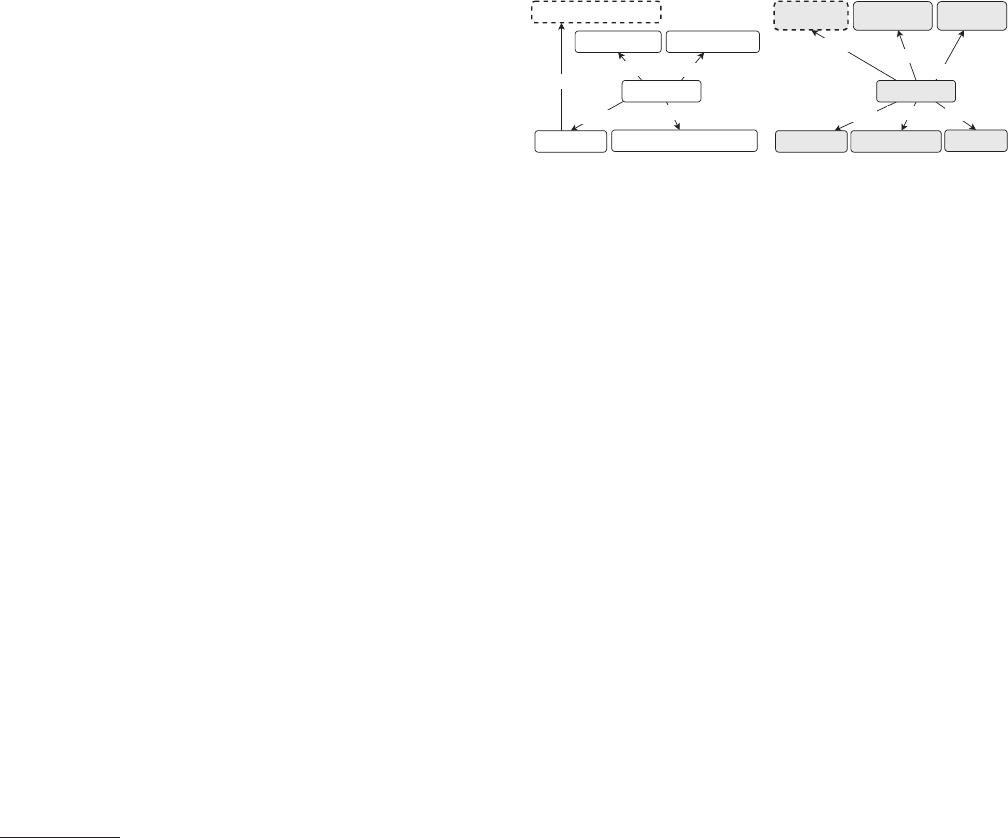
birthplace
draft team
high school
career position
Kobe Bryant
Shooting guard
Lower Merion High School
Charlotte Hornets
country
Philadelphia
United States of America
place of birth
member of sports team
country of citizenship
father
drafted by
educated at
Kobe Bryant
Lower Merion
High School
Charlotte Hornets
Joe Bryant
United States
of America
Los Angeles
Lakers
Philadelphia
Figure 1: Non-isomorphic relational neighborhood of Kobe
Bryant in DBpedia (left) and Wikidata (right), respectively.
2019) have emerged as a powerful model to learn vector
representations for graph-structured data. In GNNs, the rep-
resentation of a node is learned by recursively aggregating
the representations of its neighboring nodes. A recent work
(Morris et al
.
2019) has proved that GNNs have the same
expressiveness as the Weisfeiler-Leman (WL) test (Weisfeiler
and Lehman 1968) in terms of identifying isomorphic sub-
graphs. It provides the theory basis of using GNNs for entity
alignment between different KGs as similar entities usually
have similar neighborhood. Recently, several studies (Wang
et al
.
2018; Xu et al
.
2019b; Cao et al
.
2019; Wu et al
.
2019;
Ye et al
.
2019) have exploited GNNs for embedding-based
entity alignment, and have achieved promising results.
However, existing GNN-based entity alignment models
still face a critical problem. As different KGs usually have
heterogeneous schemas and data incompleteness (Pujara et
al
.
2013), the counterpart entities usually have dissimilar
neighborhood structures. Figure 1 gives an example. The
neighborhood of the two entities referring to Kobe Bryant
is inconsistent to each other, especially containing different
sets of neighboring entities. The statistics on DBpedia-based
benchmark datasets for entity alignment (Sun, Hu, and Li
2017) also show that the majority of aligned entity pairs
have different neighboring entities. Particularly, the percent-
ages of such entity pairs reach
89.97%
between Chinese-
English,
86.19%
between Japanese-English and
90.71%
be-
tween French-English, respectively. Different neighborhood
structures would easily cause a GNN to yield different repre-
sentations for counterpart entities.
The challenge of resolving this issue lies in the difficulty
222

of fully mitigating the non-isomorphism in the neighborhood
structures of counterpart entities from different KGs. Even
though we assume that the two KGs are complete (the goal of
MuGNN (Cao et al
.
2019)), due to the schema heterogeneity,
the counterpart entities still inevitably have dissimilar neigh-
borhood structures. For example, in Figure 1, United States
of America is among the one-hop (direct) neighbors of Kobe
Bryant in Wikidata. However in DBpedia, it is a two-hop
neighbor. Motivated by the fact that the semantically-related
information can appear in both direct and distant neighbors of
counterpart entities, we propose the KG alignment network
AliNet which aggregates both direct and distant neighbor-
hood information. Specifically, each AliNet layer has mul-
tiple functions to aggregate the neighborhood information
within multiple hops. To reduce noise information, we further
employ an attention mechanism for the distant neighborhood
aggregation to find out important neighbors in an end-to-end
manner. Finally, we use the gating mechanism to combine the
output representations of the multiple aggregation functions,
obtaining the hidden representations in the current layer. We
also design a relation loss to refine entity representations and
enable AliNet to capture some special structures such as the
triangular relational structure. We perform thorough exper-
iments with detailed ablation studies and analyses on five
entity alignment datasets, demonstrating the effectiveness of
AliNet and each of its technical contributions.
2 Preliminaries
2.1 GNNs
In GNNs, the representation of a node is learned by recur-
sively aggregating the feature vectors of its neighbors. Differ-
ent aggregation strategies lead to different variants of GNNs.
GCN
A very popular variant of GNNs is the vanilla GCN
(Kipf and Welling 2017). The hidden representation of node
i at the l-th layer (l ≥ 1), denoted as h
(l)
i
, is computed by:
h
(l)
i
= σ
j∈N
1
(i)∪{i}
1
c
i
W
(l)
h
(l−1)
j
, (1)
where
N
1
(·)
represents the set of one-hop neighbors of the
given entity,
W
(l)
is the weight matrix of the
l
-th layer and
c
i
is the normalization constant.
σ(·)
is an activation function.
The vanilla GCN encodes a node as the mean pooling of the
representations of its neighbors and itself from the last layer.
The input vector fed to the first layer is denoted as h
(0)
i
.
R-GCN
Conventional GNNs only consider the node-wise
connectivity in a graph and ignore edge labels such as the
relations in KGs. R-GCN (Schlichtkrull et al
.
2018) addresses
this issue by distinguishing different neighbors with relation-
specific weight matrices. It computes h
(l)
i
as follows:
h
(l)
i
= σ
W
(l)
0
h
(l−1)
i
+
r∈R
j∈N
r
(i)
1
c
i,r
W
(l)
r
h
(l−1)
j
, (2)
where
W
(l)
0
is the weight matrix for the node itself and
W
(l)
r
is used specifically for the neighbors having relation
r
, i.e.,
N
r
(i). R is the relation set and c
i,r
is for normalization.
2.2 Entity Alignment of KGs
We formally represent a KG as
G =(E, R, T )
, where
E
is
the set of entities, R is the set of relations, and T = E×R
×E
is the set of triples. Without loss of generality, we con-
sider the entity alignment task between two KGs, i.e.,
G
1
=
(E
1
, R
1
, T
1
)
and
G
2
=(E
2
, R
2
, T
2
)
. Given partial pre-
aligned entity pairs
A
+
= {(i, j) ∈E
1
×E
2
|i ≡ j}
where
≡
means the alignment relationship, the goal of the task is to
find alignment of remaining entities via entity embeddings.
2.3 GNNs for Entity Alignment
Recent GNN-based entity alignment models include GCN-
Align (Wang et al
.
2018), GMNN (Xu et al
.
2019b), MuGNN
(Cao et al
.
2019), RDGCN (Wu et al
.
2019) and AVR-GCN
(Yeetal
.
2019). GCN-Align and GMNN are built based on
the vanilla GCN. RDGCN introduces dual relation graphs to
enhance the vanilla GCN. AVR-GCN extends R-GCN using
a TransE-like relation-specific translation operation (Bordes
et al
.
2013). Before aggregation, each entity representation is
translated from its tail entity representations using relation
vectors. We argue that such relation-specific translation and
R-GCN introduce a high complexity with the overhead of
trainable parameters. More importantly, the aforementioned
models do not take the non-isomorphism in KG structures
into consideration. While MuGNN (Cao et al
.
2019) notices
the structure incompleteness of KGs and proposes a two-
step method of rule-based KG completion and multi-channel
GNNs for entity alignment. However, the learned rules rely
on relation alignment to resolve schema heterogeneity.
Isomorphic structures are beneficial
GNNs would learn
the same representation for the entities that have isomorphic
neighborhood structures with identical feature vectors repre-
senting corresponding neighbors (Xu et al
.
2019a). We show
that, in some cases, if two entities have isomorphic neigh-
borhood structures and only partially pre-aligned neighbor
representations, GNNs can also capture the similarity of other
neighbors to be aligned. Figure 2 (i) gives an example. For
simplicity, here we consider a single-layer GCN. We can let
pre-aligned entities have the same representation by minimiz-
ing their Euclidean distance, i.e.,
h
(0)
a
= h
(0)
a
,
h
(0)
b
= h
(0)
b
and
h
(0)
d
= h
(0)
d
as well as
h
(1)
a
= h
(1)
a
,
h
(1)
b
= h
(1)
b
and
h
(1)
d
= h
(1)
d
in the ideal condition. By the mean-pooling
based aggregation, we have
h
(1)
b
= σ(W
(1)
(h
(0)
b
+ h
(0)
a
+
h
(0)
c
)/3)
and
h
(1)
b
= σ(W
(1)
(h
(0)
b
+ h
(0)
a
+ h
(0)
c
)/3)
, yield-
ing
h
(0)
c
= h
(0)
c
. Finally, the counterpart entities would have
the same representation. This indicates that the alignment
information between entities can be propagated across the
different GNN layers and different isomorphic graphs given
partially pre-aligned neighborhood. However, for entity align-
ment between different KGs, it is impossible to require the
two KGs to have isomorphic structures due to the schema het-
erogeneity. Figure 2 (ii) gives an example of non-isomorphic
graph structures, where
c
and
c
would have different repre-
sentations due to their different neighborhood structures.
Only structures are not enough
Conventional GNNs fall
short of characterizing some special subgraph structures such
223
of 8
免费下载
【版权声明】本文为墨天轮用户原创内容,转载时必须标注文档的来源(墨天轮),文档链接,文档作者等基本信息,否则作者和墨天轮有权追究责任。如果您发现墨天轮中有涉嫌抄袭或者侵权的内容,欢迎发送邮件至:contact@modb.pro进行举报,并提供相关证据,一经查实,墨天轮将立刻删除相关内容。
下载排行榜

评论