



基于SOA 的银行新一代系统架构(建行)(1).pdf
100墨值下载
计 算 机 系 统 应 用 http://www.c-s-a.org.cn 2016 年 第 25 卷 第 12 期
42 系统建设 System Construction
基于 SOA 的银行集团“新一代”系统架构
①
金磐石, 朱玉红, 胡宪忠, 李 骁
(中国建设银行股份有限公司 信息技术管理部, 北京 100140)
摘 要: 大型商业银行集团在信息化的进程中面临内部系统众多、实现平台不统一、资源利用率低、成本高、需
求响应周期长等弊端. 随着我国银行业的快速发展, 大型商业银行集团系统架构革新势在必行. 本文重点介绍在
“新一代”系统建设中采取的基于 SOA 的架构以及组件化设计的方法. 通过 7+1 层、12P 的整体架构设计, 保证了
应用组件、构件间的松耦合, 实现子公司与海外一体化的企业级应用, 从而整合银行集团资源、快速响应业务需
求, 达到提升业务可靠性、可用性的目的. 与此同时, 引入企业级业务模型对业务进行标准化, 用结构化的模型
语言描述业务能力, 使用流程模型、数据模型、产品模型及用户体验模型为企业级分析及设计工作提供方法和依
据.
关键词: SOA 架构; 商业银行系统; 7+1 层; 12P; 企业级业务模型
SOA-Based New Generation Banking System Architecture for Banking Group
JIN Pan-Shi, ZHU Yu-Hong, HU Xian-Zhong, LI Xiao
(IT Management Department, China Construction Bank, Beijing 100140, China)
Abstract: Large commercial banking group encounters many problems in the process of informatization, such as large
number of internal systems, existence of many non-uniform platforms, low usage of resources and high cost, long cycle
of demand response and other defects. With the rapid growth of China’s banking industry, commercial banking group’s
system architecture innovation is imperative. This article focuses on the SOA-based framework and component-based
design method which are employed in the construction of the new generation banking system. By 7+1 levels and 12P
overall framework design, we ensure the application components loosely coupled and uniform the domestic and
overseas application to realize the enterprise-wide integration of resources and quick response to business requirements.
Accordingly, we achieve the purpose of enhancing the service reliability and availability. We introduce in enterprise
level business model to standardize our business process and use structured modelling language to describe our business
capability. We use process model, product model, data model and user experience model to provide methods and basis
for enterprise level analysis and design.
Key words: SOA; commercial banking system; 7+1 level; 12P; enterprise-level business model
1 简介
随着业务的发展和信息化的深入, 如何设计满足
业务动态变化和流程银行的信息系统架构, 已成为
银行下一步信息化建设的重要课题. 银行信息化的重
点从单一业务系统建设和改造, 向针对大数据量、高
并发访问的企业级架构设计转变.
“新一代”摒弃以往基于部门级需求的分析、设计
模式, 从业务架构及 IT 架构两大方向入手, 建立起统
一、规范的企业级架构规划.
业务架构关注对银行业务的企业级描述, 其表现
形式为企业级业务模型. 基于业界领先的理论和最佳
实践, 将企业级业务模型细分为流程模型、数据模型、
产品模型及用户体验模型. 流程建模采用基于
TOGAF
[1]
标准的五级建模方法, 数据建模以金融服务
① 收稿时间:2016-03-23;收到修改稿时间:2016-05-30 [doi:10.15888/j.cnki.csa.005542]
2016 年 第 25 卷 第 12 期 http://www.c-s-a.org.cn 计 算 机 系 统 应 用
System Construction 系统建设 43
数据模型(FSDM)
[2]
为基础. 通过企业级业务建模逐层
细化战略规划、产品参数化设计以及向流程银行的转
变.
IT 架构承接业务建模成果. 分为应用架构、数据
架构、技术架构以及安全架构
[3]
. 应用架构关注逻辑应
用组件及物理应用组件的实施. 数据架构关注企业级
数据模型、数据字典的管理. 技术架构关注技术路线
选择、基础设施规划、技术产品目录及部署架构, 安
全架构关注企业级安全验证、安全组件的设计及使用.
采用基于SOA 的组件化设计方法
[4]
, 将 IT 架构整
合为 7 层, 此外设计基础设施层作为支持. 7+1 层进一
步细化为 12 个技术平台(下文简称 12P), 各平台提供
通用技术组件, 上层应用基于通用技术组件完成组件
化设计和参数化设计.
IT 架构规划最终要在机房、服务器、网络等 IT
基础设施上落地. “新一代”初步建立了基于云计算技
术的基础设施环境, 完成了“两地三中心”的灾备方案
设计和部分实施工作.
本文主要阐述“新一代”建设中采用的企业级业务
模型、“新一代”7+1 层及 12P 的架构设计、基于云计
算技术的基础设施建设以及“两地三中心”灾备方案等
内容.
2 企业级业务模型
企业级业务模型是以现状业务流程、数据和产品
实践为基础, 以待实现的业务需求为输入进行目标建
模. 目标模型是 IT 实施的基础. 企业级业务模型细分
为流程模型、数据模型、产品模型及用户体验模型.
2.1 流程模型
采用基于 TOGAF
[1]
标准的五级建模方法作为指
导完成流程建模. 银行业务可从五个层级进行描述:
① 一级业务领域: 对应银行集团主要业务, 分为
核心业务和支撑业务. 如信贷、存款属于核心业务领
域, 客户管理属于支撑业务领域.
② 二级业务领域内业务组件: 业务领域内部各
价值环节, 代表业务功能. 如客户管理领域包含客户
信息管理、客户服务管理、合作伙伴管理等功能.
③三级活动: 企业级视角完成某个具有明确目
的、创造价值的端到端流程. 如采集客户信息包含从
检索客户信息到收集、维护、审核客户信息修改的全
流程.
④四级任务: 描述部门或业务单位为完成三级
流程所需不同角色完成的具有明确业务目的的事情.
如维护客户信息是由同一角色连续完成的任务.
⑤ 五级步骤规则: 描述员工为完成四级流程所
需执行的具体步骤及业务规则. 如维护客户信息包含
维护基本信息、联络信息等功能.
每个具体的流程包括了能力的落地实现元素. 如
角色、授权信息、政策、业务规则、业务信息、变化
因子、业务参考文档和表单报表等内容.
2.2 数据模型
Financial Services Data Model(FSDM)模型
[2]
是金
融行业建立核心应用系统或者数据仓库的数据模型,
FSDM 模型以数据为中心, 从企业视角提供了自顶向
下建立数据蓝图的方法.
2.2.1 企业级 C 模型及 C’模型
FSDM 模型提出九大概念(A 模型), 即参与人、合
约、条件、产品、地点、分类、业务方向、事件、资
源项, 作为不同业务领域金融模型的通用性描述.
此外, FSDM 模型通过自上而下的层级, 从概念层
到物理层逐渐细化. A 级、B 级模型为概念模型, 企业
级 C 模型提供特定业务范围内的完整属性视图, 是基
于目标能力需求及现状系统的数据库表结构, 根据
FSDM 数据模型设计理念设计得出, 并通过与流程模
型对接不断迭代完善.
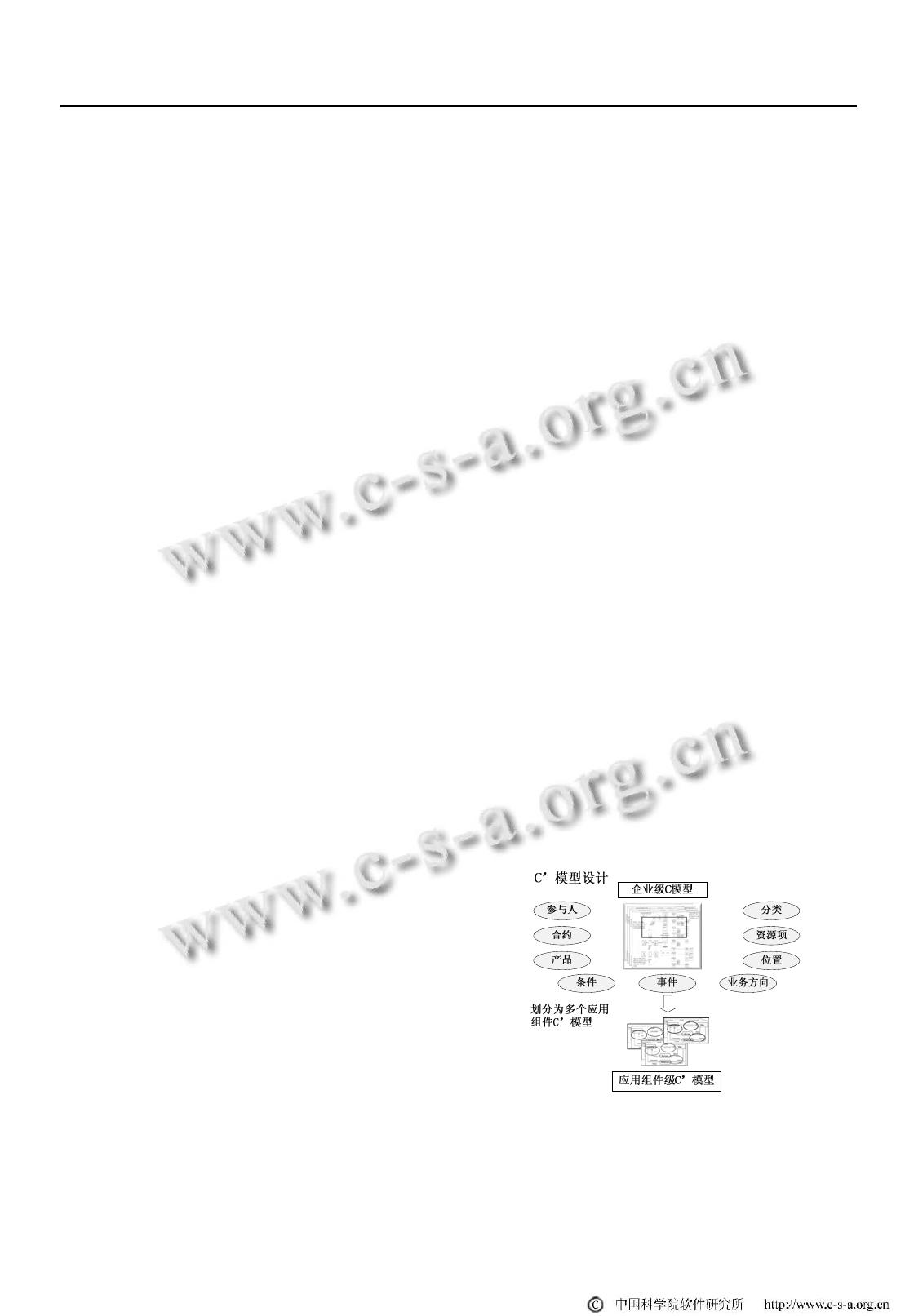
C’模型在 C 模型基础上, 增加派生数据以及可控
的冗余数据. C 与 C’模型的关系如图 1 所示. D 模型是
物理数据模型, 包含索引等信息. 在“新一代”建设过
程中, 数据模型的合理管控是一项重要工作.
图 1 C 模型与 C’模型的关系
2.2.2 企业级数据字典
企业级数据字典是对银行集团经营管理、信息系
of 11
100墨值下载
【版权声明】本文为墨天轮用户原创内容,转载时必须标注文档的来源(墨天轮),文档链接,文档作者等基本信息,否则作者和墨天轮有权追究责任。如果您发现墨天轮中有涉嫌抄袭或者侵权的内容,欢迎发送邮件至:contact@modb.pro进行举报,并提供相关证据,一经查实,墨天轮将立刻删除相关内容。
下载排行榜

评论