



Sailfish-Exploring Heterogeneous Query Acceleration on Discrete CPU-FPGA Architecture.pdf
免费下载

Sailfish: Exploring Heterogeneous Query
Acceleration on Discrete CPU-FPGA Architecture
Xing Wei
1,2
, Yaofeng Tu
1,2
, Yinjun Han
1,2
, Zhenghua Chen
2
, Xuecheng Qi
2
, Daojun Hua
2
{wei.xing6, tu.yaofeng, han.yinjun, chen.zhenghua, qi.xuecheng, hua.daojun}@zte.com.cn
1
State Key Laboratory of Mobile Network and Mobile Multimedia Technology, China
2
ZTE Corporation, China
Abstract—The hardware of modern server is being increasingly
heterogeneous as advanced accelerators, such as FPGAs, are used
together with multicore CPUs to meet the computing requirement
of analytical query workloads. Unfortunately, the earlier database
engines are designed for homogeneous servers, where query
execution is only parallelized across CPUs, but ignores the
prized FPGA resources. To exploit the available heterogeneous
resources, emerging work try to construct the cross-device query
pipeline, wherein a part of the operators run on the FPGA-
end and the rest run on the CPU-end respectively. However,
when running such a pipeline, the CPU-end and FPGA-end
operators could obtain mismatched computing resources, which
easily cause uneven processing performance between two ends,
thereby limiting whole pipeline performance or wasting comput-
ing resources. Of note, it is nearly impossible for query optimizers
to assign the matched computing resources to make CPU-end and
FPGA-end have the similar processing performance, as several
factors (e.g., operator selectivity) affect processing performance.
To tackle this problem, we propose the heterogeneous motion
operator, which can adjust the runtime computing resources (e.g.,
parallelism) of CPU-end, so as to match FPGA-end processing
performance. In addition, we further implement an FPGA
accelerator that supports parallel processing of hash join. By
integrating our motion operator into PostgreSQL with the above
FPGA accelerator, we build a prototype called Sailfish, whose
experimental performance exceeds the native acceleration scheme
by a huge margin.
Index Terms—Database, Heterogeneous System, FPGA
I. INTRODUCTION
The past few years have witnessed the rapid transformation
of Field Programmable Gate Array (FPGA) from the specific
processor to the advanced multi-function accelerator adopted
by various analytical, data-intensive applications. Comparing
to CPU and GPU, FPGA can organize its processing units into
the specific hardware circuit for target acceleration scenarios,
thereby omitting the costs of loading and parsing instructions.
Hence, FPGAs are being used in many deployment scenarios,
ranging from the supercomputing used for HPC applications to
platform-as-a-service that provides FPGA-accelerated virtual
machines. Until now, the widely-used CPU-FPGA platform is
still discrete, in which the FPGA board with many computing
and private memory resources is attached via PCIe bus as the
peripheral of CPU.
Unfortunately, traditional analytical DBMSs solely operate
on CPUs. In the past decades, to meet the strict performance
requirement of big data analysis, database engines attempt to
exploit the CPU parallelism (e.g., multi-thread and SIMD)
and node parallelism (e.g., massively parallel processing) to
speed up the query execution, yet FPGA has not attracted
attentions. Recently, a part of emerging database engines
[1]–[3] are being increasingly deployed on a heterogeneous
platform with discrete CPU and FPGA, which aim at uti-
lizing FPGA-end computing resources to facilitate the query
execution. To achieve the heterogeneous query acceleration,
earlier works [4]–[6] try to offload those CPU-heavy operators
(e.g., HashJoin) into FPGA-end, which can undertake a part
of CPU-end computing burden. Instead of speeding up an
independent operator, later works [2], [7]–[9] aggressively
hand over the contiguous operators within a pipeline to FPGA-
end with the help of reconfigurable capacity in advanced
FPGA (e.g., Xilinx FPGA Virtex-II). It is worth noting that
deploying a group of contiguous operators on FPGA-end can
not only offload more computing tasks from CPU-end, but also
amortize the overheads of cross-device data transfer and/or
synchronization into more operators, especially on discrete
CPU-FPGA architecture.
Despite the progresses made in leveraging FPGA to speedup
database, there still exists a critical issue about the mismatched
computing resources between CPU and FPGA during runtime.
More precisely, for a pipeline that leaves a part of contiguous
operators to FPGA-end, the rest of pipeline running on CPU-
end could take too many or too few computing resources (i.e.,
worker thread or process) to make its processing performance
go beyond or lag behind FPGA-end. If CPU-end provides the
higher performance, the whole pipeline will be limited by the
FPGA-end and waste the extra CPU-end computing resources.
Otherwise, the whole pipeline will be restricted to CPU-end.
Consider the processing performance of CPU-end and FPGA-
end are affected by several factors (e.g., operator selectivity),
it is very difficult for query optimizer to allocate the properly
computing resources that match the FPGA-end.
In this paper, we propose the heterogeneous motion operator
to address the above issues. Such an operator is in charge of
adjusting the runtime parallelism of CPU-end operators within
the same pipeline, so as to match the processing performance
of FPGA-end. In addition, the motion operator also plays as
the coordinator to manage the cross-device data flow so that
the pipeline across CPU-end and FPGA-end can run on the
iterator model. Based on above efforts, we further implement a
prototype called as Sailfish that integrates the motion operator
into PostgreSQL, and take only about 30% onboard resources
198
2023 IEEE 39th International Conference on Data Engineering Workshops (ICDEW)
2473-3490/23/$31.00 ©2023 IEEE
DOI 10.1109/ICDEW58674.2023.00036
2023 IEEE 39th International Conference on Data Engineering Workshops (ICDEW) | 979-8-3503-2244-6/23/$31.00 ©2023 IEEE | DOI: 10.1109/ICDEW58674.2023.00036
Authorized licensed use limited to: ZTE CORPORATION. Downloaded on August 29,2023 at 02:13:41 UTC from IEEE Xplore. Restrictions apply.
!"
#
$
%!
&'(" '("
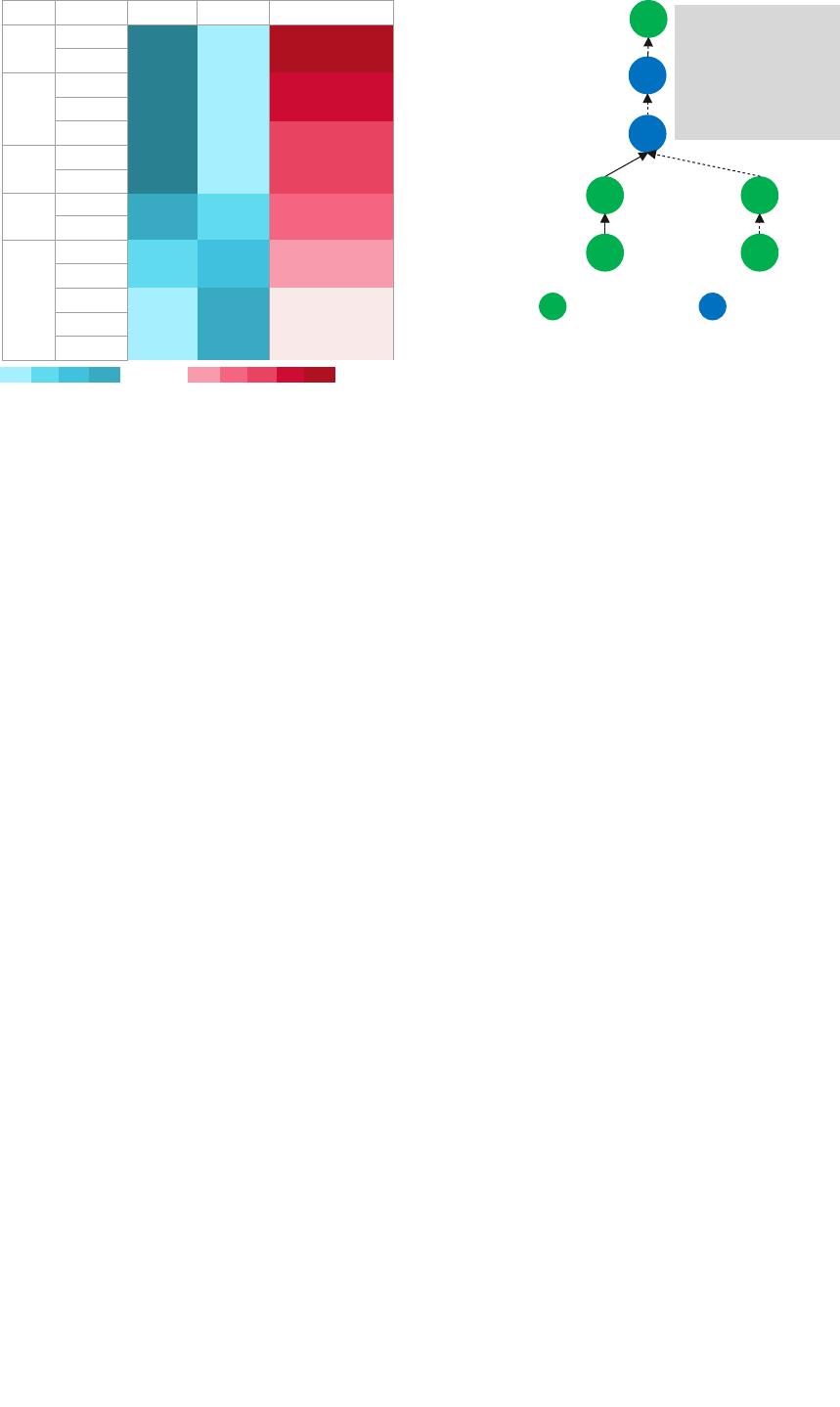
Fig. 1. A Taxonomy of Operators’ Fitness to FPGA Acceleration.
to construct the FPGA-end accelerator that facilitates parallel
hash join. Notably, the remaining onboard resources could still
speedup other operators (e.g., Aggregation and Scan). We also
conduct the experiment to verify that our design could always
take proper CPU-end computing resources to fit the FPGA-end
accelerator, thereby eliminating the wasted resources.
Outline. In the rest of paper, we first describe the background
and related work about FPGA-based database acceleration in
section II. Then, we state the design of Sailfish and detail the
heterogeneous motion operator in section III. In the following,
we evaluate our design in section IV. Finally, we conclude our
paper and discuss further work in section V.
II. B
ACKGROUND AND RELATED WORK
A. Revisiting Heterogeneous Query Acceleration
In this section, we firstly revisit the existing strategies that
leverage FPGA to accelerate query execution, and then identify
the potential performance issue on heterogeneous environment.
x Operator Acceleration: In DBMS, a SQL can be usually
translated into the execution plan including several operators,
such as Join and Aggregation. To enable them to run
faster, FPGA as a candidate accelerator can offer a large
amount of programmable computing resources (i.e., FPGA
Logic Cells) as specific kernels or processing engines (PEs)
to execute those operators. But considering the characteristics
of FPGA [10], some compute-intensive operators are friendly
to FPGA, while they belong to the control-intensive area,
i.e., having many branch predication, FPGA could perform
worse than CPU since they need to consume many hardware
resources to form the specific control logic [11]. As depicted
in Fig. 1, we conduct a taxonomy of existing query operators
in terms of computing and control perspectives, and derived
several operators fitting to the FPGA acceleration. Specifically,
HashJoin and HashAgg are both typical compute-intensive
!"
#
$% &'
!"()
!"*)
&'
Fig. 2. Query Execution with FPGA Acceleration.
operators, and there exist massive implementation methods
for these two operators. For example, Halstead et al. [4]
implemented an end-to-end multithreading hash join on FPGA,
whose experimental results can show the speedup between 2×
and 3.4× over the multi-core approaches on the uniform and
skewed datasets. Eryilmaz et al. [6] further implemented an
aggregation operator that could be configured for the different
number of groups, which is 2.2× faster than the HashAgg
on CPU.
y Pipeline Acceleration: Recently, emerging work [2],
[7], [8], [12] try to leave a set of contiguous operators
within a pipeline to FPGA. For example, as shown in Fig. 2,
the query pipeline {Scan
2
→ Filter
2
→ HashJoin →
Aggregation} can be split into two parts, wherein the part
including HashJoin and Aggregation can be handled by
FPGA device. Considering the pipeline design [11] in FPGA,
the FPGA-end operators can be mapped into a specific state
machine and avoid unnecessary loads and stores of the
intermediate results [13]. Even though the implementation
of these operators in FPGA is trivial, the acceleration of
combination of these operators is non-trivial in FPGA. To
pipeline the FPGA-end operators, some typical researches [7],
[8] utilize the query-to-hardware compilers to generate the
hardware circuit logic automatically, and leverage the low-
latency reconfigurable function of advanced FPGA to deploy
the logic in the real-time fashion. Meanwhile, the other works,
such as doppioDB [2], build a shared data buffer for multiple
FPGA-end operators, and coordinate the data flow within the
buffer to pipeline the specific operators rapidly.
B. Achilles’ Heel of Existing Acceleration Schemes
As stated earlier, the advantages of taking FPGA as database
accelerator are quite significant (e.g., replenishing computing
resources), but how to make full of them is a really tough task.
When pushed to the limit, in the FPGA-attached heterogeneous
database bottlenecks can be attributed to the data transmission
and mismatched computing resources.
199
Authorized licensed use limited to: ZTE CORPORATION. Downloaded on August 29,2023 at 02:13:41 UTC from IEEE Xplore. Restrictions apply.
of 7
免费下载
【版权声明】本文为墨天轮用户原创内容,转载时必须标注文档的来源(墨天轮),文档链接,文档作者等基本信息,否则作者和墨天轮有权追究责任。如果您发现墨天轮中有涉嫌抄袭或者侵权的内容,欢迎发送邮件至:contact@modb.pro进行举报,并提供相关证据,一经查实,墨天轮将立刻删除相关内容。
下载排行榜

评论