



PYRAFORMER LOW-COMPLEXITY PYRAMIDAL ATTENTION FOR LONG-RANGE TIME SERIES MODELING.pdf
50墨值下载

Published as a conference paper at ICLR 2022
PYRAFORMER: LOW-COMPLEXITY PYRAMIDAL AT-
TENTION FOR LONG-RANGE TIME SERIES MODELING
AND FORECASTING
Shizhan Liu
1,2∗
, Hang Yu
1∗
, Cong Liao
1
, Jianguo Li
1†
, Weiyao Lin
2
, Alex X. Liu
1
,
and Schahram Dustdar
3
1
Ant Group,
2
Shanghai Jiaotong University,
3
TU Wien, Austria
ABSTRACT
Accurate prediction of the future given the past based on time series data is of
paramount importance, since it opens the door for decision making and risk man-
agement ahead of time. In practice, the challenge is to build a flexible but parsi-
monious model that can capture a wide range of temporal dependencies. In this
paper, we propose Pyraformer by exploring the multi-resolution representation of
the time series. Specifically, we introduce the pyramidal attention module (PAM)
in which the inter-scale tree structure summarizes features at different resolutions
and the intra-scale neighboring connections model the temporal dependencies of
different ranges. Under mild conditions, the maximum length of the signal travers-
ing path in Pyraformer is a constant (i.e., O(1)) with regard to the sequence length
L, while its time and space complexity scale linearly with L. Extensive experi-
mental results show that Pyraformer typically achieves the highest prediction ac-
curacy in both single-step and long-range multi-step forecasting tasks with the
least amount of time and memory consumption, especially when the sequence is
long
1
.
1 INTRODUCTION
Time series forecasting is the cornerstone for downstream tasks such as decision making and risk
management. As an example, reliable prediction of the online traffic for micro-services can yield
early warnings of the potential risk in cloud systems. Furthermore, it also provides guidance for
dynamic resource allocation, in order to minimize the cost without degrading the performance. In
addition to online traffic, time series forecasting has also found vast applications in other fields,
including disease propagation, energy management, and economics and finance.
The major challenge of time series forecasting lies in constructing a powerful but parsimonious
model that can compactly capture temporal dependencies of different ranges. Time series often
exhibit both short-term and long-term repeating patterns (Lai et al., 2018), and taking them into
account is the key to accurate prediction. Of particular note is the more difficult task of handling
long-range dependencies, which is characterized by the length of the longest signal traversing path
(see Proposition 2 for the definition) between any two positions in the time series (Vaswani et al.,
2017). The shorter the path, the better the dependencies are captured. Additionally, to allow the
models to learn these long-term patterns, the historical input to the models should also be long. To
this end, low time and space complexity is a priority.
Unfortunately, the present state-of-the-art methods fail to accomplish these two objectives simul-
taneously. On one end, RNN (Salinas et al., 2020) and CNN (Munir et al., 2018) achieve a low
time complexity that is linear in terms of the time series length L, yet their maximum length of the
signal traversing path is O(L), thus rendering them difficult to learn dependencies between distant
positions. On the other extreme, Transformer dramatically shortens the maximum path to be O(1)
∗
Equal contribution. This work was done when Shizhan Liu was a research intern at Ant Group.
†
Corresponding author
1
Code is available at: https://github.com/alipay/Pyraformer
1
Published as a conference paper at ICLR 2022
Connection example
Maximum signal traversing path
(a) Full Attention
Hidden States
Inputs
(c) RNN
(e) ETC
(d) Pyraformer
Layer 1
Embeddings
Input
Embeddings
Layer 2
Embeddings
Layer 3
Embeddings
(b) CNN
Layer 1
Embeddings
Input
Embeddings
Layer 2
Embeddings
Layer 3
Embeddings
(f) LogTrans
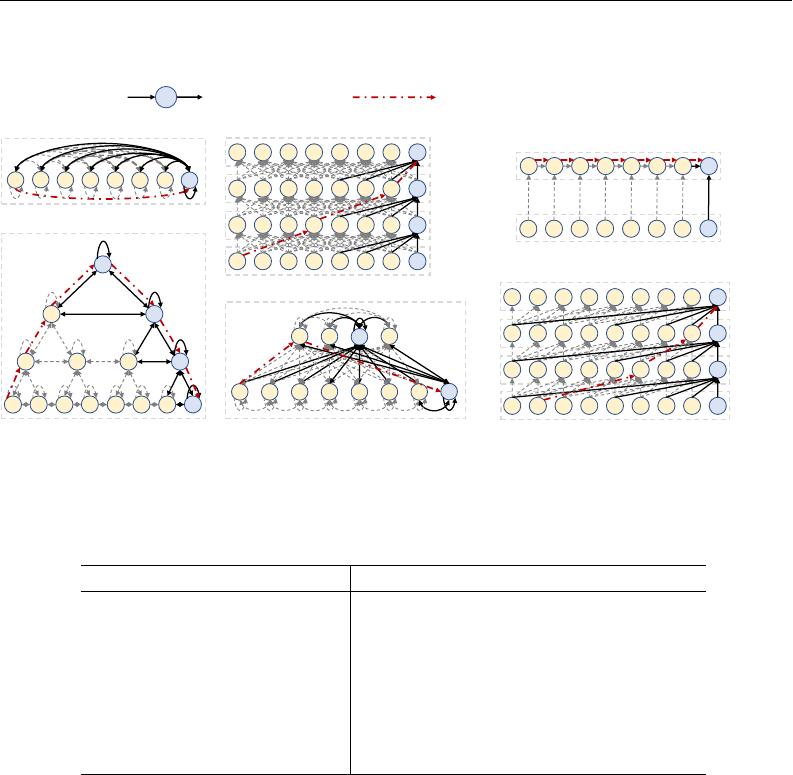
Figure 1: Graphs of commonly used neural network models for sequence data.
Table 1: Comparison of the complexity and the maximum signal traveling path for different models,
where G is the number of global tokens in ETC. In practice, the G increases with L, and so the
complexity of ETC is super-linear.
Method Complexity per layer Maximum path length
CNN (Munir et al., 2018) O(L) O(L)
RNN (Salinas et al., 2020) O(L) O(L)
Full-Attention (Vaswani et al., 2017) O(L
2
) O(1)
ETC (Ainslie et al., 2020) O(GL) O(1)
Longformer (Beltagy et al., 2020) O(L) O(L)
LogTrans (Li et al., 2019) O(L log L) O(log L)
Pyraformer O(L) O(1)
at the sacrifice of increasing the time complexity to O(L
2
). As a consequence, it cannot tackle
very long sequences. To find a compromise between the model capacity and complexity, variants
of Transformer are proposed, such as Longformer (Beltagy et al., 2020), Reformer (Kitaev et al.,
2019), and Informer (Zhou et al., 2021). However, few of them can achieve a maximum path length
less than O(L) while greatly reducing the time and space complexity.
In this paper, we propose a novel pyramidal attention based Transformer (Pyraformer) to bridge
the gap between capturing the long-range dependencies and achieving a low time and space com-
plexity. Specifically, we develop the pyramidal attention mechanism by passing messages based on
attention in the pyramidal graph as shown in Figure 1(d). The edges in this graph can be divided
into two groups: the inter-scale and the intra-scale connections. The inter-scale connections build
a multiresolution representation of the original sequence: nodes at the finest scale correspond to
the time points in the original time series (e.g., hourly observations), while nodes in the coarser
scales represent features with lower resolutions (e.g., daily, weekly, and monthly patterns). Such
latent coarser-scale nodes are initially introduced via a coarser-scale construction module. On the
other hand, the intra-scale edges capture the temporal dependencies at each resolution by connecting
neighboring nodes together. As a result, this model provides a compact representation for long-range
temporal dependencies among far-apart positions by capturing such behavior at coarser resolutions,
leading to a smaller length of the signal traversing path. Moreover, modeling temporal dependencies
of different ranges at different scales with sparse neighboring intra-scale connections significantly
reduces the computational cost. In short, our key contributions comprise:
• We propose Pyraformer to simultaneously capture temporal dependencies of different
ranges in a compact multi-resolution fashion. To distinguish Pyraformer from the state-
of-the-art methods, we summarize all models from the perspective of graphs in Figure 1.
• Theoretically, we prove that by choosing parameters appropriately, the maximum path
length of O(1) and the time and space complexity of O(L) can be reached concurrently. To
2
of 20
50墨值下载
【版权声明】本文为墨天轮用户原创内容,转载时必须标注文档的来源(墨天轮),文档链接,文档作者等基本信息,否则作者和墨天轮有权追究责任。如果您发现墨天轮中有涉嫌抄袭或者侵权的内容,欢迎发送邮件至:contact@modb.pro进行举报,并提供相关证据,一经查实,墨天轮将立刻删除相关内容。
下载排行榜

评论