



Spatio-Temporal_Point_Process_for_Multiple_Object_Tracking__GoldenDB.pdf
免费下载
IEEE TRANSACTIONS ON NEURAL NETWORKS AND LEARNING SYSTEMS, VOL. 34, NO. 4, APRIL 2023 1777
Spatio-Temporal Point Process for
Multiple Object Tracking
Tao Wang , Kean Chen, Weiyao Lin , Senior Member, IEEE, J ohn See , Senior Member, IEEE,
Zenghui Zhang , Senior Member, IEEE,QianXu ,andXiaJia
Abstract— Multiple object tracking (MOT) focuses on
modeling the relationship of detected objects among consecutive
frames and merge them into different trajectories. MOT remains
a challenging task as noisy and confusing detection results
often hinder the final performance. Furthermore, most existing
research are focusing on improving detection algorithms and
association strategies. As such, we propose a novel framework
that can effectively predict and mask-out the noisy and confusing
detection results before associating the objects into trajectories.
In particular, we formulate such “bad” detection results as a
sequence of events and adopt the spatio-temporal point process
to model such events. Traditionally, the occurrence rate in a
point process is characterized by an explicitly defined intensity
function, which depends on the prior knowledge of some specific
tasks. Thus, designing a proper model is expensive and time-
consuming, with also limited ability to generalize well. To tackle
this problem, we adopt the convolutional recurrent neural net-
work (conv-RNN) to instantiate the point process, where its
intensity function is automatically modeled by the training data.
Furthermore, we show that our method captures both temporal
and spatial evolution, which is essential in modeling events for
MOT. Experimental results demonstrate notable improvements
in addressing noisy and confusing detection results in MOT
data sets. An improved state-of-the-art performance is achieved
by incorporating our baseline MOT algorithm with the spatio-
temporal point process model.
Index Terms— Multiple object tracking, recurrent neural
networks, spatio-temporal point processes.
I. INTRODUCTION
M
ULTIPLE object tracking (MOT) is one of the funda-
mental problems in computer vision, which is important
in many applications like intelligent video sur veillance, behav-
ior analysis, automatic driving, and robotics. MOT constitutes
Manuscript received 15 October 2019; revised 1 March 2020 and 3 April
2020; accepted 14 May 2020. Date of publication 8 June 2020; date of
current version 5 April 2023. This work was supported in part by the China
Major Project for New Generation of AI under Grant 2018AAA0100400,
in part by the National Natural Science Foundation of China under
Grant 61971277, in part by ZTE Industry-Academia-Research Cooperation
Funds and State Key Laboratory of Mobile Network and Mobile Multimedia
Technology, and in part by CREST Malaysia under Grant T03C1-17.
(Corresponding author: Weiyao Lin.)
Ta o Wang, Kean Chen, Weiyao Lin, and Zenghui Zhang are with
the Department of Electronic Engineering, Shanghai Jiao Tong Uni-
versity, Shanghai 200240, China (e-mail: wang_tao1111@sjtu.edu.cn;
ckadashuaige@sjtu.edu.cn; wylin@sjtu.edu.cn; zenghui.zhang@sjtu.edu.cn).
John See is with the Faculty of Computing and Informatics, Multimedia
Uni versity, Cyberjaya 63100, Malaysia (e-mail: johnsee@mmu.edu.my).
Qian Xu and Xia Jia are with ZTE Corporation, Shenzhen 518057, China
(e-mail: xu.qian5@zte.com.cn; jia.xia@zte.com.cn).
Color versions of one or more of the figures in this article are available
online at https://ieeexplore.ieee.org.
Digital Object Identifier 10.1109/TNNLS.2020.2997006
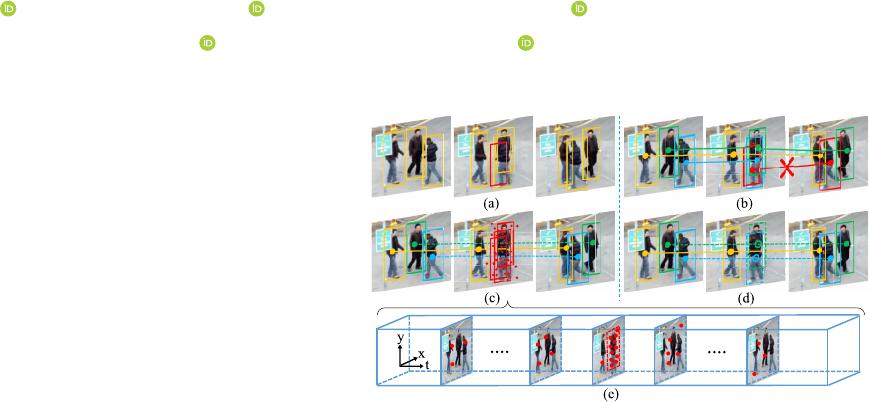
Fig. 1. Example of a noisy object detection. (a) Detection results, where a
potential noisy detection (red box) occurs in the scene. (b) As a result, the red
trajectory is unnecessarily tracked. This is an incorrect result. (c) Our approach
can predict the area which is likely to contain the noisy detections and avoid
them in the association process. (d) Tracking result using our method, where
the dashed line boxes are generated by linear interpolation. (e) Prediction is
generated by the proposed point process model.
the task of modeling the relationship of detected objects among
consecutive frames and then merging them into d ifferent
trajectories [1]–[3]. This task remains challenging, one major
issue is that some “bad” detection results always hinder the
performance of MOT. In general, such “bad” results can be
divided into two different types: 1) noisy detection results, i.e.
false positives in object detection, and 2) confusing detection
results, i.e. two highly overlapping objects with similar appear-
ances. Two such examples are shown in Figs. 1 and 2. It can be
seen that both the noisy and confusing objects had misguided
the matching process. Furthermore, we observe that most of
the failure examples in MOT are caused b y them, directly or
indirectly. Hence, the main problem in MOT that needs to be
addressed can realistically be reduced to: how to effectively
handle these “bad” detection results?
Some existing methods in MOT such as [1] and [3]–[10]
improved the tracking performance by introducing more robust
object association strategies. More specifically, some advanced
techniques for cost function and corresponding optimization
algorithm have been developed to associate objects in different
frames. However, these methods do not explicitly model
the “bad” detection results, so they can be confused by
the objects with high similarity in appearance and motion.
Other methods including [11]–[16] focused their attention
on different feature representations and metrics for detected
objects. These methods have better accuracy in normal scenes
but are still affected by the noisy detection results. Some works
2162-237X © 2020 IEEE. Personal use is permitted, but republication/redistribution requires IEEE permission.
See https://www.ieee.org/publications/rights/index.html for more information.
Authorized licensed use limited to: ZTE CORPORATION. Downloaded on October 26,2023 at 06:35:56 UTC from IEEE Xplore. Restrictions apply.
1778 IEEE TRANSACTIONS ON NEURAL NETWORKS AND LEARNING SYSTEMS, VOL. 34, NO. 4, APRIL 2023
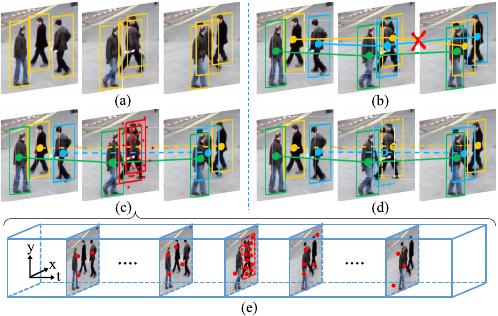
Fig. 2. Example of a confusing object detection. (a) Detection results.
(b) Incorrect tracking result due to objects that are overlapping in close
proximity (yellow box and blue box). (c) Our approach can predict the
area which is likely to contain the confusing objects and avoid them in the
association process. (d) Tracking result by our method, where the dashed line
boxes are generated by linear interpolation. (e) Prediction is generated by the
proposed point process model.
like [17]–[22] adopted more accurate object detectors in
attempt to reduce these noisy detections, while the perfor-
mances are still hindered by confusing detections such as the
highly overlapping objects.
To tackle this issue in MOT, we propose a framework that
can effectively predict and mask-out these “bad” detection
results before associating the objects into trajectories. First,
we note that the “bad” detections can be formulated as
a sequence o f events that happen in d ifferent frames and
locations. Thus, we need to infer when and where these events
are likely to happen, given the feature of current frame and
the historical behavior of the detector as prior information.
More specifically, we model these events based on the pix-
els that are inside the bounding boxes of “bad” detections.
Such events are distributed across the spatio-temporal tube
of a video and are generated based on complicated latent
mechanisms [23], [24], which is hard to capture through
simple modeling. Because these events happen in the motion
of objects, so there exists relationship between these events
which actually reflects the motion information of the objects.
In other words, we can detect these bad detections more
accurately and improve the performance of MOT by obtaining
the relationship between these events. Moreover, we make the
following observations.
1) Noisy object detections are more likely to appear in the
area where there are already some noisy detections in
the previous frames.
2) If there are confusing detections among people in a
group who walk closely or dress similar to others,
confusing d etections are more likely to appear in these
people in the subsequent frames.
In this article, we introduce the use of spatio-temporal point
process to deal with such events.
Point process [25] is a powerful tool for modeling the real-
world sequ e ntial data, which has lots of applications in many
fields, such as finance [26], equipment maintenance [27], [28],
and social n etwork [29], [30]. A point process is
characterized by its conditional intensity function, which
presents the occurrence rates of some class of events con-
ditioned on the historical events. Traditionally, the intensity
function can be explicitly defined based on prior knowledge of
event data and latent mechanisms of the process. The intensity
function usually consists of two parts [31]: an exogenous
intensity that describes factors driven by the inherent and
often time-varying occurrence rate for a type of events; an
endogenous intensity which describes the triggering effect
from the previous events. This parametric strategy has been
widely adopted in many classic models, such as Poisson
processes [32], Hawkes processes [33], and self-correcting
processes [34]. However, there are three issues that need to
be handled in the case of MOT.
1) Designing a proper parametric model is expensive and
time-consuming, since it requires expert domain knowl-
edge and experience if it were to be modeled manually.
Besides, the generalization ability is also limited.
2) It is difficult to properly capture the dynamics of influ-
ence from historical information given the complicated
nature of data patterns in MOT task. On the other
hand, it is also hard for traditional point processes
to incorporate other heterogeneous data, such as time
series [31] associated with event sequences.
3) Furthermore, the detection events in MOT occur in dif-
ferent frames and different locations in the scene, which
requires capturing both temporal and spatial evolution.
To tackle these problems, we adopt the spatio-temporal
point process to model the detection events, where a convo-
lutional recurrent neural network (conv-RNN) is proposed to
instantiate the point process. The main characteristics of our
method are shown below and in Fig. 3.
1) In our method, the intensity function is automatically
modeled by the training data, without requiring expert
knowledge and experience.
2) We propose a two-stream RNN framework to handle
two different inputs, i.e., time series and event sequence,
with a n ovel time-evolving mechanism to align and
merge these two input data. This enables our model
to capture the complex dynamics of influence from
historical information.
3) We incorporate the use of convolution operation in
RNN, which enables spatial diffusion for the historical
information of events.
Coupled with the capacity of RNN in modeling temporal
dependence, the proposed conv-RNN-based point process is
equipped with the capability of capturing both temporal and
spatial evolution. The main contributions of this article are
summarized as follows.
1) We propose a novel framework in MOT that can effec-
tively predict and mask-out the noisy and confusing
detection results before associating the objects into tra-
jectories. The “ bad” detection results are formulated as
a sequence of events and are modeled by the spatio-
temporal point process.
2) We introduce a two-stream pipeline to handle two syn-
chronous and asynchronous inputs (i.e., time series and
event sequence) with a novel-evolving mechanism for
merging.
Authorized licensed use limited to: ZTE CORPORATION. Downloaded on October 26,2023 at 06:35:56 UTC from IEEE Xplore. Restrictions apply.
of 12
免费下载
【版权声明】本文为墨天轮用户原创内容,转载时必须标注文档的来源(墨天轮),文档链接,文档作者等基本信息,否则作者和墨天轮有权追究责任。如果您发现墨天轮中有涉嫌抄袭或者侵权的内容,欢迎发送邮件至:contact@modb.pro进行举报,并提供相关证据,一经查实,墨天轮将立刻删除相关内容。
下载排行榜

评论