



IntelliTag:An Intelligent Cloud Customer Service System Based on Tag Recommendation_Ant Group_2021_ICDE.pdf
免费下载
IntelliTag: An Intelligent Cloud Customer Service
System Based on Tag Recommendation
Minghui Yang, Shaosheng Cao
∗
, Binbin Hu, Xianling Chen, Hengbin Cui,
Zhiqiang Zhang, Jun Zhou and Xiaolong Li
{minghui.ymh, shaosheng.css, bin.hbb, baizi.cxl, alexcui.chb, lingyao.zzq, jun.zhoujun, xl.li}@antfin.com
Ant Group, Hangzhou, China
Abstract—To reduce the customer service pressure of small
and medium-sized enterprises, we propose an intelligent cloud
customer service system, called IntelliTag. Unlike traditional
customer service, a cloud service based system has difficulty in
collecting user personal information. Therefore, we add a tag
recommendation function to quickly capture the user’s question
intent by clicking on the tags. Specifically, IntelliTag is elaborately
designed with the consideration of the following three aspects.
First, how to mine high-quality tags is a challenging problem.
Second, in the tag recommendation tasks, we have multifarious
data types and relations that are used to build a sequential
recommendation model. Finally, system implementation and
deployment also need to be carefully designed to satisfy online
service requirements. In this paper, we show the details of
data construction, model designs, system implementation and
deployment, and the empirical results compared with several
state-of-the-art methods. Nowadays, our IntelliTag has already
supported hundreds of thousands of enterprises and millions of
users in our industrial production environment.
Index Terms—intelligent customer service, chatbot, tag recom-
mendation, graph neural network, sequential recommendation
I. INTRODUCTION
In recent years, intelligent customer service has achieved
great success in large enterprises, significantly reducing labor
costs and improving response efficiencies, such as Microsoft’s
Superagent [11], Alibaba’s AliMe [66], JD.com’s JIMI [99]
and etc. However, it is not an easy thing for most SMEs
(Small and Medium-sized Enterprises), due to the limitation
of their technical capabilities and capital reserves. As a result,
manual customer service often brings them higher operating
cost conversely.
The traditional intelligent customer service dialogue system
is capable of collecting user personal information and histor-
ical behavior trajectories to understand the user’s intention of
questions [5], [11]. For example, in the area of E-commerce,
a user has only one online purchase record in the past few
weeks, and checked the logistics situation of the product before
inquiring about customer service. Based on such information,
intelligent customer service can easily infer that the user is
most likely asking about the purchased items’ logistics. In
contrast, it is difficult for a cloud service based system, since
assessing user’s data in products is impossible due to data
privacy reasons.
To address this problem, we aim to introduce a better inter-
active mode besides regular Q&A (Question and Answering)
∗
Shaosheng Cao is the corresponding author.
Ta gs
Predicted questions
click
click
User’s question
Final answer
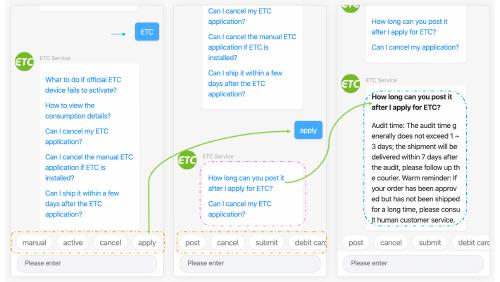
Fig. 1: The interface of our system based on tag recommenda-
tion. The left subfigure demonstrates the user’s question and
recommended tags. After clicking the second tag “apply”, a
new set of tags and predicted questions are recommended in
terms of user’s intent in the middle subfigure. And the final
answer to the user’s question is shown in the right subfigure
after the user clicks on the predicted question.
dialogue, which is able to take advantage of the information
in a consultation session. Based on our investigation, several
newly emerging chatbot assistants [47] have a tag feature,
where a user gets answers by clicking recommended tags. In
light of this idea, we add tag recommendation into our system,
as illustrated in Fig. 1, where the shown tags are suspended
in the input message dialogue box. By user’s clicked tags, we
can quickly speculate the user’s intent of questions.
In this scenario, we create an intelligent cloud customer
service system with tag recommendation, known as IntelliTag.
While SMEs, also called “tenants”, can rent our customer
service through cloud service at a meager rate. Without the
user’s personal data, we collect historical interactive behaviors
in sessions, besides Q&A dialogues. The core of the first
problem is how to mine useful and suitable tags efficiently
and accurately.
On the task of tag mining, we aim to extract complete,
representative and question-related tags, where a tag contains
one word or multiple words. Therefore, two subtasks need
to be solved: one is to distinguish tag boundary for its
completeness, and the other is to measure tag’s representative
and relatedness to questions. Compared to two single-task

solutions, multi-task learning looks more promising due to
their potential relationship of text semantics.
More important and difficult is TagRec (Tag Recommenda-
tion) task. Recently, session-based recommendation methods
[85], [87] obtain satisfactory results to recommend products
and movies. Moreover, sequence-based approaches [39], [73]
are good at modeling sequences in the recommender system.
However, it is still challenging to extract fruitful information
from our various data and address a sequential recommenda-
tion problem. Besides, conventional sequential recommenda-
tion suffers from cold start issues.
From the model perspective, we collect multifarious data
types and relations, where a heterogeneous graph ought to
be constructed for reducing the impact of data sparsity in
cold start. On the one hand, a heterogeneous graph can also
alleviate the long tail problem to a certain extent, since it
explores the topological information of unpopular tags in a
network. On the other hand, the valuable sequential clicks’
information also deserves careful consideration. We propose
a novel hierarchical end-to-end model based on multiple at-
tention mechanisms, which leverages node attention, metapath
attention and contextual attention to respectively measure the
relationship between different node neighbors, the importance
of information transmission paths and the influence of sequen-
tial behaviors.
Further, system implementation and deployment are also
crucial to real-world industrial customer service. Our online
service, including response to answers, recommended tags
and predicted questions, should be finished within tens of
milliseconds. Nowadays, our deployed system in an indus-
trial production environment has already supported hundreds
thousands of SMEs and millions of users, where more than
ten thousand customer questions are solved every day.
Our contributions can be summarized as follows:
• To the best of our knowledge, it is the first work to reveal
model and system details of intelligent cloud customer
service with tag recommendation deployed in the real
world;
• An automatic way is introduced to collect Q&A pairs, and
a new BERT-based multi-task learning model is proposed
to mine valuable tags;
• We propose a novel model for tag recommendation,
which significantly outperforms several state-of-the-art
baseline algorithms both on offline and online evalua-
tions;
• System implementation and deployment details are un-
covered, which guarantees online service timely response
with about 100 ms.
II. RELATED WORK
In this section, we review related studies in Q&A chatbot,
tag recommendation, graph neural network based recommen-
dation and sequential recommendation.
A. Question and Answering Chatbot
Intelligent personal assistant, such as Microsoft’s Cortana
1
,
Amazon’s Alexa
2
, Apple’s Siri
3
, Baidu’s Xiaodu
4
and Al-
ibaba’s TmallGenie
5
, provides new human-computer interac-
tion experience to help people complete their daily affairs.
As a comparison, intelligent customer service system, such as
Microsoft’s SuperAgent [11], Alibaba’s AliMe [66], jd.com’s
JIMI [99] and Ant Financial’s AntProphet [5], aims to solve
the user’s questions about products and services. Our IntelliTag
helps SMEs solve their customer service issue through its
cloud service. From a technical perspective, rule-based and
template-based methods were first explored [82], [84]. Data-
driven approaches have recently achieved promising perfor-
mance, and two mainstreams are gradually formed, including
information retrieve [38], [40], [90], [91] and sequence-to-
sequence generation based techniques [48], [49], [71]. How-
ever, most previous studies focus on the dialogue system and
seldom explore tag recommendations in this field.
B. Tag Recommendation
Tag recommendation, as a problem of recommendation area,
are often divided into two main categories: user-centered and
tag-centered cases. The former builds the foundation on the
user’s personal data to predict tags. Multilayer perceptron
models were first applied to address the problems in recom-
mender systems, such as Wide and Deep [9], auto-encoder
[79], deep semantic neural networks [88], [89]. Factorization-
based methods [28], [70] were later introduced and achieved
better effectiveness. In contrast, the task of tag-centered rec-
ommendation mines the associated relationship between tags
and documents. Besides efficient linear FastText [43], CNN
(Convolutional Neural Network) was introduced to measure
the semantic information [83]. Also, LSTM (Long Short-Term
Memory) based models [51], [98] were adopted to characterize
the sequential nature of the text, and more methods with
attention were introduced to describe the importance of local
information [26], [52], [58]. Our task locates in a tag-centered
scenario, different from previous studies due to the integration
of various information.
C. Graph Neural Network based Recommendation
A graph is a kind of data structure to build a bridge between
different types of entities. In recent years, GNN (Graph
Neural Network) based approaches attract much attention.
Several unsupervised learning based models [3], [15], [27],
[64] were first proposed to generate node embeddings using
the topological information of graph structure. With the full
use of label information, graph convolutional network based
approaches [30], [45], [61] achieved better performance. To
characterize the fine-grained interaction in graphs, various
attention based GNNs are proposed to locate important or
1
https://www.microsoft.com/en-us/cortana
2
https://developer.amazon.com/en-US/alexa
3
https://www.apple.com/siri
4
https://dumall.baidu.com
5
https://en.wikipedia.org/wiki/Tmall Genie
of 12
免费下载
【版权声明】本文为墨天轮用户原创内容,转载时必须标注文档的来源(墨天轮),文档链接,文档作者等基本信息,否则作者和墨天轮有权追究责任。如果您发现墨天轮中有涉嫌抄袭或者侵权的内容,欢迎发送邮件至:contact@modb.pro进行举报,并提供相关证据,一经查实,墨天轮将立刻删除相关内容。
下载排行榜

评论