



Learning Autoregressive Model in LSM-Tree based Store.pdf
100墨值下载
Learning Autoregressive Model in LSM-Tree based Store
Yunxiang Su
Tsinghua University
Beijing, China
suyx21@mails.tsinghua.edu.cn
Wenxuan Ma
Tsinghua University
Beijing, China
mwx22@mails.tsinghua.edu.cn
Shaoxu Song
BNRist, Tsinghua University
Beijing, China
sxsong@tsinghua.edu.cn
ABSTRACT
Database-native machine learning operators are highly desired for
ecient I/O and computation costs. While most existing machine
learning algorithms assume the time series data fully available and
readily ordered by timestamps, it is not the case in practice. Com-
modity time series databases store the data in pages with possibly
overlapping time ranges, known as LSM-Tree based storage. Data
points in a page could be incomplete, owing to either missing values
or out-of-order arrivals, which may be inserted by the imputed or
delayed points in the following pages. Likewise, data points in a
page could also be updated by others in another page, for dirty data
repairing or re-transmission. A straightforward idea is thus to rst
merge and order the data points by timestamps, and then apply the
existing learning algorithms. It is not only costly in I/O but also pre-
vents pre-computation of model learning. In this paper, we propose
to oine learn the AR models locally in each page on incomplete
data, and online aggregate the stored models in dierent pages with
the consideration of the aforesaid inserted and updated data points.
Remarkably, the proposed method has been deployed and included
as a function in an open source time series database, Apache IoTDB.
Extensive experiments in the system demonstrate that our proposal
LSMAR shows up to one order-of-magnitude improvement in learn-
ing time cost. It needs only about 10s of milliseconds for learning
over 1 million data points.
CCS CONCEPTS
• Information systems
→
Query operators; • Computing method-
ologies → Machine learning.
KEYWORDS
Autoregressive models, LSM store, in-database operators
ACM Reference Format:
Yunxiang Su, Wenxuan Ma, and Shaoxu Song. 2023. Learning Autoregressive
Model in LSM-Tree based Store. In Proceedings of the 29th ACM SIGKDD
Conference on Knowledge Discovery and Data Mining (KDD ’23), August
6–10, 2023, Long Beach, CA, USA. ACM, New York, NY, USA, 11 pages.
https://doi.org/10.1145/3580305.3599405
1 INTRODUCTION
IoT data are often collected in a preset frequency, e.g., in every
second, leading to time series with regular intervals. However,
the data arrivals are often out-of-order, owing to various network
This work is licensed under a Creative Commons Attribution
International 4.0 License.
KDD ’23, August 6–10, 2023, Long Beach, CA, USA
© 2023 Copyright held by the owner/author(s).
ACM ISBN 979-8-4007-0103-0/23/08.
https://doi.org/10.1145/3580305.3599405
Page 1 Page 2
320
327
1
2
Value
Imputation Repair
Delay
Re-transmission
Time
Version
320
327
Value
ݔ
ଵ
ݔො
ଶ
ݔ
ଷ
ݔ
ݔො
ݔ
଼
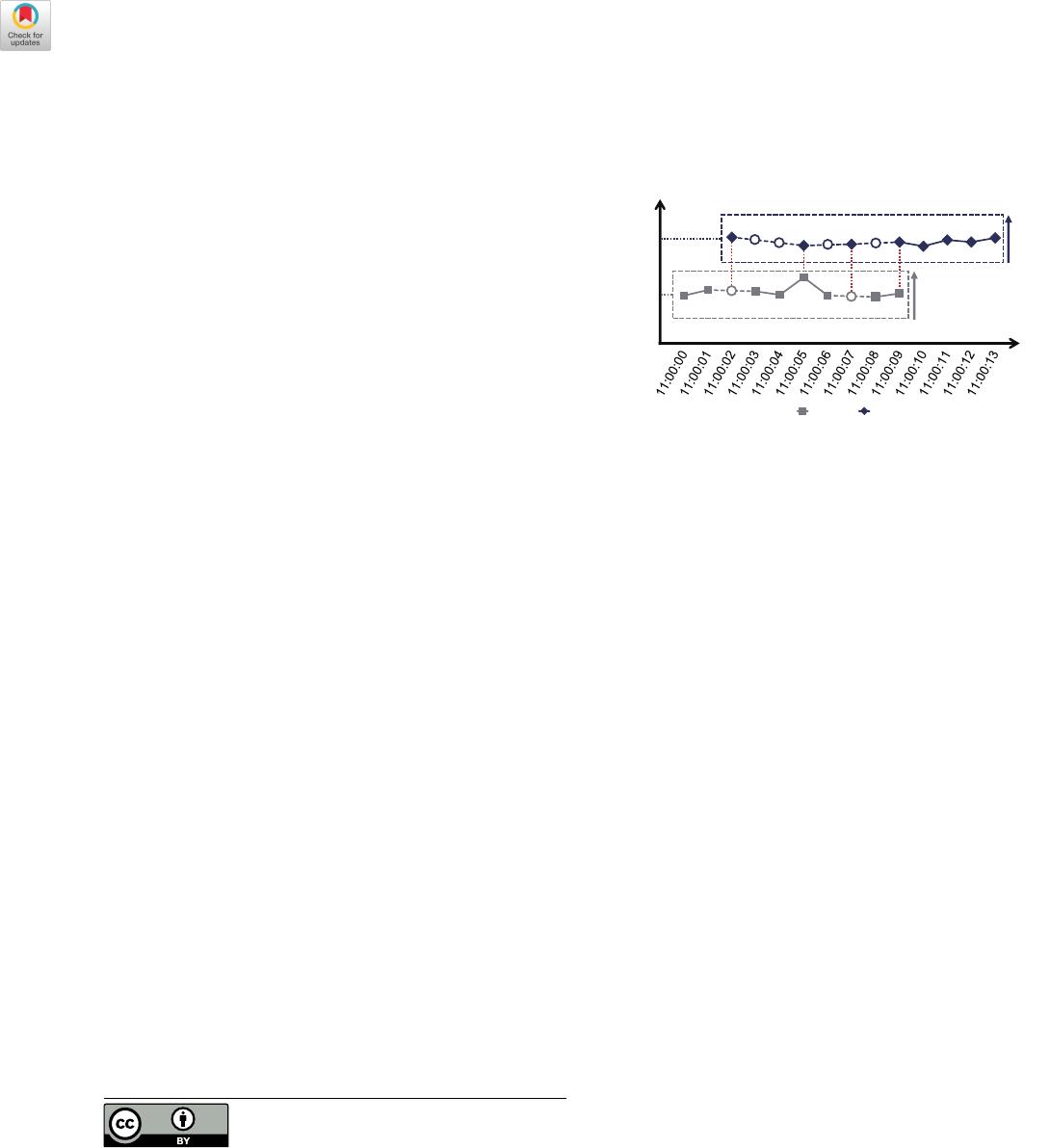
Figure 1: Example of imputed, repaired, delayed and re-
transmitted data in LSM-Tree store for learning AR models
delays in the IoT scenarios [
11
,
16
]. Moreover, some points could
be missing and inserted back by data imputation program [
21
,
25
].
Furthermore, dirty values are also detected and updated later by
requesting point re-transmission or data repairing program [26].
To handle the aforesaid out-of-order arrival, point insertion for
imputation, value update for repairing and so on [
18
], most com-
modity time series databases, such Apache IoTDB [
3
], employ a
Log-Structured Merge-Tree (LSM-Tree) [
20
] based storage. As illus-
trated in Figure 1, data points are batched in disk pages referring
to their arrivals. Some points such as the one at time 11:00:07 are
delayed and batched with other data points in page 2. The cor-
responding position in page 1 is thus denoted by a hollow circle.
Likewise, the missing point at time 11:00:02 is imputed, again in
page 2. Moreover, the point at time 11:00:05 with dirty value in
page 1 is repaired later by the one at the same time in page 2, while
the point at time 11:00:09 is updated by data re-transmission.
To learn models over the time series scattered in dierent pages
with possibly overlapping time ranges, a straightforward idea is to
rst load the data in disk pages to memory. Then, they are merged
by inserting the delayed or imputed points, and updating the re-
transmitted or repaired points. Existing learning algorithms [
8
] can
thus be applied over the merged time series ordered by time. It
is obviously inecient in I/O cost to read many stale data points
and merge them online. Moreover, the insertion and update of data
points also prevent directly utilizing the pre-computed models in
individual page when it is written to disk.
In this paper, we propose to design ecient schemes for online
aggregating the pre-computed models locally in each page. The
autoregressive (AR) is considered, since it is simple enough to learn
during the ush of the corresponding page to disk in database
ingestion. As illustrated in Figure 1, the model is pre-trained over
the incomplete time series in page 1 and stored. Intuitively, when
2061
KDD ’23, August 6–10, 2023, Long Beach, CA, USA Yunxiang Su, Wenxuan Ma, and Shaoxu Song
Table 1: Notations
Symbol Description
x time series of n = ∥x∥ data points
(t
ℎ
, x
ℎ
) time and value of ℎ-th data point in x
p the autoregressive model order
𝛾
𝑖
the 𝑖-th order auto-covariances validity of time series x
𝜙
𝑖
the 𝑖-th autoregressive model coecient
new data points appear, e.g., in page 2, the pre-computed models
could be ne-tuned rather than learning from scratch.
Our major contributions in this study are as follows.
(1) We devise the learning process of models in a single page in
Section 3, including learning models with imputation, and updating
models with modied points.
(2) We propose the ecient aggregation of models learned in
dierent pages, with the consideration of inserted and updated
values, in Section 4. For pages with various cases, i.e., adjacent,
disjoint and overlapped in time ranges, we derive the corresponding
model aggregation strategies, respectively. The theoretical results
in Propositions 4.1, 4.3, 4.5 and 4.7 guarantee the correctness of
model aggregation, i.e., equivalent to the baseline of learning over
the merged time series.
(3) We present the algorithm for learning models on time series
scattered in dierent pages in Section 5. The complexity analysis
illustrates that our proposal is more ecient than the baseline of
learning from scratch over the online merged time series. Moreover,
we provide the details about system deployment, as a function
in Apache IoTDB [
3
], an open-source time series database. The
document is available in the product website [
4
], and the code is
included in the product repository by system developers [1].
(4) We conduct extensive experiments for evaluation in Section
6. Our proposal LSMAR shows up to one order-of-magnitude im-
provement in learning time cost, compared to the aforesaid baseline
of online merging data and learning from scratch. It needs only
about tens of milliseconds for learning over 1 million data points,
while the baseline takes hundreds. The experiment code and public
data are available anonymously in [2] for reproducibility.
Finally, we discuss related work in Section 7 and conclude the
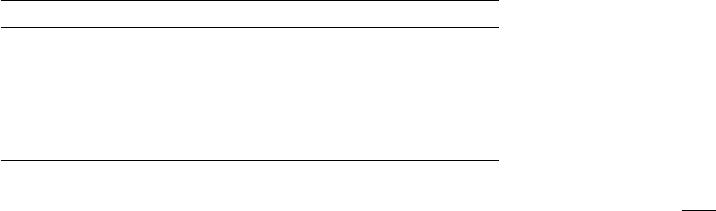
paper in Section 8. Table 1 lists the notations used in the paper.
2 PRELIMINARY
For a better comprehension of our proposal, we rst introduce the
baseline autoregressive model in Section 2.1, and we present the
structure about LSM-Tree based storage with an example in Section
2.2. Section 2.3 introduces the problem of learning autoregressive
models in LSM-Tree based storage.
2.1 Autoregressive Model
Autoregressive model ts a point x
l
by utilizing its past few points,
i.e., x
l−1
,
x
l−2
, . . . ,
x
l−p
, where parameter p determines the number
of the past points used for tting autoregressive models.
Denition 2.1 (Autoregressive Model [
8
]). An autoregressive model
of order p, denoted as 𝐴𝑅(p), is dened as
ˆ
x
l
=
p
𝑖=1
𝜙
𝑖
x
l−i
+ 𝜀
l
,
where
𝜙
1
, · · · , 𝜙
𝑝
are the parameters of models, and
𝜀
l
denotes the
white noise 𝑁 (0, 𝜎
2
) at timestamp l.
Given a zero-mean time series x[1 : n], by calculating the auto-
covariances of order 0, 1, 2, . . . , p, denoted by 𝛾
0
,𝛾
1
,𝛾
2
, . . . , 𝛾
p
, i.e.,
𝛾
i
=
1
n − i
n−i
l=1
x
l
x
l+i
, i = 0, 1, . . . , p, (1)
the coecients of AR models could be estimated by solving Yule-
Walker Equation [10], which has the following form.
©
«
𝛾
1
𝛾
2
.
.
.
𝛾
p
ª
®
®
®
®
¬
=
©
«
𝛾
0
𝛾
1
𝛾
2
· · · 𝛾
p−1
𝛾
1
𝛾
0
𝛾
1
· · · 𝛾
p−2
.
.
.
.
.
.
.
.
.
.
.
.
.
.
.
𝛾
p−1
𝛾
p−2
𝛾
p−3
· · · 𝛾
0
ª
®
®
®
®
¬
©
«
𝜙
1
𝜙
2
.
.
.
𝜙
p
ª
®
®
®
®
¬
(2)
It is worth noting that not all time series can be modeled by
autoregressive models. Generally, autoregressive models are applied
on weak stationary time series.
Denition 2.2 (Weak Stationary Time Series [
15
]). Given a time
series x, by considering the value x
l
at timestamp l as a continuous
random variable, x is called a weak stationary time series, if
𝐸(x
l
) = 𝜇, ∀l,
𝐸(x
l+s
x
l
) = 𝜎
2
s
, ∀l, s,
where 𝜇 is a constant and 𝜎
2
s
only depends upon the lag s.
For simplicity, we consider all time series mentioned in the article
as zero-mean time series. For time series with mean value not equal
to 0, we replace the value x
l
at timestamp l with x
l
− 𝜇.
2.2 LSM-Tree Storage
To support frequent and extensive writing and reading of time
series data, the Log-Structured Merge-Tree (LSM-Tree) [
20
] is often
employed in time series database. We follow the convention of
Apache IoTDB, an LSM-Tree based time series database.
Figure 2 presents an overview of the LSM-Tree storage struc-
ture, where a time series is stored into multiple pages, i.e., P
1
to
P
6
, with possibly overlapped time intervals. Each page consists of
PageHeader (denoted by blue rectangles), recording metadata, e.g.,
StartTime and EndTime, and PageData (denoted by red rectangles),
storing the batched data received in a time period. Note that each
page is associated with a version, and the higher the version is, the
later the batched data points are received. If pages have overlapped
time intervals, e.g., P
1
and P
2
, the page with the higher version
would overwrite the page with the lower version.
Example 2.3. Figure 1 presents a time series stored in two pages,
page 1 and page 2, recording the oil temperatures in the tank of
a sailing ship. The vertical axis denotes the page version, and the
value of each point is suggested by the relative height in the dotted
rectangle with range from 320 to 327. Due to transmission issues,
2062
of 11
100墨值下载
【版权声明】本文为墨天轮用户原创内容,转载时必须标注文档的来源(墨天轮),文档链接,文档作者等基本信息,否则作者和墨天轮有权追究责任。如果您发现墨天轮中有涉嫌抄袭或者侵权的内容,欢迎发送邮件至:contact@modb.pro进行举报,并提供相关证据,一经查实,墨天轮将立刻删除相关内容。
下载排行榜

评论