



DeepSeek-V3 Technical Report.pdf
50墨值下载
DeepSeek-V3 Technical Report
DeepSeek-AI
research@deepseek.com
Abstract
We present DeepSeek-V3, a strong Mixture-of-Experts (MoE) language model with 671B total
parameters with 37B activated for each token. To achieve efficient inference and cost-effective
training, DeepSeek-V3 adopts Multi-head Latent Attention (MLA) and DeepSeekMoE architec-
tures, which were thoroughly validated in DeepSeek-V2. Furthermore, DeepSeek-V3 pioneers
an auxiliary-loss-free strategy for load balancing and sets a multi-token prediction training
objective for stronger performance. We pre-train DeepSeek-V3 on 14.8 trillion diverse and
high-quality tokens, followed by Supervised Fine-Tuning and Reinforcement Learning stages to
fully harness its capabilities. Comprehensive evaluations reveal that DeepSeek-V3 outperforms
other open-source models and achieves performance comparable to leading closed-source
models. Despite its excellent performance, DeepSeek-V3 requires only 2.788M H800 GPU hours
for its full training. In addition, its training process is remarkably stable. Throughout the entire
training process, we did not experience any irrecoverable loss spikes or perform any rollbacks.
The model checkpoints are available at https://github.com/deepseek-ai/DeepSeek-V3.
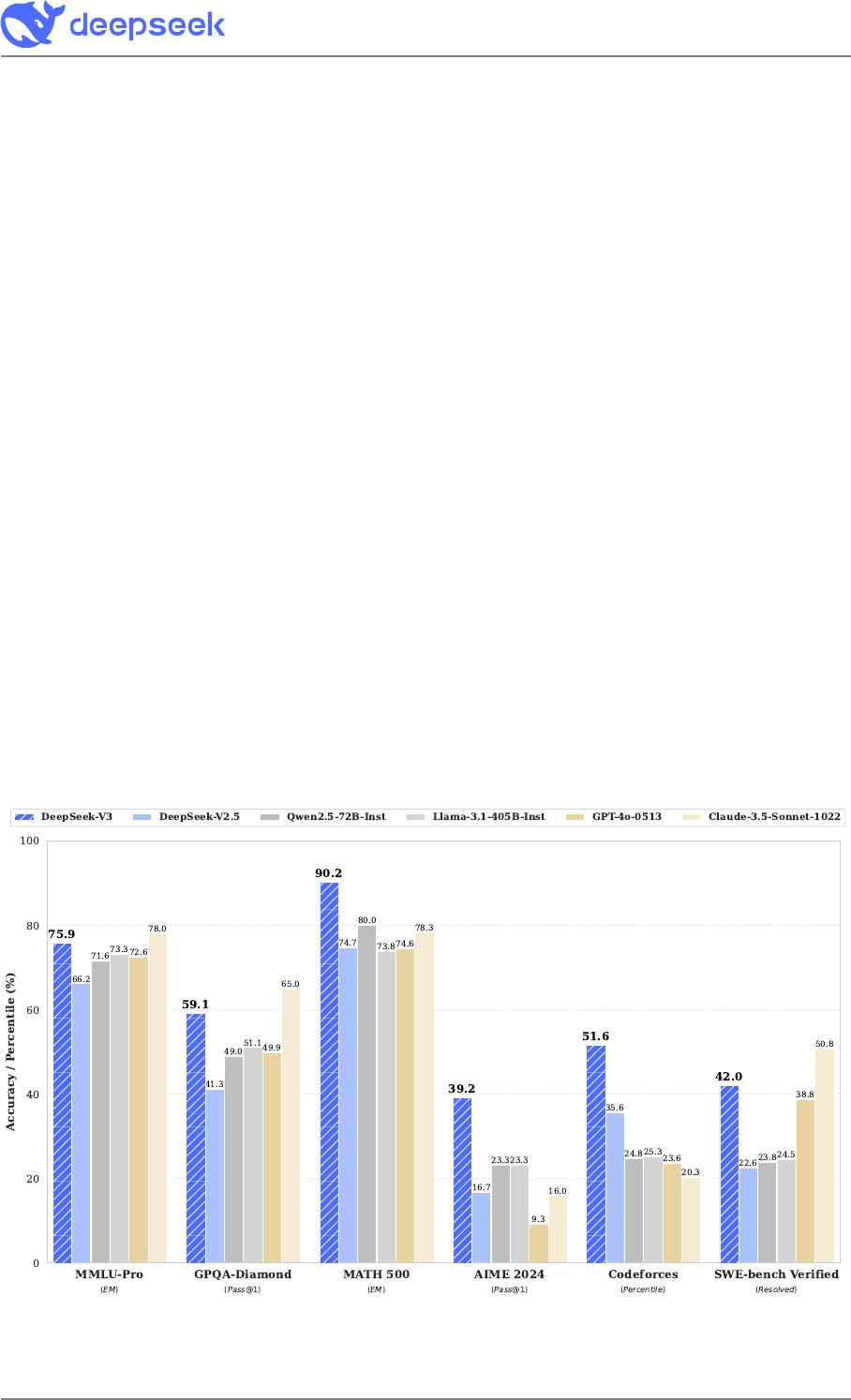
Figure 1 | Benchmark performance of DeepSeek-V3 and its counterparts.
arXiv:2412.19437v1 [cs.CL] 27 Dec 2024
Contents
1 Introduction 4
2 Architecture 6
2.1 Basic Architecture . . . . . . . . . . . . . . . . . . . . . . . . . . . . . . . . . . . . . 6
2.1.1 Multi-Head Latent Attention . . . . . . . . . . . . . . . . . . . . . . . . . . 7
2.1.2 DeepSeekMoE with Auxiliary-Loss-Free Load Balancing . . . . . . . . . . 8
2.2 Multi-Token Prediction . . . . . . . . . . . . . . . . . . . . . . . . . . . . . . . . . . 10
3 Infrastructures 11
3.1 Compute Clusters . . . . . . . . . . . . . . . . . . . . . . . . . . . . . . . . . . . . . 11
3.2 Training Framework . . . . . . . . . . . . . . . . . . . . . . . . . . . . . . . . . . . 12
3.2.1 DualPipe and Computation-Communication Overlap . . . . . . . . . . . . 12
3.2.2 Efficient Implementation of Cross-Node All-to-All Communication . . . . 13
3.2.3 Extremely Memory Saving with Minimal Overhead . . . . . . . . . . . . . 14
3.3 FP8 Training . . . . . . . . . . . . . . . . . . . . . . . . . . . . . . . . . . . . . . . . 14
3.3.1 Mixed Precision Framework . . . . . . . . . . . . . . . . . . . . . . . . . . 15
3.3.2 Improved Precision from Quantization and Multiplication . . . . . . . . . 16
3.3.3 Low-Precision Storage and Communication . . . . . . . . . . . . . . . . . 18
3.4 Inference and Deployment . . . . . . . . . . . . . . . . . . . . . . . . . . . . . . . . 18
3.4.1 Prefilling . . . . . . . . . . . . . . . . . . . . . . . . . . . . . . . . . . . . . . 19
3.4.2 Decoding . . . . . . . . . . . . . . . . . . . . . . . . . . . . . . . . . . . . . 19
3.5 Suggestions on Hardware Design . . . . . . . . . . . . . . . . . . . . . . . . . . . . 20
3.5.1 Communication Hardware . . . . . . . . . . . . . . . . . . . . . . . . . . . 20
3.5.2 Compute Hardware . . . . . . . . . . . . . . . . . . . . . . . . . . . . . . . 20
4 Pre-Training 22
4.1 Data Construction . . . . . . . . . . . . . . . . . . . . . . . . . . . . . . . . . . . . . 22
4.2 Hyper-Parameters . . . . . . . . . . . . . . . . . . . . . . . . . . . . . . . . . . . . . 22
4.3 Long Context Extension . . . . . . . . . . . . . . . . . . . . . . . . . . . . . . . . . 23
4.4 Evaluations . . . . . . . . . . . . . . . . . . . . . . . . . . . . . . . . . . . . . . . . 24
4.4.1 Evaluation Benchmarks . . . . . . . . . . . . . . . . . . . . . . . . . . . . . 24
4.4.2 Evaluation Results . . . . . . . . . . . . . . . . . . . . . . . . . . . . . . . . 25
4.5 Discussion . . . . . . . . . . . . . . . . . . . . . . . . . . . . . . . . . . . . . . . . . 26
4.5.1 Ablation Studies for Multi-Token Prediction . . . . . . . . . . . . . . . . . 26
4.5.2 Ablation Studies for the Auxiliary-Loss-Free Balancing Strategy . . . . . . 27
2
of 53
50墨值下载
【版权声明】本文为墨天轮用户原创内容,转载时必须标注文档的来源(墨天轮),文档链接,文档作者等基本信息,否则作者和墨天轮有权追究责任。如果您发现墨天轮中有涉嫌抄袭或者侵权的内容,欢迎发送邮件至:contact@modb.pro进行举报,并提供相关证据,一经查实,墨天轮将立刻删除相关内容。
下载排行榜

评论