



01.Deep Residual Learning for Image Recognition.pdf
50墨值下载
Deep Residual Learning for Image Recognition
Kaiming He Xiangyu Zhang Shaoqing Ren Jian Sun
Microsoft Research
{kahe, v-xiangz, v-shren, jiansun}@microsoft.com
Abstract
Deeper neural networks are more difficult to train. We
present a residual learning framework to ease the training
of networks that are substantially deeper than those used
previously. We explicitly reformulate the layers as learn-
ing residual functions with reference to the layer inputs, in-
stead of learning unreferenced functions. We provide com-
prehensive empirical evidence showing that these residual
networks are easier to optimize, and can gain accuracy from
considerably increased depth. On the ImageNet dataset we
evaluate residual nets with a depth of up to 152 layers—8×
deeper than VGG nets [41] but still having lower complex-
ity. An ensemble of these residual nets achieves 3.57% error
on the ImageNet test set. This result won the 1st place on the
ILSVRC 2015 classification task. We also present analysis
on CIFAR-10 with 100 and 1000 layers.
The depth of representations is of central importance
for many visual recognition tasks. Solely due to our ex-
tremely deep representations, we obtain a 28% relative im-
provement on the COCO object detection dataset. Deep
residual nets are foundations of our submissions to ILSVRC
& COCO 2015 competitions
1
, where we also won the 1st
places on the tasks of ImageNet detection, ImageNet local-
ization, COCO detection, and COCO segmentation.
1. Introduction
Deep convolutional neural networks [22, 21] have led
to a series of breakthroughs for image classification [21,
50, 40]. Deep networks naturally integrate low/mid/high-
level features [50] and classifiers in an end-to-end multi-
layer fashion, and the “levels” of features can be enriched
by the number of stacked layers (depth). Recent evidence
[41, 44] reveals that network depth is of crucial importance,
and the leading results [41, 44, 13, 16] on the challenging
ImageNet dataset [36] all exploit “very deep” [41] models,
with a depth of sixteen [41] to thirty [16]. Many other non-
trivial visual recognition tasks [8, 12, 7, 32, 27] have also
1
http://image-net.org/challenges/LSVRC/2015/ and
http://mscoco.org/dataset/#detections-challenge2015.
0 1 2 3 4 5 6
0
10
20
iter. (1e4)
training error (%)
0 1 2 3 4 5 6
0
10
20
iter. (1e4)
test error (%)
56-layer
20-layer
56-layer
20-layer
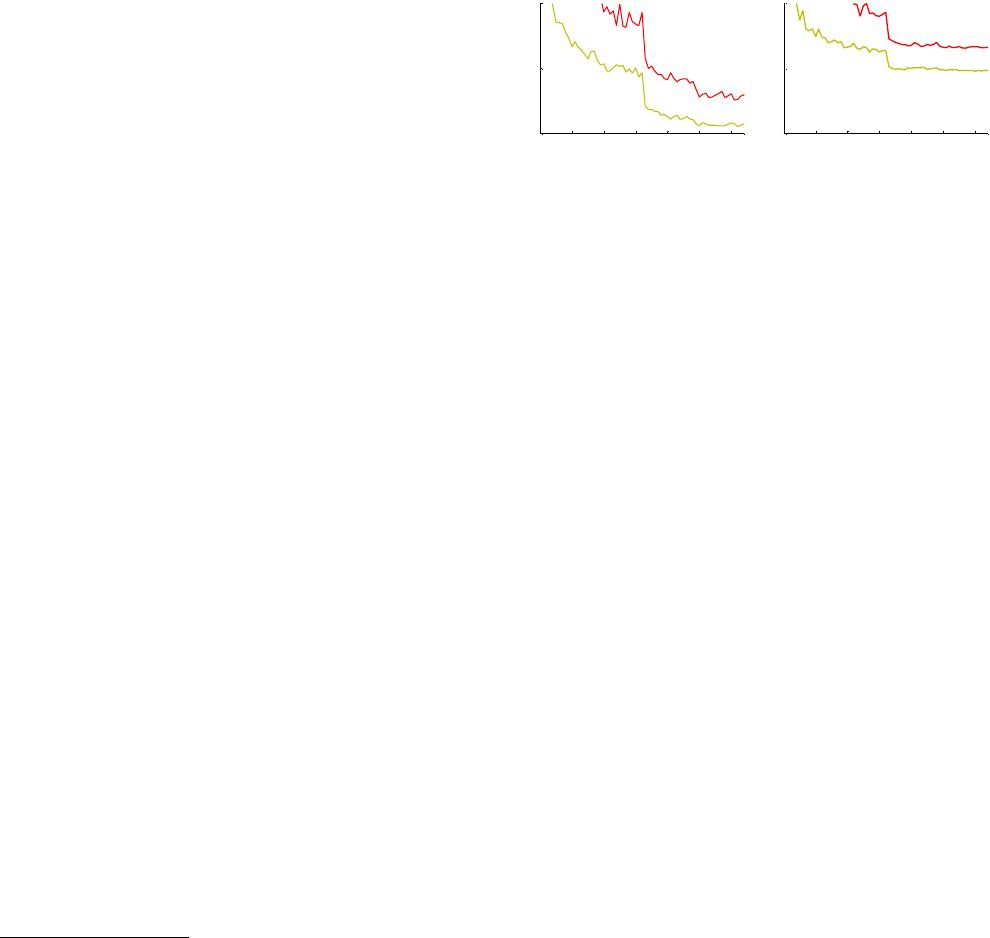
Figure 1. Training error (left) and test error (right) on CIFAR-10
with 20-layer and 56-layer “plain” networks. The deeper network
has higher training error, and thus test error. Similar phenomena
on ImageNet is presented in Fig. 4.
greatly benefited from very deep models.
Driven by the significance of depth, a question arises: Is
learning better networks as easy as stacking more layers?
An obstacle to answering this question was the notorious
problem of vanishing/exploding gradients [1, 9], which
hamper convergence from the beginning. This problem,
however, has been largely addressed by normalized initial-
ization [23, 9, 37, 13] and intermediate normalization layers
[16], which enable networks with tens of layers to start con-
verging for stochastic gradient descent (SGD) with back-
propagation [22].
When deeper networks are able to start converging, a
degradation problem has been exposed: with the network
depth increasing, accuracy gets saturated (which might be
unsurprising) and then degrades rapidly. Unexpectedly,
such degradation is not caused by overfitting, and adding
more layers to a suitably deep model leads to higher train-
ing error, as reported in [11, 42] and thoroughly verified by
our experiments. Fig. 1 shows a typical example.
The degradation (of training accuracy) indicates that not
all systems are similarly easy to optimize. Let us consider a
shallower architecture and its deeper counterpart that adds
more layers onto it. There exists a solution by construction
to the deeper model: the added layers are identity mapping,
and the other layers are copied from the learned shallower
model. The existence of this constructed solution indicates
that a deeper model should produce no higher training error
than its shallower counterpart. But experiments show that
our current solvers on hand are unable to find solutions that
1
arXiv:1512.03385v1 [cs.CV] 10 Dec 2015
identity
weight layer
weight layer
relu
relu
F(x)+x
x
F(x)
x
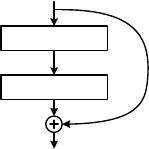
Figure 2. Residual learning: a building block.
are comparably good or better than the constructed solution
(or unable to do so in feasible time).
In this paper, we address the degradation problem by
introducing a deep residual learning framework. In-
stead of hoping each few stacked layers directly fit a
desired underlying mapping, we explicitly let these lay-
ers fit a residual mapping. Formally, denoting the desired
underlying mapping as H(x), we let the stacked nonlinear
layers fit another mapping of F(x) := H(x) − x. The orig-
inal mapping is recast into F(x)+x. We hypothesize that it
is easier to optimize the residual mapping than to optimize
the original, unreferenced mapping. To the extreme, if an
identity mapping were optimal, it would be easier to push
the residual to zero than to fit an identity mapping by a stack
of nonlinear layers.
The formulation of F(x) + x can be realized by feedfor-
ward neural networks with “shortcut connections” (Fig. 2).
Shortcut connections [2, 34, 49] are those skipping one or
more layers. In our case, the shortcut connections simply
perform identity mapping, and their outputs are added to
the outputs of the stacked layers (Fig. 2). Identity short-
cut connections add neither extra parameter nor computa-
tional complexity. The entire network can still be trained
end-to-end by SGD with backpropagation, and can be eas-
ily implemented using common libraries (e.g., Caffe [19])
without modifying the solvers.
We present comprehensive experiments on ImageNet
[36] to show the degradation problem and evaluate our
method. We show that: 1) Our extremely deep residual nets
are easy to optimize, but the counterpart “plain” nets (that
simply stack layers) exhibit higher training error when the
depth increases; 2) Our deep residual nets can easily enjoy
accuracy gains from greatly increased depth, producing re-
sults substantially better than previous networks.
Similar phenomena are also shown on the CIFAR-10 set
[20], suggesting that the optimization difficulties and the
effects of our method are not just akin to a particular dataset.
We present successfully trained models on this dataset with
over 100 layers, and explore models with over 1000 layers.
On the ImageNet classification dataset [36], we obtain
excellent results by extremely deep residual nets. Our 152-
layer residual net is the deepest network ever presented on
ImageNet, while still having lower complexity than VGG
nets [41]. Our ensemble has 3.57% top-5 error on the
ImageNet test set, and won the 1st place in the ILSVRC
2015 classification competition. The extremely deep rep-
resentations also have excellent generalization performance
on other recognition tasks, and lead us to further win the
1st places on: ImageNet detection, ImageNet localization,
COCO detection, and COCO segmentation in ILSVRC &
COCO 2015 competitions. This strong evidence shows that
the residual learning principle is generic, and we expect that
it is applicable in other vision and non-vision problems.
2. Related Work
Residual Representations. In image recognition, VLAD
[18] is a representation that encodes by the residual vectors
with respect to a dictionary, and Fisher Vector [30] can be
formulated as a probabilistic version [18] of VLAD. Both
of them are powerful shallow representations for image re-
trieval and classification [4, 48]. For vector quantization,
encoding residual vectors [17] is shown to be more effec-
tive than encoding original vectors.
In low-level vision and computer graphics, for solv-
ing Partial Differential Equations (PDEs), the widely used
Multigrid method [3] reformulates the system as subprob-
lems at multiple scales, where each subproblem is respon-
sible for the residual solution between a coarser and a finer
scale. An alternative to Multigrid is hierarchical basis pre-
conditioning [45, 46], which relies on variables that repre-
sent residual vectors between two scales. It has been shown
[3, 45, 46] that these solvers converge much faster than stan-
dard solvers that are unaware of the residual nature of the
solutions. These methods suggest that a good reformulation
or preconditioning can simplify the optimization.
Shortcut Connections. Practices and theories that lead to
shortcut connections [2, 34, 49] have been studied for a long
time. An early practice of training multi-layer perceptrons
(MLPs) is to add a linear layer connected from the network
input to the output [34, 49]. In [44, 24], a few interme-
diate layers are directly connected to auxiliary classifiers
for addressing vanishing/exploding gradients. The papers
of [39, 38, 31, 47] propose methods for centering layer re-
sponses, gradients, and propagated errors, implemented by
shortcut connections. In [44], an “inception” layer is com-
posed of a shortcut branch and a few deeper branches.
Concurrent with our work, “highway networks” [42, 43]
present shortcut connections with gating functions [15].
These gates are data-dependent and have parameters, in
contrast to our identity shortcuts that are parameter-free.
When a gated shortcut is “closed” (approaching zero), the
layers in highway networks represent non-residual func-
tions. On the contrary, our formulation always learns
residual functions; our identity shortcuts are never closed,
and all information is always passed through, with addi-
tional residual functions to be learned. In addition, high-
2
of 12
50墨值下载
【版权声明】本文为墨天轮用户原创内容,转载时必须标注文档的来源(墨天轮),文档链接,文档作者等基本信息,否则作者和墨天轮有权追究责任。如果您发现墨天轮中有涉嫌抄袭或者侵权的内容,欢迎发送邮件至:contact@modb.pro进行举报,并提供相关证据,一经查实,墨天轮将立刻删除相关内容。
下载排行榜

评论