



Integration Challenges of Facilities-Layer DCC for Heterogeneous V2X Services.pdf
50墨值下载
Integration Challenges of Facilities-Layer DCC for
Heterogeneous V2X Services
I. Khan
†
, J. Härri
†
†
EURECOM, 450 route des Chappes, 06904 Sophia-Antipolis, France
E-mails:{khanm, haerri}@eurecom.fr
Abstract—Decentralized Congestion Control (DCC) for
802.11p based inter-vehicular communication (V2X) is a critical
mechanism for distributed wireless resource allocation of future
connected intelligent vehicles. Studies so far mostly focused on
optimizing resources for a single Cooperative Awareness service,
whereas future connected intelligent vehicles will be based on
multiple heterogeneous new V2X services. In this paper, we
present a Facilities-layer DCC, currently being standardized in
Europe, capable of handling heterogeneous V2X services and
evaluate its integration impact with legacy DCC mechanisms.
We first emphasize significant wireless resource under-utilizations
and application performance degradations stemming from con-
flicting decisions between legacy and Facilities-layer DCC. We
then show the capability of the DCC mechanism purely based at
service layer and illustrate its flexibility for agile wireless resource
allocations between V2X services for intelligent vehicles.
I. I
NTRODUCTION
Automated Driving and Platooning are paramount examples
of benefits of future cooperative intelligent vehicles to safe
and smart transportation. To reach that goal, intelligent vehi-
cles must not only acquire environmental awareness through
their advance embedded sensors, but also share it with other
vehicles via V2X communication to increase their awareness
horizon. Depending on the scope and scale, the required
data will be exchanged via heterogeneous V2X services, such
as Cooperative Awareness (CA), Collective Perception (CP),
Position & Time (POTI), or Local Dynamic Map (LDM). The
reliability of these services will depend on the dependability
of the underlying V2X communication technologies.
Whether cellular or WiFi, V2X communication technologies
require vehicles to take autonomous communication decision
and as such operate in ad-hoc mode. In particular, spatio-
temporal channel resources must be regulated among various
V2X services in a fully decentralized way to guarantee reliable
and fair V2X communication conditions. This process is called
Decentralized Congestion Control (DCC) in Europe, and many
DCC mechanisms have been proposed [1]–[4], while some
have been standardized [5]–[7].
In Europe, ETSI is in charge of V2X communication
standards for Cooperative Intelligent Transport System (C-
ITS). In 2016, it completed a full set of specification for
the first generation of C-ITS applications. The vast majority
is based on a single service called Cooperative Awareness
and a single message called Cooperative Awareness Message
(CAM). Accordingly, DCC has been optimized mostly for
this message only. While ETSI currently moves towards the
second generation of C-ITS applications, such as Cooperative
Adaptive Cruise Control (CACC), Platooning, or Safety of
Vulnerable Road Users (VRU), DCC will need to deal with a
larger set of V2X services and messages.
In this paper, we introduce a recent ETSI DCC proposal
[7] designed to support heterogeneous V2X Services. Located
at the ETSI Facilities layer [8], it allows V2X services to
directly request wireless resources, whereas the legacy ETSI
Access Layer DCC only blocks traffic based on WiFi traffic
priority. Although providing more agile tuning of the required
resources per V2X service, the interaction of Facilities DCC
with Access DCC can be problematic, creating potential
conflicts between legacy and Facilities DCC. Our contribu-
tions are three folds: (i) we introduce the new ETSI cross-
layer DCC architecture; (ii) we describe the Facilities-DCC
mechanism, notably its key mechanisms to share wireless
resources among V2X services; (iii) we finally integrate and
evaluate the Facilities DCC with and without the Legacy DCC.
We show via simulations on the iTETRIS platform [9] that
Legacy and Facilities DCC mechanisms strongly interfere,
severely degrading V2X services while under-utilizing the
available wireless resources. We also illustrate that DCC at
Facilities layer alone performs better and is sufficient by itself
to efficiently regulate V2X communications.
The rest of the paper is organized as follows: Section II
gives a brief overview of the DCC mechanism, followed by
Section III outlining the evolution of V2X services for C-
ITS. Section IV introduces the Facilities DCC, illustrating the
integration issues with Access DCC, followed by Section V
providing performance evaluation results. Finally, Section VI
concludes the paper.
II. D
ECENTRALIZED CONGESTION CONTROL - OVERVIEW
Operating in ad-hoc mode, V2X communication technolo-
gies leave each node autonomously contend for channel ac-
cess. Uncoordinated, such contention-based channel access
may lead to severe packet collisions or channel resource
exhaustions by potential selfish nodes. Moreover, considering
that the CA service relies on broadcast transmissions only,
collisions cannot be corrected. Therefore if individual trans-
missions are not regulated, collisions rapidly increase with the
number of neighbors, creating scalability concerns.
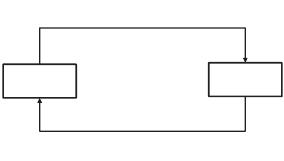
Cyber
Physical
measuringchannel
adjustingTXpolicies
Fig. 1: DCC as Cyber-Physical System
2018 IEEE Intelligent Vehicles Symposium (IV)
Changshu, Suzhou, China, June 26-30, 2018
978-1-5386-4451-5/18/$31.00 ©2018 IEEE 1131

V2V
Cooperative
Awareness (Day 1)
Collective
Perce ption
Local Dynamic Map
Exchange
Trajectory
Inten t
Accurate Position
and Time
Platoon Control
TCU
OBU
LTE
TCU
OBU
LTE
Fig. 2: Heterogeneous Services for Day 2
In order to solve this problem, DCC protocols have been
developed to limit the transmit parameters, mainly transmit
rate and power, of each vehicle based on channel condition.
Rate control sets the maximum number of transmissions
allowed in a given period to limit the temporal utilization of
channel, while power control sets the maximum power to limit
the spatial channel utilization and optimize spatial reuse of
wireless resources.
Conceptually speaking, DCC may be seen as a Cyber-
Physical System (CPS), as shown on Fig 1, where transmit
decisions are optimized based on a feedback loop from mea-
sured channel conditions. The physical block in each node
continuously senses the Channel Load (CL) conditions, via
metrics such as Channel Busy Ratio (CBR). Based on the
sensing metric from the physical block, the control algorithm
in the cyber block adjusts its control parameters, i.e. trans-
mit rate, transmit power, modulation or any other parameter
influencing the metrics from the physical block.
DCC has been extensively studied in the literature and
many protocols have been proposed for congestion control
and resource allocations. Several proposals focused on trans-
mission rate optimizations [1], [2] while keeping the transmit
power constant. Other strategies such as [3], [4] have proposed
adapting the transport power for better spatial channel usage.
Yet other works [10] have proposed hybrid adaptations of both
rate and power. There are other approaches using different
control parameters such as optimizing the data rate [11]
or the physical carrier sense threshold [12] based on the
channel quality. Several studies [13], [14] have questioned
the effectiveness of combining multiple control parameters
for congestion control, as made available by the standards.
A survey of DCC mechanisms is presented in [15].
Nevertheless, almost all existing works, except a few (e.g.
[16]), deal with a single type of message i.e. CAM, when
analyzing DCC strategies. The work in [16] highlights the
problem of Access DCC when dealing with multiple types of
packets, without considering Facilities DCC. In this paper, we
implement Facilities DCC for managing resource allocation of
multiple services and illustrate how Access DCC may hinder
the functioning of Facilities DCC.
Several DCC protocols have been standardized for Day 1, by
the Car2Car Consortium and ETSI in Europe and by Society of
Automotive Engineers (SAE) [17] in the USA. The approach
to the US DCC is cross-layer, which considers multiple
sensing parameters, such as vehicular traffic density, packet
error rate, neighbor tracking error. Until recently, the EU DCC
has been mainly limited to the Access Layer. Although Access
DCC would suffice for Day 1 considering a single message,
unable to differentiate between services, it is not suitable for
multiple messages and V2X services for Day 2.
III. V2X S
ERVICES FOR CONNECTED COOPERATIVE
AUTOMATED VEHICLES
Safety and traffic efficiency Day 1 applications in Europe
are based on periodic CAM and occasionally event trig-
gered messages called Decentralized Environment Notification
Message (DENM). However as shown on Fig. 2, there will
be multiple heterogeneous messages for Day 2 applications,
realizing a concept called ‘extended horizon’, where vehicles
gather information outside the range of their built-in sensors
through cooperative V2X communications. The conjunction of
the various V2X services and messages are critical for creating
such ‘extended horizon’ and allows future automated vehicles
to take optimal control decisions.
Accordingly, several new services are currently being de-
veloped in Europe, which require new messages such as:
• Collective Perception Message (CPM) - ETSI TS 103
324: shares a vehicle’s various sensor information with
other ITS stations.
• Position and Time Message (POTI) - ETSI TS 102
890–2: obtains precise position and time from other ITS
stations.
• Local Dynamic Map (LDM) messages - exchanges of
of the LDM [18] with other ITS stations.
Further down the road, communication capabilities will be
used for cooperative driving and navigation, and it is expected
that further messages will be developed to exchange a vehicle’s
‘trajectory intent’ (i.e. for vehicles to negotiate and coordinate
their actions).
Accordingly, plethora of V2X services will have hetero-
geneous packet size, periodicity, urgency, or relevance area.
Although existing congestion control mechanisms at Access
layer may regulate cooperative services, without considering
the heterogeneous message characteristics, new services will
be penalized. Access DCC strategies can only drop or delay
packets via queuing and flow control (more details in the
next section). However Day 2 scenarios will require smarter
strategies to distribute the sparse network resources or transmit
opportunities among multiple applications, such as optimiz-
ing modulation, packet size, or prioritizing information as a
function of the application’s needs and context. Therefore,
there is a need to regulate wireless channel resources for
heterogeneous V2X services, which we analyze in the rest
of this paper.
IV. A
NALYSIS OF ACCESS AND FACILITIES DCC FOR
HETEROGENEOUS SERVICES
In European DCC standards, Transmit Rate Control (TRC)
has been the most significant control mechanism. TRC can
either limit the number of packets released into the medium
1132
of 6
50墨值下载
【版权声明】本文为墨天轮用户原创内容,转载时必须标注文档的来源(墨天轮),文档链接,文档作者等基本信息,否则作者和墨天轮有权追究责任。如果您发现墨天轮中有涉嫌抄袭或者侵权的内容,欢迎发送邮件至:contact@modb.pro进行举报,并提供相关证据,一经查实,墨天轮将立刻删除相关内容。
下载排行榜

评论