



MIT Autonomous Vehicle Technology Study:Large-Scale Deep Learning Based Analysis of Driver Behavior and Interaction with Automation.pdf
50墨值下载
MIT Autonomous Vehicle Technology Study:
Large-Scale Deep Learning Based Analysis of
Driver Behavior and Interaction with Automation
Lex Fridman
∗
, Daniel E. Brown, Michael Glazer, William Angell, Spencer Dodd, Benedikt Jenik,
Jack Terwilliger, Julia Kindelsberger, Li Ding, Sean Seaman, Hillary Abraham, Alea Mehler,
Andrew Sipperley, Anthony Pettinato, Bobbie Seppelt, Linda Angell, Bruce Mehler, Bryan Reimer
∗
Abstract—Today, and possibly for a long time to come, the
full driving task is too complex an activity to be fully formalized
as a sensing-acting robotics system that can be explicitly solved
through model-based and learning-based approaches in order to
achieve full unconstrained vehicle autonomy. Localization, map-
ping, scene perception, vehicle control, trajectory optimization,
and higher-level planning decisions associated with autonomous
vehicle development remain full of open challenges. This is
especially true for unconstrained, real-world operation where the
margin of allowable error is extremely small and the number of
edge-cases is extremely large. Until these problems are solved,
human beings will remain an integral part of the driving task,
monitoring the AI system as it performs anywhere from just over
0% to just under 100% of the driving. The governing objectives of
the MIT Autonomous Vehicle Technology (MIT-AVT) study are
to (1) undertake large-scale real-world driving data collection
that includes high-definition video to fuel the development of
deep learning based internal and external perception systems,
(2) gain a holistic understanding of how human beings interact
with vehicle automation technology by integrating video data
with vehicle state data, driver characteristics, mental models,
and self-reported experiences with technology, and (3) identify
how technology and other factors related to automation adoption
and use can be improved in ways that save lives. In pursuing
these objectives, we have instrumented 21 Tesla Model S and
Model X vehicles, 2 Volvo S90 vehicles, and 2 Range Rover
Evoque vehicles for both long-term (over a year per driver)
and medium term (one month per driver) naturalistic driving
data collection. Furthermore, we are continually developing new
methods for analysis of the massive-scale dataset collected from
the instrumented vehicle fleet. The recorded data streams include
IMU, GPS, CAN messages, and high-definition video streams
of the driver face, the driver cabin, the forward roadway, and
the instrument cluster (on select vehicles). The study is on-
going and growing. To date, we have 78 participants, 7,146 days
of participation, 275,589 miles, and 3.5 billion video frames.
This paper presents the design of the study, the data collection
hardware, the processing of the data, and the computer vision
algorithms currently being used to extract actionable knowledge
from the data.
MIT Autonomous Vehicle
Technology Study
Study months to-date: 21
Participant days: 7,146
Drivers: 78
Vehicles: 25
Miles driven: 275,589
Video frames: 3.48 billion
Study data collection is ongoing.
Statistics updated on: Oct 23, 2017.
Tesla Model S
24,657 miles
588 days in study
Tesla Model X
22,001 miles
421 days in study
Tesla Model S
18,896 miles
435 days in study
Tesla Model S
18,666 miles
353 days in study
Range Rover
Evoque
18,130 miles
483 days in study
Tesla Model S
15,735 miles
322 days in study
Tesla Model X
15,074 miles
276 days in study
Range Rover
Evoque
14,499 miles
440 days in study
Tesla Model S
14,410 miles
371 days in study
Tesla Model S
14,117 miles
248 days in study
Volvo S90
13,970 miles
325 days in study
Tesla Model S
12,353 miles
321 days in study
Volvo S90
11,072 miles
412 days in study
Tesla Model X
10,271 miles
366 days in study
Tesla Model S
9,188 miles
183 days in study
Tesla Model S
8,319 miles
374 days in study
Tesla Model S
6,720 miles
194 days in study
Tesla Model S
5,186 miles
91 days in study
Tesla Model X
5,111 miles
232 days in study
Tesla Model S
4,596 miles
132 days in study
Tesla Model X
4,587 miles
233 days in study
Tesla Model X
3,719 miles
133 days in study
Tesla Model S
3,006 miles
144 days in study
Tesla Model X
1,306 miles
69 days in study
Tesla Model S
(Ooad pending)
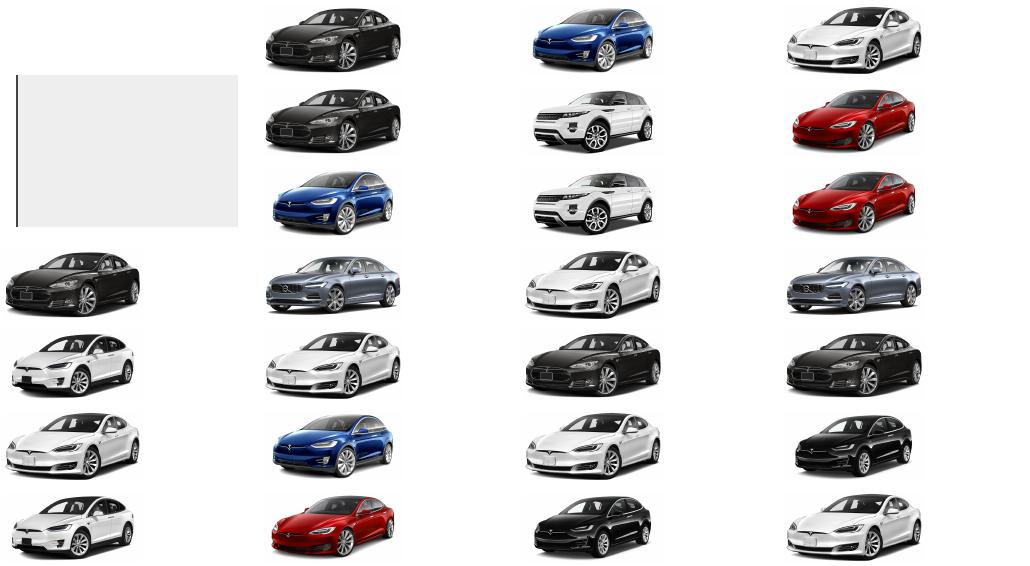
Fig. 1: Dataset statistics for the MIT-AVT study as a whole and for the individual vehicles in the study.
* Lex Fridman (fridman@mit.edu) and Bryan Reimer (reimer@mit.edu) are primary contacts. Linda Angell and Sean Seaman are affiliated with
Touchstone Evaluations Inc. All other authors are affiliated with Massachusetts Institute of Technology (MIT).
arXiv:1711.06976v1 [cs.CY] 19 Nov 2017

(a) Face Camera for Driver State.
(b) Driver Cabin Camera for Driver Body Position.
(c) Forward-Facing Camera for Driving Scene Perception.
(d) Instrument Cluster Camera for Vehicle State.
Fig. 2: Video frames from MIT-AVT cameras and visualization
of computer vision tasks performed for each.
I. INTRODUCTION
The idea that human beings are poor drivers is well-
documented in popular culture [1], [2]. While this idea is
often over-dramatized, there is some truth to it in that we’re
at times distracted, drowsy, drunk, drugged, and irrational
decision makers [3]. However, this does not mean it is easy
to design and build an autonomous perception-control system
that drives better than the average human driver. The 2007
DARPA Urban Challenge [4] was a landmark achievement
in robotics, when 6 of the 11 autonomous vehicles in the
finals successfully navigated an urban environment to reach
the finish line, with the first place finisher traveling at an
average speed of 15 mph. The success of this competition
led many to declare the fully autonomous driving task a
“solved problem”, one with only a few remaining messy
details to be resolved by automakers as part of delivering a
commercial product. Today, over ten years later, the problems
of localization, mapping, scene perception, vehicle control,
trajectory optimization, and higher-level planning decisions
associated with autonomous vehicle development remain full
of open challenges that have yet to be fully solved by systems
incorporated into a production platforms (e.g. offered for
sale) for even a restricted operational space. The testing of
prototype vehicles with a human supervisor responsible for
taking control during periods where the AI system is “unsure”
or unable to safely proceed remains the norm [5], [6].
The belief underlying the MIT Autonomous Vehicle Tech-
nology (MIT-AVT) study is that the DARPA Urban Challenge
was only a first step down a long road toward developing
autonomous vehicle systems. The Urban Challenge had no
people participating in the scenario except the professional
drivers controlling the other 30 cars on the road that day. The
authors believe that the current real-world challenge is one
that has the human being as an integral part of every aspect
of the system. This challenge is made especially difficult due
to the immense variability inherent to the driving task due to
the following factors:
• The underlying uncertainty of human behavior as rep-
resented by every type of social interaction and conflict
resolution between vehicles, pedestrians, and cyclists.
• The variability between driver styles, experience, and
other characteristics that contribute to their understand-
ing, trust, and use of automation.
• The complexities and edge-cases of the scene perception
and understanding problem.
• The underactuated nature of the control problem [7] for
every human-in-the-loop mechanical system in the car:
from the driver interaction with the steering wheel to the
tires contacting the road surface.
• The expected and unexpected limitation of and imperfec-
tions in the sensors.
• The reliance on software with all the challenges inherent
to software-based systems: bugs, vulnerabilities, and the
constantly changing feature set from minor and major
version updates.
2
of 17
50墨值下载
【版权声明】本文为墨天轮用户原创内容,转载时必须标注文档的来源(墨天轮),文档链接,文档作者等基本信息,否则作者和墨天轮有权追究责任。如果您发现墨天轮中有涉嫌抄袭或者侵权的内容,欢迎发送邮件至:contact@modb.pro进行举报,并提供相关证据,一经查实,墨天轮将立刻删除相关内容。
下载排行榜

评论