



数据库顶会VLDB 2021最佳EA B论文奖《Are We Ready For Learned Cardinality Estimation》- Xiaoying Wang.pdf
免费下载

Are We Ready For Learne d Cardinality Estimation?
Xiaoying Wang
†∗
, Changbo Qu
†∗
, Weiyuan Wu
†∗
, Jiannan Wang
†
, Qingqing Zhou
♦
Simon Fraser University
†
Tencent Inc.
♦
{xiaoying_wang, changboq, youngw, jnwang}@sfu.ca hewanzhou@tencent.com
ABSTRACT
Cardinality estimation is a fundamental but long unresolved prob-
lem in query optimization. Recently, multiple papers from different
research groups consistently report that learned models have the
potential to replace existing cardinality estimators. In this paper,
we ask a forward-thinking question: Are we ready to deploy these
learned cardinality models in production? Our study consists of three
main parts. Firstly, we focus on the static environment (i.e., no data
updates) and compare five new learned methods with nine tradi-
tional methods on four real-world datasets under a unified workload
setting. The results show that learned models are indeed more ac-
curate than traditional methods, but they often suffer from high
training and inference costs. Secondly, we explore whether these
learned models are ready for dynamic environments (i.e., frequent
data updates). We find that they cannot catch up with fast data up-
dates and return large errors for different reasons. For less frequent
updates, they can perform better but there is no clear winner among
themselves. Thirdly, we take a deeper look into learned models and
explore when they may go wrong. Our results show that the perfor-
mance of learned methods can be greatly affected by the changes
in correlation, skewness, or domain size. More importantly, their
behaviors are much harder to interpret and often unpredictable.
Based on these findings, we identify two promising research direc-
tions (control the cost of learned models and make learned models
trustworthy) and suggest a number of research opportunities. We
hope that our study can guide researchers and practitioners to work
together to eventually push learned cardinality estimators into real
database systems.
PVLDB Reference Format:
Xiaoying Wang, Changbo Qu, Weiyuan Wu, Jiannan Wang, Qingqing Zhou.
Are We Ready For Learned Cardinality Estimation?. PVLDB, 14(9): 1640 -
1654, 2021.
doi:10.14778/3461535.3461552
PVLDB Artifact Availability:
The source code, data, and/or other artifacts have been made available at
https://github.com/sfu-db/AreCELearnedYet.
1 INTRODUCTION
The rise of “ML for DB” has sparked a large bo dy of exciting research
studies exploring how to replace existing database components with
learned models [
32
,
37
,
39
,
68
,
84
,
98
]. Impressive results have been
repeatedly reported from these papers, which suggest that “ML for
DB” is a promising research area for the database community to
This work is licensed under the Creative Commons BY-NC-ND 4.0 International
License. Visit https://creativecommons.org/licenses/by-nc-nd/4.0/ to view a copy of
this license. For any use beyond those covered by this license, obtain permission by
emailing info@vldb.org. Copyright is held by the owner/author(s). Publication rights
licensed to the VLDB Endowment.
Proceedings of the VLDB Endowment, Vol. 14, No. 9 ISSN 2150-8097.
doi:10.14778/3461535.3461552
* The first three authors contributed equally to this research.
explore. To maximize the impact of this research area, one natural
question that we should keep asking ourselves is: Are we ready to
deploy these learned models in production?
In this paper, we seek to answer this question for cardinality
estimation. In particular, we focus on single-table cardinality esti-
mation, a fundamental and long standing problem in query opti-
mization [
18
,
95
]. It is the task of estimating the number of tuples
of a table that satisfy the query predicates. Database systems use
a query optimizer to choose an execution plan with the estimated
minimum cost. The performance of a query optimizer largely de-
pends on the quality of cardinality estimation. A query plan based
on a wrongly estimated cardinality can be orders of magnitude
slower than the best plan [42].
Multiple recent papers [
18
,
28
,
30
,
34
,
95
] have shown that learne d
models can greatly improve the cardinality estimation accuracy
compared with traditional methods. However, their experiments
have a number of limitations (see Section 2.5 for more detailed
discussion). Firstly, they do not include all the learned methods in
their evaluation. Secondly, they do not use the same datasets and
workload. Thirdly, they do not extensively test how well learned
methods perform in dynamic environments (e.g., by varying update
rate). Lastly, they mainly fo cus on when learned methods will go
right rather than when they may go wrong.
We overcome these limitations and conduct comprehensive ex-
periments and analyses. The paper makes four contributions:
Are Learned Methods Ready For Static Environments?
We
propose a unified workload generator and collect four real-world
benchmark datasets. We compare five new learned methods with
nine traditional methods using the same datasets and workload in
static environments (i.e., no data updates). The results on accuracy
are quite promising. In terms of training/inference time, there is
only one method [
18
] that can achieve similar performance with
existing DBMSs. The other learned methods typically require 10
−
1000
×
more time in training and inference. Moreover, all learned
methods have an extra cost for hyper-parameter tuning.
Are Learned Methods Ready For Dynamic Environments?
We explore how each learned method performs by varying up-
date rate on four real-world datasets. The results show that learned
methods fail to catch up with fast data updates and tend to re-
turn large error for various reasons (e.g., the stale model processes
too many queries, the update period is not long enough to get a
good updated model). When data updates are less frequent, learned
methods can perform better but there is no clear winner among
themselves. We further explore the update time vs. accuracy trade-
off, and investigate how much GPU can help learned methods in
dynamic environments.
When Do Learned Methods Go Wrong?
We vary correlation,
skewness, and domain size, respectively, on a synthetic dataset, and
try to understand when learned methods may go wrong. We find
that all learned methods tend to output larger error on more cor-
related data, but they react differently w.r.t. skewness and domain
size. Due to the use of black-box models, their wrong behaviors are
1640
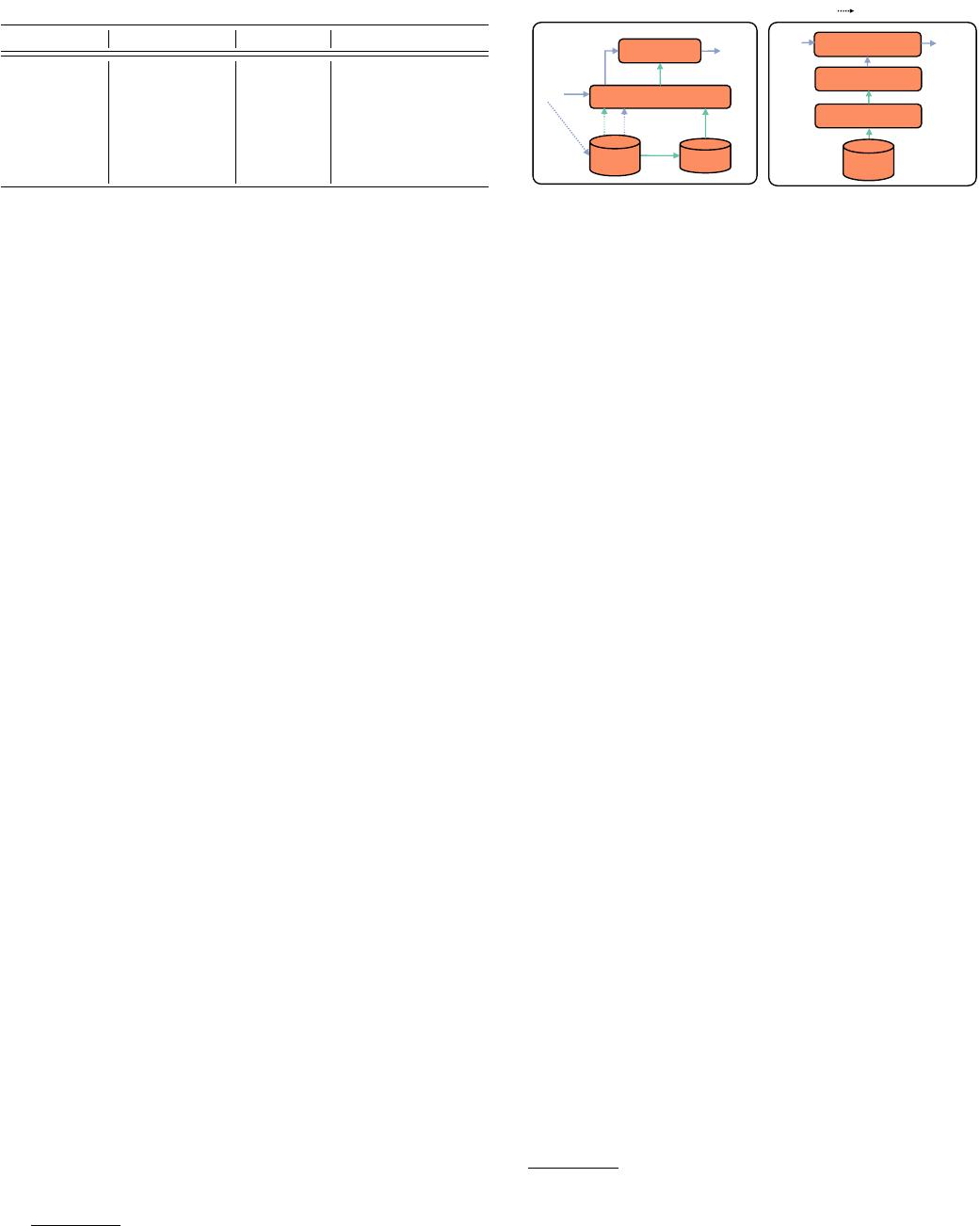
Table 1: Taxonomy of New Learned Cardinality Estimators.
Methodology Input Model
MSCN [34] Regression Query+Data Neural Network
LW-XGB [18]
Regression Query+Data Gradient Boosted Tree
LW-NN [18]
Regression Query+Data Neural Network
DQM-Q [28]
Regression Query Neural Network
Naru [95]
Joint Distribution Data Autoregressive Model
DeepDB [30]
Joint Distribution Data Sum Product Network
DQM-D [28]
Joint Distribution Data Autoregressive Model
very hard to interpret. We further investigate whether their behav-
iors follow some simple and intuitive logical rules. Unfortunately,
most of them violate these rules. We discuss four issues related to
deploying (black-box and illogical) learned models in production.
Research Opportunities.
We identify two future research direc-
tions: i) control the cost of learned methods and ii) make learned
methods trustworthy, and suggest a number of promising research
opportunities. We publish our code and datasets on GitHub
1
to
facilitate future research studies. We hope our work can attract
more research efforts in these directions and eventually overcome
the barriers of deploying learned estimators in production.
The rest of the paper is organized as follows: We present a sur-
vey on learned cardinality estimation in Section 2 and describe
the general experimental setup in Section 3. We explore whether
learned methods are ready for static environments in Section 4
and for dynamic environments in Section 5, and examine when
learned methods go wrong in Section 6. Future research opportuni-
ties are discussed in Section 7. Multi-table scenario are discussed
in Section 8 and related works are reviewed in Section 9. Finally,
we present our conclusions in Section 10.
2 LEARNED CARDINALITY ESTIMATION
In this section, we first formulate the cardinality estimation (CE)
problem, then put new learned methods into a taxonomy and
present how each method works, and finally discuss the limita-
tions of existing evaluation on learned methods.
2.1 Problem Statement
Consider a relation
with
attributes
{
1
,...,
}
and a query
over with a conjunctive of predicates:
SELECT COUNT(*) FROM R
WHERE
1
AND ··· and
,
where
(
∈[
1
,]
) can be an equality predicate like
=
, an
open range predicate like
≤
, or a close range predicate like
≤ ≤
. The goal of CE is to estimate the answer to this query,
i.e., the number of tuples in
that satisfy the query predicates. An
equivalent problem is called selectivity estimation, which computes
the percentage of tuples that satisfy the query predicates.
2.2 Taxonomy
The idea of using ML for CE is not new (see Section 9 for more
related work). The novelty of recent learned methods is to adopt
more advanced ML models, such as deep neural networks [
18
,
28
,
34
], gradient boosted trees [
18
], sum-product networks [
30
], and
deep autoregressive models [
28
,
95
]. We call these methods “new
learned methods” or “learned methods” if the context is clear. In
contrast, we refer to “traditional methods” as the methods based on
histogram or classic ML models like KDE and Bayesian Network.
1
https://github.com/sfu-db/AreCELearnedYet
Data Processing
Query Featurization
Regression Model
Query Pool
+ Labels
Query
Green: Train Stage Blue: Inference Stage
Construct
Train
CE
Result
Statistics
Data
Query Processing
CE
Result
Train
Query
(a) Regression Methods
(b) Joint Distribution Methods
Look Up
Statistics
: Optional
Data
Joint Distribution Model
Figure 1: Workflow of Learned Methods.
Table 1 shows a taxonomy of new learned methods
2
. Based on
the methodology, we split them into two groups - Regression and
Joint Distribution methods. Regression methods (a.k.a query-driven
methods) mo del CE as a regression problem and aim to build a map-
ping between queries and the CE results via feature vectors, i.e.,
𝑦 → _ → _
. Joint Distribution methods
(a.k.a data-driven methods) model CE as a joint probability distribu-
tion estimation problem and aim to construct the joint distribution
from the table, i.e.,
(
1
,
2
, ··· ,
)
, then estimate the cardinal-
ity. The Input column represents what is the input to construct
each model. Regression metho ds all require queries as input while
joint distribution methods only depend on data. The Model column
indicates which type of model is used correspondingly. We will
introduce these methods in the following.
2.3 Methodology 1: Regression
Workflow.
Figure 1(a) depicts the workflow of regression methods.
In the training stage, it first constructs a query pool and gets the
label (CE result) of each query. Then, it goes through the query
featurization module, which converts each query to a feature vector.
The feature vector does not only contain query information but
also optionally include some statistics (like a small sample) from
the data. Finally, a regression model is trained on a set of
(
feature
vector, label
)
pairs. In the inference stage, given a query, it converts
the query to a feature vector using the same process as the training
stage, and applies the regression model to the feature vector to get
the CE result. To handle data updates, regression methods need to
update the query pool and labels, generate new feature vectors, and
update the regression model.
There are four regression methods: MSCN, LW-XGB, LW-NN,
and DQM-Q. One common design choice in them is the usage
of log-transformation on the selectivity label since the selectivity
often follows a skewed distribution and log-transformation is com-
monly used to handle this issue [
19
]. These works vary from many
perspectives, such as their input information, query featurization,
and model architecture.
MSCN [34]
introduces a specialized deep neural network model
termed multi-set convolutional network (MSCN). MSCN can sup-
port join cardinality estimation. It represents a query as a feature
vector which contains three modules (i.e., table, join, and predicate
modules). Each module is a two-layer neural network and different
module outputs are concatenated and fed into a final output net-
work, which is also a two-layer neural network. MSCN enriches the
training data with a materialized sample. A predicate will be evalu-
ated on a sample, and a bitmap, where each bit indicates whether
a tuple in the sample satisfies the predicate or not, will be added
2
Naru, DeepDB and MSCN are named by their authors. For convenience of discussion,
we give others the following short names. Lightweight Gradient Boosting Tree (LW-
XGB) and Lightweight Neural Network (LW-NN) are two models from [
18
]. From [
28
],
two complementary methods are proposed, Data&Query Model - Data (DQM-D) and
Data&Query Model - Query (DQM-Q).
1641
of 15
免费下载
【版权声明】本文为墨天轮用户原创内容,转载时必须标注文档的来源(墨天轮),文档链接,文档作者等基本信息,否则作者和墨天轮有权追究责任。如果您发现墨天轮中有涉嫌抄袭或者侵权的内容,欢迎发送邮件至:contact@modb.pro进行举报,并提供相关证据,一经查实,墨天轮将立刻删除相关内容。
下载排行榜

评论