



VLDB 2020-_Leaper A Learned Prefetcher for Cache Invalidation in LSM-tree based Storage Engines _Lei Yang.pdf
免费下载
Leaper: A Learned Prefetcher for Cache Invalidation in
LSM-tree based Storage Engines
Lei Yang
1
∗
, Hong Wu
2
, Tieying Zhang
2
, Xuntao Cheng
2
, Feifei Li
2
, Lei Zou
1
,
Yujie Wang
2
, Rongyao Chen
2
, Jianying Wang
2
, and Gui Huang
2
{yang lei, zoulei}@pku.edu.cn
1
{hong.wu, tieying.zhang, xuntao.cxt, lifeifei, zhencheng.wyj, rongyao.cry, beilou.wjy,
qushan}@alibaba-inc.com
2
Peking University
1
Alibaba Group
2
ABSTRACT
Frequency-based cache replacement policies that work well
on page-based database storage engines are no longer suffi-
cient for the emerging LSM-tree (Log-Structure Merge-tree)
based storage engines. Due to the append-only and copy-
on-write techniques applied to accelerate writes, the state-
of-the-art LSM-tree adopts mutable record blocks and issues
frequent background operations (i.e., compaction, flush) to
reorganize records in possibly every block. As a side-effect,
such operations invalidate the corresponding entries in the
cache for each involved record, causing sudden drops on the
cache hit rates and spikes on access latency. Given the ob-
servation that existing methods cannot address this cache
invalidation problem, we propose Leaper, a machine learn-
ing method to predict hot records in an LSM-tree storage
engine and prefetch them into the cache without being dis-
turbed by background operations. We implement Leaper in
a state-of-the-art LSM-tree storage engine, X-Engine, as a
light-weight plug-in. Evaluation results show that Leaper
eliminates about 70% cache invalidations and 99% latency
spikes with at most 0.95% overheads as measured in real-
world workloads.
PVLDB Reference Format:
Lei Yang, Hong Wu, Tieying Zhang, Xuntao Cheng, Feifei Li,
Lei Zou, Yujie Wang, Rongyao Chen, Jianying Wang, and Gui
Huang. Leaper: A Learned Prefetcher for Cache Invalidation in
LSM-tree based Storage Engines. PVLDB, 13(11): 1976-1989,
2020.
DOI: https://doi.org/10.14778/3407790.3407803
1. INTRODUCTION
Caches are essential in many database storage engines
for buffering frequently accessed (i.e., hot) records in main
memory and accelerating their lookups. Recently, LSM-tree
(Log-Structure Merge-tree) based database storage engines
have been widely applied in industrial database systems
∗
Work performed while at Alibaba Group.
This work is licensed under the Creative Commons Attribution-
NonCommercial-NoDerivatives 4.0 International License. To view a copy
of this license, visit http://creativecommons.org/licenses/by-nc-nd/4.0/. For
any use beyond those covered by this license, obtain permission by emailing
info@vldb.org. Copyright is held by the owner/author(s). Publication rights
licensed to the VLDB Endowment.
Proceedings of the VLDB Endowment, Vol. 13, No. 11
ISSN 2150-8097.
DOI: https://doi.org/10.14778/3407790.3407803
0 50 100 150 200
Time (s)
10
0
10
1
Normalized value
Hit ratio
QPS
Latency
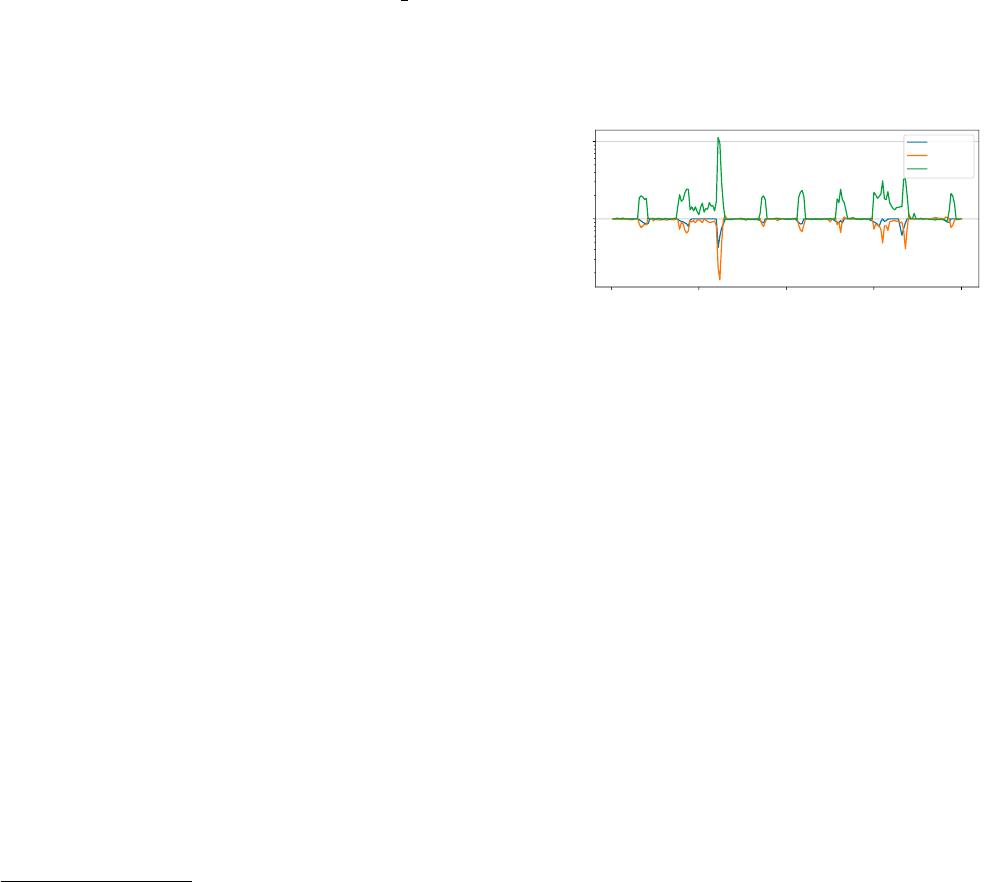
Figure 1: Cache hit ratio and system performance churn (QPS
and latency of 95th percentile) caused by cache invalidations.
with notable examples including LevelDB [10], HBase [2],
RocksDB [7] and X-Engine [14] for its superior write perfor-
mance. These storage engines usually come with row-level
and block-level caches to buffer hot records in main mem-
ory. In this work, we find that traditional page-based and
frequency-based cache replacement policies (e.g., Least Re-
cently Used (LRU) [28], Least Frequently Used (LFU) [33])
do not work well in such caches, despite their successes
on B-Trees and hash indexes. The key reason is that the
background operations in the LSM-tree (e.g., compactions,
flushes) reorganize records within the storage periodically,
invalidating the tracked statistics for the cache and dis-
abling these replacement policies to effectively identify the
hot blocks to be swapped into the cache.
The root causes come from append-only and copy-on-
write (CoW) techniques applied to accelerate inserts, up-
dates and deletes, in conjunction with the mutable blocks
in the storage layout of an LSM-tree. Although newly ar-
rived records and deltas on existing records are appended
into the main memory in the first place, eventually they
need to be merged with existing record blocks in the durable
storage through the flush and compaction operations in the
LSM-tree. Because of these operations, traditional cache
replacement policies that rely on tracking page/block level
access frequency are no longer effective. Every time when
a flush or compaction is executed in the LSM-tree, record
blocks are reorganized and moved both physically and logi-
cally to or within the durable storage, along with changing
key ranges for records and updated values and locations.
This invalidates their corresponding entries and statistics in
the cache and leads to cache miss for their lookups. Further-
more, compactions are usually executed multiple times for
the same record due to the hierarchical storage layout of the
1976
LSM-tree. In this work, we have identified that this problem
often causes latency spikes due to the decreased cache hit
rates. We refer to it as the cache invalidation problem.
Such cache invalidations happen frequently in workloads
with intensive writes and updates, such as order-placement
on hot merchandises in e-commerce workloads. Figure 1
shows an example where the cache misses caused by such
invalidations leads up to 10× latency spikes and 90% queries
per second (QPS) drops in X-Engine [14], a high-performance
LSM-tree based storage engine at Alibaba and Alibaba Cloud.
This level of performance instability introduces potential
risks for mission-critical applications. Meanwhile, off-peak
scheduling of compactions cannot maintain high performance
under high stress, because it accumulates a large number of
levels which lead to severe performance degradation in LSM-
tree (e.g., the accrued range deletion operations have fatal
performance reduction to range selection queries [35]). Be-
yond this, we aim to provide a general database service on
the cloud, so that we cannot ignore the cache invalidation
problem when users need high performance (i.e., under high
stress).
The cache invalidation problem has attracted some re-
search attention in the past [11, 1, 37]. They try to decrease
the frequency of compactions by relaxing the sorted data
layout of the LSM-tree [15], or maintain a mapping between
records before and after compactions [1, 40]. Furthermore,
they often require significant changes to the LSM-tree im-
plementation. Hence, they either sacrifice the range query
performance, or the space efficiency, or introduce signifi-
cant extra overhead. These are often unacceptable because
many industrial applications prefer general-purpose storage
engines offering competitive performance for both point and
range queries with high memory and space efficiencies.
In this paper, we introduce machine learning techniques to
capture the data access trends during and after compactions
that cannot be captured by existing methods. Our proposal
introduces a small overhead without adding or altering any
data structures in the LSM-tree. More specifically, we pro-
pose a learned prefetcher, Leaper, to predict which records
would be accessed during and after compactions using ma-
chine learning models, and prefetch them into the cache ac-
cordingly. Our key insight is to capture data access trends
at the range level, and intersects hot ranges with record
block boundaries to identify record blocks for prefetching
into the cache. We are enabled by machine learning models
to find such hot ranges from the workload, which cannot be
identified by conventional cache replacement policies. The
identified ranges are independent of background operations,
allowing Leaper to perform across multiple compactions or
flushes continuously. And, our method naturally supports
both point and range queries.
We design and implement Leaper to minimize both of-
fline training overhead and online inference overhead. To
this end, we have applied several optimizations in the imple-
mentation such as the locking mechanism and the two-phase
prefetcher. We have evaluated Leaper using both synthetic
and real-world workloads. Results show that Leaper is able
to reduce cache invalidations and latency spikes by 70% and
99%, respectively. The training and inference overheads of
Leaper are constrained to 6 seconds and 5 milliseconds, re-
spectively. Our main contributions are as follows:
• We formulate the cache invalidation problem, and iden-
tify its root causes in the modern LSM-tree storage
engines, which existing methods cannot address. We
have proposed a machine learning-based approach, Le-
aper, to predict future hot records and prefetch them
into the cache, without being disturbed by background
LSM-tree operations that cause the cache invalidation
problem.
• We have achieved a low training and inference over-
head in our machine learning-based proposal by care-
fully formulating the solution, selecting light-weight
models for predictions and optimizing the implemen-
tation. The overall overhead is often as small as 0.95%
(compared to the cost of other normal execution op-
erations excluding Leaper) as observed in real-world
workloads. We have extracted effective features, achie-
ving a high level of accuracy: 0.99 and 0.95 recall
scores for synthetic and real-world workloads, respec-
tively.
• We have evaluated our proposal by comparing it with
the state-of-the-art baselines using both synthetic and
real-world workloads. Experimental results show that
Leaper improves the QPS by more than 50% in average
and eliminates about 70% cache invalidations and 99%
of latency spikes, significantly outperforming others.
The remainder of this paper is organized as follows. Sec-
tion 2 introduces the background and formulates the cache
invalidation problem. Section 3 presents our design overview
of Leaper. We introduce details of Leaper’s components in
Sections 4, 5 and 6. We evaluate our proposal in Section 7
and discuss related works in Section 8. At last, we conclude
in Section 9.
2. BACKGROUND AND PRELIMINARY
2.1 LSM-tree based Storage Engines
LSM-tree based storage engines have acquired significant
popularity in recent years. Notable examples include Lev-
elDB [10] from Google, RocksDB [7] from Facebook and X-
Engine [14] from Alibaba, supporting applications such as
Chrome [17], LinkedIn [8], and DingTalk [14]. This popu-
larity is driven by the trend that there are increasingly more
writes (e.g., inserts, updates) in database workloads, where
the traditional B-tree based storages struggle to offer the
expected performance at a reasonable space cost.
LSM-tree is designed to achieve a high write through-
put. Figure 2 illustrates the generic architecture of a LSM-
tree, consisting of a memory-resident component and a disk-
resident component. Incoming records are inserted into ac-
tive memtables in the main memory, which are implemented
as skiplists in many systems [31, 14]. To update an existing
record, the corresponding delta is inserted into this active
memtable in the same way. This append-only design ensures
that all writes other than logging are completed in the main
memory without going into the durable storage where the
access latency is much higher. When an active memtable
is filled, it is switched to be an immutable memtable. As
memtables accumulate in the main memory, approaching
the main memory capacity, flush operations are triggered
to flush some immutable memtables into the durable storage
where incoming records are merged with existing ones. Such
a merge may incur a lot of disk I/Os. And, the same record
may be merged multiple times, causing write amplifications.
To bound such write amplifications and to facilitate fast
lookups over recently flushed records which are still very
1977
of 14
免费下载
【版权声明】本文为墨天轮用户原创内容,转载时必须标注文档的来源(墨天轮),文档链接,文档作者等基本信息,否则作者和墨天轮有权追究责任。如果您发现墨天轮中有涉嫌抄袭或者侵权的内容,欢迎发送邮件至:contact@modb.pro进行举报,并提供相关证据,一经查实,墨天轮将立刻删除相关内容。
下载排行榜

评论