



在 Flash 上使用 Redis 构建大型数据库.pdf
免费下载

WHITE PAPER
Building Large Databases with Redis on Flash
Cihan Biyikoglu, VP, Product Management, Redis
CONTENTS
Why Redis on Flash? 2
Redis on Flash Architecture 2
High Availability with Redis Enterprise 3
Scaling Databases with Redis on Flash 3
Data Durability with Redis Enterprise 5
“Buer Cache” vs The “RAM Extension” Approach 5
Redis Enterprise Flash Use Cases 6
References 6
2
Why Redis on Flash?
Redis is known for its sub-millisecond latencies and high throughput. For many interacve applicaons, responsiveness
is key to engaging and uid experiences. However, keeping a large amount of data in RAM with Redis can be expensive.
Today many applicaons either pay a premium for storing sizable datasets in RAM with Redis or they limit Redis database
use to the most valuable data and augment Redis with disk-based relaonal or NoSQL databases.
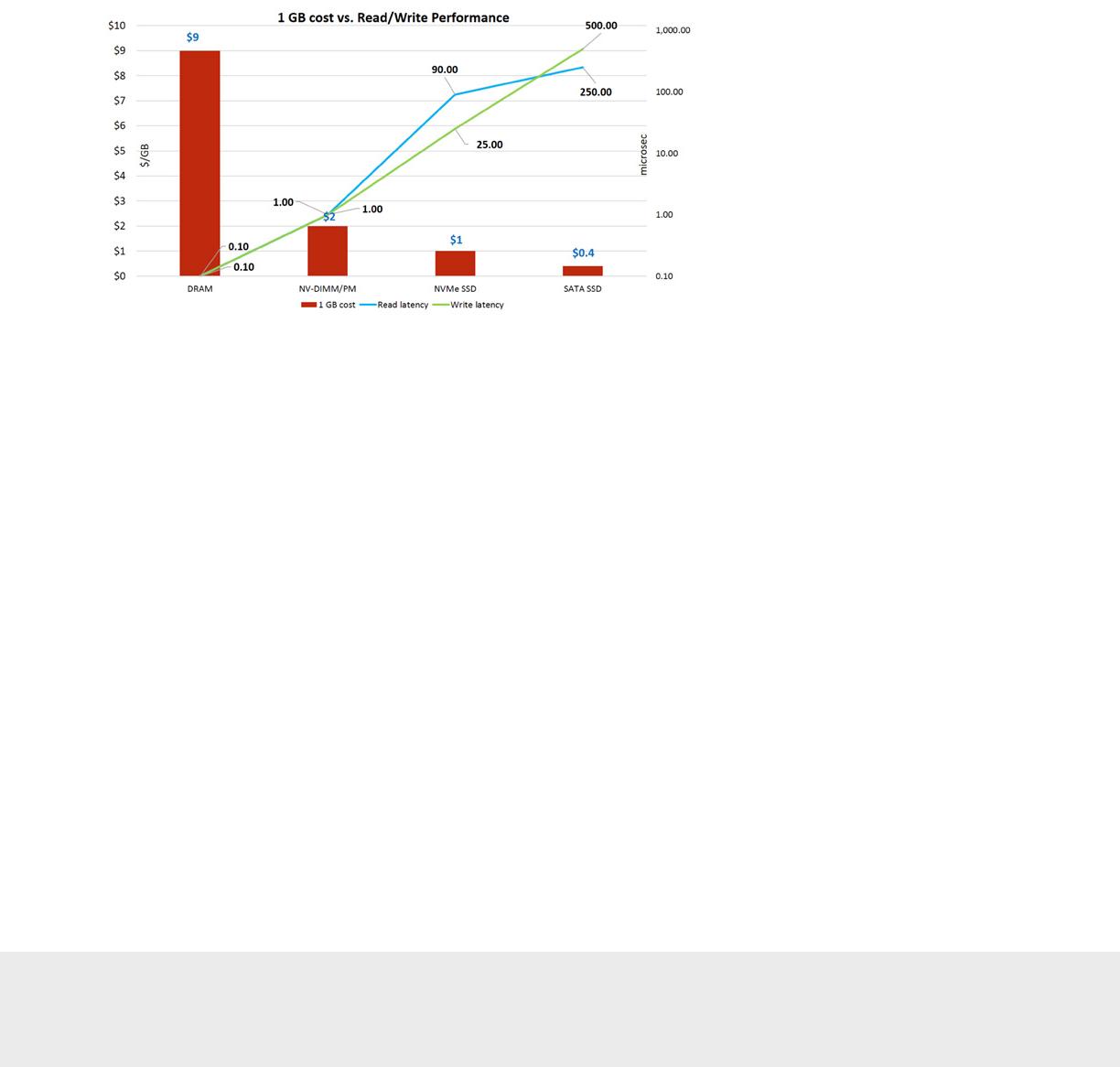
With new advances in hardware, ash technology (SSDs based on SATA or NVMe) provides a great alternave for low
latency read/writes and comes at a cost 10-20 mes cheaper than RAM (on a per GB basis). RAM connues to dominate
with lowest latency data access guarantees. However, ash technology is catching up fast with NV-DIMM and NVMe SSDs
from major vendors.
Redis on Flash technology combines RAM and ash to store large data sets in Redis with much lower cost per GB. With
Redis on Flash, you can extend RAM onto Flash memory and keep larger data sets in Redis, all without losing Redis’ perfor-
mance advantage.
To provide the best data access performance, Redis on Flash uses smart data placement, storing frequently accessed data
in RAM and less frequently accessed data in ash. The cost savings to store “10TB in RAM” vs. “2TB RAM + 8TB in a Flash
drive” (SATA or NVMe-based SSDs) can oen be more than 80%.
Redis on Flash Architecture
A Redis Enterprise cluster is composed of idencal nodes that are deployed within a data center or stretched across local
availability zones. Redis Enterprise architecture is made up of a management path (depicted in the blue layer in Figure 1
below) and data access path (depicted in the red layer in Figure 1 below).
• The Management path includes the cluster manager, proxy and secure REST API/UI for programmac administraon. In
short, the cluster manager is responsible for orchestrang the cluster and the placement of database shards, as well as
detecng and migang failures. Proxy helps scale connecon management.
• The Data Access path is composed of master and slave Redis shards. Clients perform data operaons on the master
shard. Master shards maintain slave shards using the in-memory replicaon for protecon against failures that may
render the master shard inaccessible.
of 7
免费下载
【版权声明】本文为墨天轮用户原创内容,转载时必须标注文档的来源(墨天轮),文档链接,文档作者等基本信息,否则作者和墨天轮有权追究责任。如果您发现墨天轮中有涉嫌抄袭或者侵权的内容,欢迎发送邮件至:contact@modb.pro进行举报,并提供相关证据,一经查实,墨天轮将立刻删除相关内容。
下载排行榜

评论