



Scaling Memcache at Facebook——mcrouter
免费下载

USENIX Association 10th USENIX Symposium on Networked Systems Design and Implementation (NSDI ’13) 385
Scaling Memcache at Facebook
Rajesh Nishtala, Hans Fugal, Steven Grimm, Marc Kwiatkowski, Herman Lee, Harry C. Li,
Ryan McElroy, Mike Paleczny, Daniel Peek, Paul Saab, David Stafford, Tony Tung,
Venkateshwaran Venkataramani
{rajeshn,hans}@fb.com, {sgrimm, marc}@facebook.com, {herman, hcli, rm, mpal, dpeek, ps, dstaff, ttung, veeve}@fb.com
Facebook Inc.
Abstract: Memcached is a well known, simple, in-
memory caching solution. This paper describes how
Facebook leverages memcached as a building block to
construct and scale a distributed key-value store that
supports the world’s largest social network. Our system
handles billions of requests per second and holds tril-
lions of items to deliver a rich experience for over a bil-
lion users around the world.
1 Introduction
Popular and engaging social networking sites present
significant infrastructure challenges. Hundreds of mil-
lions of people use these networks every day and im-
pose computational, network, and I/O demands that tra-
ditional web architectures struggle to satisfy. A social
network’s infrastructure needs to (1) allow near real-
time communication, (2) aggregate content on-the-fly
from multiple sources, (3) be able to access and update
very popular shared content, and (4) scale to process
millions of user requests per second.
We describe how we improved the open source ver-
sion of memcached [14] and used it as a building block to
construct a distributed key-value store for the largest so-
cial network in the world. We discuss our journey scal-
ing from a single cluster of servers to multiple geograph-
ically distributed clusters. To the best of our knowledge,
this system is the largest memcached installation in the
world, processing over a billion requests per second and
storing trillions of items.
This paper is the latest in a series of works that have
recognized the flexibility and utility of distributed key-
value stores [1, 2, 5, 6, 12, 14, 34, 36]. This paper fo-
cuses on memcached—an open-source implementation
of an in-memory hash table—as it provides low latency
access to a shared storage pool at low cost. These quali-
ties enable us to build data-intensive features that would
otherwise be impractical. For example, a feature that
issues hundreds of database queries per page request
would likely never leave the prototype stage because it
would be too slow and expensive. In our application,
however, web pages routinely fetch thousands of key-
value pairs from memcached servers.
One of our goals is to present the important themes
that emerge at different scales of our deployment. While
qualities like performance, efficiency, fault-tolerance,
and consistency are important at all scales, our experi-
ence indicates that at specific sizes some qualities re-
quire more effort to achieve than others. For exam-
ple, maintaining data consistency can be easier at small
scales if replication is minimal compared to larger ones
where replication is often necessary. Additionally, the
importance of finding an optimal communication sched-
ule increases as the number of servers increase and net-
working becomes the bottleneck.
This paper includes four main contributions: (1)
We describe the evolution of Facebook’s memcached-
based architecture. (2) We identify enhancements to
memcached that improve performance and increase
memory efficiency. (3) We highlight mechanisms that
improve our ability to operate our system at scale. (4)
We characterize the production workloads imposed on
our system.
2 Overview
The following properties greatly influence our design.
First, users consume an order of magnitude more con-
tent than they create. This behavior results in a workload
dominated by fetching data and suggests that caching
can have significant advantages. Second, our read op-
erations fetch data from a variety of sources such as
MySQL databases, HDFS installations, and backend
services. This heterogeneity requires a flexible caching
strategy able to store data from disparate sources.
Memcached provides a simple set of operations (set,
get, and delete) that makes it attractive as an elemen-
tal component in a large-scale distributed system. The
open-source version we started with provides a single-
machine in-memory hash table. In this paper, we discuss
how we took this basic building block, made it more ef-
ficient, and used it to build a distributed key-value store
that can process billions of requests per second. Hence-
386 10th USENIX Symposium on Networked Systems Design and Implementation (NSDI ’13) USENIX Association
database
web
server
memcache
1. get k 2. SELECT ...
3. set (k,v)
database
web
server
memcache
2. delete k
1. UPDATE ...
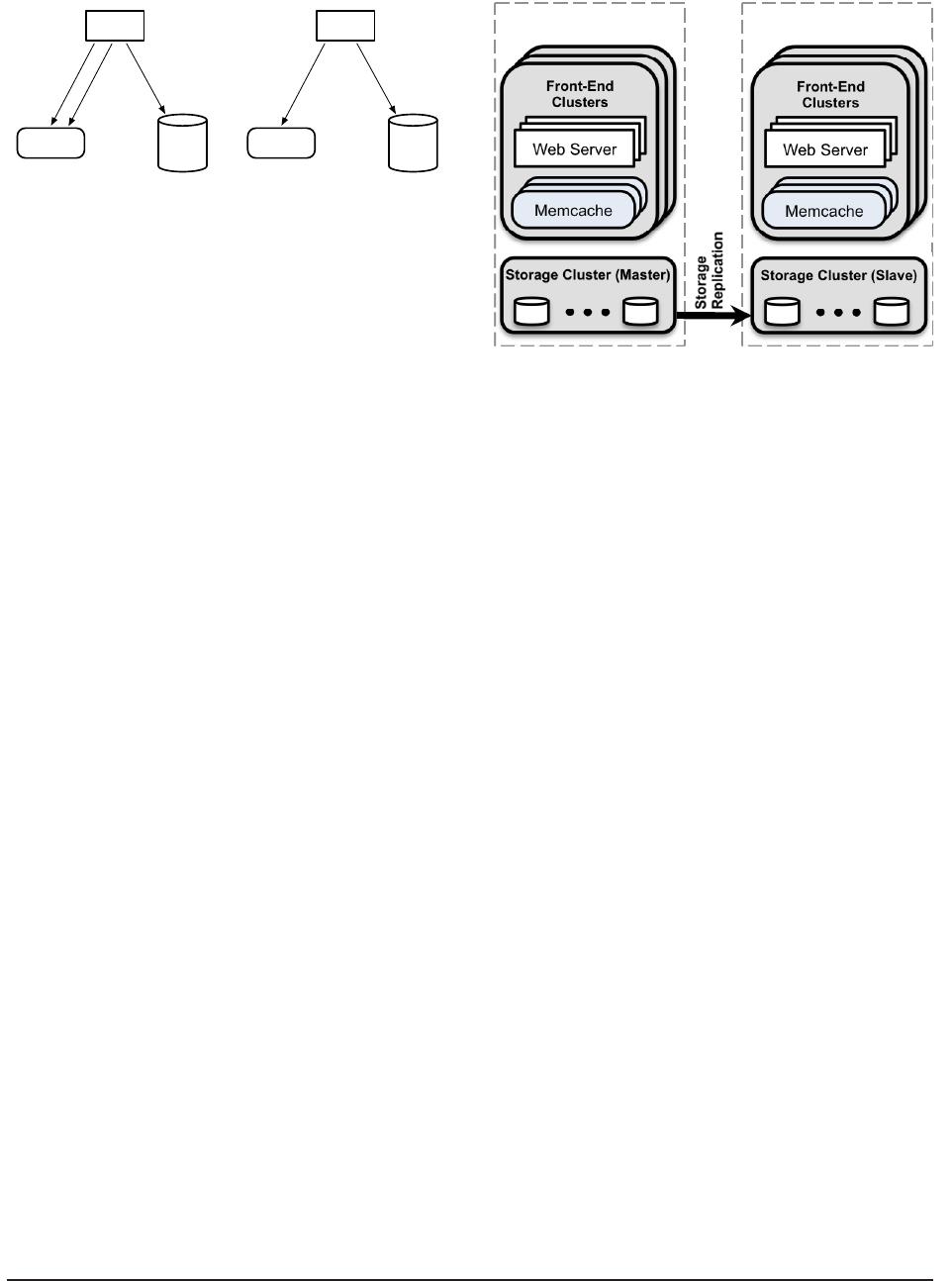
Figure 1: Memcache as a demand-filled look-aside
cache. The left half illustrates the read path for a web
server on a cache miss. The right half illustrates the
write path.
forth, we use ‘memcached’ to refer to the source code
or a running binary and ‘memcache’ to describe the dis-
tributed system.
Query cache: We rely on memcache to lighten the read
load on our databases. In particular, we use memcache
as a demand-filled look-aside cache as shown in Fig-
ure 1. When a web server needs data, it first requests
the value from memcache by providing a string key. If
the item addressed by that key is not cached, the web
server retrieves the data from the database or other back-
end service and populates the cache with the key-value
pair. For write requests, the web server issues SQL state-
ments to the database and then sends a delete request to
memcache that invalidates any stale data. We choose to
delete cached data instead of updating it because deletes
are idempotent. Memcache is not the authoritative source
of the data and is therefore allowed to evict cached data.
While there are several ways to address excessive
read traffic on MySQL databases, we chose to use
memcache. It was the best choice given limited engi-
neering resources and time. Additionally, separating our
caching layer from our persistence layer allows us to ad-
just each layer independently as our workload changes.
Generic cache: We also leverage memcache as a more
general key-value store. For example, engineers use
memcache to store pre-computed results from sophisti-
cated machine learning algorithms which can then be
used by a variety of other applications. It takes little ef-
fort for new services to leverage the existing marcher
infrastructure without the burden of tuning, optimizing,
provisioning, and maintaining a large server fleet.
As is, memcached provides no server-to-server co-
ordination; it is an in-memory hash table running on
a single server. In the remainder of this paper we de-
scribe how we built a distributed key-value store based
on memcached capable of operating under Facebook’s
workload. Our system provides a suite of configu-
ration, aggregation, and routing services to organize
memcached instances into a distributed system.
Figure 2: Overall architecture
We structure our paper to emphasize the themes that
emerge at three different deployment scales. Our read-
heavy workload and wide fan-out is the primary con-
cern when we have one cluster of servers. As it becomes
necessary to scale to multiple frontend clusters, we ad-
dress data replication between these clusters. Finally, we
describe mechanisms to provide a consistent user ex-
perience as we spread clusters around the world. Op-
erational complexity and fault tolerance is important at
all scales. We present salient data that supports our de-
sign decisions and refer the reader to work by Atikoglu
et al. [8] for a more detailed analysis of our workload. At
a high-level, Figure 2 illustrates this final architecture in
which we organize co-located clusters into a region and
designate a master region that provides a data stream to
keep non-master regions up-to-date.
While evolving our system we prioritize two ma-
jor design goals. (1) Any change must impact a user-
facing or operational issue. Optimizations that have lim-
ited scope are rarely considered. (2) We treat the prob-
ability of reading transient stale data as a parameter to
be tuned, similar to responsiveness. We are willing to
expose slightly stale data in exchange for insulating a
backend storage service from excessive load.
3 In a Cluster: Latency and Load
We now consider the challenges of scaling to thousands
of servers within a cluster. At this scale, most of our
efforts focus on reducing either the latency of fetching
cached data or the load imposed due to a cache miss.
3.1 Reducing Latency
Whether a request for data results in a cache hit or miss,
the latency of memcache’s response is a critical factor
in the response time of a user’s request. A single user
web request can often result in hundreds of individual
of 14
免费下载
【版权声明】本文为墨天轮用户原创内容,转载时必须标注文档的来源(墨天轮),文档链接,文档作者等基本信息,否则作者和墨天轮有权追究责任。如果您发现墨天轮中有涉嫌抄袭或者侵权的内容,欢迎发送邮件至:contact@modb.pro进行举报,并提供相关证据,一经查实,墨天轮将立刻删除相关内容。
下载排行榜

评论