



SupercheQ:Quantum Advantage for Distributed Databases_P. Gokhale.pdf
免费下载
SupercheQ: Quantum Advantage for Distributed Databases
P. Gokhale,
1, ∗
E. R. Anschuetz,
1, 2, ∗
C. Campbell,
3
F. T. Chong,
1, 4
E. D. Dahl,
3
P.
Frederick,
1
E. B. Jones,
3
B. Hall,
1
S. Issa,
1
P. Goiporia,
1
S. Lee,
1
P. Noell,
1
V. Omole,
1
D.
Owusu-Antwi,
1
M. A. Perlin,
1
R. Rines,
1
M. Saffman,
3, 5
K. N. Smith,
1
and T. Tomesh
1, 6
1
Super.tech, a division of Infleqtion
2
Department of Physics, Massachusetts Institute of Technology
3
ColdQuanta, a division of Infleqtion
4
Department of Computer Science, University of Chicago
5
Department of Physics, University of Wisconsin-Madison
6
Department of Computer Science, Princeton University
(Dated: December 8, 2022)
We introduce SupercheQ, a family of quantum protocols that achieves asymptotic advantage over
classical protocols for checking the equivalence of files, a task also known as fingerprinting. The
first variant, SupercheQ-EE (Efficient Encoding), uses n qubits to verify files with 2
O(n)
bits—
an exponential advantage in communication complexity (i.e. bandwidth, often the limiting factor in
networked applications) over the best possible classical protocol in the simultaneous message passing
setting. Moreover, SupercheQ-EE can be gracefully scaled down for implementation on circuits with
poly(n
`
) depth to enable verification for files with O(n
`
) bits for arbitrary constant `. The quantum
advantage is achieved by random circuit sampling, thereby endowing circuits from recent quantum
supremacy and quantum volume experiments with a practical application. We validate SupercheQ-
EE’s performance at scale through GPU simulation. The second variant, SupercheQ-IE (Incremental
Encoding), uses n qubits to verify files with O(n
2
) bits while supporting constant-time incremental
updates to the fingerprint. Moreover, SupercheQ-IE only requires Clifford gates, ensuring relatively
modest overheads for error-corrected implementation. We experimentally demonstrate proof-of-
concepts through Qiskit Runtime on IBM quantum hardware. We envision SupercheQ could be
deployed in distributed data settings, accompanying replicas of important databases.
I. INTRODUCTION
A hallmark of modern networks and databases is dis-
tributed replication of files, whether to improve availabil-
ity, redundancy, or performance. However, replication
requires protocols for integrity verification to check that
copies of data have not diverged. This motivates the
task of fingerprinting: mapping an input bitstring to a
shorter bitstring (the fingerprint) in order to distinguish
two inputs with (arbitrarily) high success probability.
Fingerprinting has been extensively studied in the so-
called simultaneous message passing (SMP) setting [1–3].
In this model, fingerprints of two bitstrings A and B are
sent to a referee to verify whether A = B with high prob-
ability. The goal is to minimize the communication com-
plexity, i.e. the number of bits transferred to the referee,
of this process. Previous work [4] has shown that there
is an exponential advantage in communication complex-
ity when utilizing quantum states for this task. Namely,
for A and B each of N bits, there is a quantum proto-
col that succeeds with high probability using O (log N)
qubits, while there is a known achievable lower-bound of
Θ
√
N
classical bits in performing this task [2]. Un-
fortunately, the protocol of [4] requires constructing a
complicated superposition state that generally takes time
scaling with N to prepare on a quantum computer.
∗
These two authors contributed equally
SupercheQ–EE
SupercheQ–IE
101110010…
Alice
(N bits)
101110010…
Random circuit sampling
𝑂(log 𝑁) qubits transmitted.
Or
𝑂(𝑁
!/#
)
with
poly(𝑘)
cost.
Bob
(N bits)
t
0
101110010…
101110010…
?
t
1
Graph state encoding with O(1) incremental updates
𝑂( 𝑁) qubits transmitted.
QPU
QPU
QPU
QPU
?
0
01110010…
0
01110010…
?
QPU
QPU
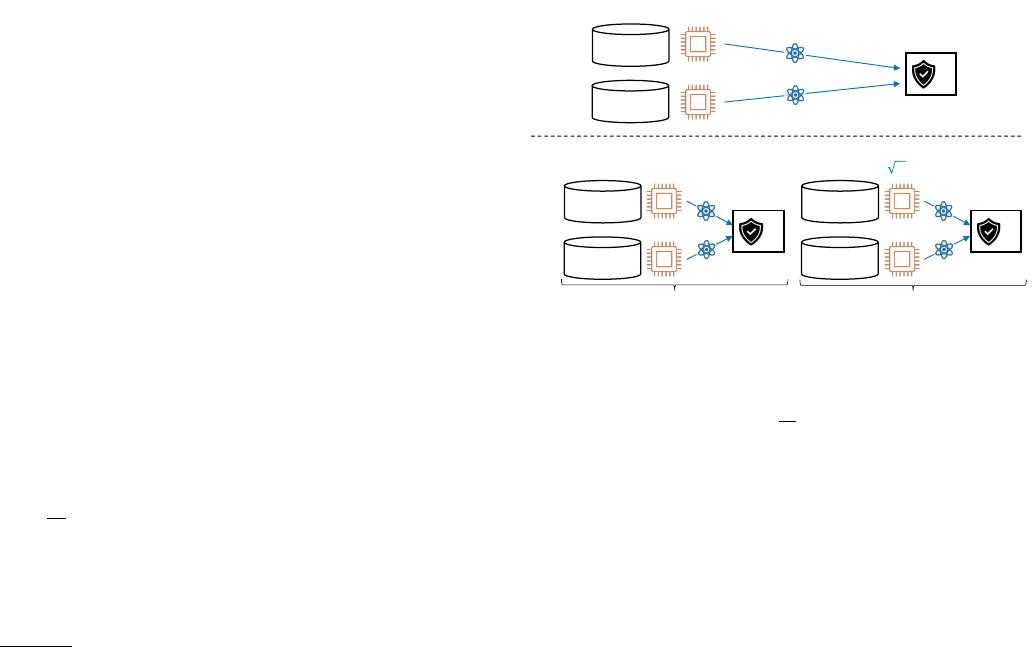
FIG. 1. The EE (Efficient Encoding) variant of SupercheQ
compares two N-bit files by transmitting as few as O(log N)
qubits—an exponential advantage over classical protocols in
the SMP setting. The IE (Incremental Encoding) variant
matches the best-possible Θ(
√
N) scaling of classical proto-
cols while achieving constant-time updates for incremental file
changes.
To address these difficulties we introduce SupercheQ,
a family of quantum protocols that exhibit asymp-
totic advantage over classical protocols for fingerprint-
ing, as summarized in Fig. 1 and Table I. The first
variant, SupercheQ-EE (Efficient Encoding), achieves an
advantage in communication complexity. This is of-
ten the limiting factor for modern distributed databases.
arXiv:2212.03850v1 [quant-ph] 7 Dec 2022

2
Protocol Hash Quantum FP SupercheQ-EE [§III A, III B, III C] SupercheQ-IE Classical FP Naive
[Example] [SHA-256] [4] [Haar Rdm] [Aprx t-Dsgn] [HW-Eff] [§IV] [3]
FP Size (n) O(1), [256 bits] O(log N ) O(log N ) O(N
1/`
) Empirical
h
∼
√
2N
i
Θ
√
N
,
h
∼
√
3N
i
N
Quantum Cost N/A exp(n) exp(n) poly(n
`
) Empirical O(N ) N/A N/A
Collision-Free? No Yes Yes Yes Yes Yes Yes Yes
Incremental? ?, [No] No No No No Yes No Yes
TABLE I. Comparison of fingerprinting (FP) protocols for files with N classical bits, in ascending order of the fingerprint size.
Quantum cost refers to the gate count needed to produce the quantum fingerprint state. Collision-free refers to whether the
protocol is with high probability safe against worst-case choices of files; in particular, hashing to a constant size (e.g. SHA-256)
is not collision-free because there always exist (many) pairs of files that map to the same hashed value. Incremental refers to
whether fingerprints can be updated in constant time when the underlying file is bit-flipped. We introduce SupercheQ-Efficient
Encoding (EE), which encompasses three subcategories: Haar-Random (§III A), Approximate Unitary t-Design (§III B), and
Hardware-Efficient variant (§III C). We also introduce SupercheQ-Incremental Encoding (IE), which is the only protocol here
that achieves incremental updates.
SupercheQ-EE can be used to check if two 2
O(n)
-bit files
are identical by sending only n qubits, which is an expo-
nential advantage relative to the best-possible classical
protocol. In a nearer-term setting with restricted quan-
tum circuit gate counts and connectivity, SupercheQ-
EE can compare files of size O(n
`
) bits for arbitrarily
large constant `, with quantum circuit cost that scales
as poly(n
`
). For comparison, ` = 2 is known to be the
best that can be achieved classically in the SMP set-
ting [2, 5]. Interestingly, SupercheQ-EE’s core mecha-
nism is random circuit sampling. As such, SupercheQ-EE
endows circuits from quantum supremacy and quantum
volume experiments with the first plausible application
to our knowledge, though current noise rates do not yet
permit a practical advantage.
The second variant, SupercheQ-IE (Incremental En-
coding), matches the ` = 2 quadratic scaling of the best
possible classical protocol, but with the advantage of be-
ing incremental. Specifically, if a bit is flipped in an N-
bit source file, the n = Θ(
√
N)-qubit fingerprint can be
updated in constant time. To our knowledge, no nontriv-
ial classical fingerprinting protocols guarantee this prop-
erty, nor are they likely to achieve this property. The
SupercheQ-IE protocol has two somewhat counterintu-
itive features:
1. The essential ingredient is a Clifford circuit, which
is known to be efficiently classically simulable with
a quadratic memory overhead. However, this
quadratic separation is known to be optimal [6–8]
(i.e. it takes quadratically more classical bits than
qubits to simulate Clifford circuits). As a result,
quantum advantages are known to still persist in
a variety of communication complexity settings, as
recently demonstrated by [7, 8].
2. The protocol does not involve Grover search and
no quantum random access memory (QRAM) is
involved—only an ordinary classical database.
These features are appealing for error-corrected imple-
mentations of SupercheQ-IE. Since only Clifford circuits
are required, SupercheQ-IE avoids the overhead of magic
state distillation for non-Clifford operations [9]. More-
over, no special hardware for classical data loading is
required.
The remainder of this paper is organized as follows.
Sec. II provides background on fingerprinting for check-
ing equivalence of data. Secs. III and IV specify the
SupercheQ-EE (Efficient Encoding) and SupercheQ-IE
(Incremental Encoding) protocols, respectively. Since
our asymptotic bounds for SupercheQ-EE are loose,
we employ GPU-accelerated simulation to elucidate
the real-world advantage achievable with SupercheQ in
Sec. V. Next, we demonstrate experimental results for
SupercheQ, executed on IBM quantum hardware, in
Sec. VI. Finally, we conclude in Sec. VII. Appendix A
presents mathematical proofs for key results, and Ap-
pendix B contains additional plots pertaining to noisy
simulation of SupercheQ-EE.
II. BACKGROUND
A. Notation and Setup
Throughout this paper, N will denote the number of
classical bits composing a file of interest, while n will de-
note the number of qubits in the fingerprint. We focus
exclusively on the simultaneous message passing (SMP)
setting [1]. Under this model, we consider the communi-
cation complexity for Alice and Bob to send the finger-
print to a third-party referee, as depicted in Fig. 1. The
SMP setting allows for both Alice and Bob to have pri-
vate coins (i.e., uncorrelated randomness), but assumes
that Alice and Bob do not share a secure random key
(which would require a secure key exchange protocol).
B. Fingerprinting
The most naive classical procedure for fingerprinting a
file is to send the entire file itself. In this case—which cor-
responds to the right-most column in Table I—we have
that n = N . On the other end of the spectrum, we may
of 16
免费下载
【版权声明】本文为墨天轮用户原创内容,转载时必须标注文档的来源(墨天轮),文档链接,文档作者等基本信息,否则作者和墨天轮有权追究责任。如果您发现墨天轮中有涉嫌抄袭或者侵权的内容,欢迎发送邮件至:contact@modb.pro进行举报,并提供相关证据,一经查实,墨天轮将立刻删除相关内容。
下载排行榜

评论