



1、线上问题
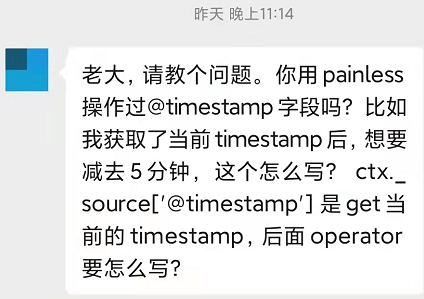
2、问题拆解
3、开搞,实战一把
3.1 步骤 1:创建索引,并导入一批含日期类型的数据。
DELETE logsPUT logs{ "mappings": { "properties": { "name": { "type": "text" }, "start_date": { "type": "date" }, "close_date": { "type": "date" } } }}PUT logs/_bulk?refresh{"index":{"_id":1}}{"name":"Person AA","start_date":"2015-05-06T02:49:40.894Z","close_date":"2015-11-01T18:10:30Z"}{"index":{"_id":2}}{"name":"Person CC","start_date":"2015-05-06T02:49:40.894Z","close_date":"2015-11-02T13:10:30Z"}
3.2 步骤 2:更新处理尝试。
我的初始理解,获取时间,然后 - 5(代表 5 分钟的意思),不就搞定了吗。
试试看?simulate 仿真执行一下:
POST /_ingest/pipeline/_simulate{ "pipeline": { "description": "_description", "processors": [ { "script": { "description": "add time", "lang": "painless", "source": """ ctx.start_date = ctx.start_date - 5 """ } } ] }, "docs": [ { "_index": "index", "_id": 1, "_source": { "name": "Person AA", "start_date": "2015-05-06T02:49:40.894Z", "close_date": "2015-11-01T18:10:30Z" } } ]}
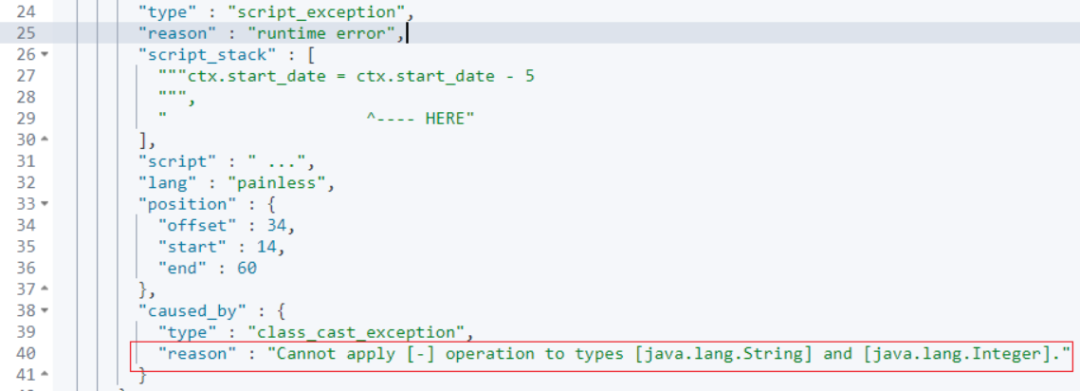
3.3 步骤 3:换个思路,从脚本部分再切入。
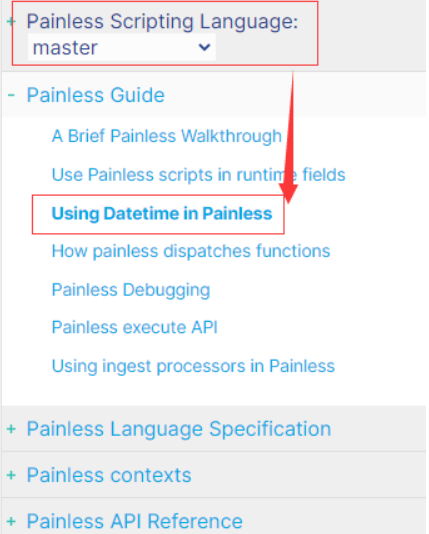
换个思路思考,既然:官方文档拿出 1 篇文章的篇幅讲解 Datetime 时间类型的 painless 的应用,说明这里还是有“文章”的。
类型1:numeric 时间戳类型,举例: 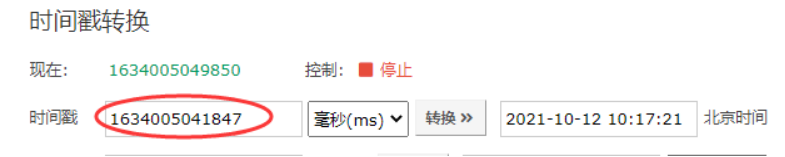
类型2:string 类型。举例:"2015-05-06T02:49:40.894Z"。
类型3:complex 类型。这种我们不常见,它是一种复杂对象类型。在 painless 中通常为:ZonedDateTime。
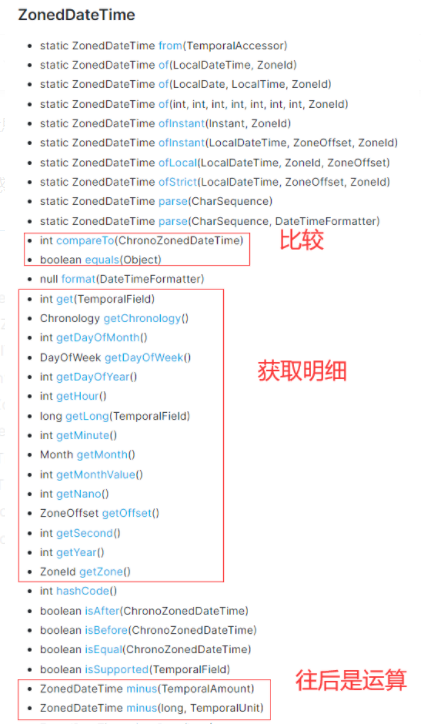
要强调的是如下一段话,切中选型要害!
在日期时间格式上述三种不同类型之间切换通常是实现脚本目标所必需的。
脚本中的典型应用是:将数字(numeric)或字符串(string)格式切换为 complex 日期格式,基于complex 日期格式做修改或比较,然后将其切换回数字或字符串日期格式进行存储或返回结果。
继续开搞吧:
PUT /_ingest/pipeline/time_pipeline{ "processors": [ { "script": { "description": "add time", "lang": "painless", "source": """ String datetime = ctx.start_date; ZonedDateTime zdt = ZonedDateTime.parse(datetime); zdt = zdt.minusMinutes(5); ctx.start_date = zdt; """ } } ]}POST logs/_update_by_query?pipeline=time_pipeline{ "query": { "match_all": {} }}GET logs/_search
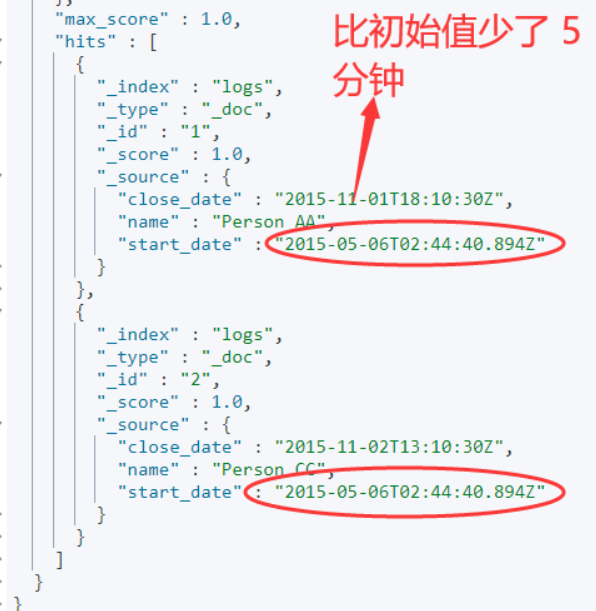
4、核心实现的语法解读
String datetime = ctx.start_date;
ZonedDateTime zdt = ZonedDateTime.parse(datetime);
zdt = zdt.minusMinutes(5);
ctx.start_date = zdt;
5、小结
参考
推荐
更短时间更快习得更多干货!
已带领70位球友通过 Elastic 官方认证!
中国仅通过百余人

文章转载自铭毅天下Elasticsearch,如果涉嫌侵权,请发送邮件至:contact@modb.pro进行举报,并提供相关证据,一经查实,墨天轮将立刻删除相关内容。
